Today's animal friend · 15 October 2026
Antarctic Krill: The Tiny Pink Crowd Beneath the Ice
They may be no longer than a little finger, but Antarctic krill gather in spectacular swarms and help feed an entire ocean neighbourhood.
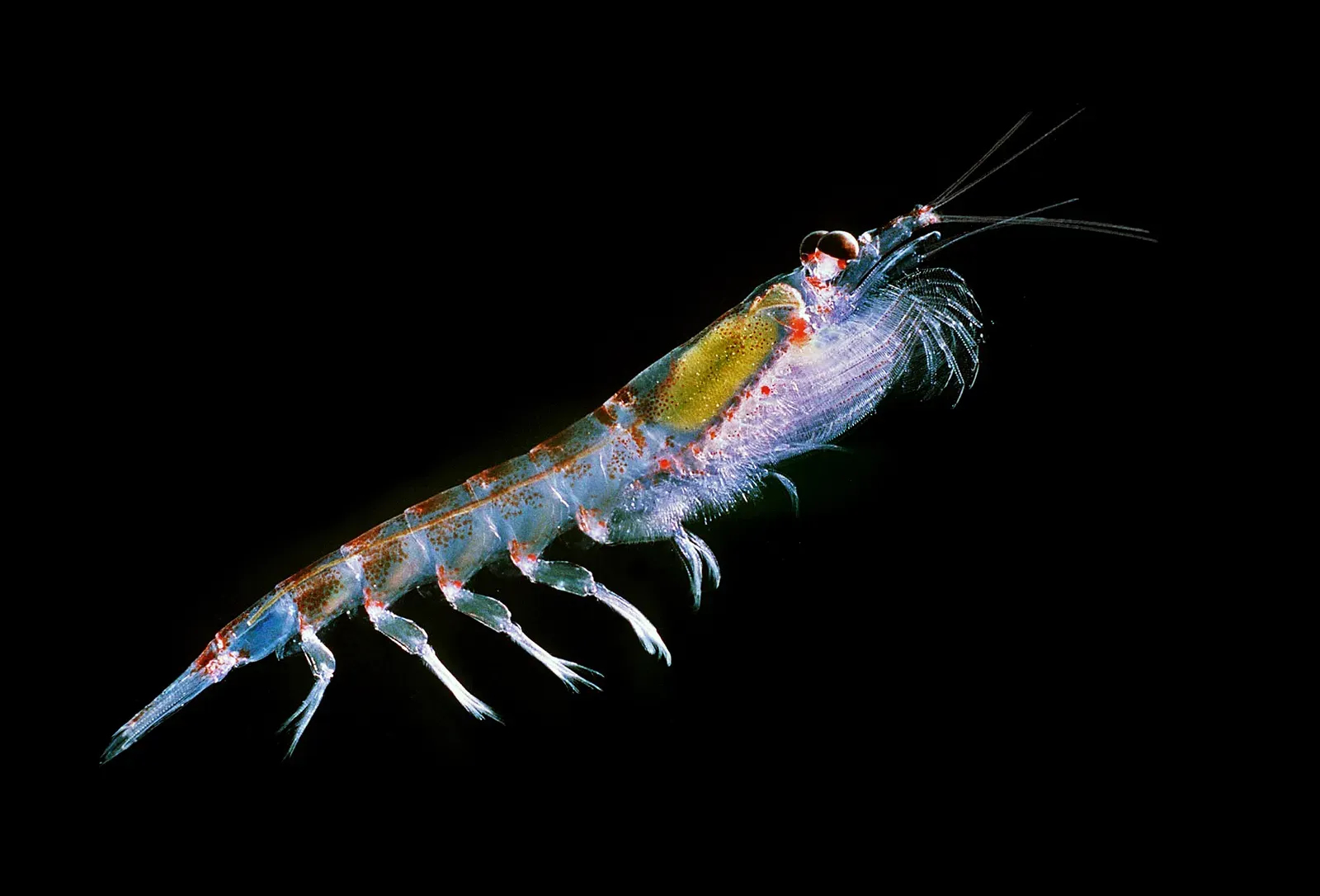
They may be no longer than a little finger, but Antarctic krill gather in spectacular swarms and help feed an entire ocean neighbourhood.
A pink shimmer in the blue
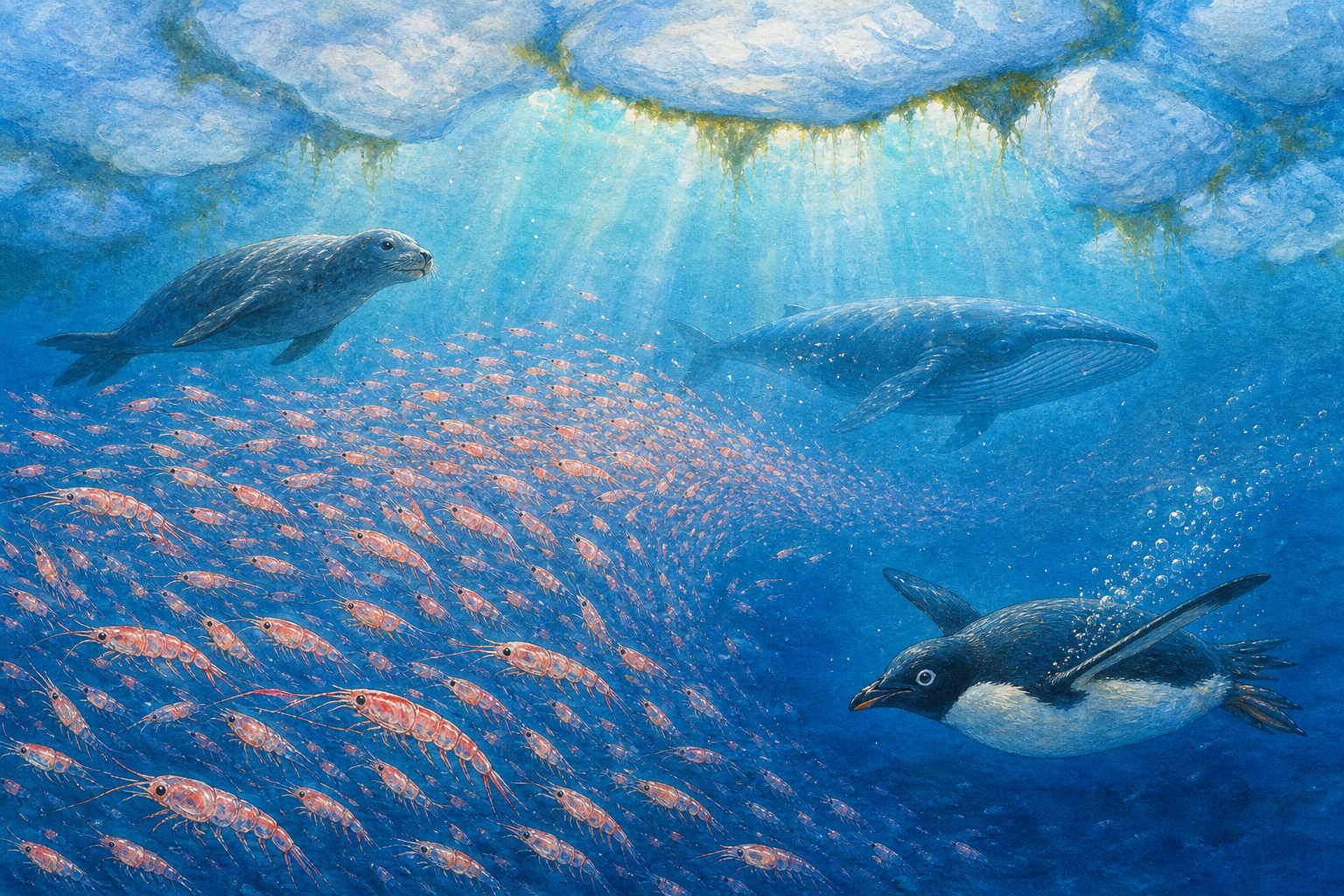
Imagine peering into the icy water around Antarctica. The sea looks deep blue, the wind sounds like it has forgotten how to whisper, and then—whoosh!—a pinkish cloud seems to drift below the surface. It is not paint, confetti, or a bubble-gum ocean. It is a crowd of Antarctic krill.
Antarctic krill, whose scientific name is Euphausia superba, are small shrimp-like crustaceans. A grown krill can be about as long as your little finger, yet these tiny swimmers can gather in swarms so dense that thousands may fit in a bucket of seawater. Alone, one krill is easy to miss. Together, they can colour the water and make the ocean seem alive with flickering movement.
That is the first brilliant krill surprise: being small does not mean being unimportant. In the Southern Ocean around Antarctica, krill are part of a busy underwater world where a tiny mouthful can matter enormously.
Evidence: World Register of Marine Species (WoRMS): Euphausia superba Dana, 1850; Australian Antarctic Program: Antarctic krill; British Antarctic Survey: Antarctic wildlife; Wikipedia: Antarctic krill (Euphausia superba)
How does a tiny animal make such a giant crowd?
Krill almost never have to be lonely. They form thick swarms, sometimes called schools, moving together through cold open water and waters near sea ice. A swarm is a bit like a playground crowd racing towards the same exciting thing—except everyone is swimming, nobody has lost a shoe, and the playground is freezing ocean.
Why gather? A crowd can make it harder for a hungry predator to focus on just one krill. It also means that animals looking for krill may find a great big meal in one place. Of course, this is not exactly a stealthy plan. A pink cloud of snacks is noticeable! But the swarm is an important part of how krill live.
Krill can travel up and down in the water too. They often feed nearer the surface at night and move deeper during the day, though this can change with the season and sea ice. Think of it as an ocean elevator with no buttons: light, food, and safety help shape the journey.
Like other crustaceans, krill shed an old outer covering as they grow. They keep moulting through life and may even shrink during times when food is scarce. That sounds like a magic trick, but it is one of the extraordinary ways these little animals cope with a challenging world.
Evidence: Australian Antarctic Program: Antarctic krill; British Antarctic Survey: Antarctic wildlife; Wikipedia: Antarctic krill (Euphausia superba)
Sunshine sandwiches, made underwater
So what is on the krill menu? Mostly tiny drifting plant-like organisms called phytoplankton, along with algae associated with sea ice. Krill filter these small bits of food from the water. Picture using a very fine strainer to catch the tiniest green specks in a huge watery soup.
Phytoplankton use sunlight to grow near the ocean surface. When krill eat them, they pass that energy along. In a wonderfully roundabout way, sunshine can help feed a penguin or a whale: sunlight helps phytoplankton grow, krill eat the phytoplankton, and larger animals eat krill.
Sea ice matters especially to young krill and to winter feeding. It is not just a white lid floating on the sea. It is part of a living place, connected to algae, food, shelter, and the chilly seasonal rhythms that krill have known for ages.
An individual Antarctic krill may live for several years. That is a long time for a small creature in an ocean full of hungry neighbours. Every day asks for the same important choices: find food, stay with the swarm, and avoid becoming somebody else’s lunch.
Evidence: Australian Antarctic Program: Antarctic krill; Wikipedia: Antarctic krill (Euphausia superba); British Antarctic Survey: Antarctic wildlife
The snack that supports a whole neighbourhood
Who is looking for krill? The answer is a spectacular guest list: whales, seals, penguins, fish, squid, and seabirds all rely on them as food. Baleen whales can take huge mouthfuls of water and strain it through comb-like plates, keeping the krill behind. For a whale, a krill swarm can be a magnificent buffet. For a krill, it is a very good reason to keep swimming.
Scientists describe krill as a key link in the Antarctic food web. A food web is like a giant web of dinner connections: many animals are linked because one eats another, or because they share food. Krill connect tiny plant-like life with much larger animals. If that link weakens, many other lives can be affected.
That does not make krill “just food.” Each one is a living animal, paddling through cold water, finding its way through a crowd, and responding to its changing home. Their importance is a reminder that the smallest neighbours can hold a community together.
Antarctic krill are listed as Least Concern in a 2015 conservation assessment, but that is not a reason to stop paying attention. Their population trend is not known, and sea-ice loss, climate-linked warming, and fishing pressure can all put pressure on krill and the animals that depend on them.
Evidence: British Antarctic Survey: Antarctic wildlife; Australian Antarctic Program: Antarctic krill; Wikipedia: Antarctic krill (Euphausia superba); Commission for the Conservation of Antarctic Marine Living Resources (CCAMLR): Krill fisheries and sustainability
Keeping the Southern Ocean a good place to be small
Life at the bottom of the world is not separate from the rest of our planet. As the climate changes, warming and loss of sea ice can damage important krill habitat, particularly for larvae. That matters because today’s tiny young krill are tomorrow’s swarm swimmers.
Krill are also caught in commercial fisheries. There is hopeful work here: the Commission for the Conservation of Antarctic Marine Living Resources uses precautionary, ecosystem-based limits for krill fishing. The idea is simple and caring—do not take so much that whales, penguins, seals, and other krill-eaters are left without enough to eat.
Protecting krill means noticing connections. Healthy cold seas, sea ice, careful international decisions, and thoughtful choices far from Antarctica can all be parts of the same story. You do not have to visit the Southern Ocean to be amazed by it. You can start by picturing that pink, shimmering crowd beneath the ice—and by remembering that every creature in it is working hard to live.
Evidence: Australian Antarctic Program: Antarctic krill; Commission for the Conservation of Antarctic Marine Living Resources (CCAMLR): Krill fisheries and sustainability; British Antarctic Survey: Antarctic wildlife; Wikipedia: Antarctic krill (Euphausia superba)
A kind choice can ripple all the way to the ice
When we care about animals, it can be tempting to focus only on the biggest and fluffiest ones. Krill invite us to widen the circle. A little swimmer no bigger than a finger can matter to whales, penguins, and an entire sea. That is a powerful reason to treat ocean life as neighbours, not objects.
At home, you might explore more plant-powered meals with your family: colourful vegetables, fruit, beans, lentils, whole grains, nuts, and seeds can all be part of a varied healthy diet. The World Health Organization encourages varied diets built around these foods, while the IPCC reports that shifts toward sustainable, healthy, more plant-based diets can reduce pressure on land and biodiversity and lower food-system emissions. No one needs to be perfect; curious, kind steps count.
Perhaps your next meal can become a tiny “thank you” to the living world: try a bean taco, lentil pasta sauce, or seed-topped fruit. Then imagine Antarctic krill glimmering together below the ice—small friends with a very big story.
Evidence: World Health Organization: Healthy diet; Intergovernmental Panel on Climate Change: Climate Change 2022: Mitigation of Climate Change — Chapter 7
Questions people ask
Are Antarctic krill really shrimp?
They are shrimp-like crustaceans, but they belong to their own group, Euphausiacea. Their accepted scientific name is Euphausia superba.
Evidence: World Register of Marine Species (WoRMS): Euphausia superba Dana, 1850; Australian Antarctic Program: Antarctic krill
Why do krill swarm?
Dense swarms may help make an individual krill harder for a predator to single out. Swarming is a major part of their social life in the Southern Ocean.
Evidence: Australian Antarctic Program: Antarctic krill; British Antarctic Survey: Antarctic wildlife; Wikipedia: Antarctic krill (Euphausia superba)
What eats Antarctic krill?
Many animals do, including whales, seals, penguins, fish, squid, and seabirds. That is why krill are such an important food-web link.
Evidence: British Antarctic Survey: Antarctic wildlife; Australian Antarctic Program: Antarctic krill
Can people help krill from far away?
Yes. Caring about a stable climate and healthy oceans helps. Learning how food choices connect with land, biodiversity, and emissions is another thoughtful step to take with the adults in your life.
Evidence: Australian Antarctic Program: Antarctic krill; Intergovernmental Panel on Climate Change: Climate Change 2022: Mitigation of Climate Change — Chapter 7
Read the evidence
Sources behind this story
- Antarctic krill (Euphausia superba) — Wikipedia
- Antarctic wildlife — British Antarctic Survey
- Antarctic krill — Australian Antarctic Program
- Krill fisheries and sustainability — Commission for the Conservation of Antarctic Marine Living Resources (CCAMLR)
- Euphausia superba Dana, 1850 — World Register of Marine Species (WoRMS)
- Healthy diet — World Health Organization
- Climate Change 2022: Mitigation of Climate Change — Chapter 7 — Intergovernmental Panel on Climate Change
Health information is general education, not personal medical advice. Young readers should make food choices with a trusted adult and qualified health professional.