 ← All animals
 mammal · Ceratotherium simum
White rhinoceros
Gallery
6 photos Real photograph 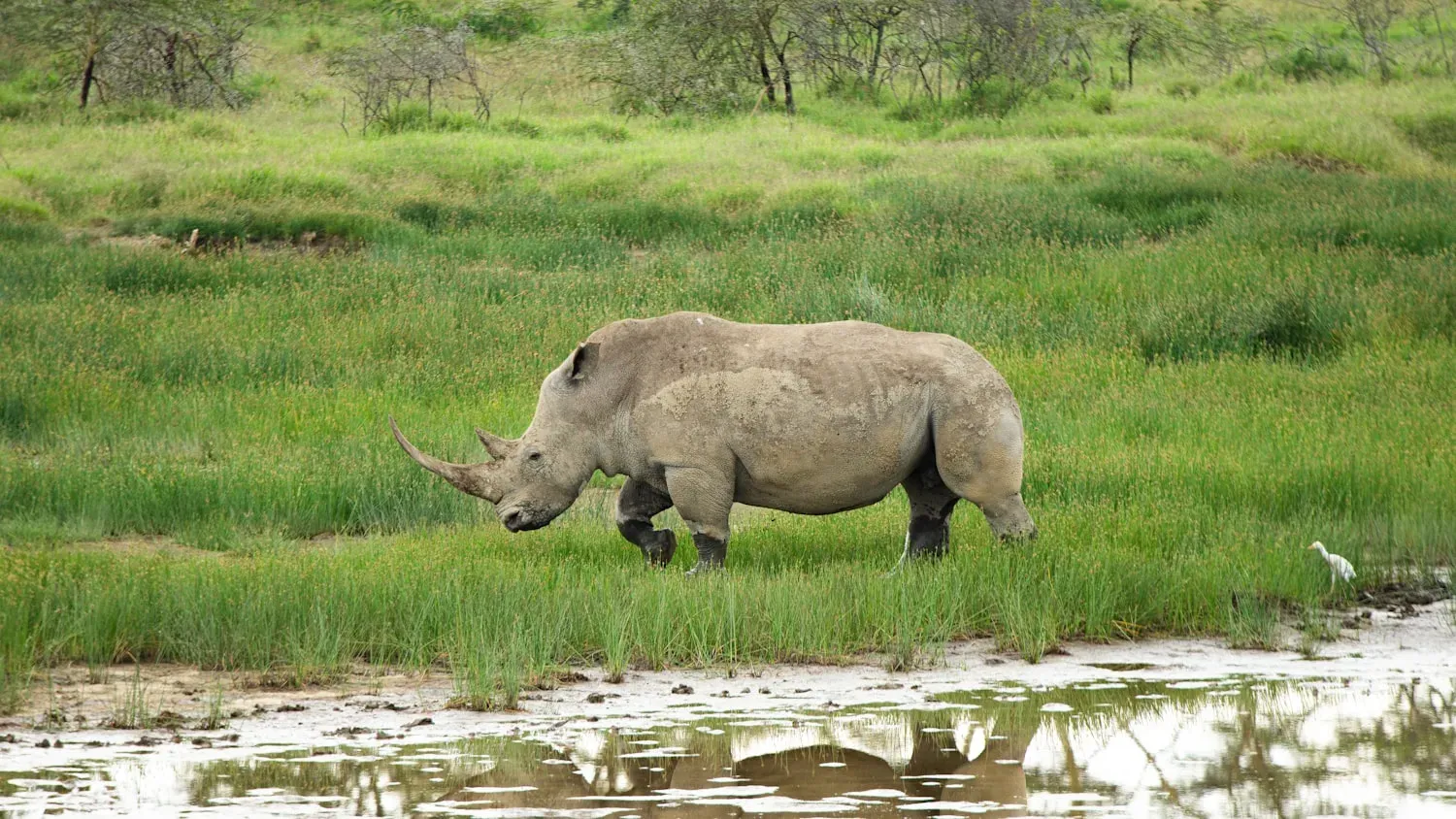 Real photograph
  Real photograph
  Real photograph
  Real photograph
  Real photograph
 Why we love them
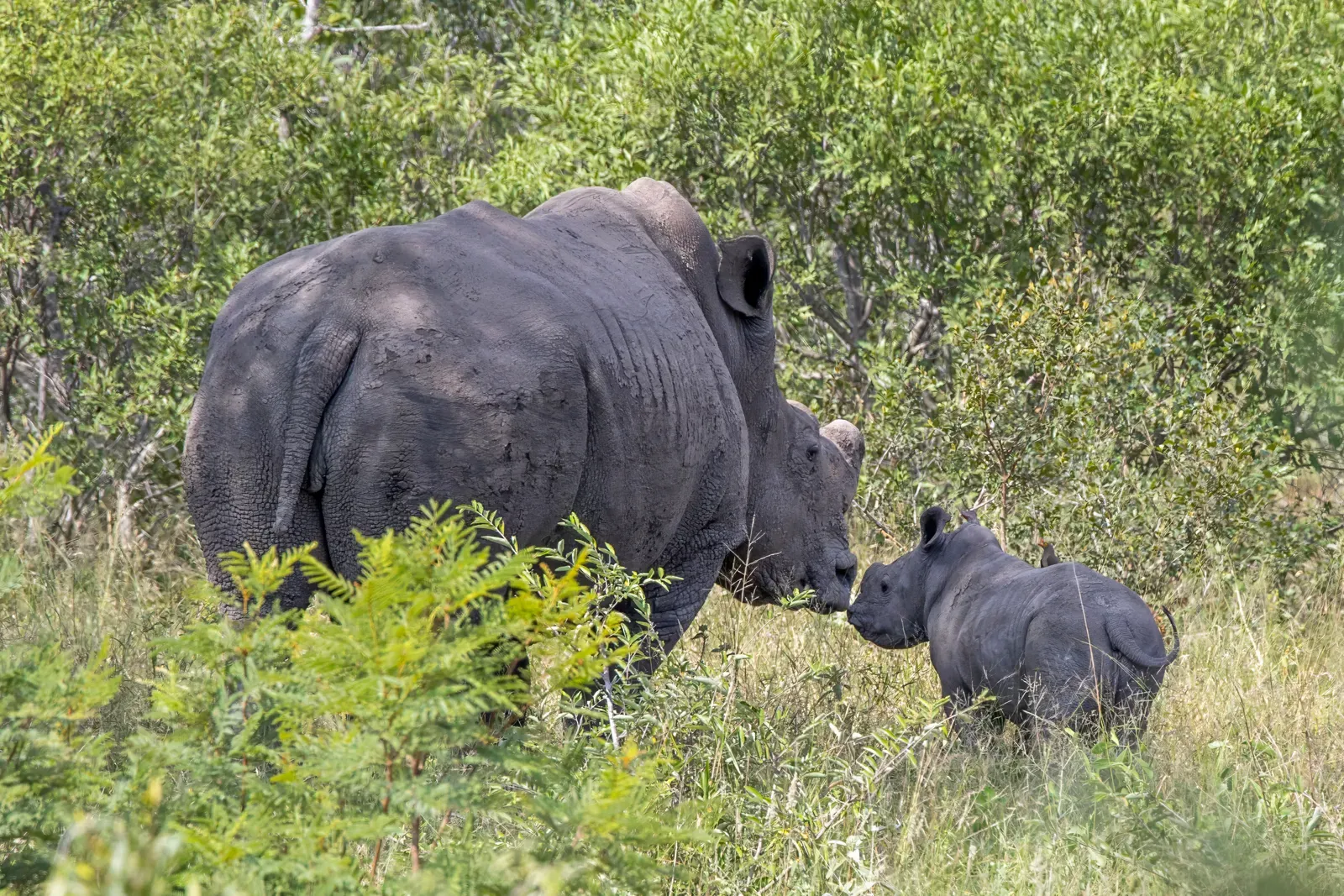
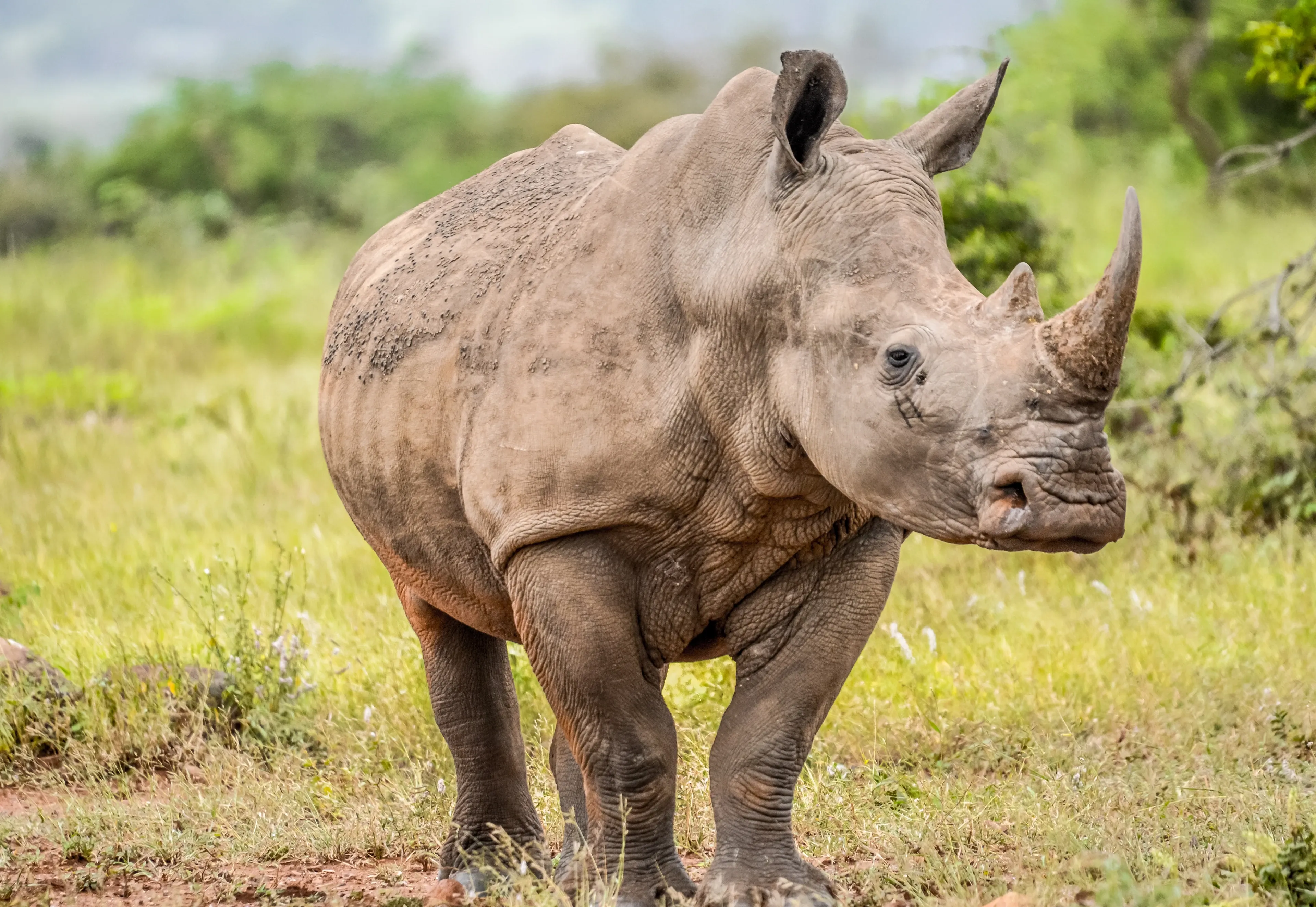
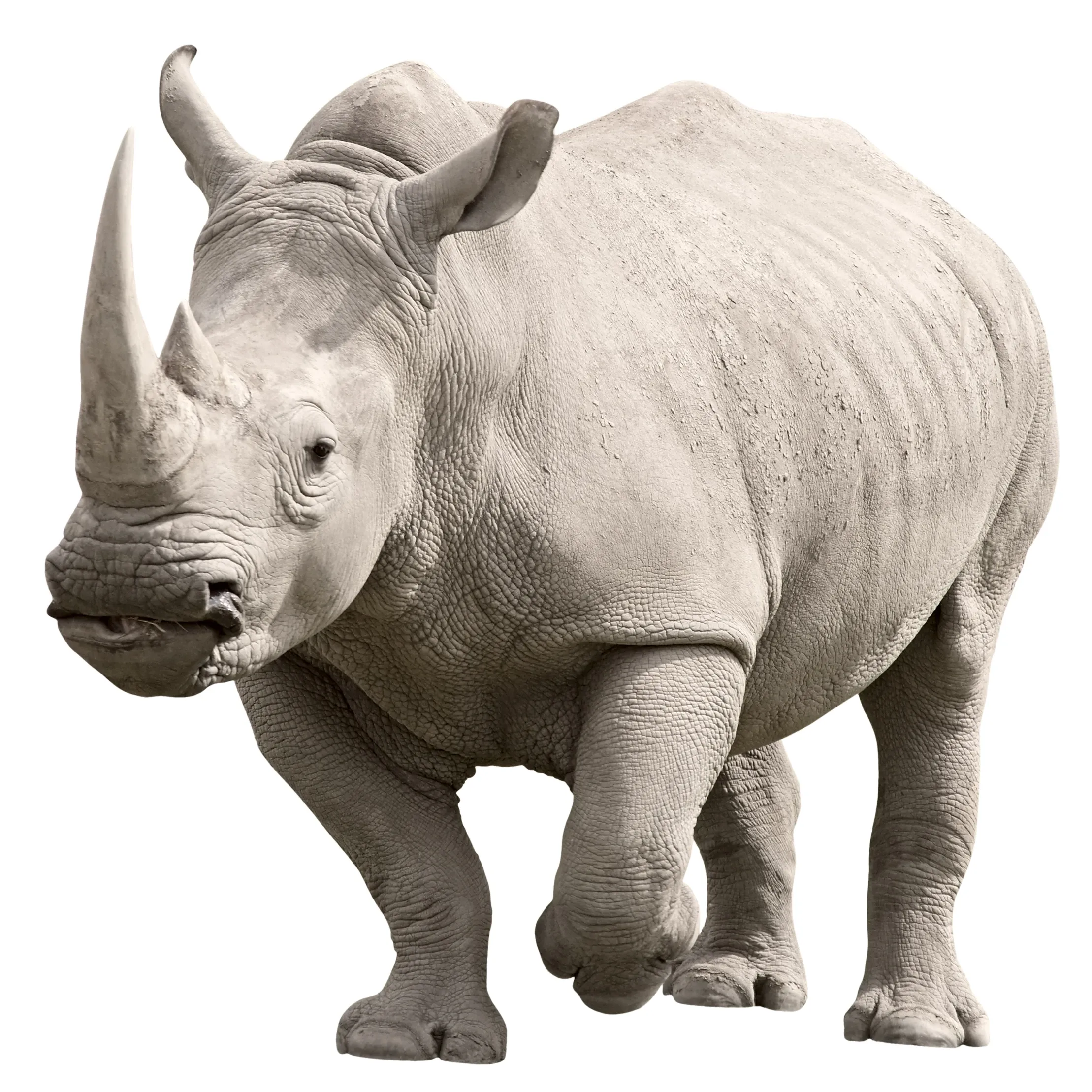
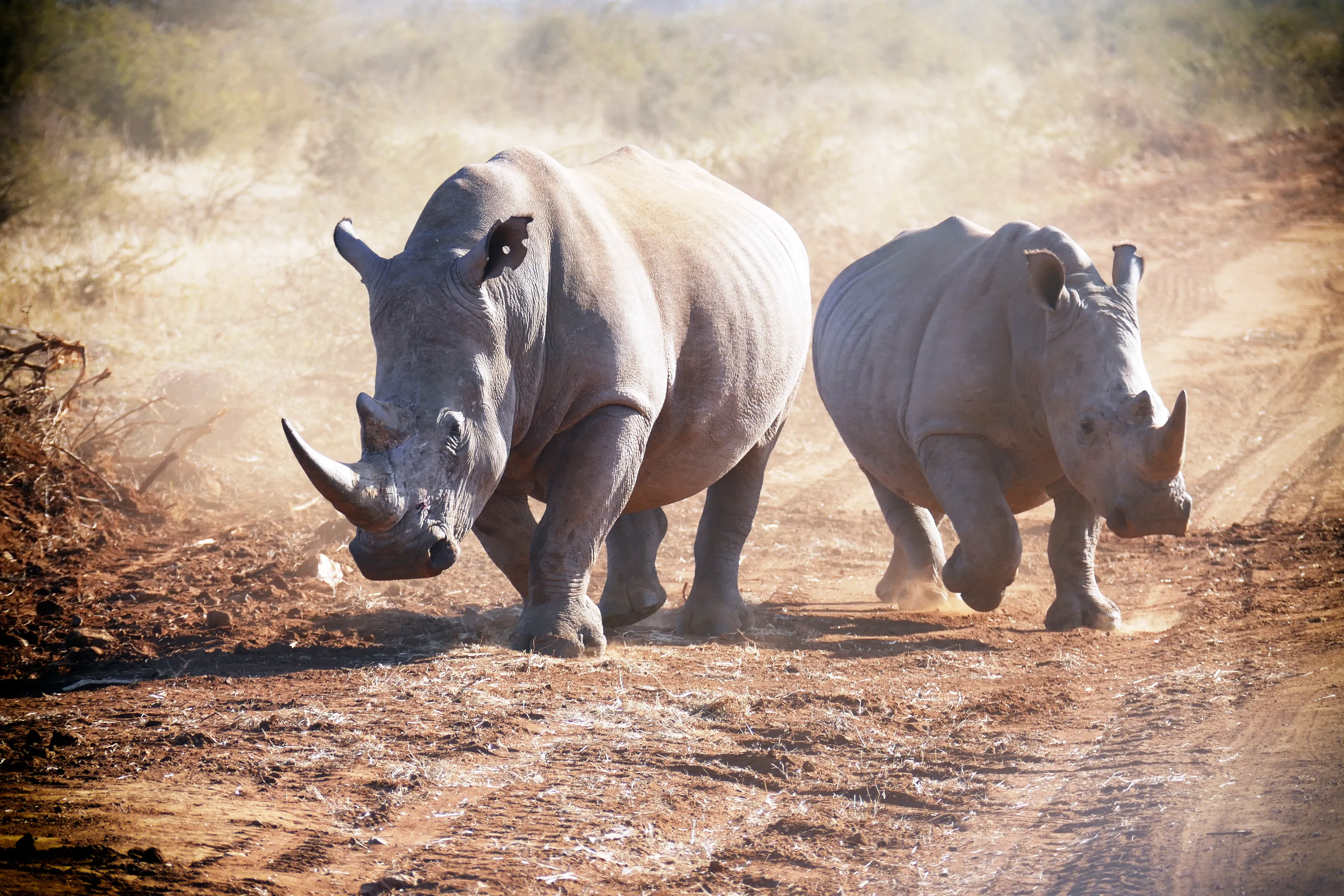
The white rhinoceros is a huge, heavy animal with thick grey skin and two horns on its nose. It is the biggest kind of rhino and one of the largest land animals anywhere on Earth. A grown-up white rhino can weigh as much as a small truck, yet it spends most of its day quietly eating grass.
Even though it is called "white," this rhino is really a soft grey colour. The name probably came from an old word meaning "wide," because the white rhino has a wide, flat mouth. That big square mouth is perfect for cropping lots of grass close to the ground, almost like a living lawnmower.
White rhinos live on the grassy plains and open woodlands of Africa. They love to roll around in mud, which dries on their skin and keeps them cool and safe from biting bugs and the hot sun. A bump of strong muscle on the back of the neck helps hold up their big, heavy head while they graze.
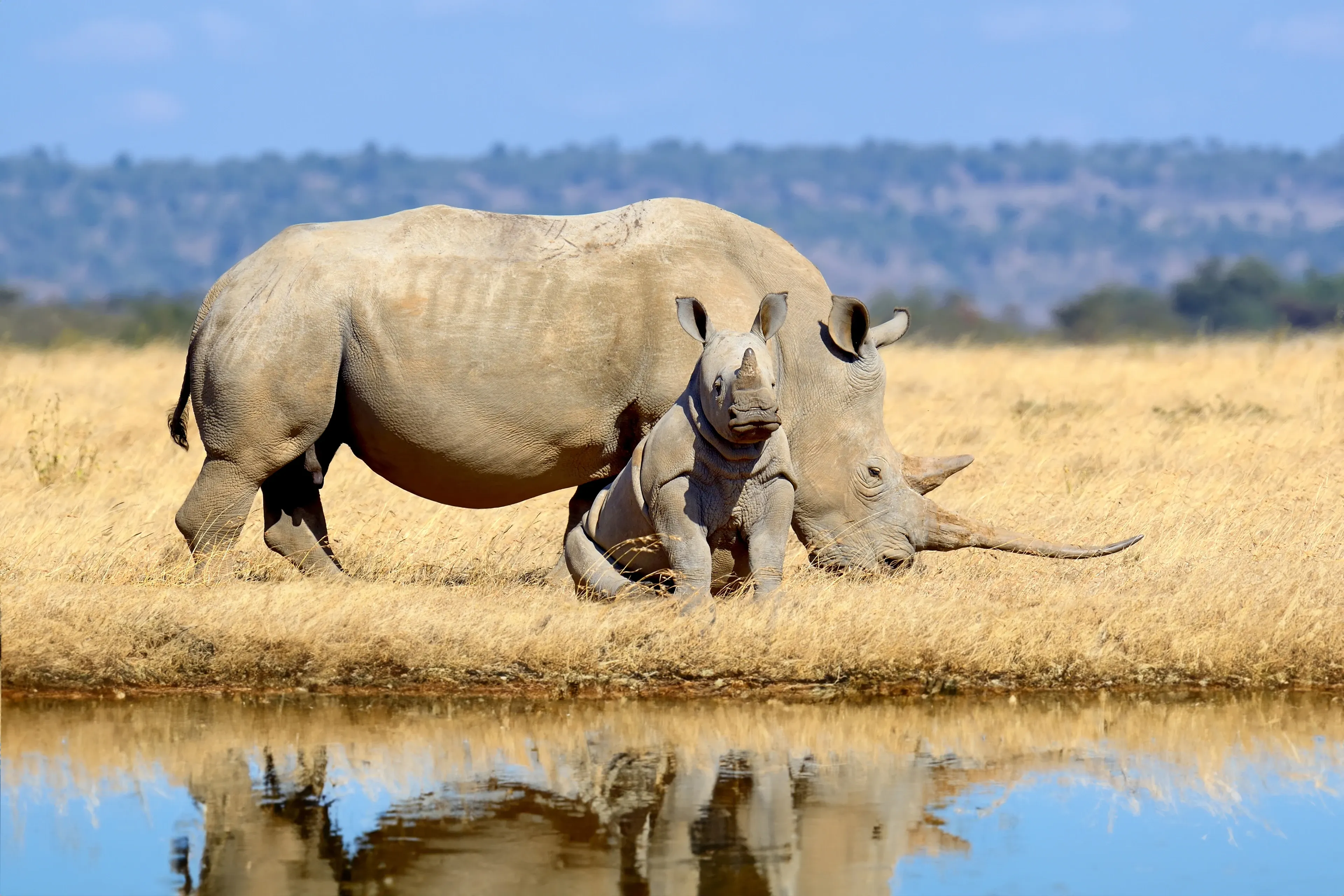
White rhinos are the most friendly of all the rhinos and often rest in small groups. A mother rhino has one baby, called a calf, and it stays close by her side to stay safe. Rhinos have small eyes and cannot see very well, but they have excellent hearing and a wonderful sense of smell.
For a long time, white rhinos were in great danger because people hunted them for their horns. Kind rangers and scientists worked very hard to protect them, and the southern kind of white rhino grew from just a few animals back to many thousands. Sadly, the northern kind is now nearly gone, with only two left. People around the world are still working to keep these gentle giants safe.
My home
Grassland, savanna, open woodland
Where I live
Africa
What I eat
Grass
How long I am
3.35–3.77 m
How heavy I am
1000–3600 kg
How long I live
40–50 years
The white rhino is the biggest kind of rhino and one of the largest land animals on the whole planet.
Its wide, flat mouth is just right for munching lots of grass, like a big living lawnmower.
The name "white" is not about its colour at all; it may come from an old word that means "wide," because of its wide lips.
Every white rhinoceros can feel happy, scared and loved — just like you.
Looking after my friends
How many are there?
About 17,500 southern white rhinos were estimated worldwide in 2023.
This rounded figure is for the southern subspecies. Only two northern white rhinos, both female, remained in the same source snapshot.
The population in the wild was increasing in 2023.
How are they doing?
Close to threatenedThis species is not threatened right now, but it is close enough that scientists keep a careful watch.
You can help by learning their names, keeping wild places clean, and telling someone why this animal matters.
Where this came from
- Ceratotherium simum (White Rhinoceros) — IUCN Red List conservation status — IUCN Red List of Threatened Species
- White rhinoceros — Wikipedia — Wikipedia (Wikimedia Foundation)
- Ceratotherium simum — Animal Diversity Web — Animal Diversity Web, University of Michigan Museum of Zoology