 ← All animals
 bird · Porphyrio hochstetteri
Takahē
Gallery
4 photos Real photograph 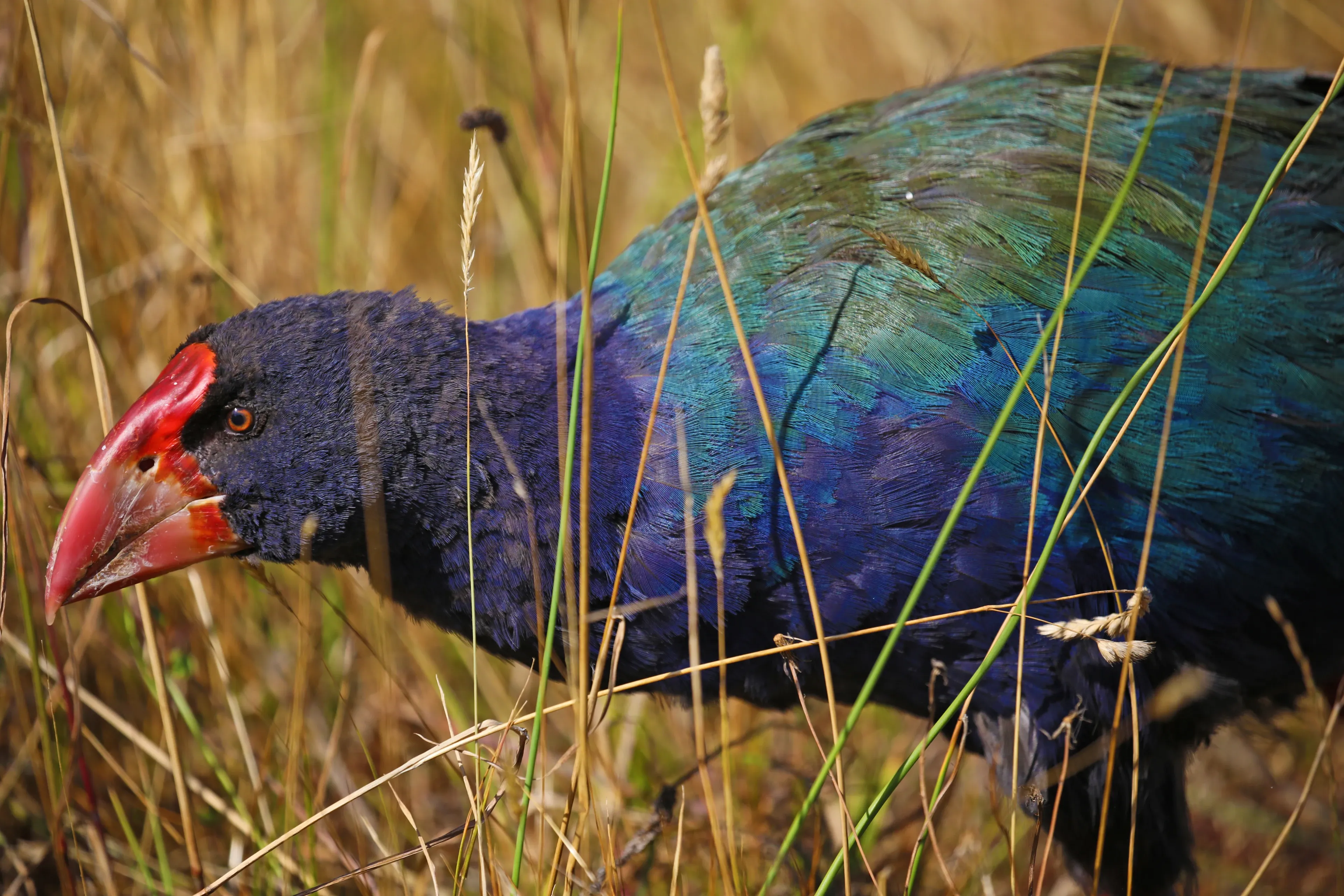 Real photograph
 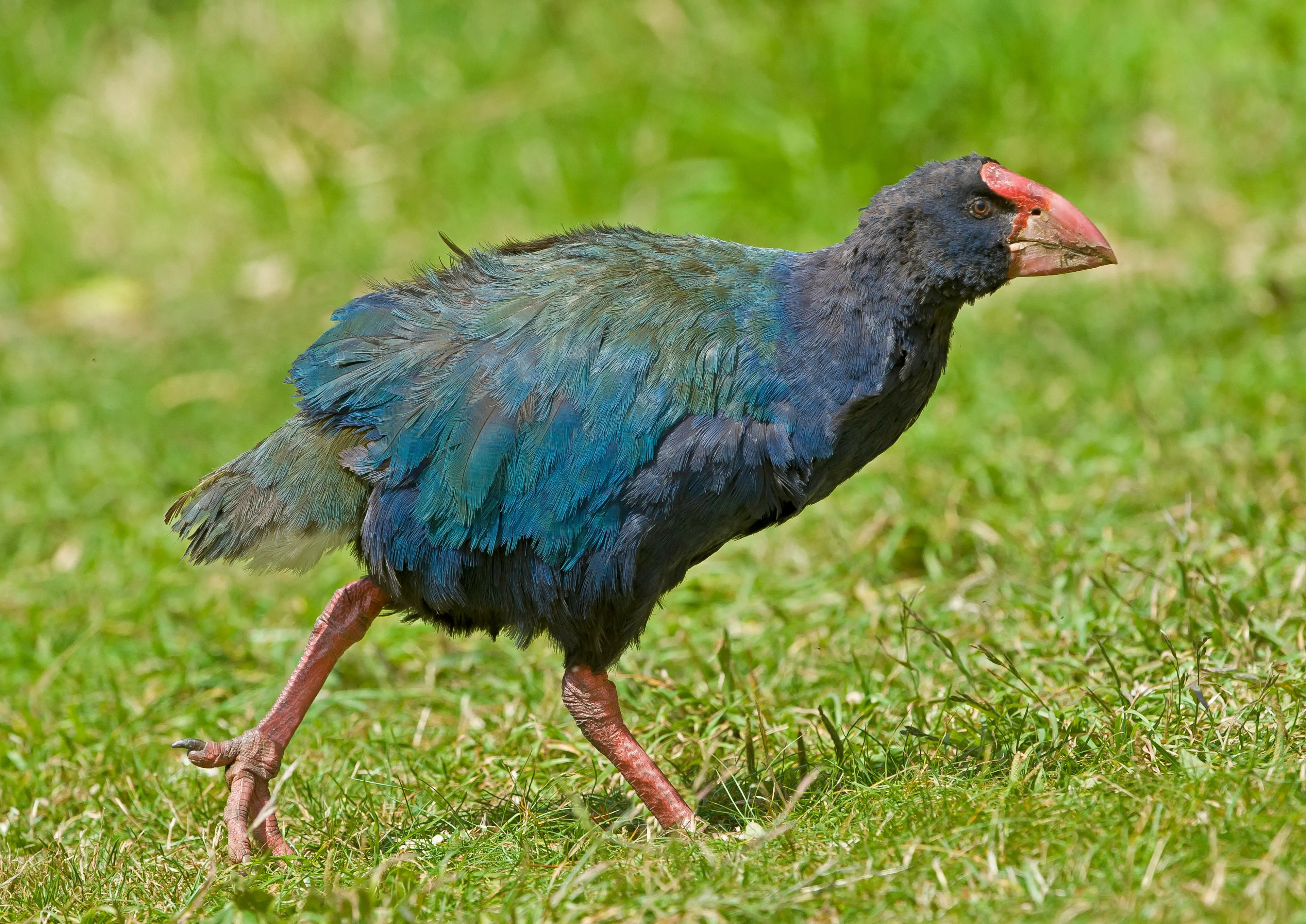 Real photograph
 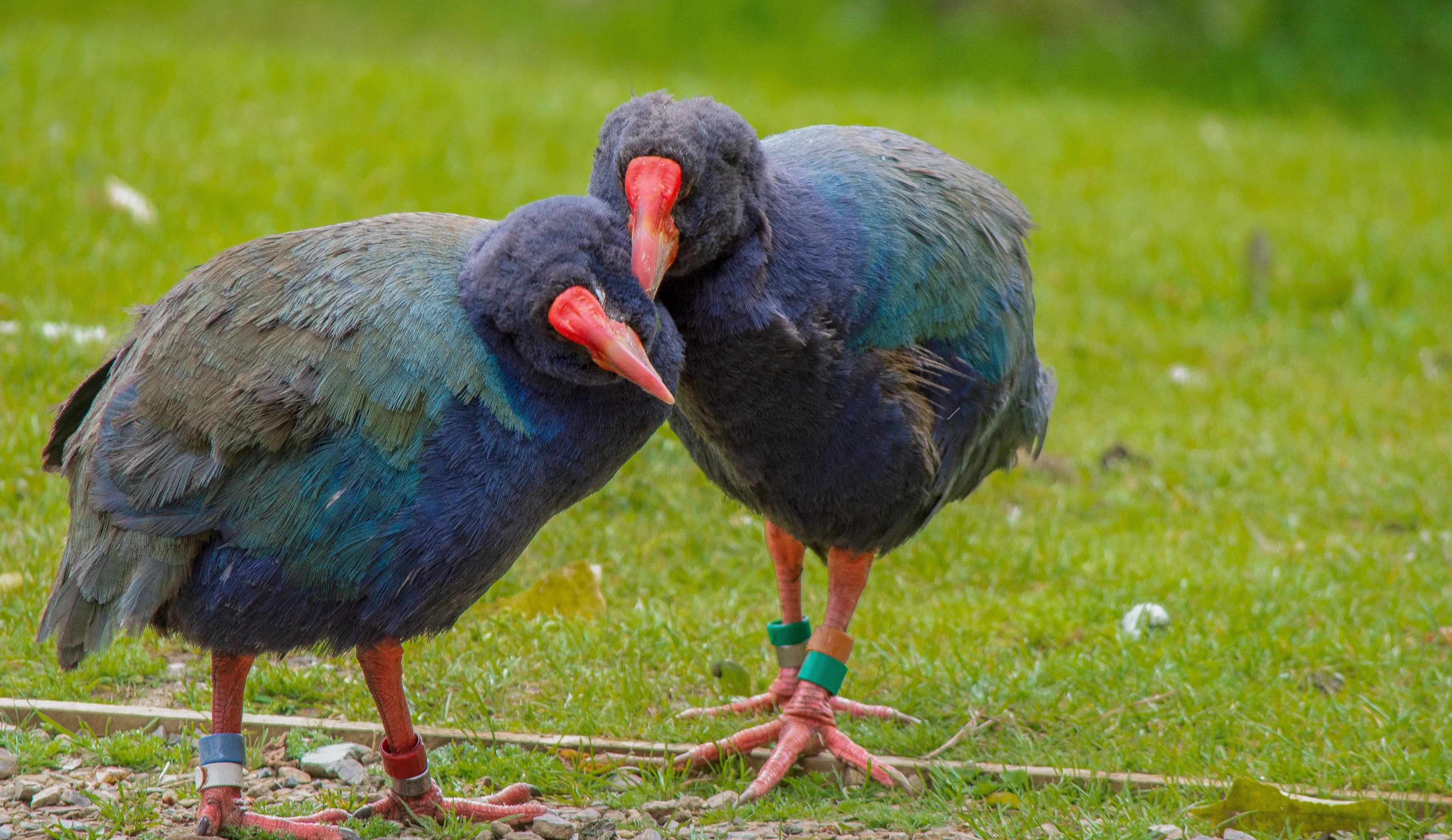 Real photograph
 Why we love them
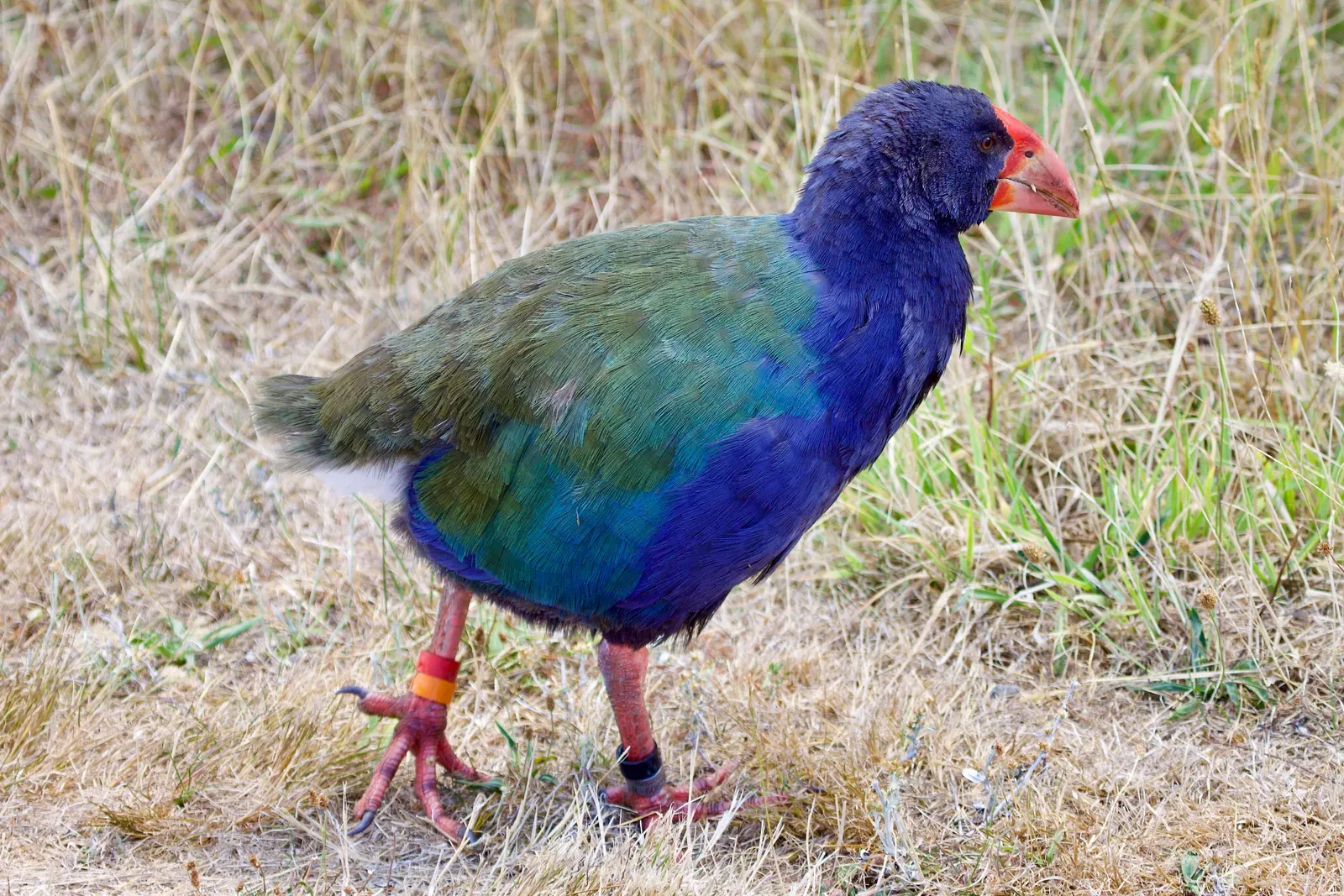
The takahē is a chunky, colourful bird from Aotearoa New Zealand with a story that feels almost like a fairy tale. It is a big, round bird with glowing purple-blue feathers, a greenish back, and a thick, bright red beak. The takahē is the largest living member of the rail family, and like the kiwi it cannot fly. Instead it strides about on strong red legs through the grass.
For a long time, people believed the takahē was gone forever. Nobody had seen one for many years, and it was thought to be extinct. Then, on 20 November 1948, a determined doctor named Geoffrey Orbell led an expedition high into the Murchison Mountains near Lake Te Anau, following mysterious footprints. There, to everyone's amazement and delight, he found living takahē.
Takahē are plant eaters, or herbivores. They live in cool alpine grasslands and love to munch on tough tussock grasses, using their strong beaks to pull out the soft, juicy parts at the base of each stem. You might spot one gripping a clump of grass in its foot like a hand, nibbling away happily in the sunshine.
Takahē grow to about 63 centimetres long and can live for around 18 years in the wild, or even a little longer in safe sanctuaries. Every single one is precious, because there are still only a small number of these special birds left in the world.
Today the takahē is endangered, but its story is a hopeful one. Thanks to careful conservation work, there are now around 500 takahē, and the population is growing by about 8 percent every year. They are protected in Fiordland and on special predator-free islands, where kind rangers help this famous comeback bird thrive.
My home
Alpine grassland, tussock grassland, predator free islands
Where I live
Oceania
What I eat
Grasses, tussock, shoots, seeds
How long I am
0.63–0.63 m
How heavy I am
1.8–4.2 kg
How long I live
18–22 years
The takahē is the largest living rail (a member of the Rallidae family) and cannot fly; it has bright purple-blue feathers, a greenish back and a strong red beak.
Takahē were once thought to be extinct, but they were joyfully rediscovered on 20 November 1948 in the Murchison Mountains near Lake Te Anau.
Thanks to careful conservation work, there are now around 500 takahē, and the population is growing by about 8 percent each year.
Every takahē can feel happy, scared and loved — just like you.
Looking after my friends
How many are there?
At least 500 takahē were recorded worldwide on 23 April 2026.
DOC describes the total as just over 500, so the record preserves 500 as a conservative lower bound rather than inventing an exact count.
How are they doing?
EndangeredThis species has a very high risk of extinction in the wild, so protecting it matters greatly.
You can help by learning their names, keeping wild places clean, and telling someone why this animal matters.
Where this came from
- Porphyrio hochstetteri (Takahē) — Red List Assessment — IUCN Red List of Threatened Species / BirdLife International (Red List Authority for birds)
- Takahē — New Zealand native land birds — New Zealand Department of Conservation (Te Papa Atawhai)
- Takahē — Wikipedia
- Fast DNA sex test ‘game changer’ for conservation — New Zealand Department of Conservation