 ← All animals
 mammal · Tachyglossus aculeatus
Short-beaked echidna
Gallery
3 photos Real photograph 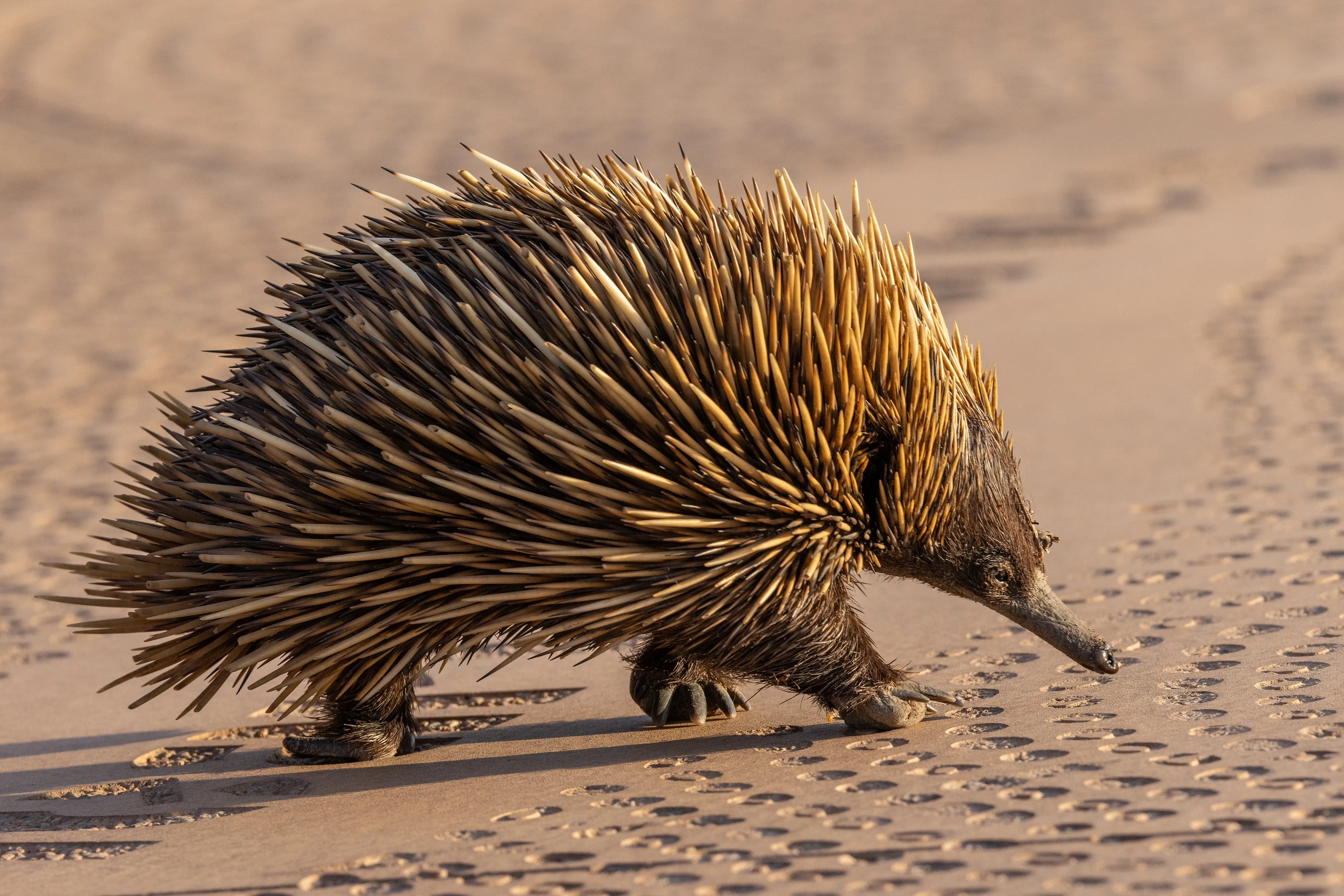 Real photograph
 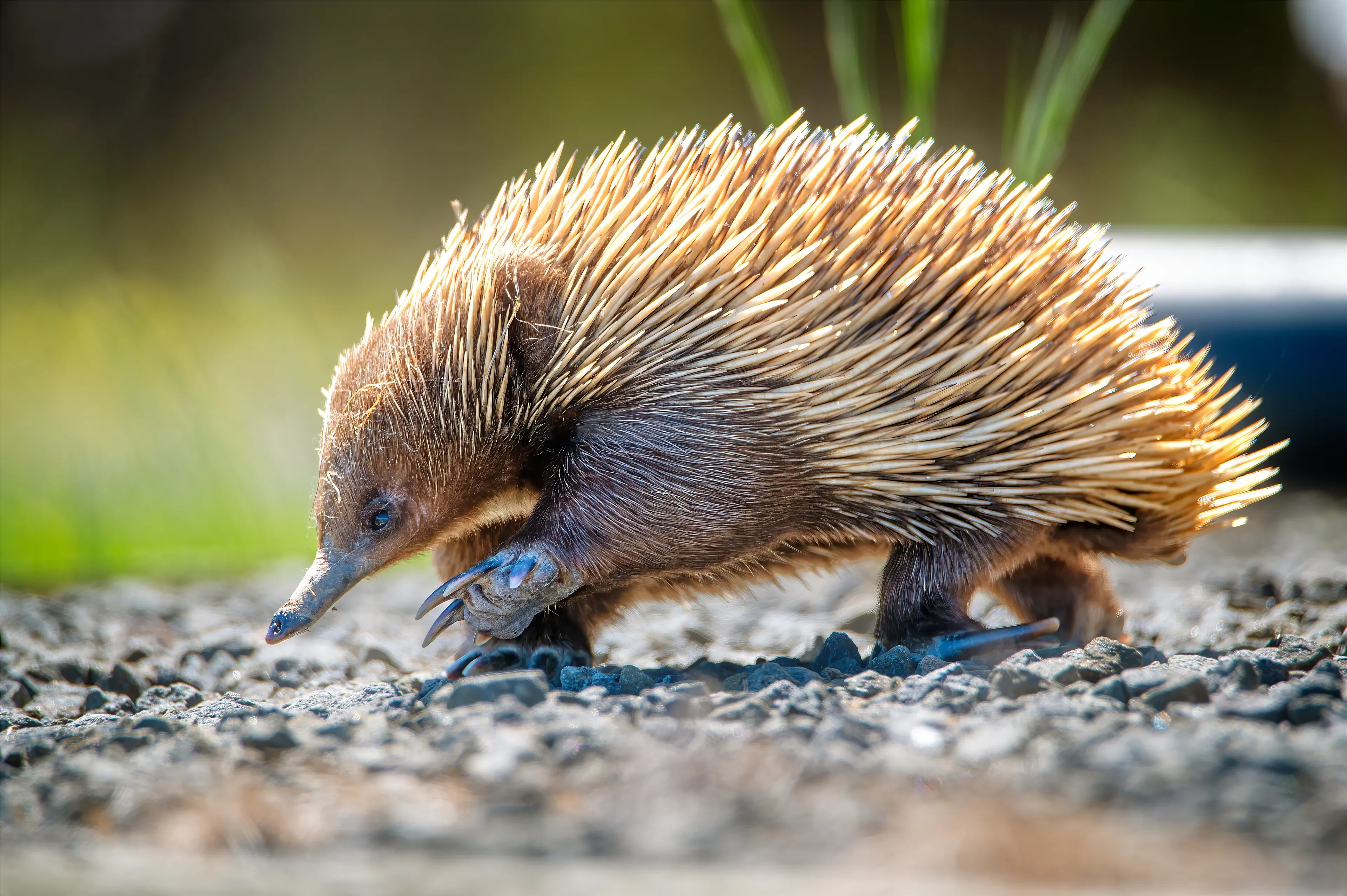 Real photograph
 Why we love them
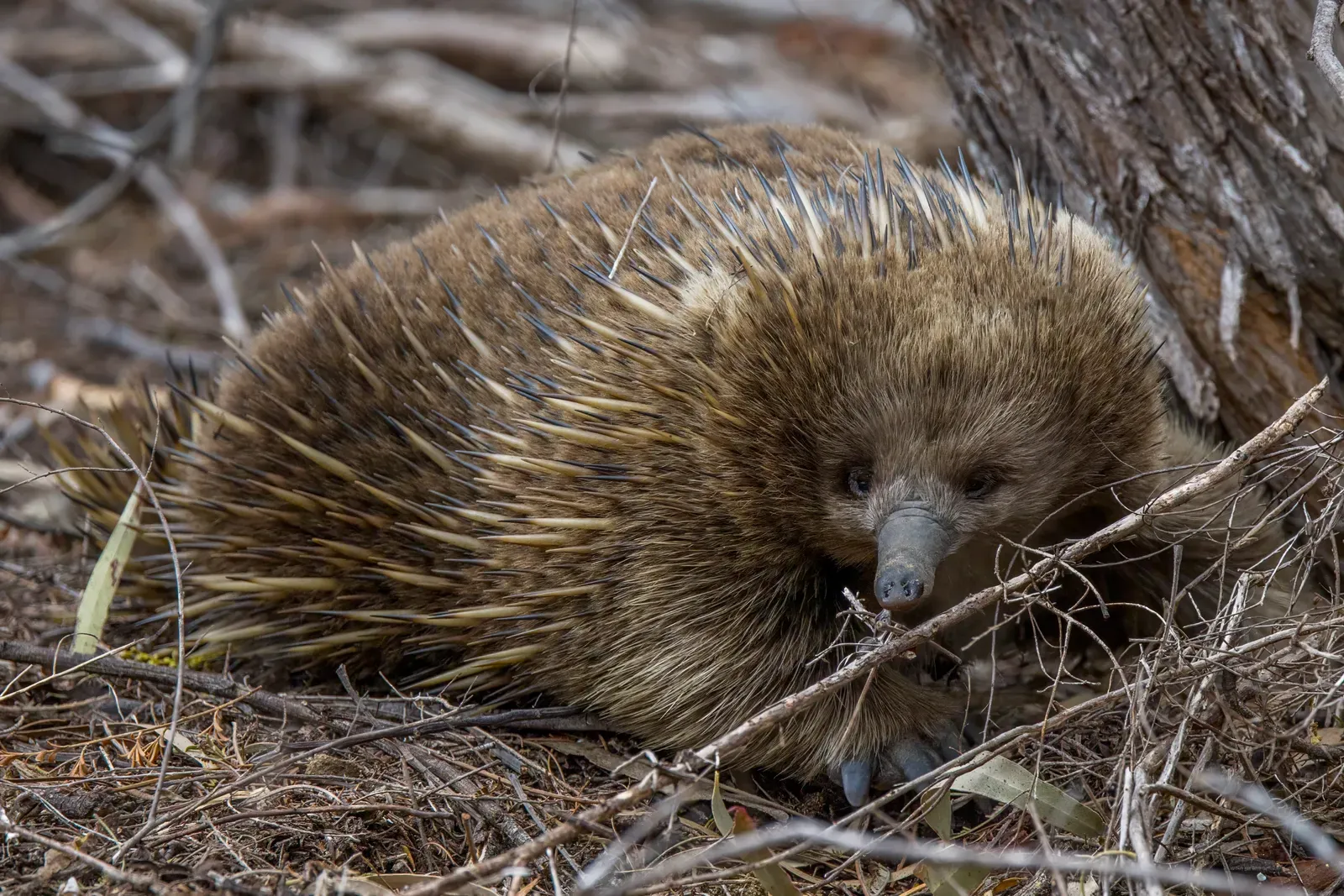
The short-beaked echidna is a small, round animal covered in sharp spines, a bit like a hedgehog or a little walking pincushion. It lives across Australia and in New Guinea, and you can find it in forests, grasslands, and even dry deserts. It shuffles along the ground with a funny waddle, sniffing for its next meal.
The echidna is a monotreme, which means it is a very rare kind of mammal that lays eggs. A mother echidna lays one soft, leathery egg about the size of a grape and tucks it into a cosy pouch on her belly. When the tiny baby hatches, it is called a puggle, and it drinks its mother's milk to grow big and strong.
An echidna loves to eat ants and termites. It has a long snout and an even longer sticky tongue that darts in and out super fast to catch its dinner. Echidnas do not have teeth, so they mash up their food between hard pads inside their mouth. Their strong claws are perfect for digging open an ant nest.
Those spines are the echidna's clever way of staying safe. If something startles it, the echidna can tuck in its legs and curl into a prickly ball, or dig straight down into the ground so only its spikes are showing. Most animals decide a spiky echidna is far too tricky to bother.
Short-beaked echidnas are found in lots of places and are doing well in the wild. They are quiet, gentle diggers who help the soil by turning it over as they search for food. The main thing that worries them is busy roads, so people watch out for echidnas crossing and give these spiky little travellers a safe path.
My home
Forest, woodland, grassland, desert
Where I live
Oceania
What I eat
Ants, termites, other small invertebrates
How long I am
0.3–0.4 m
How heavy I am
2–7 kg
How long I live
10–45 years
The short-beaked echidna is an egg-laying mammal, and the mother tucks her single soft egg into a little pouch on her tummy to keep it warm.
An echidna has a long, sticky tongue that it flicks in and out very fast to slurp up ants and termites.
Echidnas are covered in sharp spines, and when they feel worried they can curl into a prickly ball or quickly dig straight down into the soil.
Every short-beaked echidna can feel happy, scared and loved — just like you.
Looking after my friends
How many are there?
A female short-beaked echidna lays 1 soft-shelled egg into her pouch.
This is the number of eggs in one breeding attempt, not a population estimate.
Estimate source: Tachyglossus aculeatus (short-beaked echidna)
How are they doing?
Lower extinction riskThis species has a lower global extinction risk right now. Local populations can still grow or shrink.
You can help by learning their names, keeping wild places clean, and telling someone why this animal matters.
Where this came from
- Tachyglossus aculeatus (Short-beaked Echidna) — Red List Assessment — IUCN Red List of Threatened Species
- Tachyglossus aculeatus (short-beaked echidna) — Animal Diversity Web, University of Michigan Museum of Zoology
- Short-beaked echidna — Wikipedia (English)