 ← All animals
 bird · Ara macao
Scarlet macaw
Gallery
2 photos Real photograph 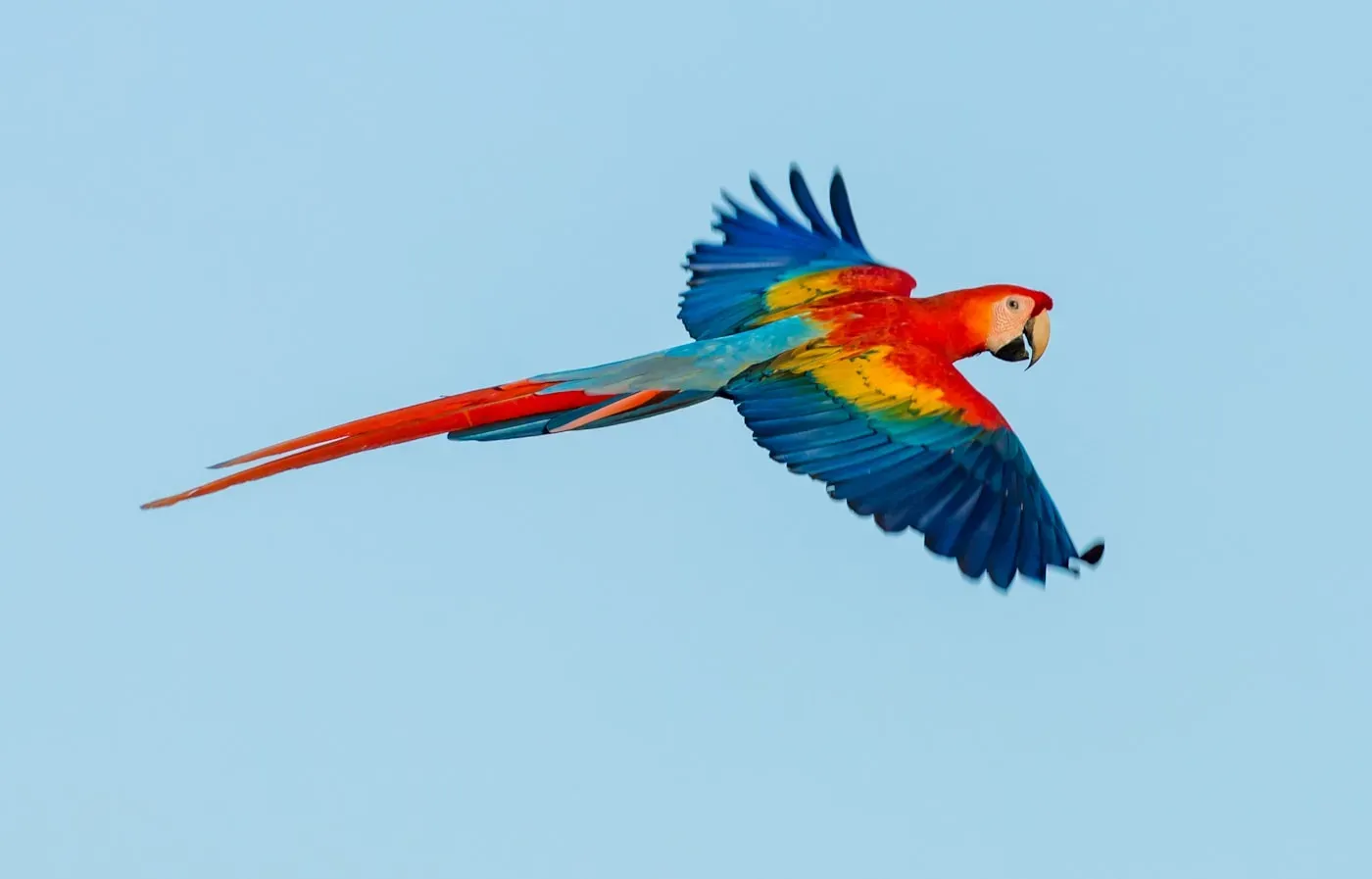 Real photograph
 Why we love them
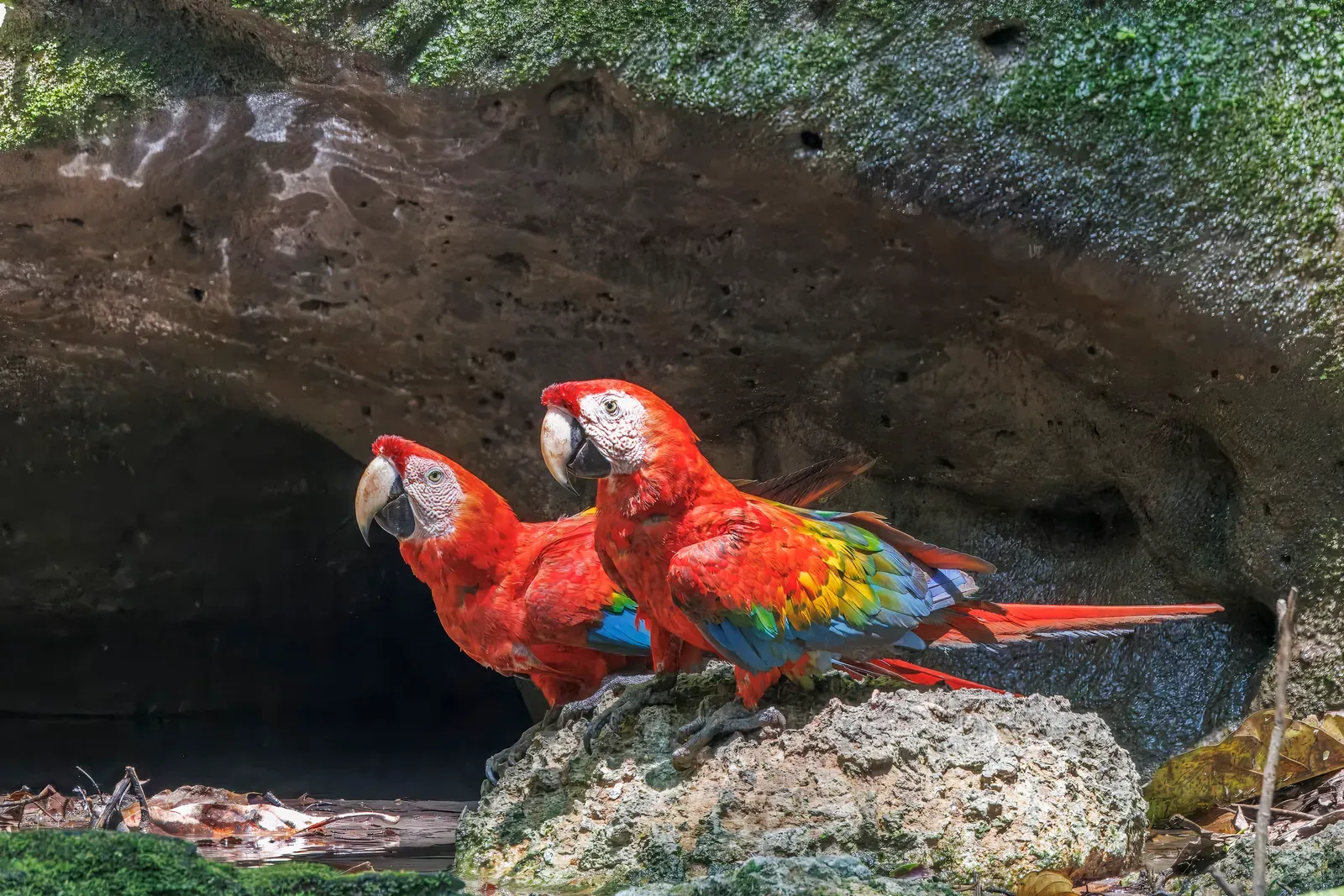
The scarlet macaw is one of the most colourful birds in the world. Its feathers are bright red, with patches of sunny yellow and deep blue on the wings, and it has a long, pointed tail. A grown scarlet macaw is about 84 centimetres long from its head to the tip of its tail, and more than half of that is the tail itself.
Scarlet macaws live in the warm, green rainforests and woodlands of Central and South America, from the great Amazon jungle all the way north into Mexico. They like tall trees near rivers and open spaces, and in some places they gather at special riverbanks to nibble clay, which helps their tummies.
These parrots are very social and like to be together. They fly through the forest in pairs, family groups, or flocks of ten to thirty birds, calling to one another with loud squawks. They wake up before dawn, preen their feathers, and then travel to find food, sometimes flying a long way to reach trees full of ripe fruit.
Scarlet macaws eat fruits, nuts, seeds, flowers, and nectar. Their big, hooked beaks are strong enough to crack open hard nuts and tough seeds, working like a built-in nutcracker. Two macaws often stay close as a pair, sharing food and sitting side by side.
There are still many scarlet macaws living across the huge forests of South America, so scientists say the whole species is doing all right for now. Even so, these birds can lose their homes when forests are cut down, and some are caught to be sold as pets. Protecting big patches of rainforest helps keep wild macaws safe and free.
My home
Rainforest, woodland, savanna, river edges
Where I live
North America, South America
What I eat
Fruits, nuts, seeds, flowers, nectar
How long I am
0.84–0.89 m
How heavy I am
1–1 kg
The scarlet macaw is a big, bright parrot painted red, yellow, and blue, with a very long pointed tail that makes up more than half its length.
Macaws like to stay together, flying and feeding in pairs, family groups, or noisy flocks of ten to thirty birds.
A macaw's strong, curved beak works like a nutcracker to crack open hard nuts and seeds that other birds cannot open.
Every scarlet macaw can feel happy, scared and loved — just like you.
Looking after my friends
How many are there?
Between 50,000 and 499,999 mature scarlet macaws were estimated worldwide in 2021.
The assessment gives a broad range, showing that the global total is uncertain.
How are they doing?
Lower extinction riskThis species has a lower global extinction risk right now. Local populations can still grow or shrink.
You can help by learning their names, keeping wild places clean, and telling someone why this animal matters.
Where this came from
- Ara macao (Scarlet Macaw) — Red List Assessment — IUCN Red List of Threatened Species
- Scarlet macaw — Wikipedia
- Macaw — San Diego Zoo Wildlife Alliance