 ← All animals
 bird · Archilochus colubris
Ruby-throated Hummingbird
Gallery
5 photos Real photograph 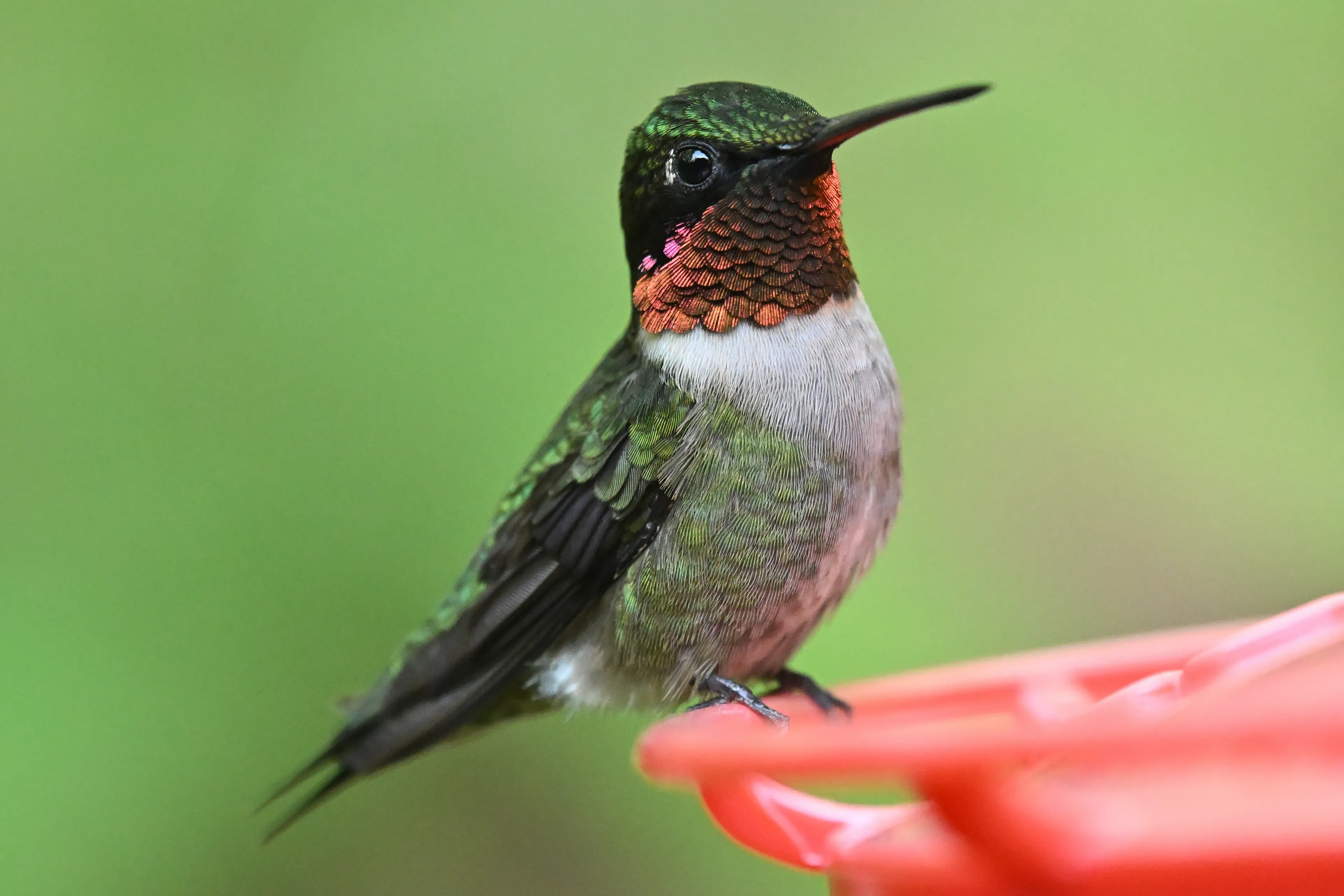 Real photograph
  Real photograph
  Real photograph
  Real photograph
 Why we love them
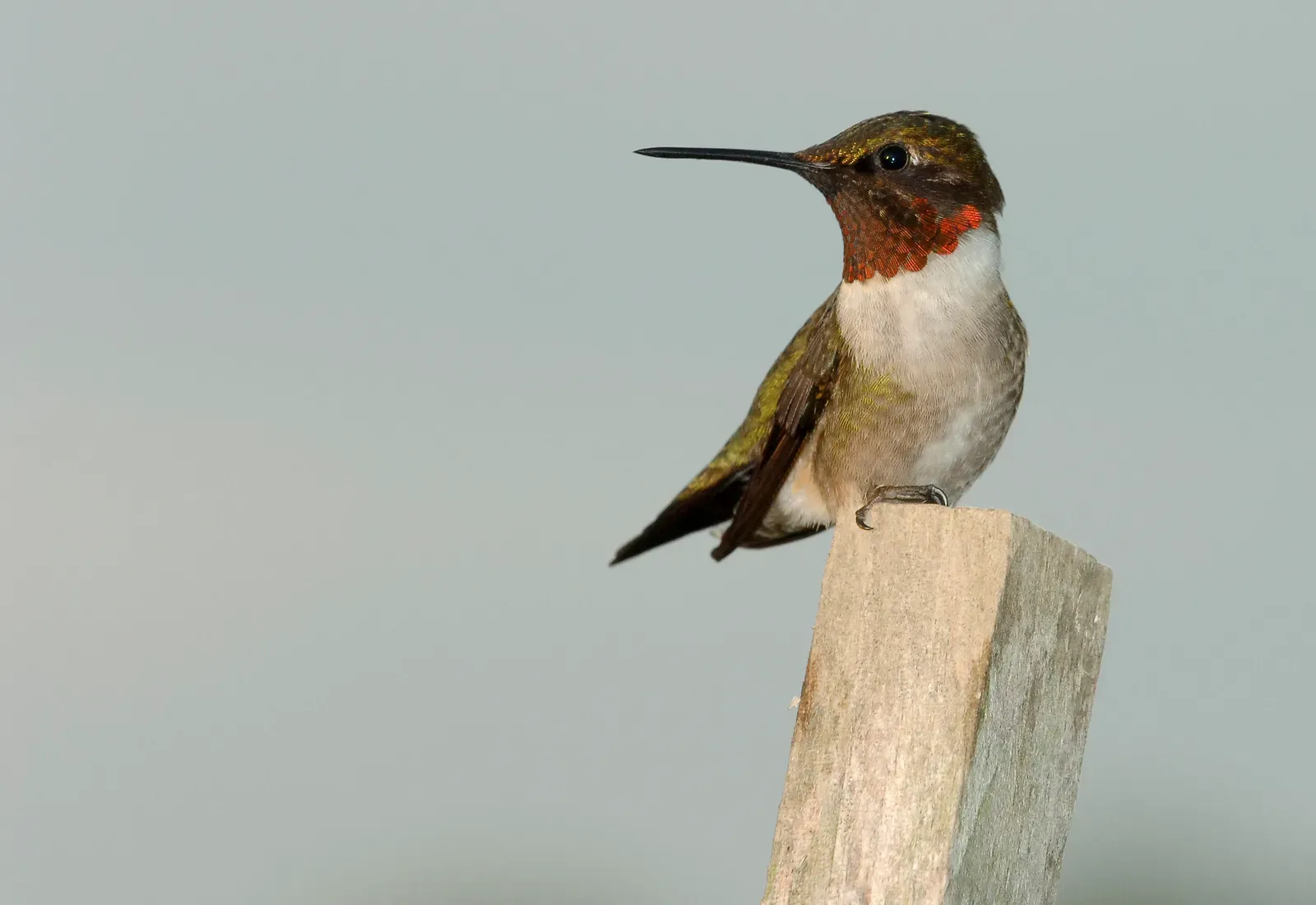
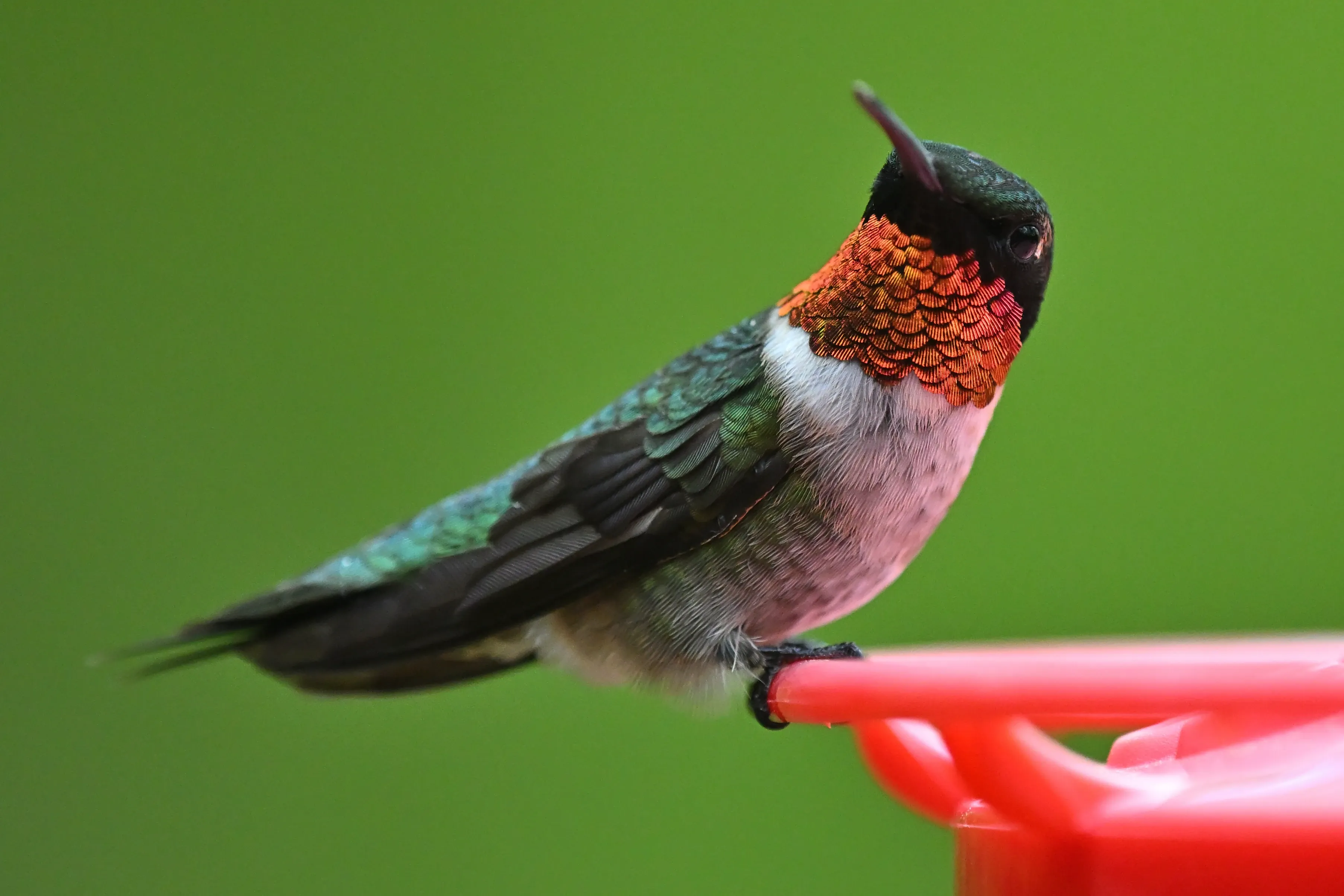
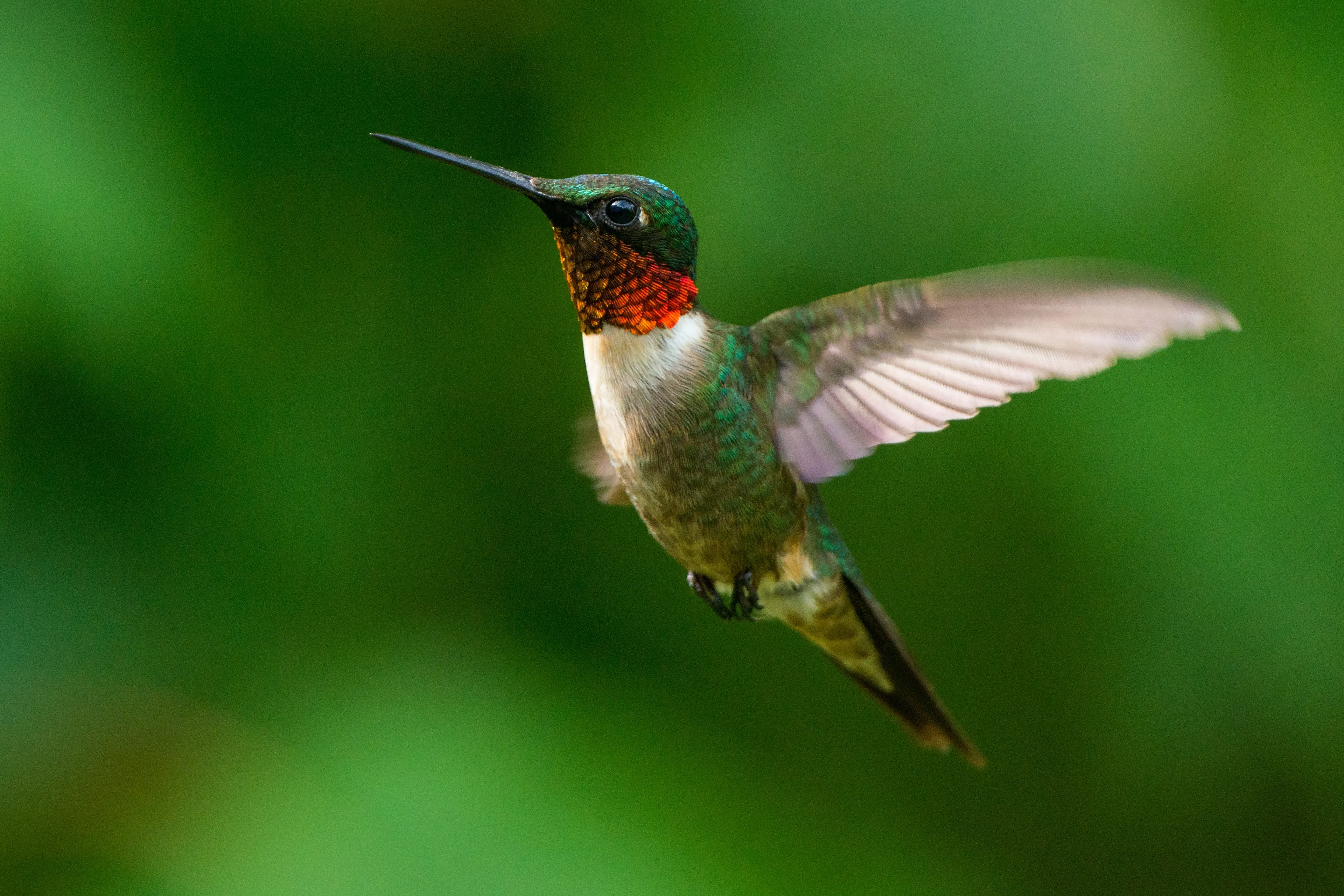
The ruby-throated hummingbird is a tiny, jewel-bright bird that lives in gardens, forests, and orchards across the eastern side of North America. It is metallic green on top and pale underneath, and the grown-up male has a shining ruby-red throat that flashes in the sunlight.
The most amazing thing about a hummingbird is the way it flies. It beats its wings so fast, around fifty times a second, that they look like a blur and make a gentle humming sound. This lets the bird hover in one spot in the air, and it can even fly backwards, which almost no other bird can do.
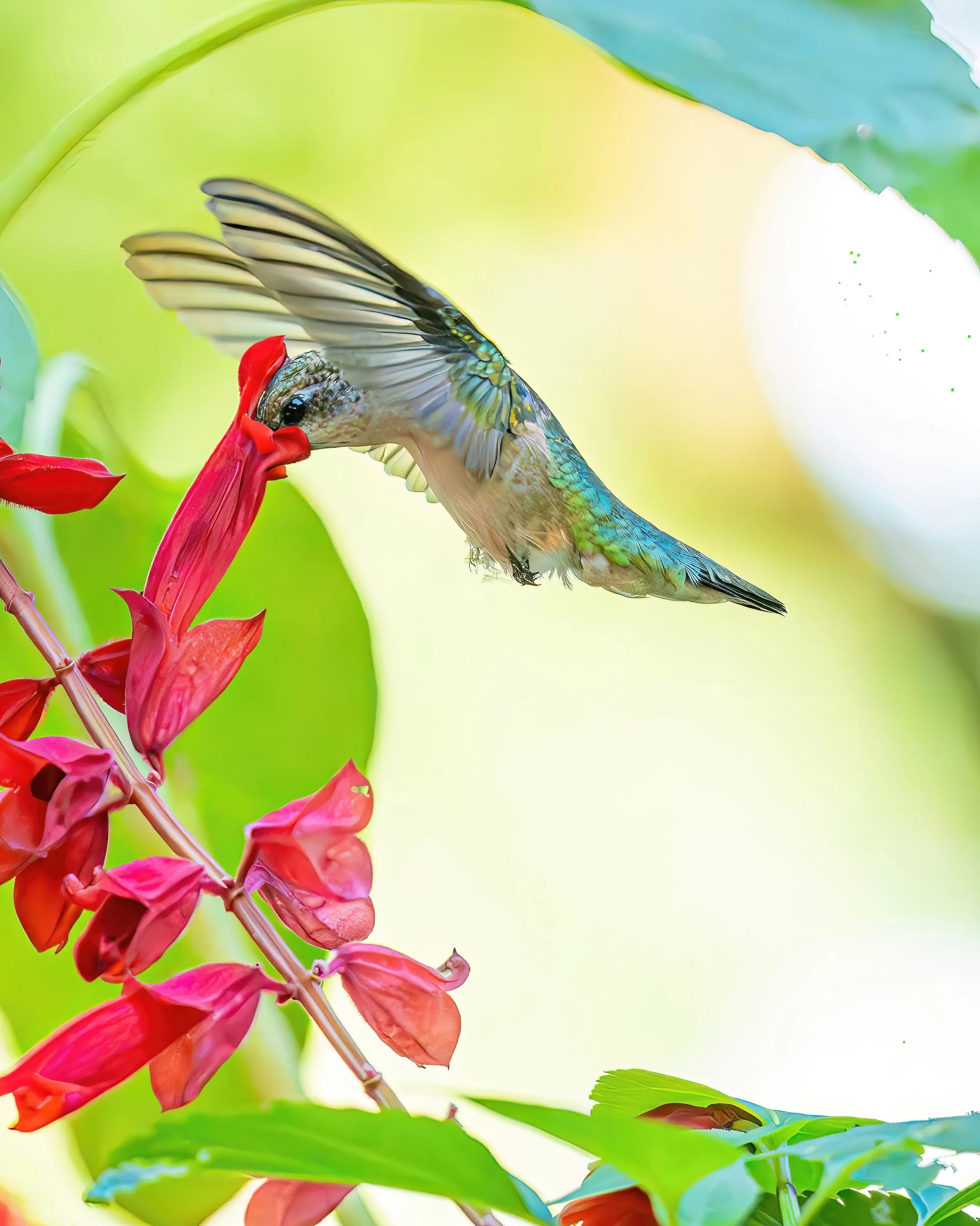
Hummingbirds love to drink nectar, the sweet juice inside flowers. They hover in front of a bloom and sip the nectar with their long, thin tongue. They especially like red, orange, and pink tube-shaped flowers. They also snap up tiny insects and spiders, which give them the protein they need to stay strong.
Because their bodies work so hard and so fast, hummingbirds need to eat very often, visiting hundreds of flowers every day. They are also brave and busy, often chasing other hummingbirds away from a favourite patch of flowers or a garden feeder.
When the weather turns cold, ruby-throated hummingbirds travel a very long way to spend the winter somewhere warm, in Mexico and Central America. Some of them fly all the way across the Gulf of Mexico without stopping, an incredible journey for a bird so small. There are many millions of them, and they are one of the most common hummingbirds in North America.
My home
Forest, forest edge, garden, orchard
Where I live
North America
What I eat
Flower nectar, small insects, spiders, tree sap
How long I am
0.07–0.09 m
How heavy I am
0.002–0.006 kg
How long I live
9 years
A ruby-throated hummingbird can beat its wings around 50 times every single second, so fast that they turn into a soft blur and make a humming sound.
It is one of the tiniest birds in the world, weighing only about as much as a small coin, roughly three to four grams.
Every autumn many of these little birds fly non-stop across the Gulf of Mexico, an amazing journey of about 800 kilometres over open water.
Every ruby-throated hummingbird can feel happy, scared and loved — just like you.
Looking after my friends
How many are there?
Between 34 million and 36 million ruby-throated hummingbirds were estimated worldwide in 2021.
This is a rounded global estimate, not an exact count.
How are they doing?
Lower extinction riskThis species has a lower global extinction risk right now. Local populations can still grow or shrink.
You can help by learning their names, keeping wild places clean, and telling someone why this animal matters.
Where this came from
- Archilochus colubris (Ruby-throated Hummingbird) — Red List Assessment — IUCN Red List of Threatened Species
- Archilochus colubris (ruby-throated hummingbird) — Animal Diversity Web, University of Michigan Museum of Zoology
- Ruby-throated hummingbird — Wikipedia (Wikimedia Foundation)