 ← All animals
 fish · Oncorhynchus mykiss
Rainbow Trout
Gallery
4 photos Real photograph 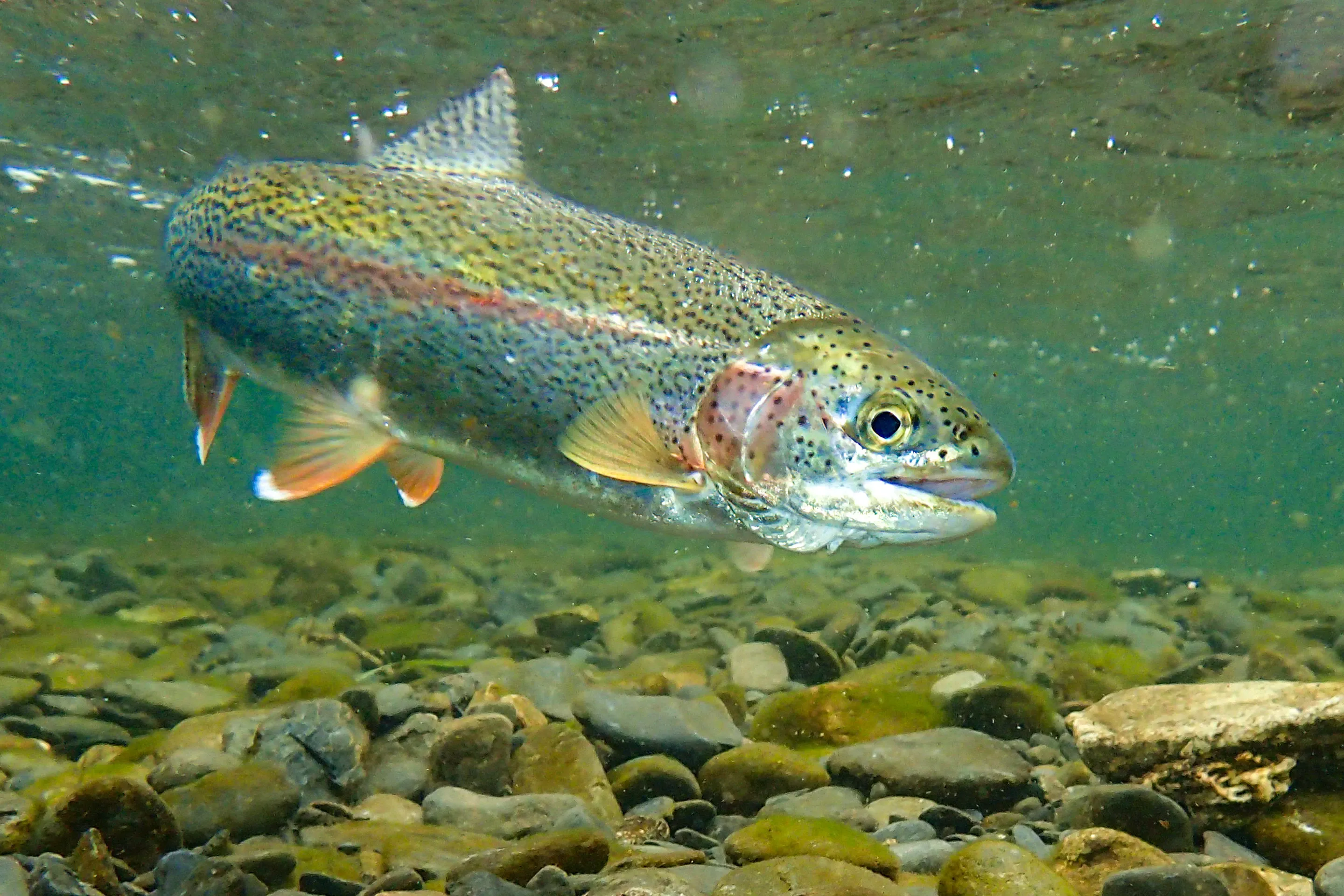 Real photograph
  Real photograph
  Real photograph
 Why we love them
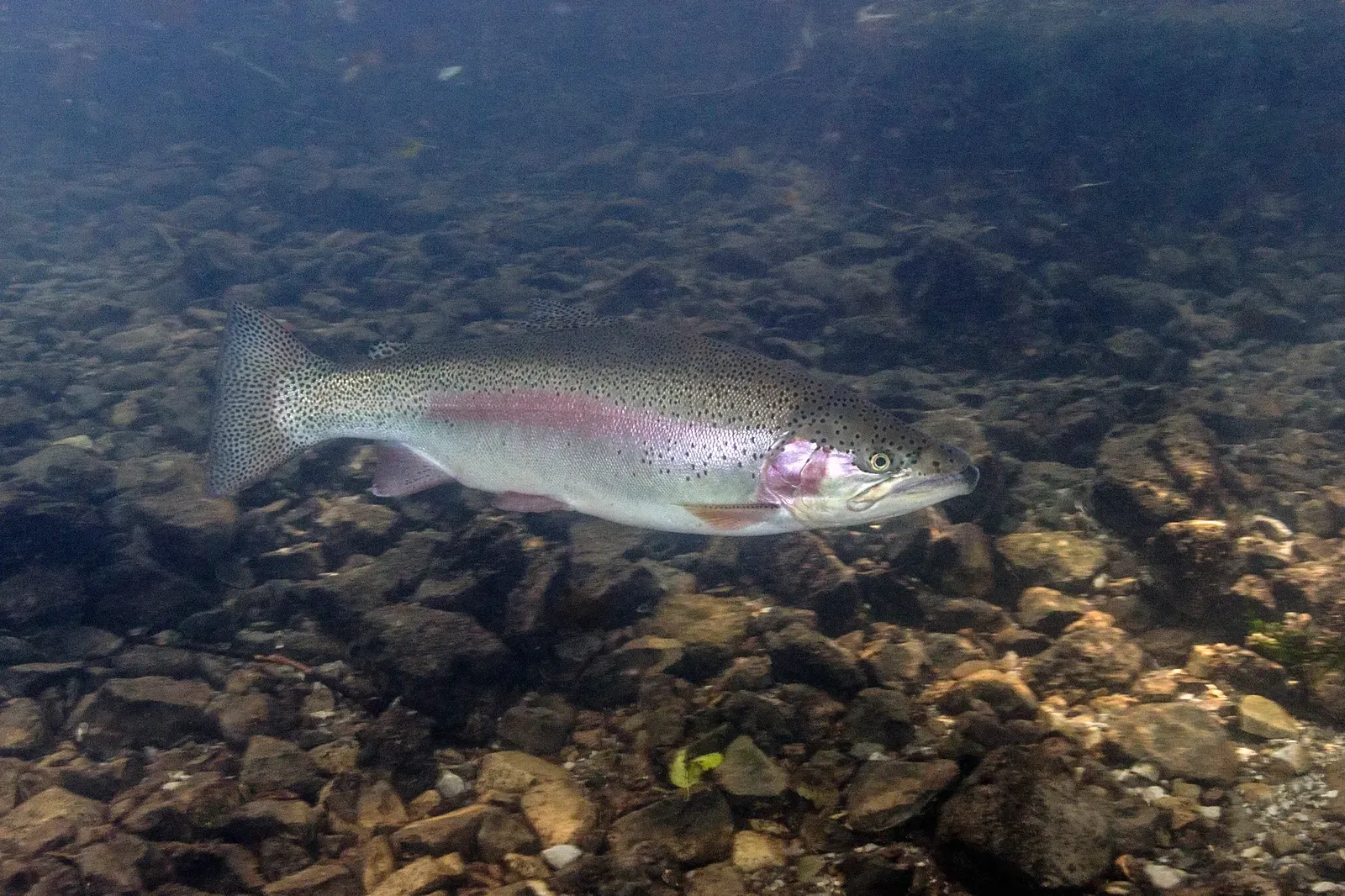
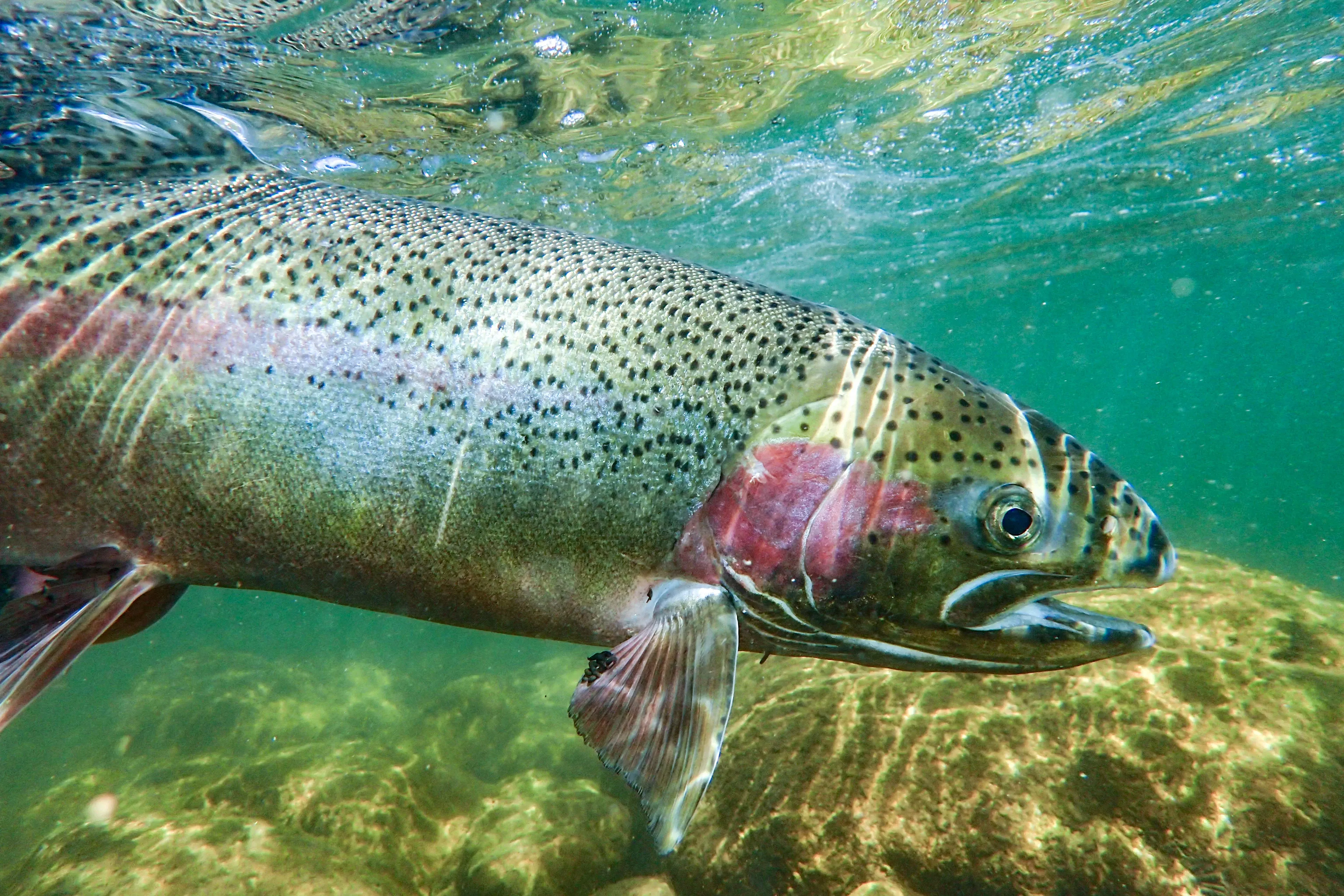
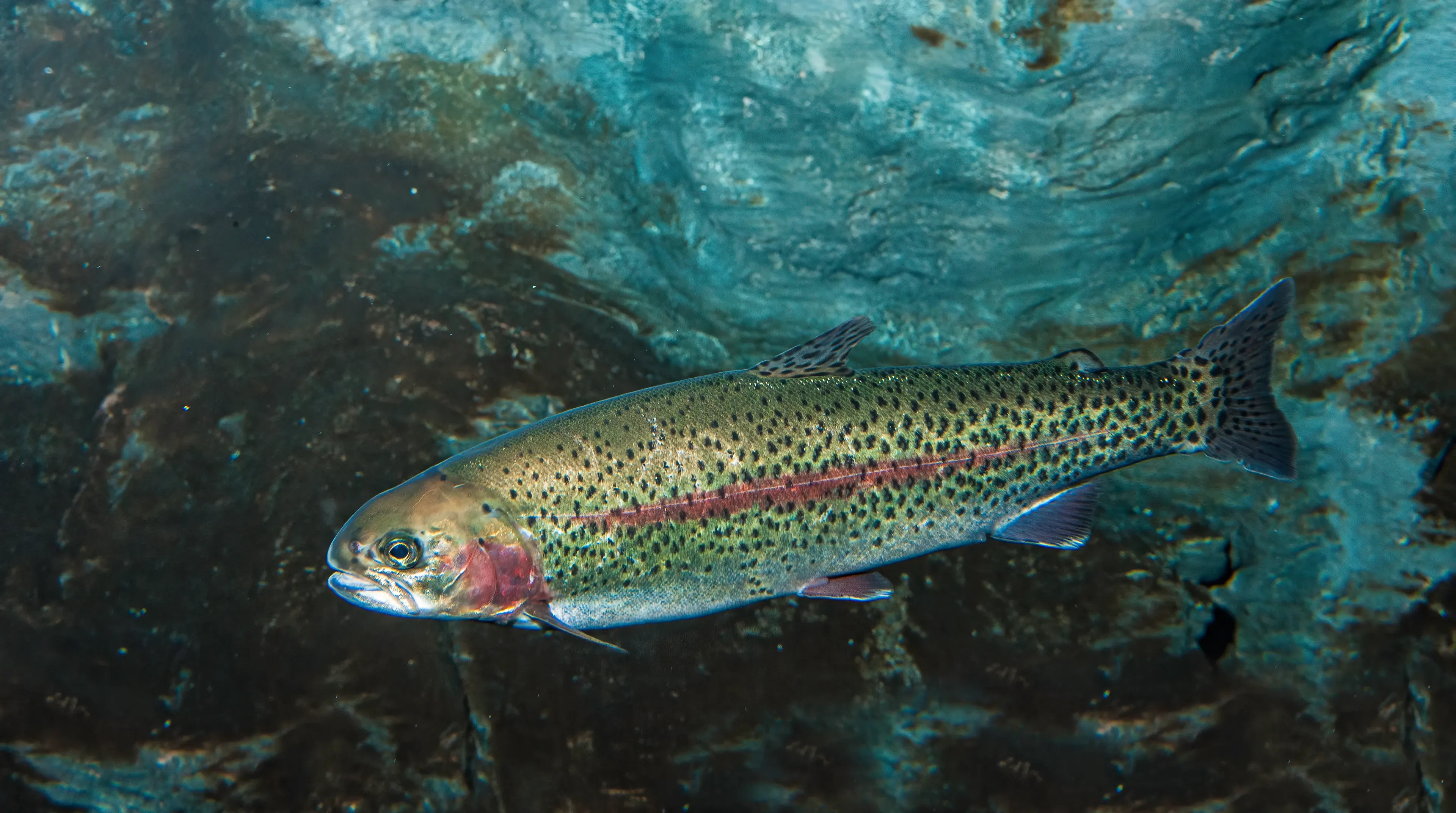
The rainbow trout is a sleek, speckled fish that shimmers in cool, clear water. Its back is a soft blue-green or olive, covered in tiny black spots, and along each side runs a wide band of pink and red. That colourful stripe is how the fish got its cheerful name — it looks a little like a rainbow gliding through the river.
Rainbow trout are quick, curious hunters. They eat almost anything they can catch, from mayflies and caddisflies to little crayfish, shrimp, and fish eggs. Young trout often wait in the middle of the water and grab tasty bits that drift past, which saves them the effort of searching along the bottom.
One kind of rainbow trout has an amazing adventure. Called the steelhead, it swims from its home river all the way out to the wide ocean. There it grows big and strong before travelling back up the same rivers to lay its eggs, following the water like a map it has never forgotten.
These fish come from the cool Pacific waters that stretch from Russia, past Alaska, and down to Mexico. Because people love to watch and catch them, rainbow trout have been carried to rivers and lakes all over the world, and today they live on nearly every continent.
Rainbow trout are listed as Least Concern, which means there are still many of them swimming in the wild. They do best in clean, cold, well-cared-for water, so looking after rivers and lakes helps keep these bright, lively fish thriving for years to come.
My home
River, stream, lake
Where I live
North America, Pacific Ocean
What I eat
Aquatic insects, crustaceans, crayfish, fish eggs, small fish, algae
How heavy I am
0.5–9 kg
How long I live
11 years
The rainbow trout is named for the wide pink and reddish stripe that runs along each side of its body, like a little rainbow in the water.
Some rainbow trout, called steelhead, swim all the way out to the ocean and later travel back up rivers to lay their eggs.
Rainbow trout come from the cool Pacific waters between Russia and Mexico, but people have brought them to rivers and lakes all around the world.
Every rainbow trout can feel happy, scared and loved — just like you.
Looking after my friends
How many are there?
Fish farms produced about 848,051 tonnes of rainbow trout worldwide in 2018.
This is annual farmed production by weight, not the number or mass of living wild trout.
Estimate source: Rainbow Trout aquaculture profile
How are they doing?
Lower extinction riskThis species has a lower global extinction risk right now. Local populations can still grow or shrink.
You can help by learning their names, keeping wild places clean, and telling someone why this animal matters.
Where this came from
- Oncorhynchus mykiss (Rainbow Trout) — Red List Assessment — IUCN Red List of Threatened Species
- Oncorhynchus mykiss (Coast rainbow trout) — Animal Diversity Web, University of Michigan Museum of Zoology
- Rainbow trout — Wikipedia
- Rainbow Trout aquaculture profile — Seafish