 ← All animals
 bird · Trichoglossus moluccanus
Rainbow lorikeet
Gallery
2 photos Real photograph 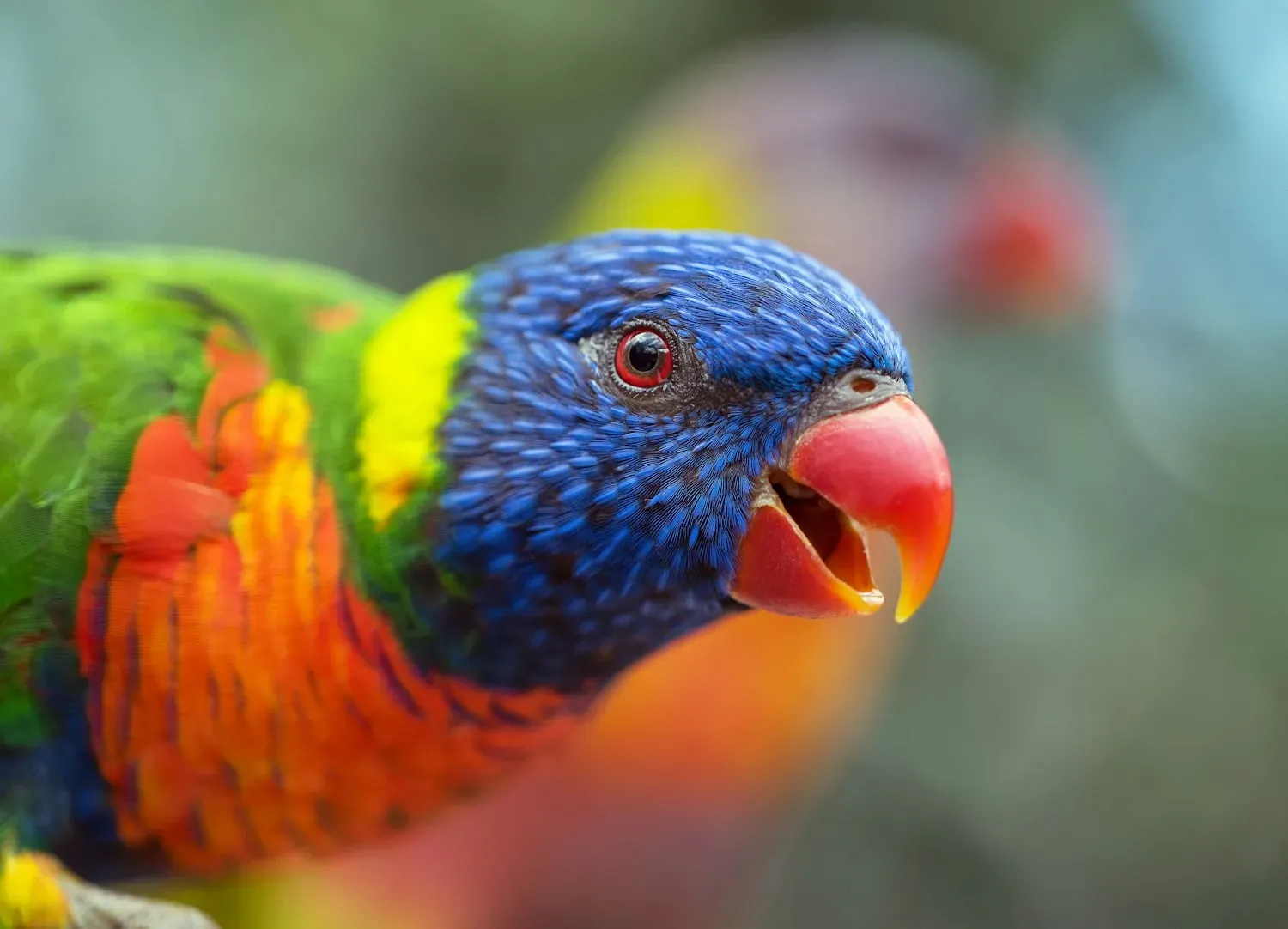 Real photograph
 Why we love them
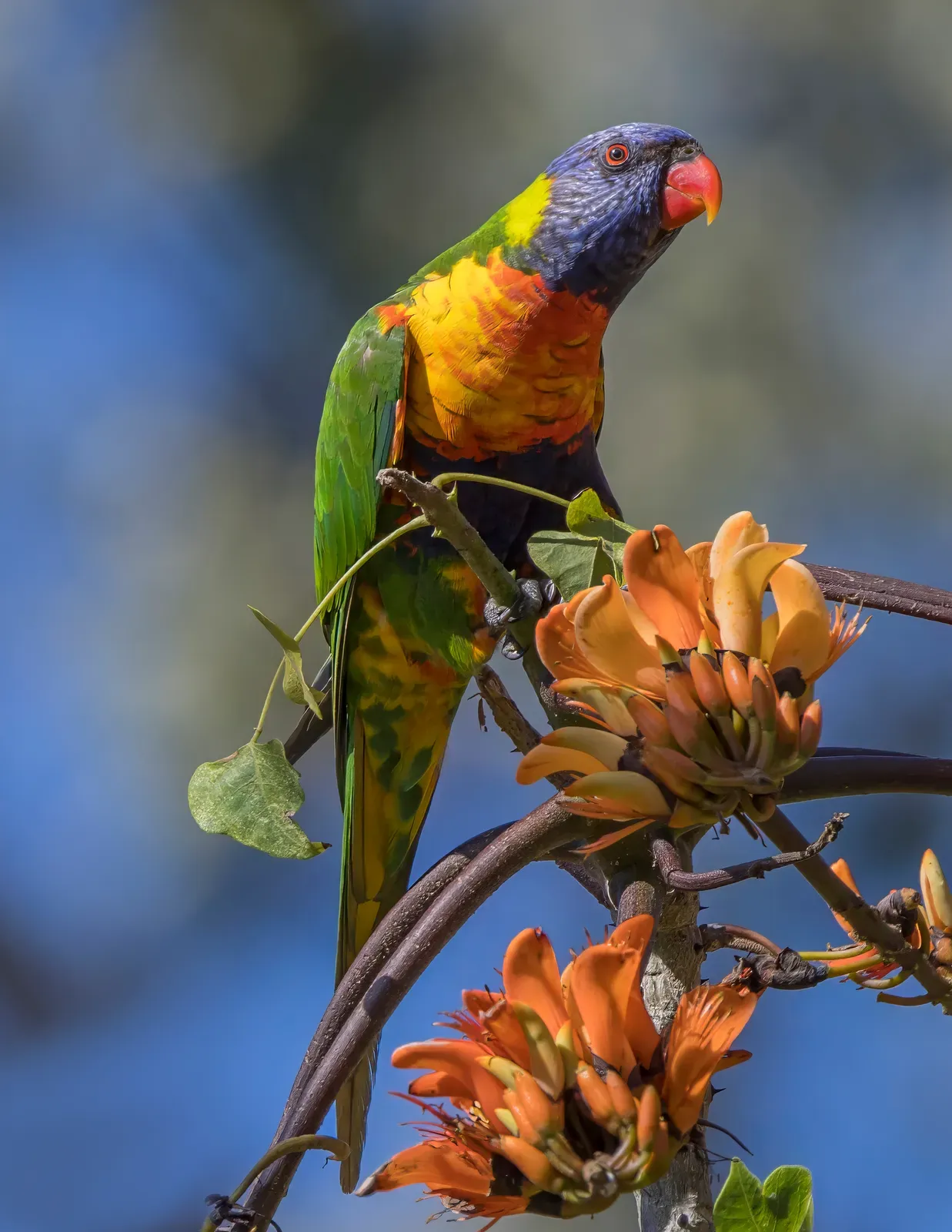
The rainbow lorikeet is a small, dazzling parrot from Australia, and it looks just like its name. It has a blue head and belly, green wings, back, and tail, and a bright orange-and-yellow chest, all topped off with a cheerful red beak. Both males and females wear the same bright colours.
Rainbow lorikeets live along the eastern side of Australia, from the warm north all the way down the coast. You can find them in rainforests, in leafy woodlands, in bushy areas near the sea, and even in gardens and parks in the middle of busy towns.
These little parrots have an unusual favourite food. Instead of cracking seeds, they drink sweet nectar and gather powdery pollen from flowers, using a tongue with a tiny brush on the tip to soak it up. They also enjoy fruit, some seeds, and the occasional insect.
Rainbow lorikeets are lively and loud. They flash through the trees in fast-moving flocks, screeching and chattering to one another, and at dusk they gather in big groups to sleep together in the same trees. When it is time to nest, a pair finds a hollow high in a gum tree and lays its eggs on soft, chewed wood inside.
Rainbow lorikeets are doing well in the wild. They have happily settled into towns and suburbs alongside people, feeding on garden flowers and fruiting trees, so today there are plenty of these colourful parrots brightening up the Australian sky.
My home
Rainforest, woodland, coastal bush, urban parks
Where I live
Oceania
What I eat
Nectar, pollen, fruit, seeds, insects
How long I am
0.28–0.32 m
The rainbow lorikeet is a small parrot that wears almost every colour at once, with a blue head, a green back, and a bright orange chest.
Instead of eating seeds like many parrots, it laps up sweet flower nectar with a special brush-tipped tongue.
Rainbow lorikeets zoom around in noisy, chattering flocks and gather in big groups to roost together at dusk.
Every rainbow lorikeet can feel happy, scared and loved — just like you.
Looking after my friends
How many are there?
By 1999, an introduced New Zealand population had grown to about 150–200 rainbow lorikeets.
This is a historical introduced population, not the much larger Australian population.
Estimate source: Rainbow lorikeet
How are they doing?
Lower extinction riskThis species has a lower global extinction risk right now. Local populations can still grow or shrink.
You can help by learning their names, keeping wild places clean, and telling someone why this animal matters.
Where this came from
- Trichoglossus moluccanus (Rainbow lorikeet) — Red List category — IUCN Red List of Threatened Species
- Rainbow Lorikeet — Australian Museum
- Rainbow lorikeet — Wikipedia