 ← All animals
 mammal · Procyon lotor
Raccoon
Gallery
5 photos Real photograph 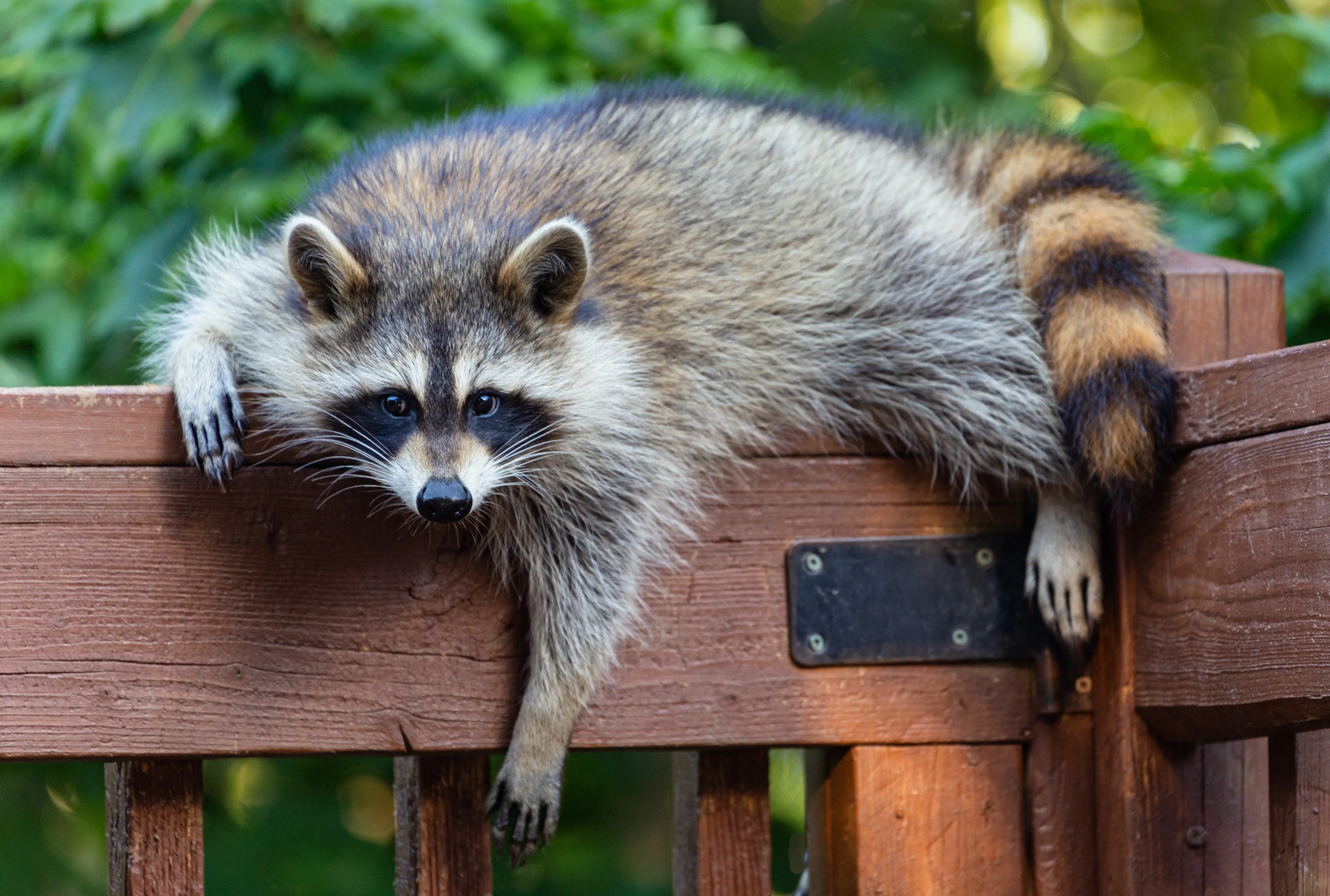 Real photograph
  Real photograph
  Real photograph
  Real photograph
 Why we love them
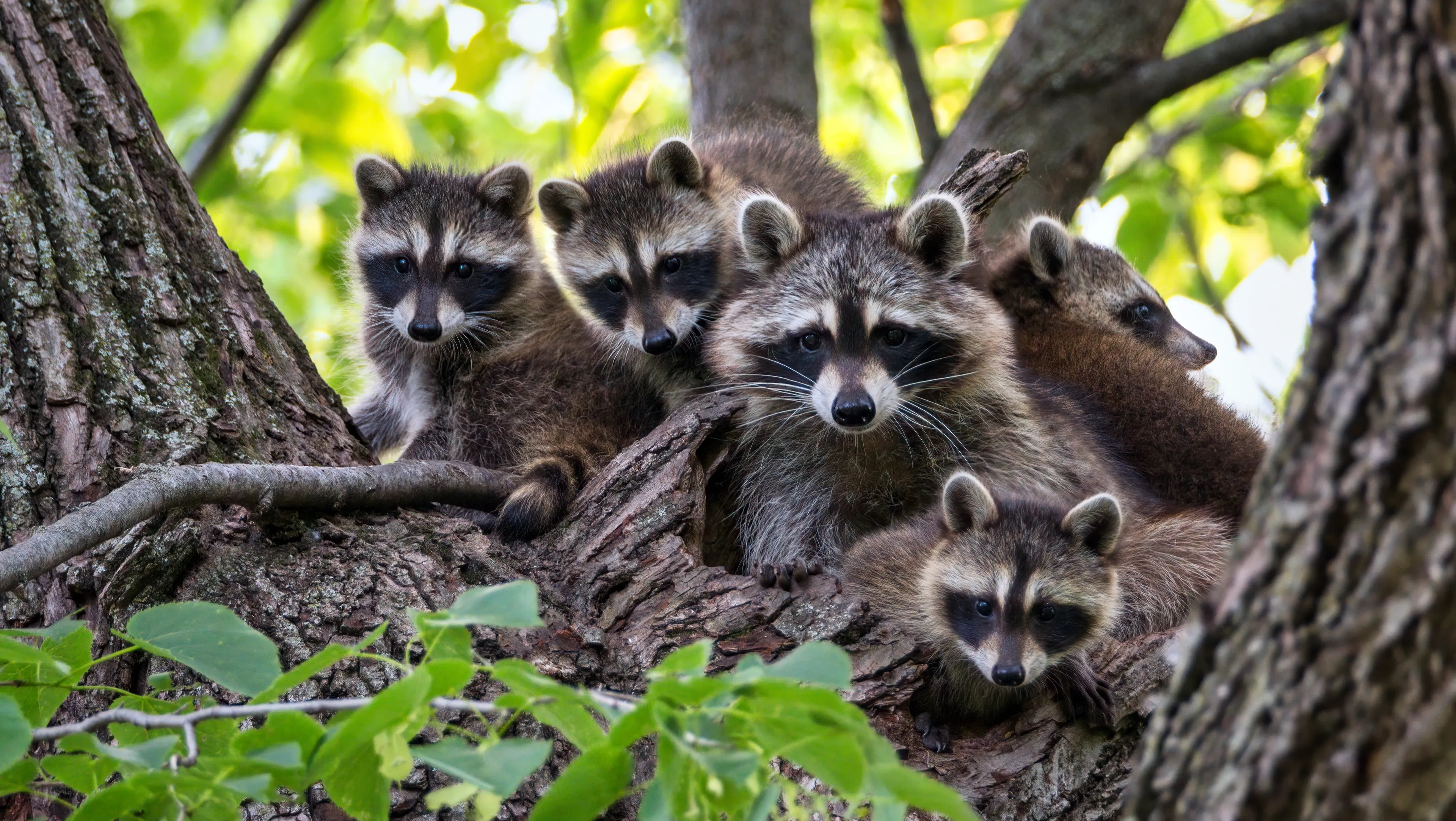
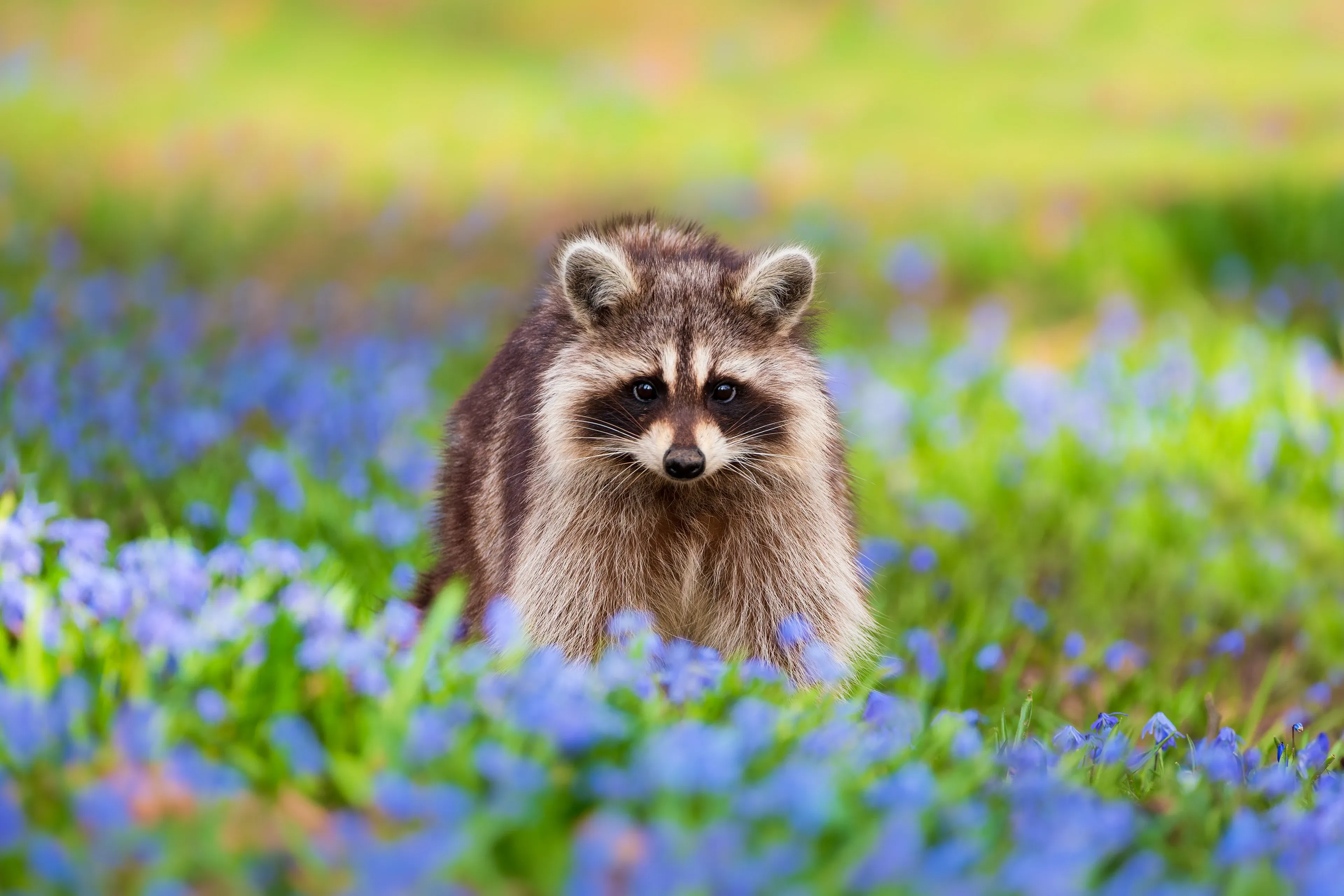
The raccoon is a furry, grey animal about the size of a small dog, best known for the black patch of fur across its eyes that looks just like a little mask. It also has a bushy tail with dark rings around it, which makes it easy to spot. Raccoons come from North America, and today they also live in parts of Europe and Asia.
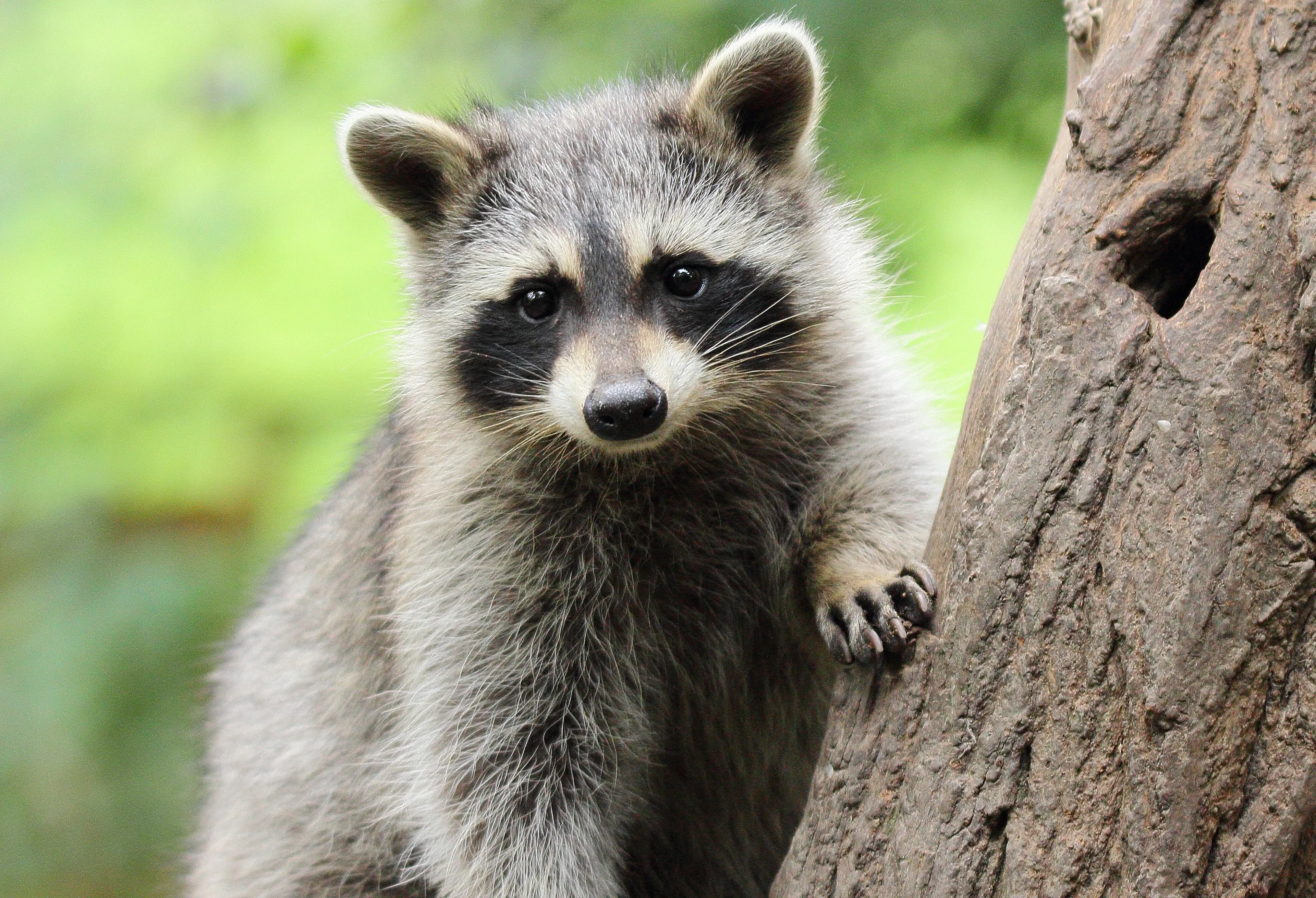
Raccoons have amazing front paws that work almost like tiny hands, with five long, bendy fingers. They use them to feel, grab, and turn things over, and they are so clever with their paws that they can open lids, untie knots, and pick up the smallest snacks.
One of the raccoon's most famous habits gives it its scientific name, which means "washer". Near water, a raccoon often dips its food in and rubs it between its paws before eating. Getting its paws wet helps the raccoon feel exactly what it is holding, so it can tell tasty food from bits it does not want.
Raccoons are omnivores, which means they eat all sorts of things. Out in the wild they munch fruit, nuts, insects, crayfish, and eggs. Raccoons are also very good at finding a meal near people, and they will happily snack on food they find in gardens and parks.
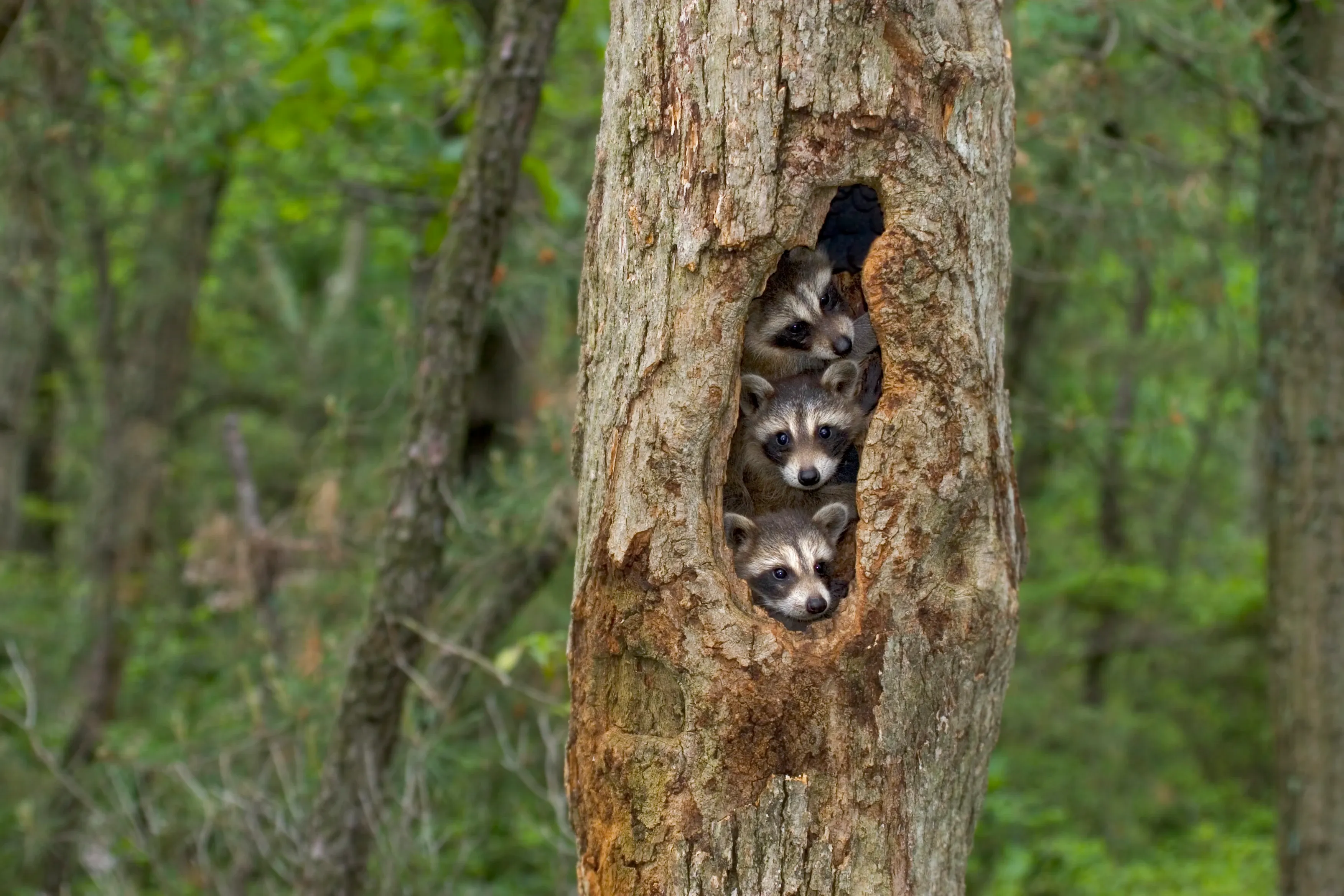
Baby raccoons are called kits. In spring, a mother raccoon has a litter of about four kits, and she keeps them warm and safe in a snug den, often high up in a hollow tree. The kits are born tiny and helpless, but they grow quickly and are soon following their mother out to explore at night.
Raccoons are mostly active after dark, and they are very good at making a home almost anywhere, from thick woods to busy towns and cities. Because they are so clever and adaptable, there are plenty of raccoons about, and their numbers have been growing.
My home
Woodland, wetland, riverbank, towns
Where I live
Asia, Europe, North America
What I eat
Fruit, nuts, insects, crayfish, eggs, small animals
How long I am
0.6–1.1 m
How heavy I am
1.8–10.4 kg
How long I live
2–20 years
Baby raccoons are called kits, and a mother usually has about four of them tucked up together in a cosy den in spring.
Raccoons have clever front paws that work almost like little hands, and they often dip their food in water and rub it before eating.
Raccoons are happy living near people in towns and cities, and their numbers have been growing.
Every raccoon can feel happy, scared and loved — just like you.
Looking after my friends
How many are there?
About 5–20 million raccoons are estimated to live in North America.
This broad secondary estimate is not a formal range-wide census, and raccoon density varies greatly between habitats.
Estimate source: What State Has the Most Raccoons and Why?
How are they doing?
Lower extinction riskThis species has a lower global extinction risk right now. Local populations can still grow or shrink.
You can help by learning their names, keeping wild places clean, and telling someone why this animal matters.
Where this came from
- Procyon lotor (Raccoon) — Red List Assessment — IUCN Red List of Threatened Species
- Procyon lotor (northern raccoon) — Animal Diversity Web, University of Michigan Museum of Zoology
- Raccoon (Procyon lotor) — Wikipedia
- What State Has the Most Raccoons and Why? — Biology Insights