 ← All animals
 other invertebrate · Physalia physalis
Portuguese man o' war
Gallery
5 photos Real photograph 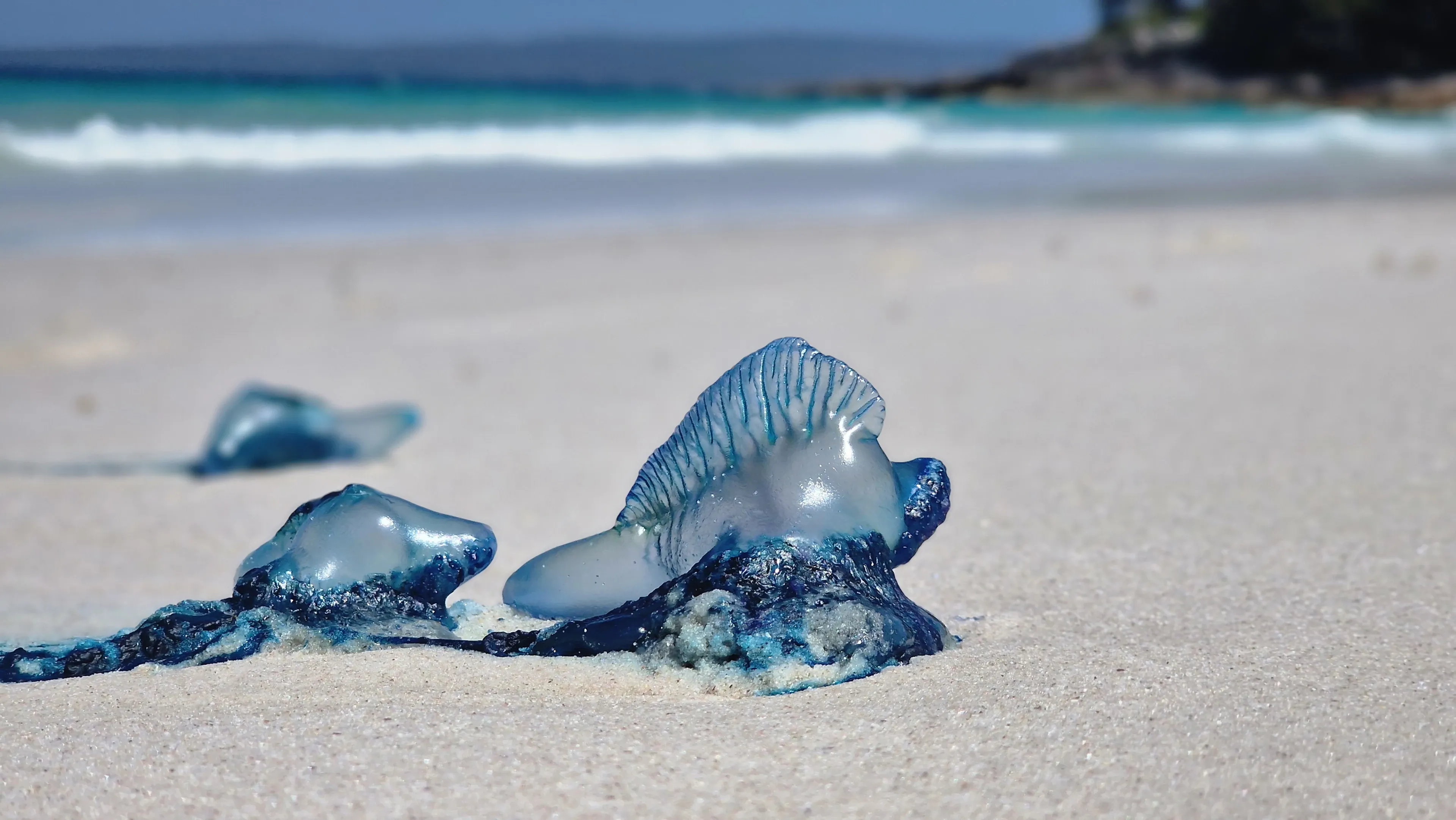 Real photograph
  Real photograph
  Real photograph
  Real photograph
 Why we love them
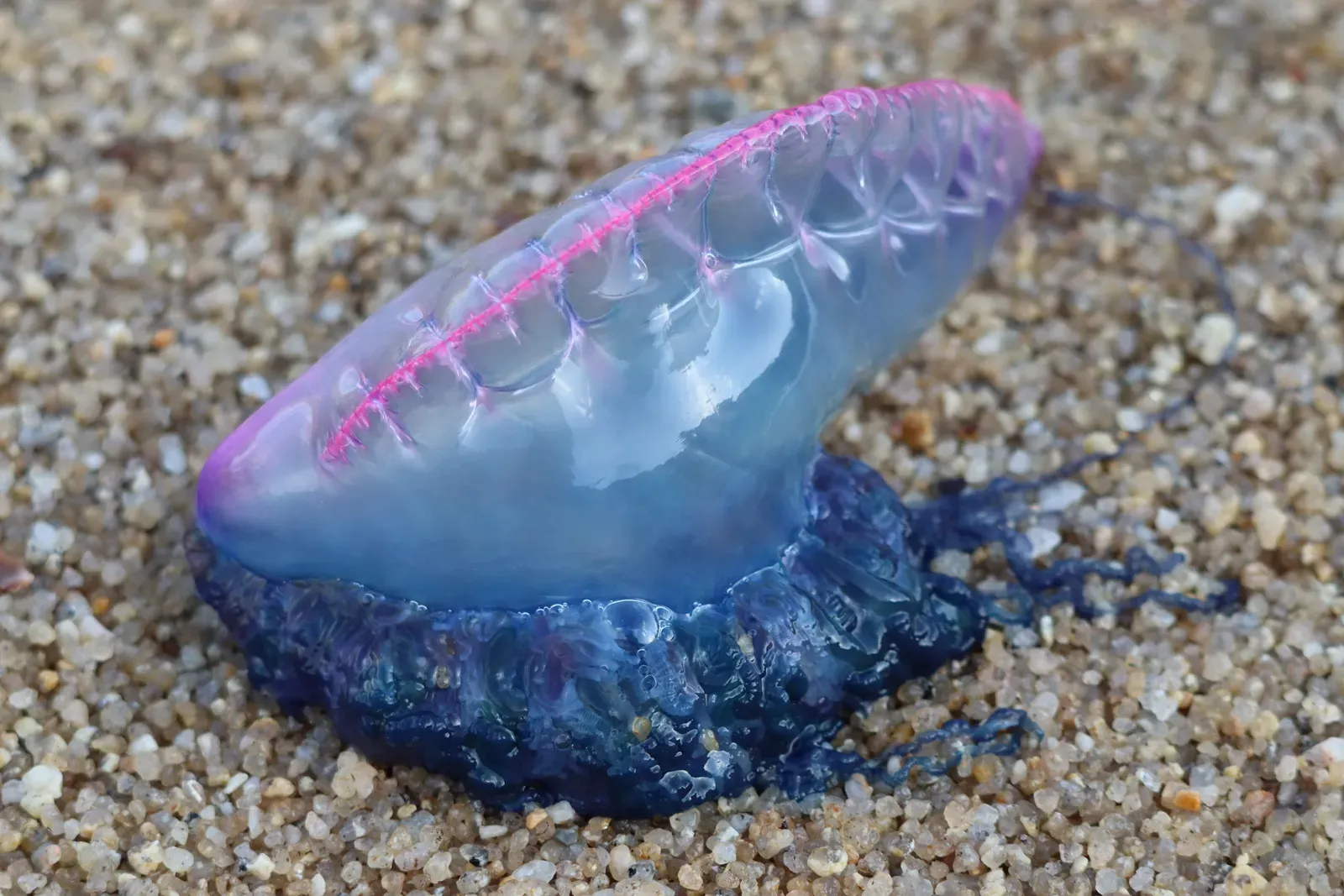
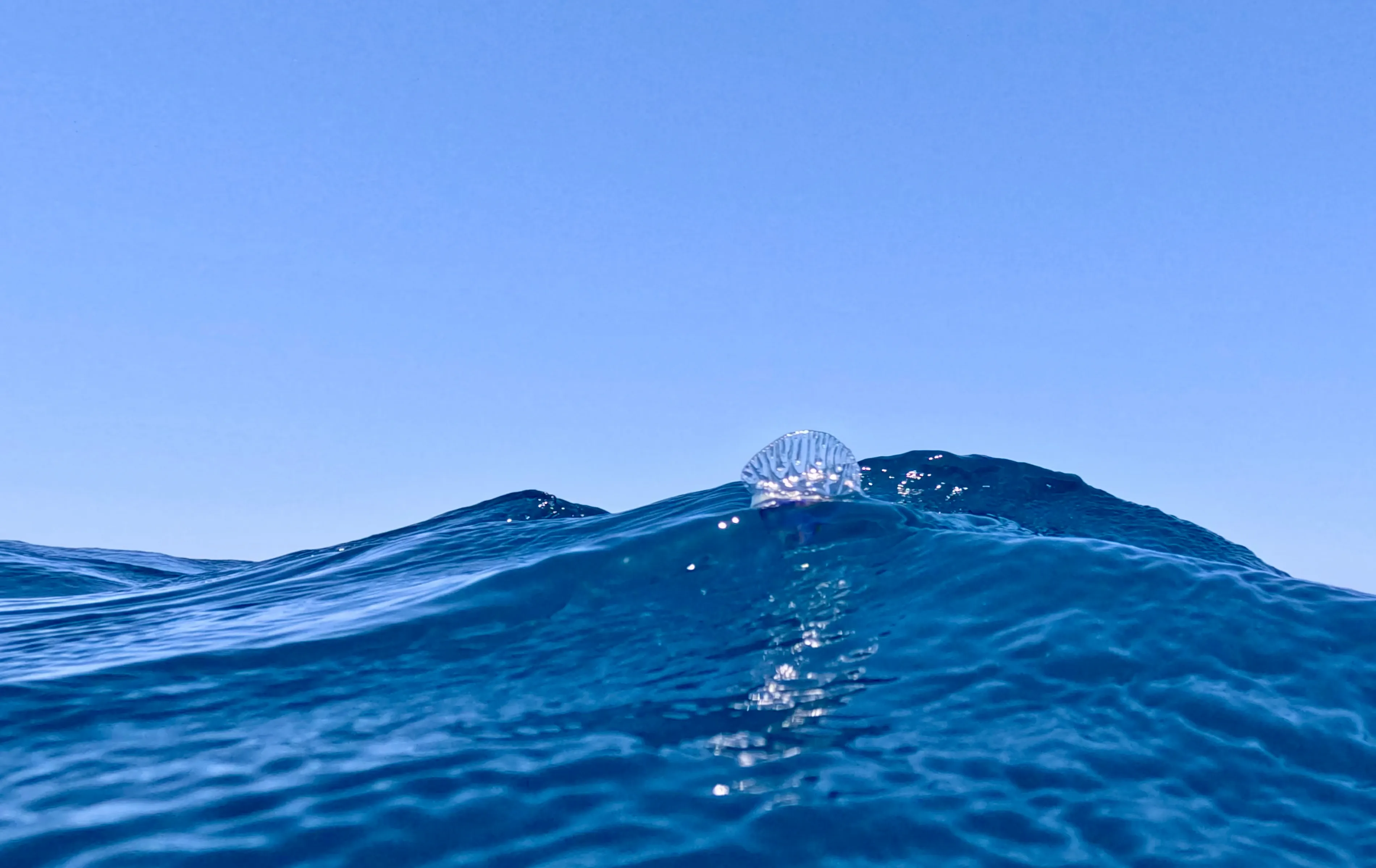
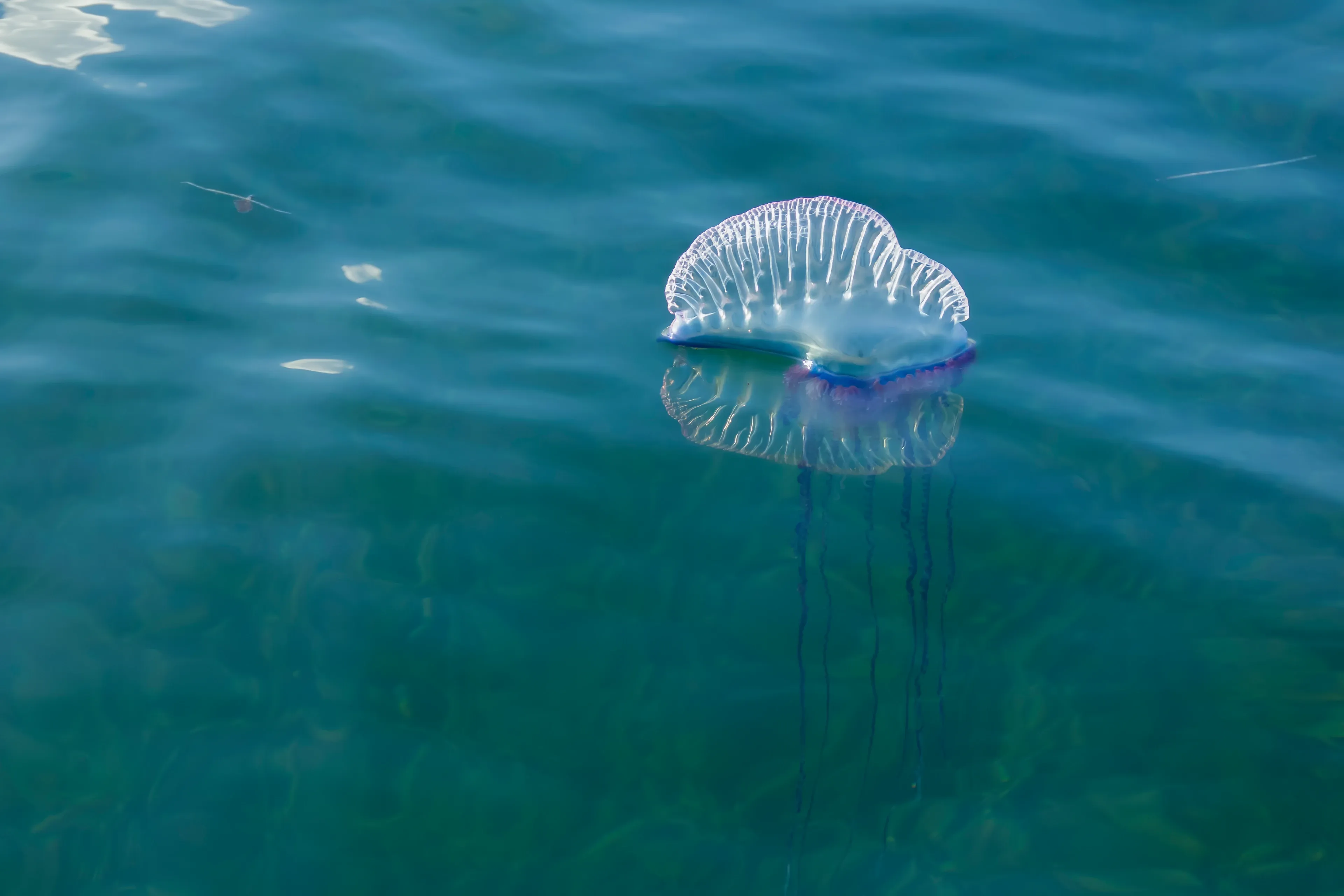
The Portuguese man o' war is one of the most beautiful sights in the sea. It floats along the top of the warm ocean with a shimmering blue and purple bubble poking above the water, trailing long, wispy threads beneath it. From far away it looks like a jellyfish, but it is really something even more surprising and special.
Here is the most amazing thing of all: a man o' war is not a single animal. It is a whole colony of tiny creatures called zooids, all joined together. Each little zooid has its own special job — some help the colony feed, some help it float, and some help it make babies. None of them could live on their own, so they team up and work together as if they were one big animal.
On top of the colony sits a bubble filled with gas, and it works just like a sail. The man o' war cannot swim at all. Instead, the wind pushes against its sail and carries it gently across the sea, so it goes wherever the breeze decides to take it. That is why you sometimes find them washed up on a beach after a windy day.
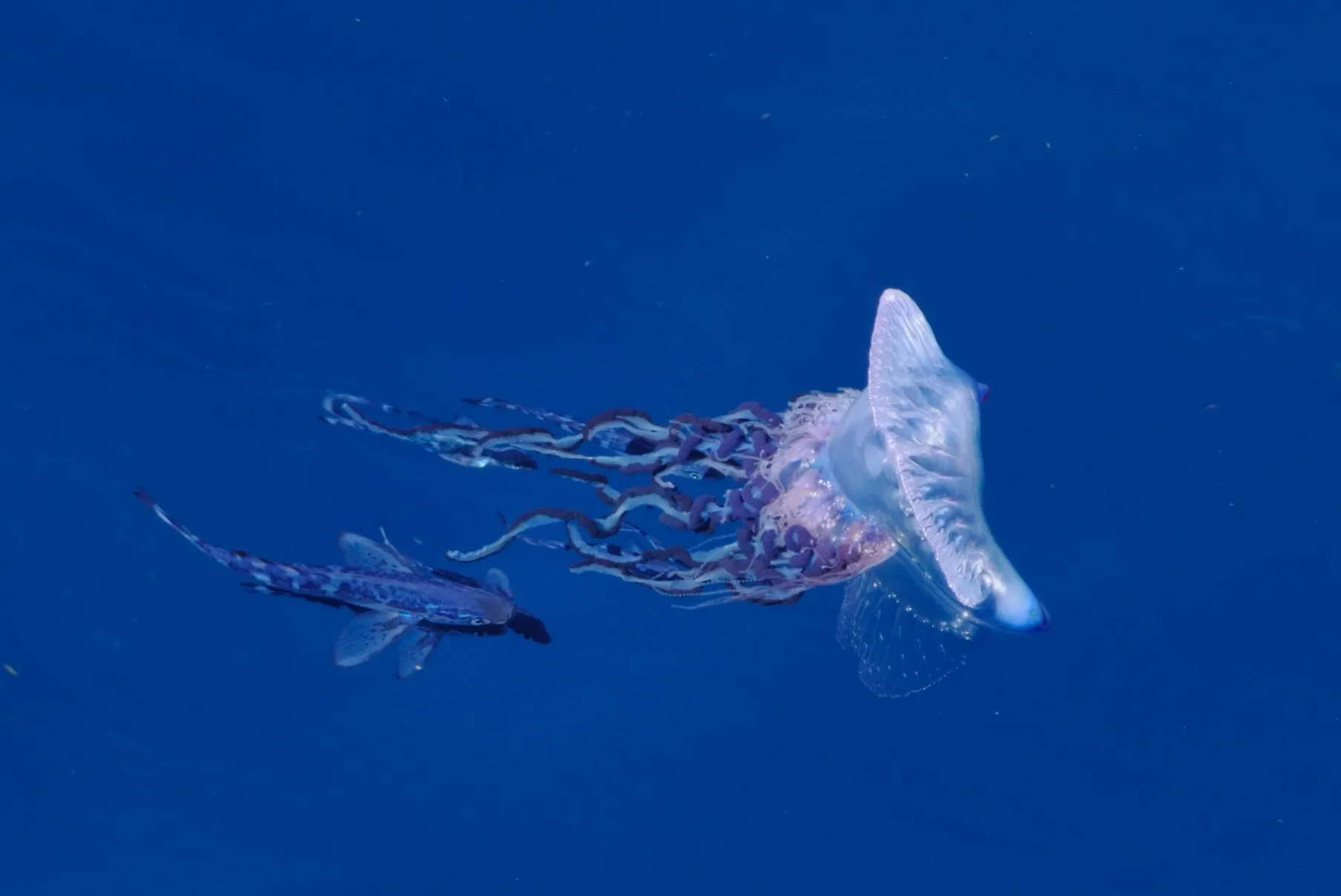
Hanging below the float are long, thin tentacles that the man o' war uses to catch small fish and other tiny sea creatures. These tentacles can sting, so if you ever spot a man o' war — in the water or resting on the sand — it is best to look but not touch, and simply admire this wonderful creature from a safe distance.
Portuguese man o' war drift through the warm parts of the Atlantic, Pacific, and Indian Oceans. Some small fish are even clever enough to shelter among the tentacles, hiding there from bigger animals that would not dare to come close. A sailing colony of tiny friends, riding the wind together — the man o' war really is one of the ocean's true wonders.
My home
Open ocean surface, warm seas
Where I live
Pacific Ocean, Atlantic Ocean, Indian Ocean
What I eat
Small fish, plankton, tiny crustaceans
How long I am
30 m
How long I live
1 years
The Portuguese man o' war looks like one creature but is really a colony of many tiny animals called zooids, all living and working together as if they were a single body.
A gas-filled bladder floats on top like a little sail, so the man o' war cannot swim — instead it drifts wherever the wind blows it across the sea.
Its long trailing tentacles can stretch many metres below the water and can give a painful sting, so it is best admired from a distance and never touched.
Every portuguese man o' war can feel happy, scared and loved — just like you.
Looking after my friends
How many are there?
Wind and currents can gather more than 1,000 Portuguese man o' war colonies into one drifting group.
Each visible man o' war is itself a colony; this is an aggregation size, not a global total.
Estimate source: Portuguese man o' war
How are they doing?
No global assessmentThis animal does not have a global extinction-risk assessment recorded in this system.
You can help by learning their names, keeping wild places clean, and telling someone why this animal matters.
Where this came from
- Physalia physalis (Portuguese man o' war) — conservation status — IUCN Red List of Threatened Species
- Portuguese Man O'War (Physalia physalis) — species profile — The Wildlife Trusts
- Portuguese man o' war — Wikipedia