 ← All animals
 other invertebrate · Actinia equina
Beadlet anemone
Gallery
4 photos Real photograph 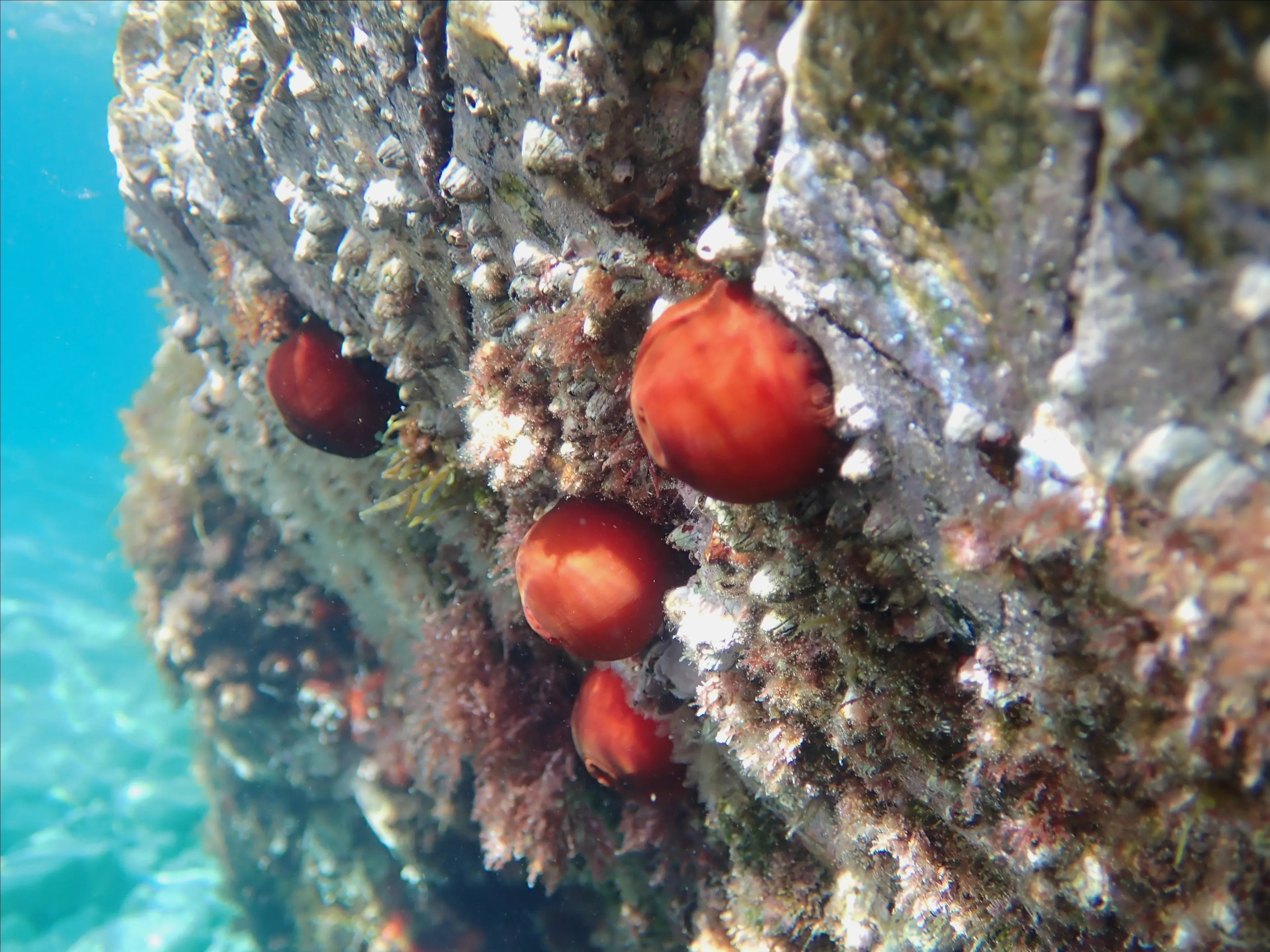 Real photograph
  Real photograph
  Real photograph
 Why we love them
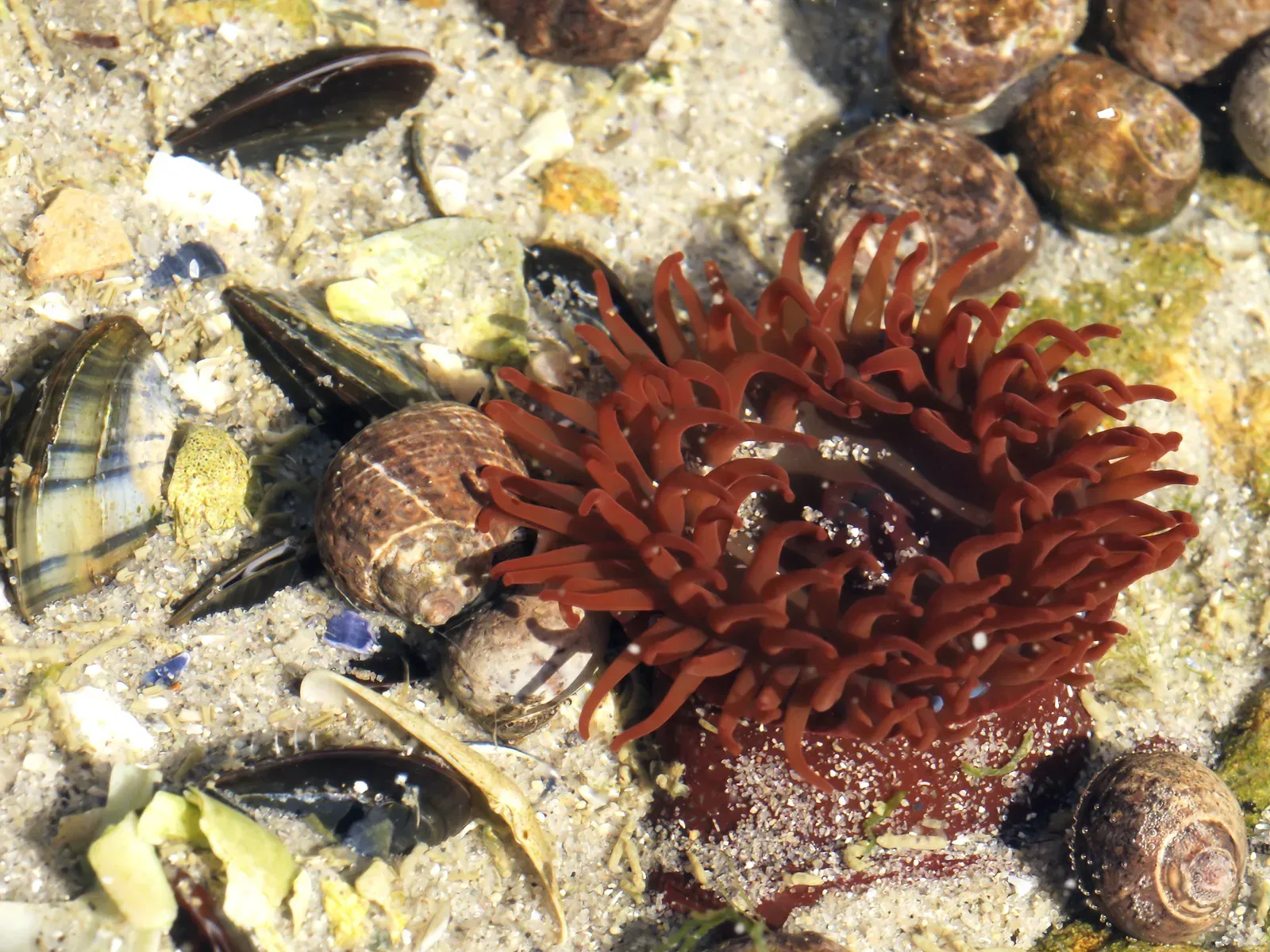
If you have ever explored a rocky beach, you may have spotted little blobs that look like squishy red jelly stuck to the rocks. Those are beadlet anemones, and they are hiding a lovely secret. They may look like plain dark-red or green lumps, but they are really gentle sea animals waiting patiently for the tide to come back in.
When the seawater covers them again, something magical happens. The blob slowly opens up into a beautiful ring of short, soft tentacles that sway in the water. There can be up to around two hundred of these little tentacles, and the anemone uses them to catch tiny bits of food, like drifting shrimp and small sea creatures that float past.
The moment the tide goes out again, or if something disturbs it, the beadlet anemone pulls all its tentacles safely inside. This turns it back into a shiny blob. Tucking itself away like this keeps the soft, delicate tentacles from drying out in the air and hides them from anything that might want a nibble.
Underneath its body is a wide, flat foot that works just like a sucker. It grips the rock so firmly that even big, crashing waves cannot knock the anemone loose. This clever little sucker lets it stay in one cosy spot, in its rock pool, for a very long time.
Beadlet anemones live all around the rocky coasts of Europe and beyond, from chilly northern shores down to the warmer Mediterranean Sea. They are among the easiest sea animals to find when the tide is low, so next time you visit a rocky beach, keep your eyes open for these jewel-like blobs waiting quietly for the sea to return.
My home
Rocky shore, rock pool, intertidal zone
Where I live
Europe, Atlantic Ocean
What I eat
Small fish, shrimp, tiny crabs
How long I am
0.05 m
When the tide goes out, the beadlet anemone tucks its tentacles inside and looks just like a shiny red blob of jelly stuck to the rock.
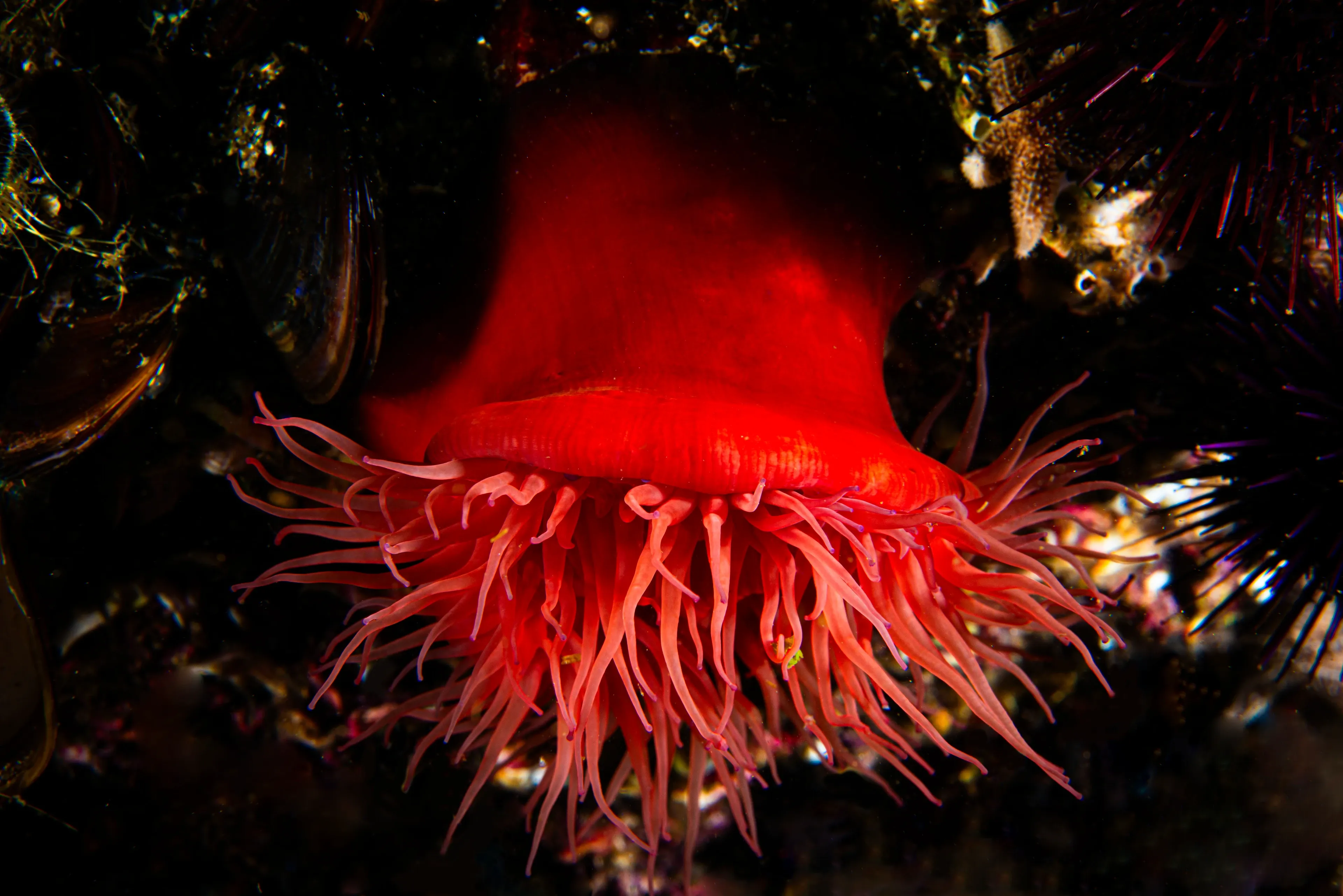
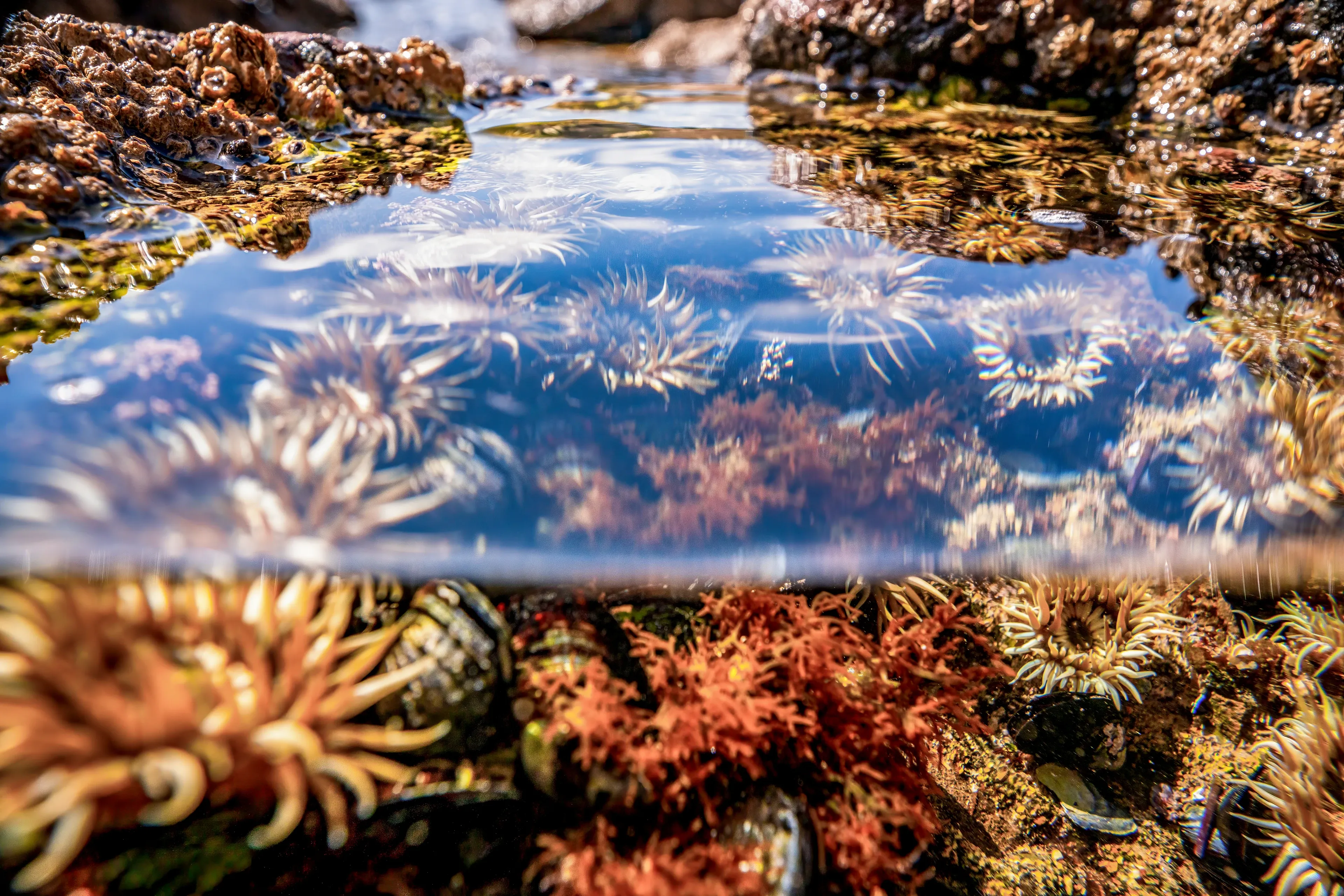
Once the water covers it again, it opens up into a ring of up to around two hundred short, soft tentacles that it waves about to catch tiny drifting food.
The flat base of its body works like a sucker, gripping tightly onto the rock so that crashing waves cannot wash it away.
Every beadlet anemone can feel happy, scared and loved — just like you.
Looking after my friends
How many are there?
Scientists counted 14,772 beadlet anemones on 15 Welsh shores—an average of about 8 per square metre.
This is an average across surveyed Welsh shores; individual patches ranged from none to 100 per square metre.
Estimate source: Population characteristics and predation rates of the dominant soft-bodied and durophagous predators on temperate intertidal shores
How are they doing?
No global assessmentThis animal does not have a global extinction-risk assessment recorded in this system.
You can help by learning their names, keeping wild places clean, and telling someone why this animal matters.
Where this came from
- Actinia equina (Beadlet anemone) — conservation status — IUCN Red List of Threatened Species
- Beadlet anemone (Actinia equina) — species profile — The Wildlife Trusts
- Beadlet anemone — Wikipedia
- Population characteristics and predation rates of the dominant soft-bodied and durophagous predators on temperate intertidal shores — Royal Society Open Science