 ← All animals
 reptile · Furcifer pardalis
Panther chameleon
Gallery
4 photos Real photograph 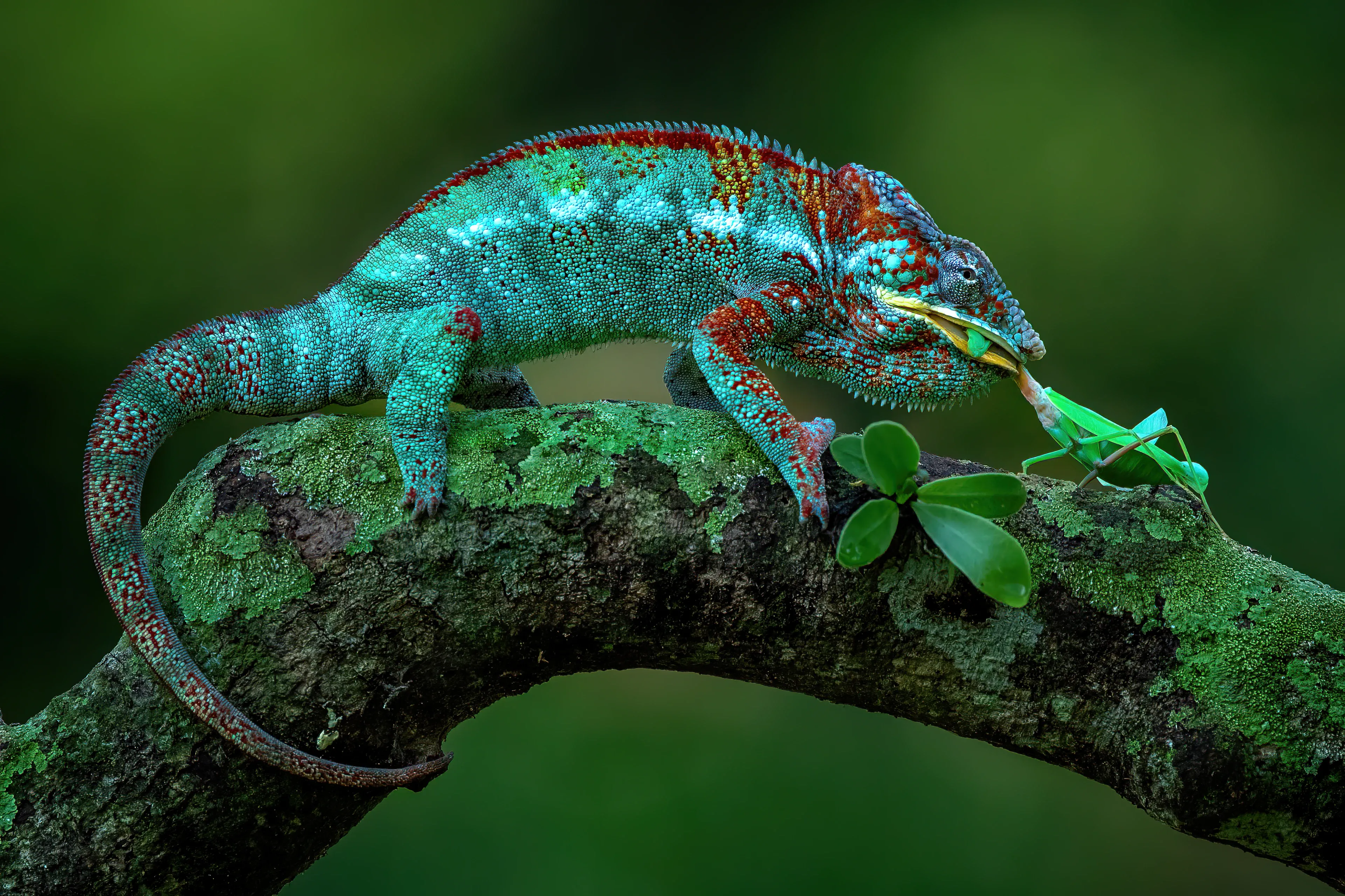 Real photograph
  Real photograph
  Real photograph
 Why we love them
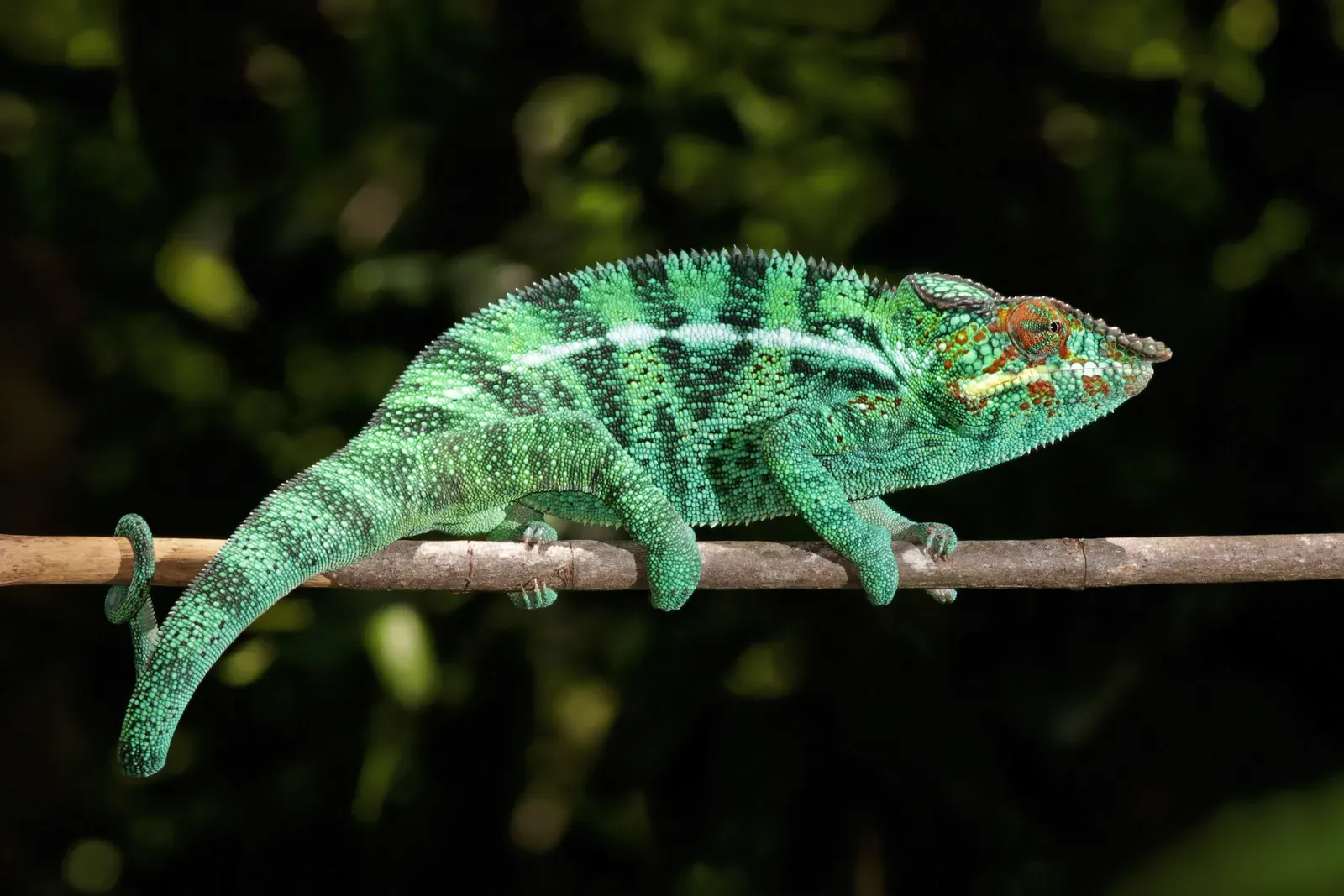
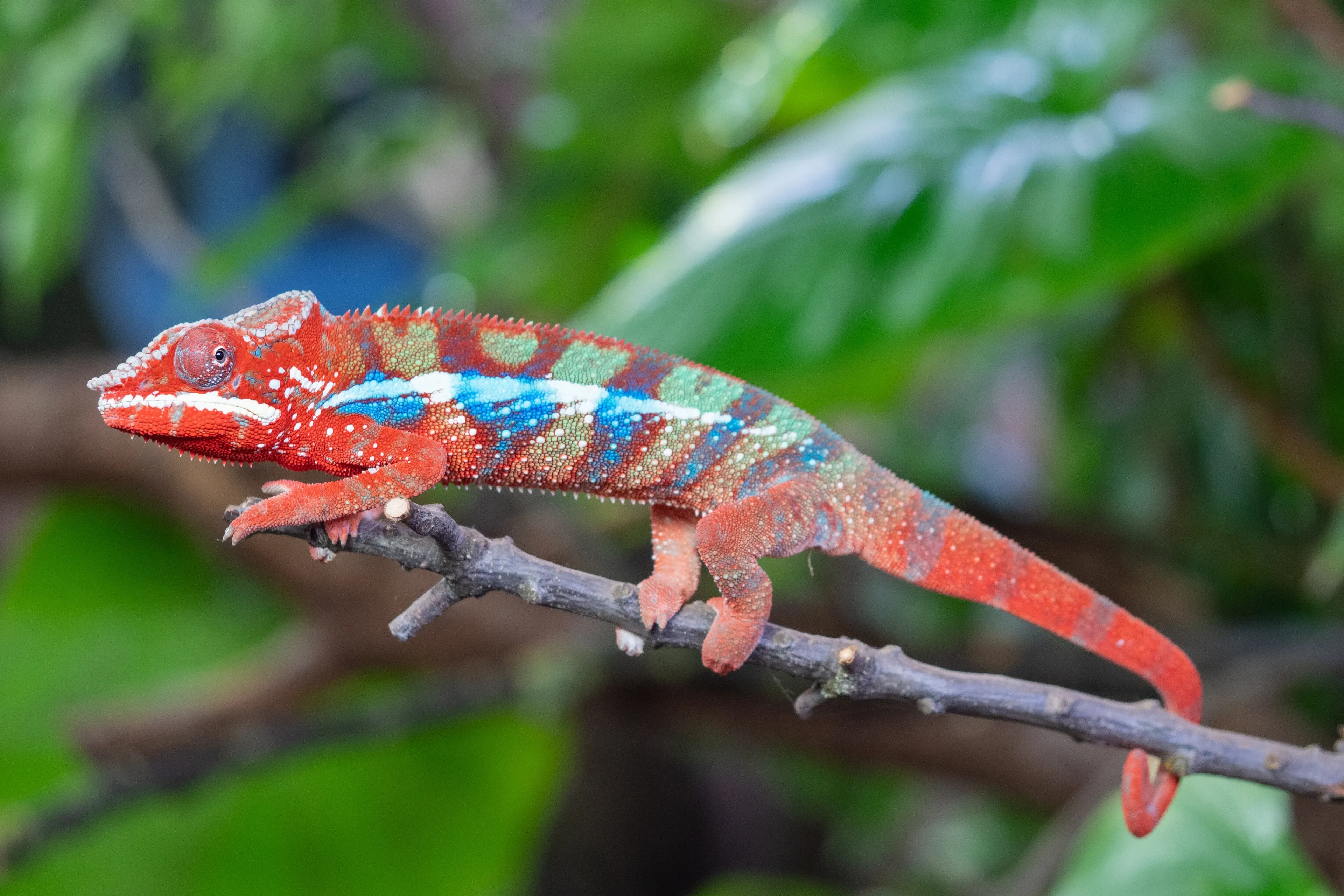
The panther chameleon is one of the most colourful lizards in the whole world. It lives on the warm island of Madagascar, off the coast of Africa, where it climbs slowly through trees and bushes with its tail curled up like a spring.
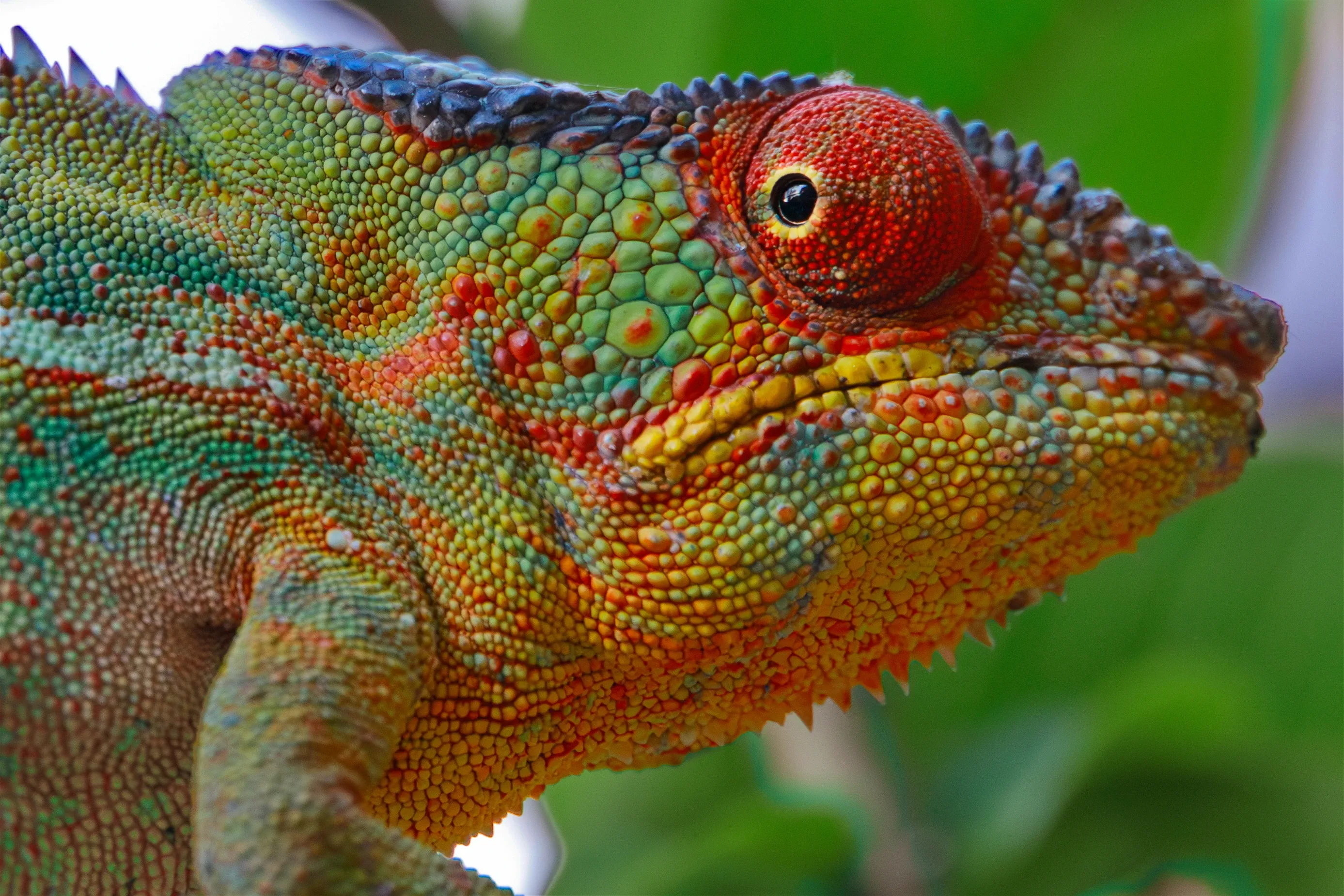
The most amazing thing about this chameleon is its eyes. Each eye can swivel on its own, so it can look forwards with one eye and backwards with the other at the very same time. That gives it a view almost all the way around its body, which is perfect for spotting a tasty insect or a sneaky enemy.
Panther chameleons are famous for changing colour. People often think they do this only to hide, but really they change to show their feelings and to warm up. A calm chameleon might be a soft green, while an excited male can turn bright red, orange, blue and turquoise to say "this is my tree!" to other males.
When a chameleon spots a cricket or a fly, it takes careful aim with both eyes. Then its long, sticky tongue shoots out faster than you can blink, sometimes longer than the chameleon's whole body, and snaps the insect right back into its mouth.
Panther chameleons live on their own and like their space, spending most of the day quietly hunting among the leaves. There are still plenty of them in the wild, which is good news, but they need their forests to stay healthy so they always have trees to climb and insects to catch.
My home
Tropical forest, coastal forest, shrubland
Where I live
Africa
What I eat
Crickets, flies, grasshoppers, beetles, other insects
How long I am
0.23–0.5 m
How heavy I am
0.2 kg
How long I live
2–7 years
A panther chameleon can move each eye on its own, looking two ways at once, so it can watch almost all the way around its body without turning its head.
Panther chameleons change colour to show how they feel and to warm up in the sun, not only to hide, and the males wear the brightest reds, greens and blues.
Its sticky tongue can shoot out longer than its whole body to grab an insect in the blink of an eye.
Every panther chameleon can feel happy, scared and loved — just like you.
Looking after my friends
How many are there?
A survey estimated at least about 451,730 panther chameleons on the island of Nosy Be.
This island estimate had a very wide confidence interval and does not cover the species' whole Madagascar range.
Estimate source: Panther chameleon conservation assessment
How are they doing?
Lower extinction riskThis species has a lower global extinction risk right now. Local populations can still grow or shrink.
You can help by learning their names, keeping wild places clean, and telling someone why this animal matters.
Where this came from
- Furcifer pardalis (Panther Chameleon) — Red List Assessment — IUCN Red List of Threatened Species
- Furcifer pardalis — Animal Diversity Web, University of Michigan Museum of Zoology
- Panther chameleon — Wikipedia
- Panther chameleon conservation assessment — Conservation Leadership Programme