 ← All animals
 other invertebrate · Aurelia aurita
Moon jellyfish
Gallery
2 photos Real photograph 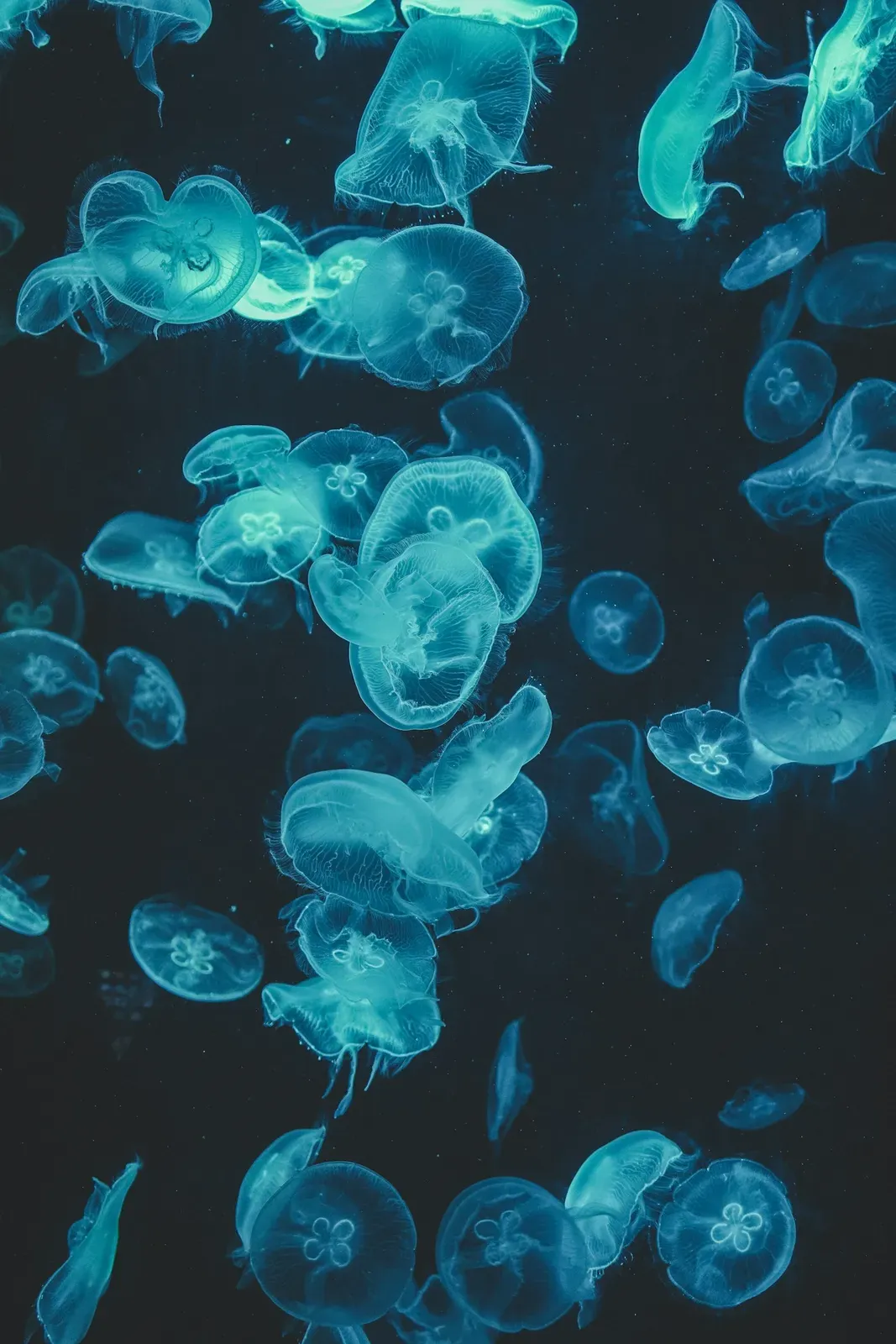 Real photograph
 Why we love them
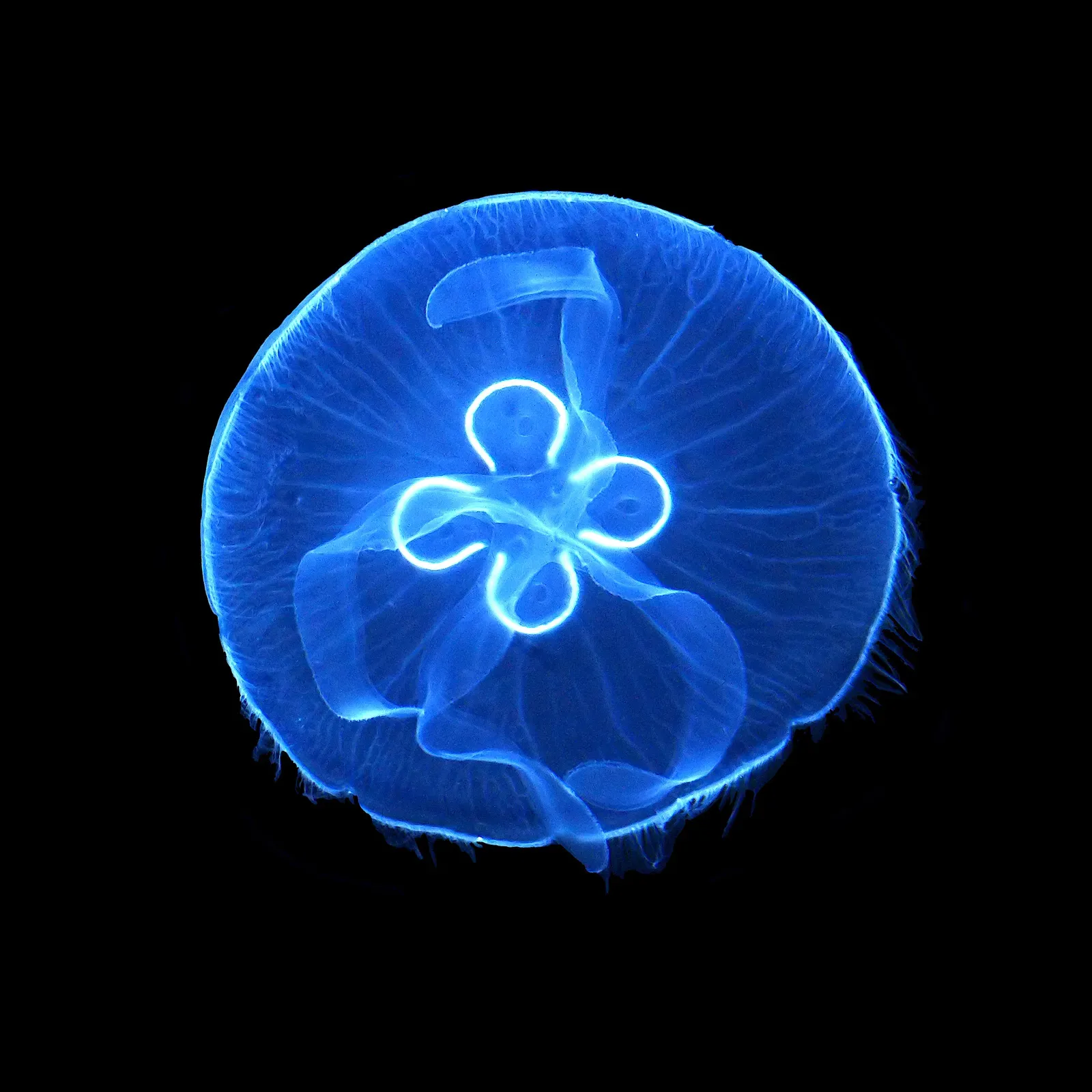
The moon jellyfish is a soft, see-through animal shaped like a floating umbrella. Near the top of its body you can spot four little rings, each shaped like a tiny horseshoe.
A moon jelly is almost all water — about ninety-five parts out of every hundred. It has no bones, no heart, and no brain. Even so, it can still tell light from dark and know which way is up and which way is down.
Moon jellies are not strong swimmers. They open and close their soft bell to give a little push, but mostly they simply drift wherever the ocean currents carry them.
They eat by catching tiny drifting animals called plankton with their short, fringy tentacles. Their sting is so gentle that it does not hurt most people.
Moon jellies float in seas in many parts of the world, in both warm and cool water. Calm and quiet, they are one of the gentlest animals you can watch drift by.
My home
Ocean, coastal waters, bays, estuaries
Where I live
Pacific Ocean, Atlantic Ocean, Indian Ocean
What I eat
Plankton, tiny floating animals
How long I am
0.05–0.4 m
How long I live
1 years
A moon jelly is almost all water — about ninety-five parts out of every hundred.
It has no brain, no heart, and no bones, yet it can still sense light and know which way is up.
Its gentle sting is so mild that it does not hurt most people at all.
Every moon jellyfish can feel happy, scared and loved — just like you.
Looking after my friends
How many are there?
A moon-jellyfish bloom can contain about 10–100 jellyfish in one cubic metre of water.
This is temporary bloom density, not a typical density or a global count.
Estimate source: Moon Jelly (Aurelia aurita) — Aquarium of the Pacific Online Learning Center
How are they doing?
No global assessmentThis animal does not have a global extinction-risk assessment recorded in this system.
You can help by learning their names, keeping wild places clean, and telling someone why this animal matters.
Where this came from
- Moon Jelly (Aurelia aurita) — Aquarium of the Pacific Online Learning Center — Aquarium of the Pacific
- Aurelia aurita — Wikipedia — Wikipedia