 ← All animals
 worm · Hirudo medicinalis
Medicinal leech
Gallery
1 photo Real photograph Why we love them
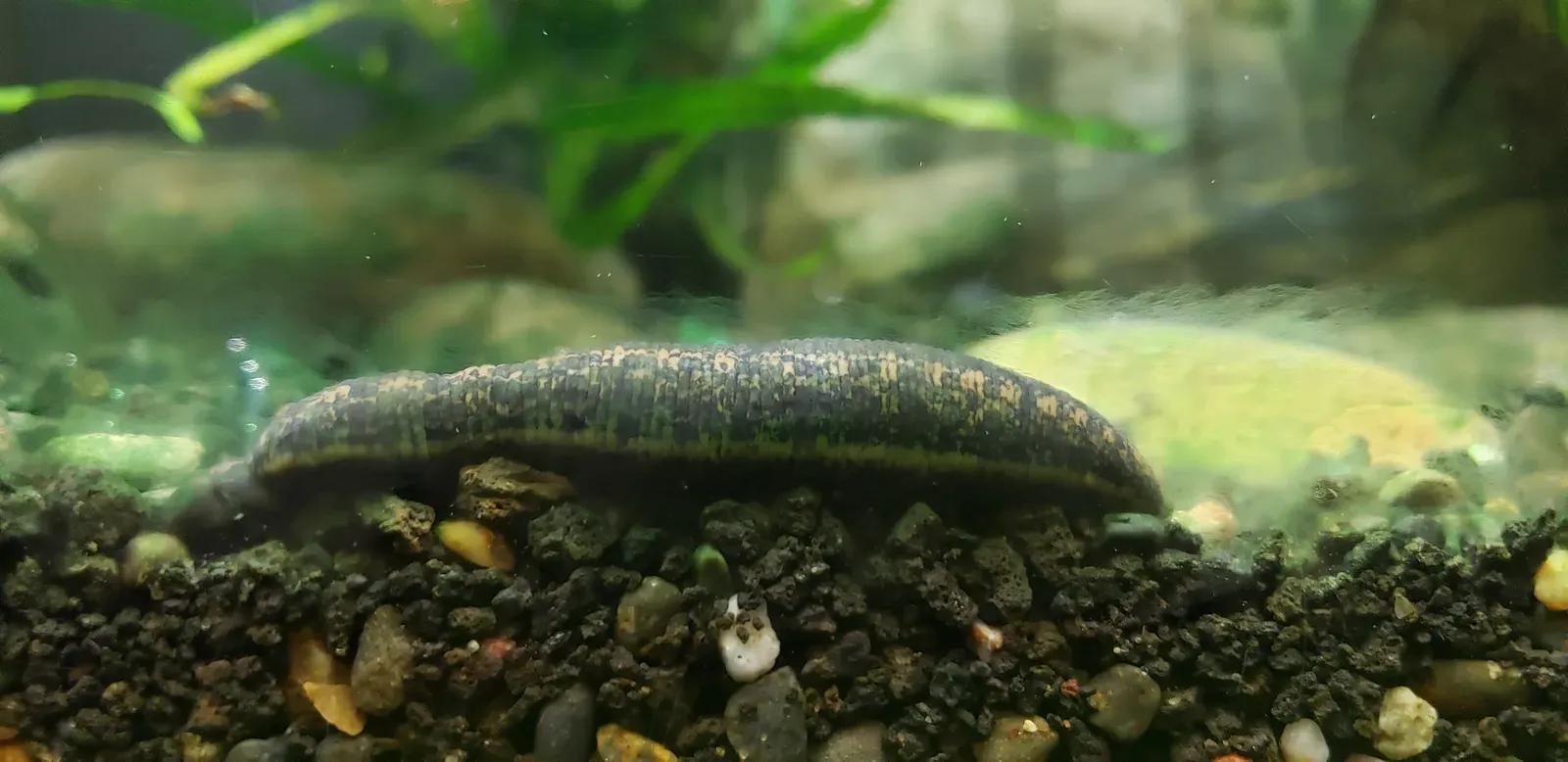
The medicinal leech is a soft, stretchy little water animal, and it is one of the most famous helpers in the whole history of medicine. It is a kind of worm, a close cousin of the earthworm, with a smooth body that can reach about 20 centimetres long. It is green-brown with a thin red stripe running down its back, and it has a small sucker at each end of its body.
These leeches live in muddy freshwater — quiet ponds, ditches, and weedy wetlands across Europe and parts of Asia. Using their two suckers, they can loop and stretch along like a spring, or swim through the water with graceful ripples. When they are not busy, they rest among the pond weeds, waiting patiently.
What makes this leech so special is how it has helped people. For thousands of years — all the way back to Ancient Egypt — doctors have used medicinal leeches in healing. Amazingly, they still do today. After tricky surgery, such as reattaching a finger or an ear, a leech can be placed on the skin to help fresh blood flow into the mending tissue and keep it healthy.
To do its gentle work, the leech takes a small sip of blood. Its spit is full of clever ingredients, including one called hirudin that keeps blood flowing smoothly, and a natural numbing touch, so the little bite is barely felt at all. It is this steady, gentle flow — not the tiny meal itself — that helps a wound heal well.
Sadly, long ago so many leeches were collected, and so many of their wetland homes were drained, that they became harder to find in the wild. Today the medicinal leech is listed as Near Threatened, and it is protected across much of its range, so this remarkable animal doctor can keep thriving in its ponds.
My home
Pond, ditch, marsh, wetland
Where I live
Asia, Europe
What I eat
Blood
How long I am
0.2 m
Doctors have used medicinal leeches for thousands of years, and they still gently use them today to help fresh blood flow back into healing skin after delicate surgery.
A medicinal leech's spit holds a special helper called hirudin that keeps blood flowing smoothly, plus a natural numbing touch, so its little sip is barely felt.
A grown medicinal leech can be about 20 centimetres long, coloured green-brown with a thin red stripe down its back and a sucker at each end.
Every medicinal leech can feel happy, scared and loved — just like you.
Looking after my friends
How many are there?
One protected wetland near Lydd, England, is estimated to hold at least 2,000 medicinal leeches.
The source says 'several thousand' without an exact total; this is one local population.
Estimate source: Hirudo medicinalis
How are they doing?
Close to threatenedThis species is not threatened right now, but it is close enough that scientists keep a careful watch.
You can help by learning their names, keeping wild places clean, and telling someone why this animal matters.
Where this came from
- Hirudo medicinalis (Medicinal Leech) — Red List Assessment — IUCN Red List of Threatened Species
- Hirudo medicinalis — Animal Diversity Web — Animal Diversity Web (University of Michigan Museum of Zoology)
- Hirudo medicinalis — Wikipedia