 ← All animals
 bird · Anas platyrhynchos
Mallard
Gallery
2 photos Real photograph 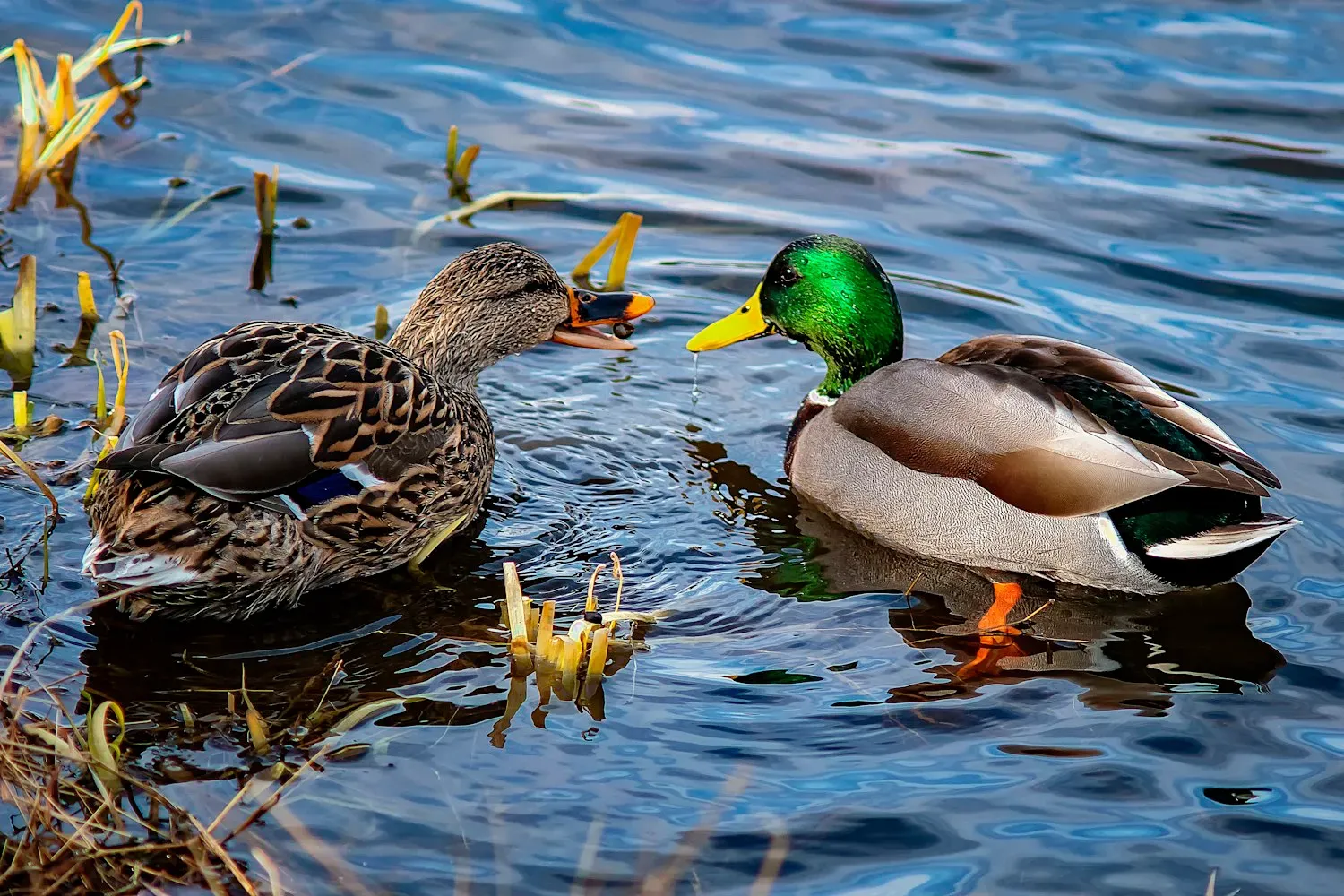 Real photograph
 Why we love them
The mallard is the duck most people picture when they think of a duck. It is a medium-sized waterbird, about 50 to 65 centimetres long, that paddles happily on lakes, ponds, rivers, and marshes. You can spot mallards on wild wetlands and in busy city parks alike.
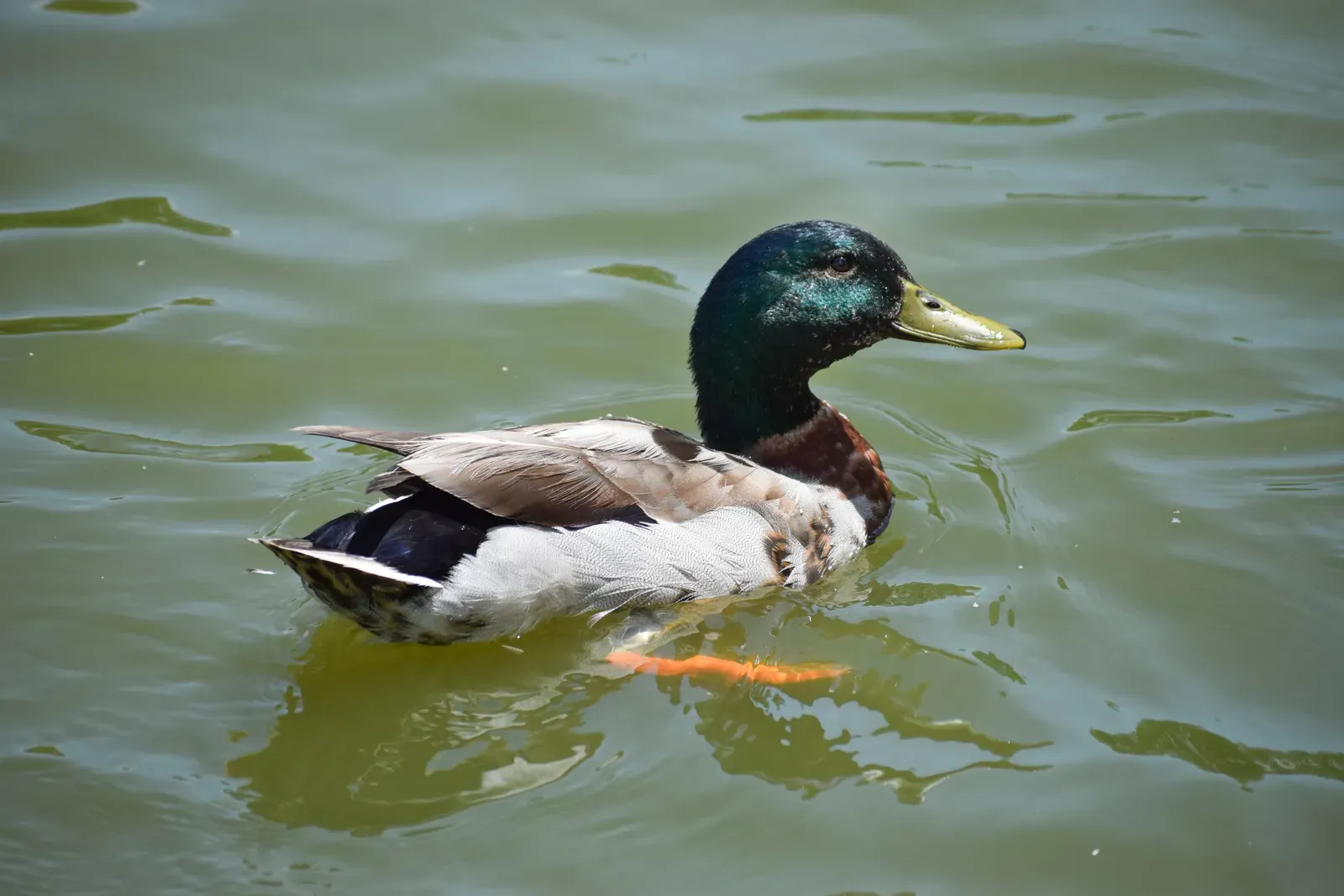
It is easy to tell a boy mallard from a girl. The male, called a drake, has a glossy green head, a white ring around his neck, and a yellowy-orange bill. The female is a soft speckled brown all over, which helps her stay hidden when she sits on her nest. Both have a bright blue patch on the wing edged with white.
Mallards belong to a group called dabbling ducks. Instead of diving all the way under, they tip forward with their heads down and their tails pointing up to the sky, reaching for food in the shallow water below. They will eat almost anything they find: seeds, water plants, roots, insects, snails, and worms.
Mallards live across a huge part of the world, all around the northern half of the globe and in some places in the south too. Ducks that nest in cold northern lands fly south when winter comes so they can find open, unfrozen water, then travel back again in spring.
There are more than seventeen million grown mallards in the world, so this duck is not in danger and has been listed as least concern for a long time. Mallards are so good at living near people that they turn up in many towns and cities. Even so, they still need clean lakes, ponds, and wetlands where they can feed, nest, and raise their fluffy ducklings.
My home
Wetlands, lakes, ponds, rivers, marshes
Where I live
Africa, Asia, Europe, North America
What I eat
Seeds, aquatic plants, roots, insects, snails, worms
How long I am
0.5–0.65 m
How heavy I am
0.7–1.6 kg
The male mallard has a shiny green head and a thin white ring around his neck, while the female is speckled brown to help her hide on her nest.
Mallards are dabbling ducks, which means they tip upside down in shallow water with their tails in the air to reach food below.
Mallards live almost everywhere ducks can live, from cold northern lakes to city park ponds, and northern ones fly south for the winter.
Every mallard can feel happy, scared and loved — just like you.
Looking after my friends
How many are there?
At least 17 million mature mallards were estimated worldwide in 2025.
The source reports more than 17 million mature birds, so this is recorded as a minimum.
The population in the world was decreasing in 2025.
How are they doing?
Lower extinction riskThis species has a lower global extinction risk right now. Local populations can still grow or shrink.
You can help by learning their names, keeping wild places clean, and telling someone why this animal matters.
Where this came from
- Anas platyrhynchos (Mallard) — Red List Assessment — IUCN Red List of Threatened Species
- Mallard — Wikipedia
- Mallard — Overview, All About Birds — Cornell Lab of Ornithology