 ← All animals
 reptile · Eublepharis macularius
Leopard gecko
Gallery
2 photos Real photograph 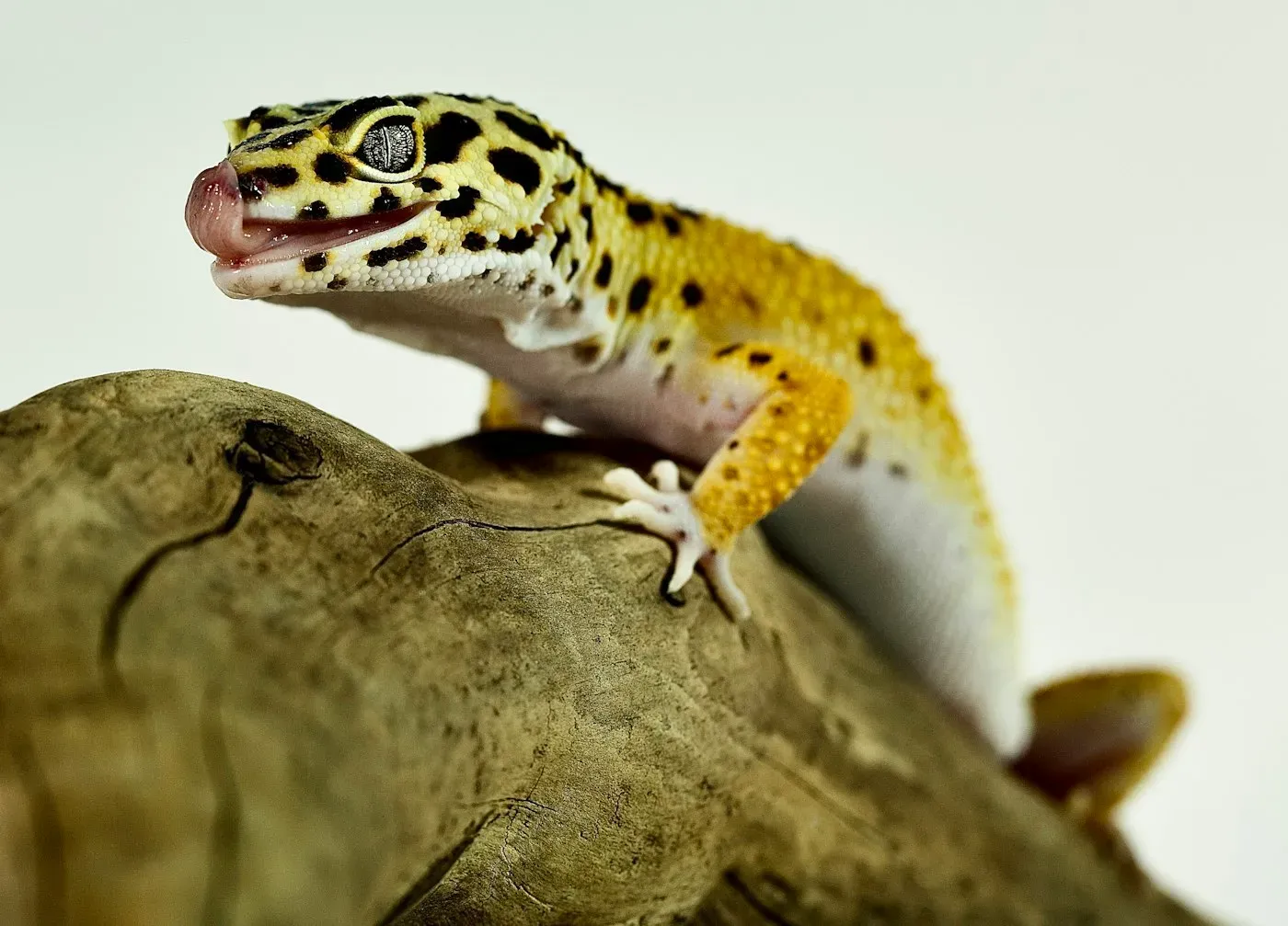 Real photograph
 Why we love them
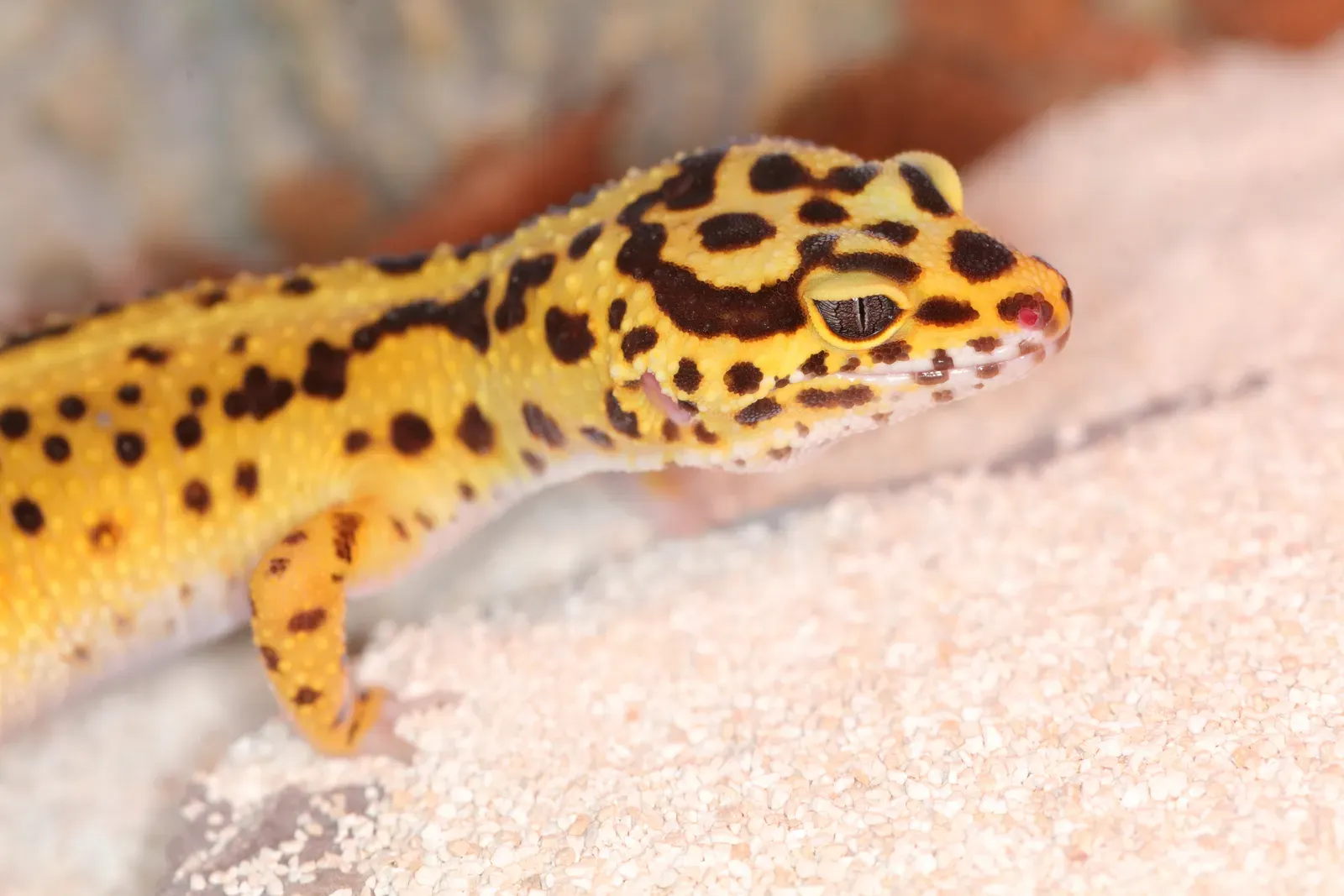
The leopard gecko is a small, friendly-looking lizard covered in dark spots, a bit like a leopard's coat. It lives in the dry, rocky grasslands and deserts of countries like Afghanistan, Pakistan, and north-west India. Grown-up geckos are only about as long as a pencil, from around eighteen to twenty-eight centimetres, with a plump, spotty tail.
This gecko comes out mostly in the evening and at night, when the desert is cool. During the hot day it hides away in rocky cracks and burrows to stay safe and out of the sun. When winter turns cold, leopard geckos rest underground in a long, sleepy time and live off the fat stored in their bodies.
One of the most special things about a leopard gecko is its fat tail. It stores food inside the tail, so if there are no insects to eat for a while, the gecko can still keep going. When it hunts, it may wiggle its tail from side to side before it pounces on a tasty bug.
Leopard geckos have a clever trick to escape danger. If a predator grabs the tail, the gecko can let the tail drop right off and wriggle away to safety. Later a new tail slowly grows back, though it usually looks a little shorter and stumpier than before. Unlike many geckos, they also have eyelids that move, so they can blink and shut their eyes to sleep.
Reference sources list leopard geckos as "least concern," which means they are not thought to be in global danger right now, though the exact assessment details still need a fresh check. Even so, wild ones can be harmed when their dry homelands are cleared or when too many are taken to be sold as pets, so it is kind to leave wild geckos where they belong and choose captive-bred pets.
My home
Desert, dry grassland, rocky areas
Where I live
Asia
What I eat
Insects, spiders, other small invertebrates
How long I am
0.18–0.28 m
How heavy I am
0.05–0.08 kg
A leopard gecko keeps a snack hidden in its own tail — the fat stored there feeds it when food is hard to find.
If a hungry animal grabs its tail, the gecko can pop the tail off and run away, then slowly grow a new one.
Unlike many geckos, leopard geckos have moving eyelids, so they can blink and even close their eyes to sleep.
Every leopard gecko can feel happy, scared and loved — just like you.
Looking after my friends
How many are there?
A leopard gecko almost always lays 2 eggs in one clutch and may lay several clutches a year.
This is one clutch, not a population estimate.
Estimate source: Eublepharis macularius (Common Leopard Gecko)
How are they doing?
Lower extinction riskThis species has a lower global extinction risk right now. Local populations can still grow or shrink.
You can help by learning their names, keeping wild places clean, and telling someone why this animal matters.
Where this came from
- Eublepharis macularius (Common Leopard Gecko) — Red List category — IUCN Red List of Threatened Species
- Eublepharis macularius (Common Leopard Gecko) — Animal Diversity Web, University of Michigan Museum of Zoology
- Leopard gecko — Wikipedia