 ← All animals
 bird · Dacelo novaeguineae
Laughing kookaburra
Gallery
7 photos Real photograph 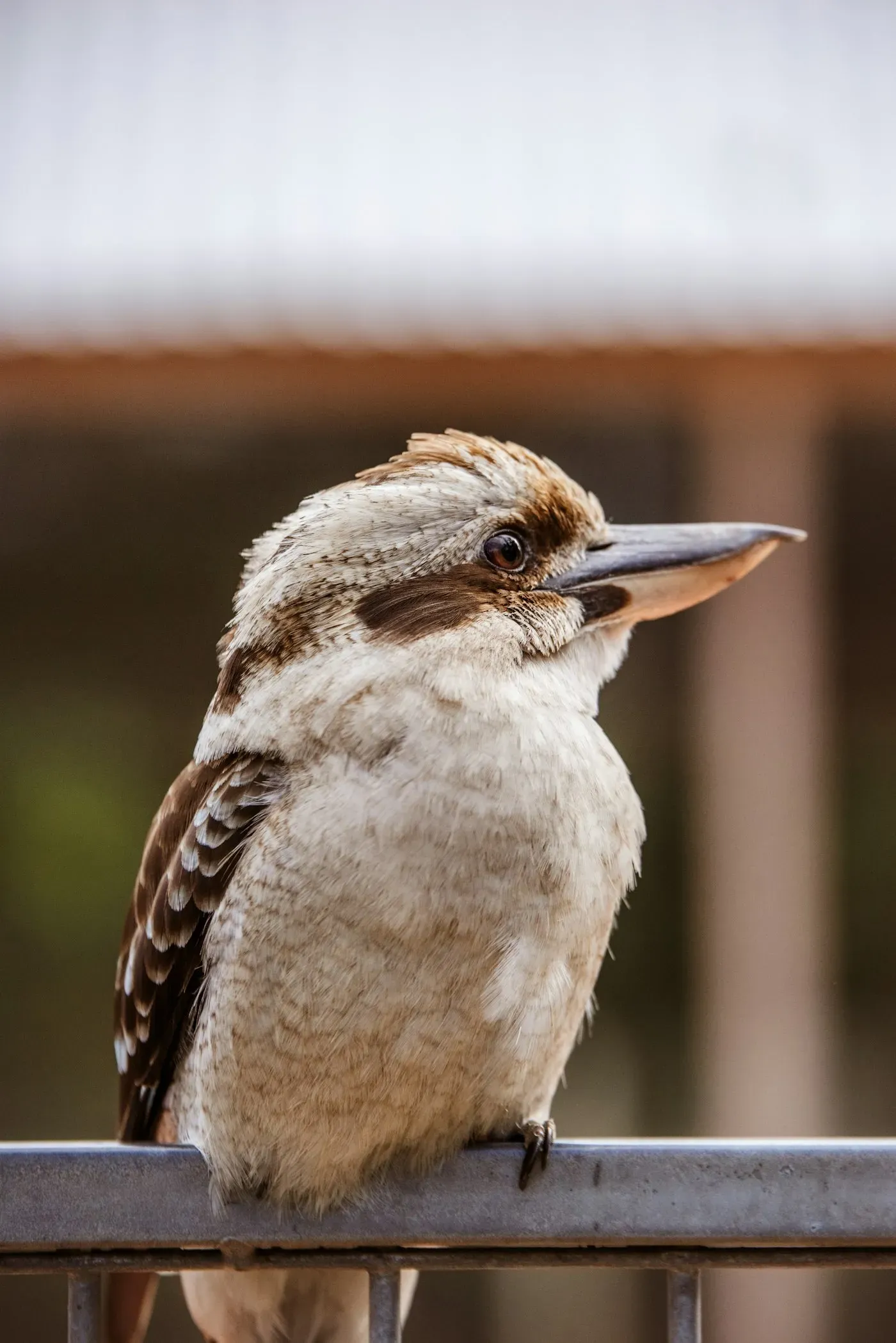 Real photograph
 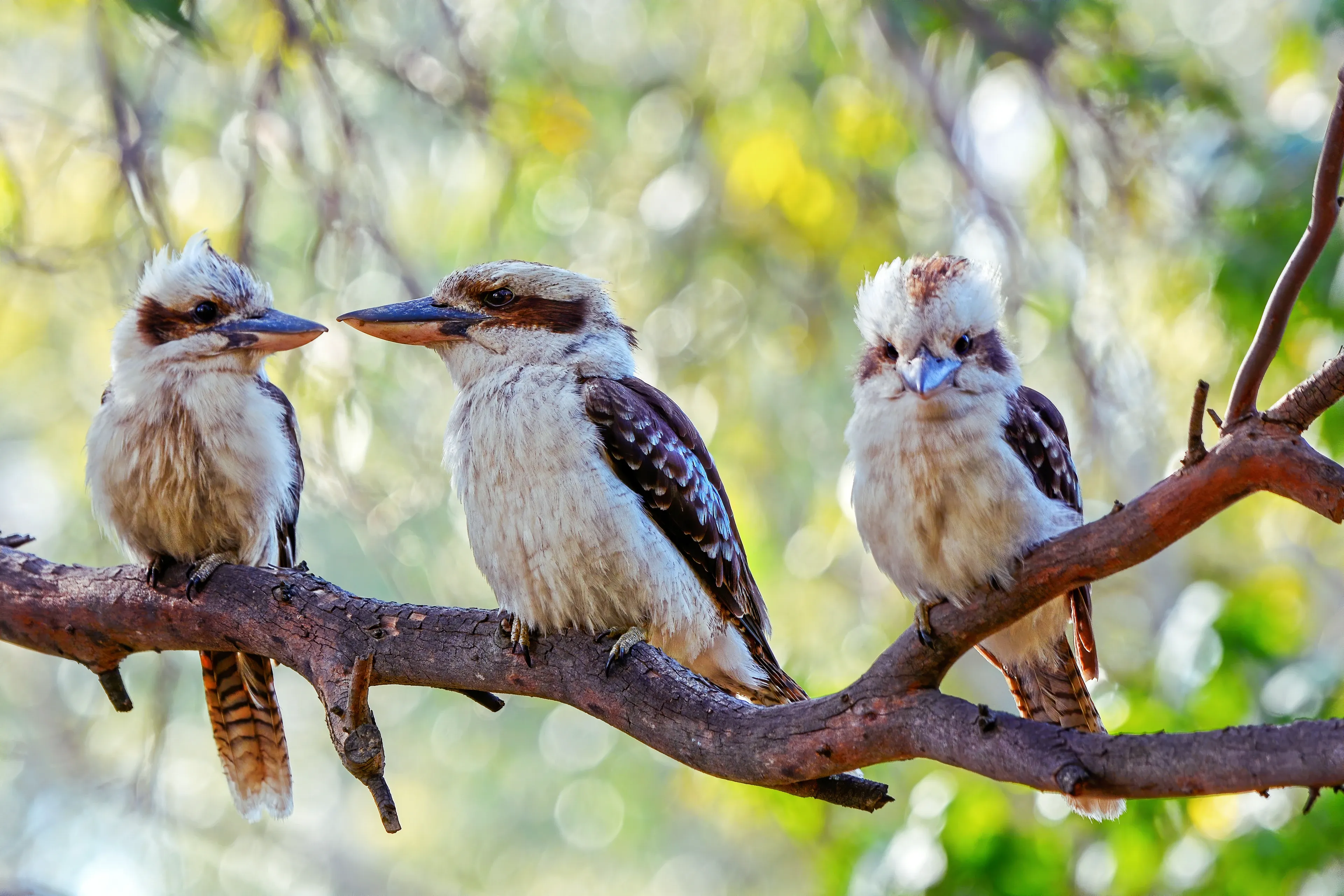 Real photograph
 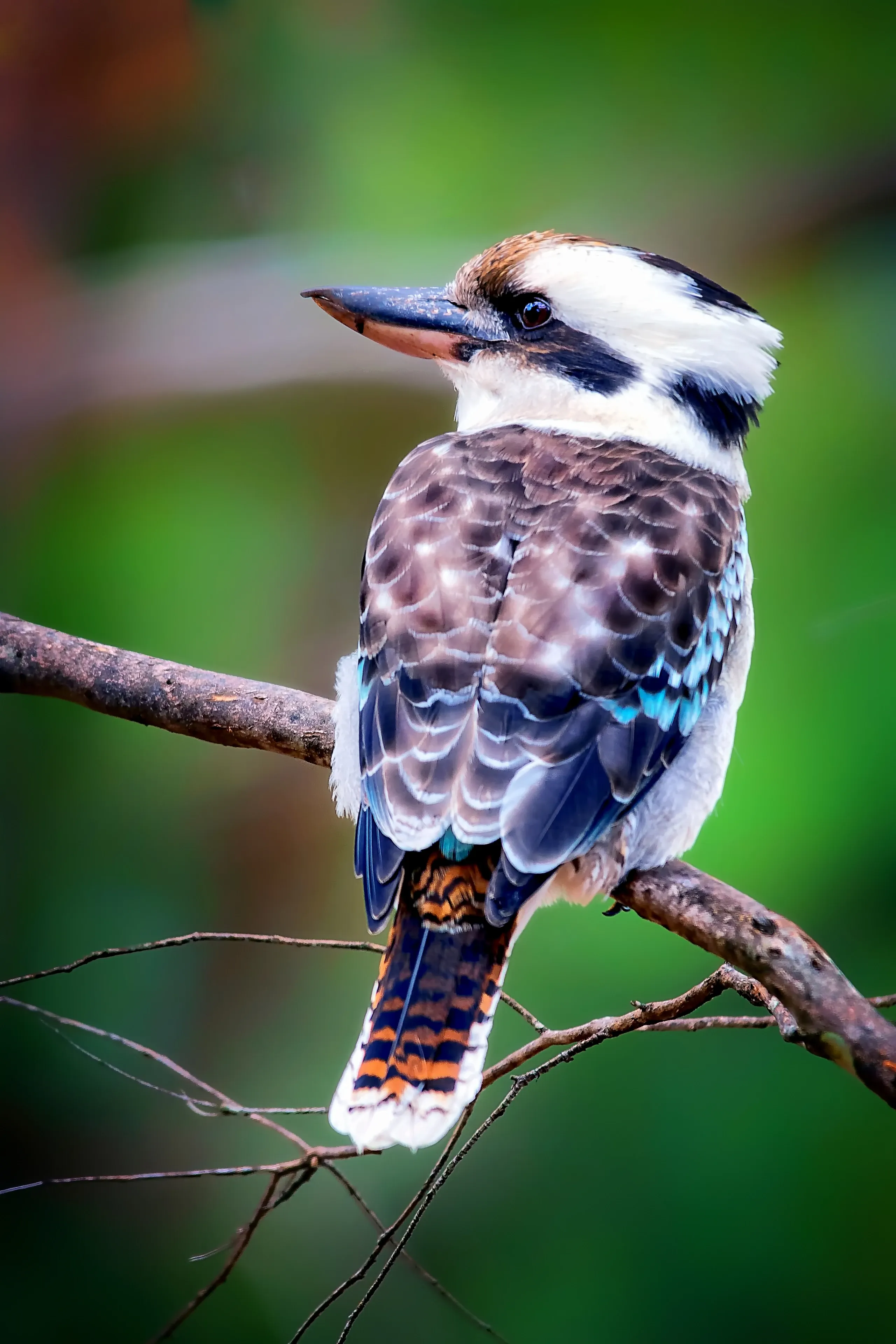 Real photograph
 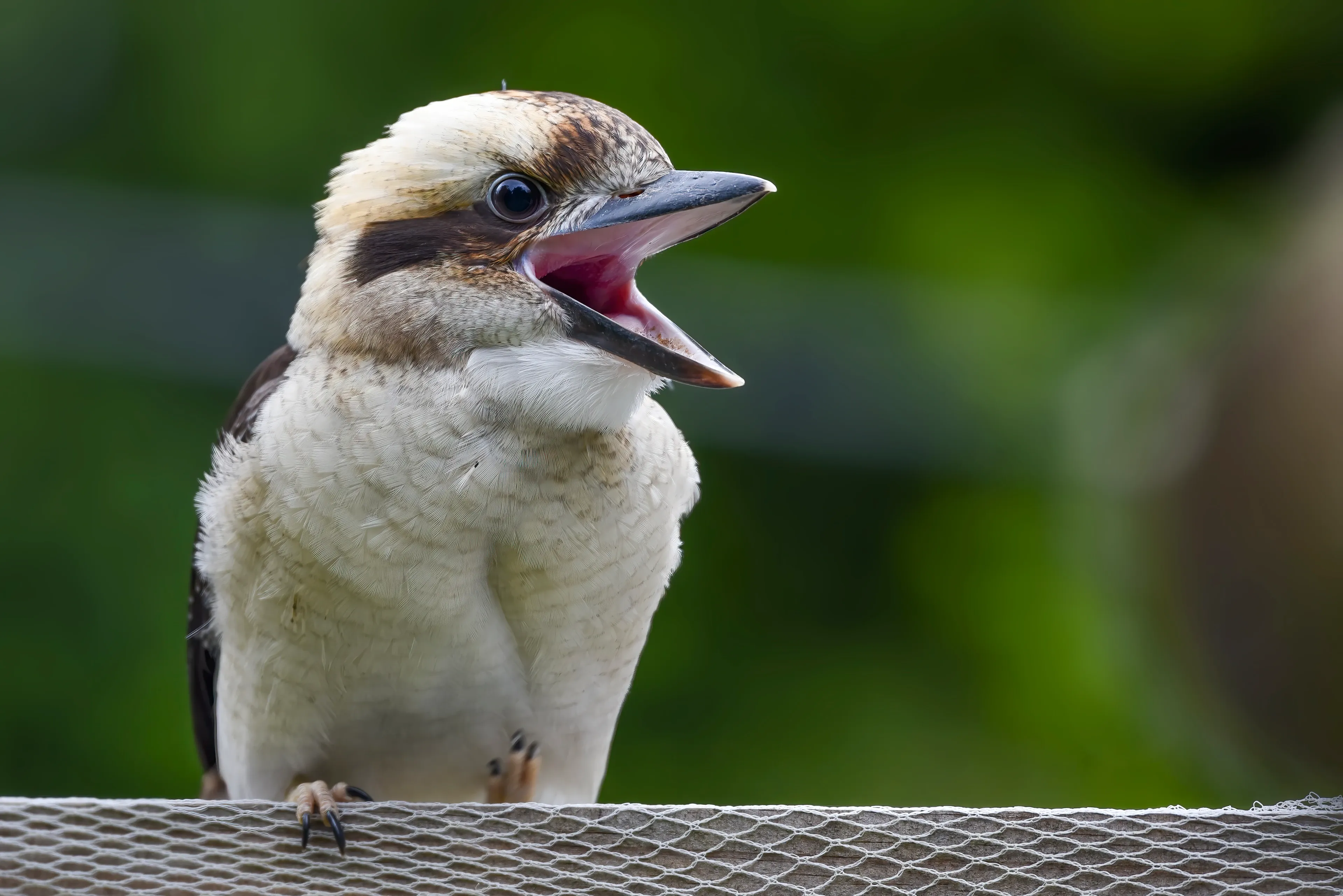 Real photograph
  Real photograph
  Real photograph
 Why we love them
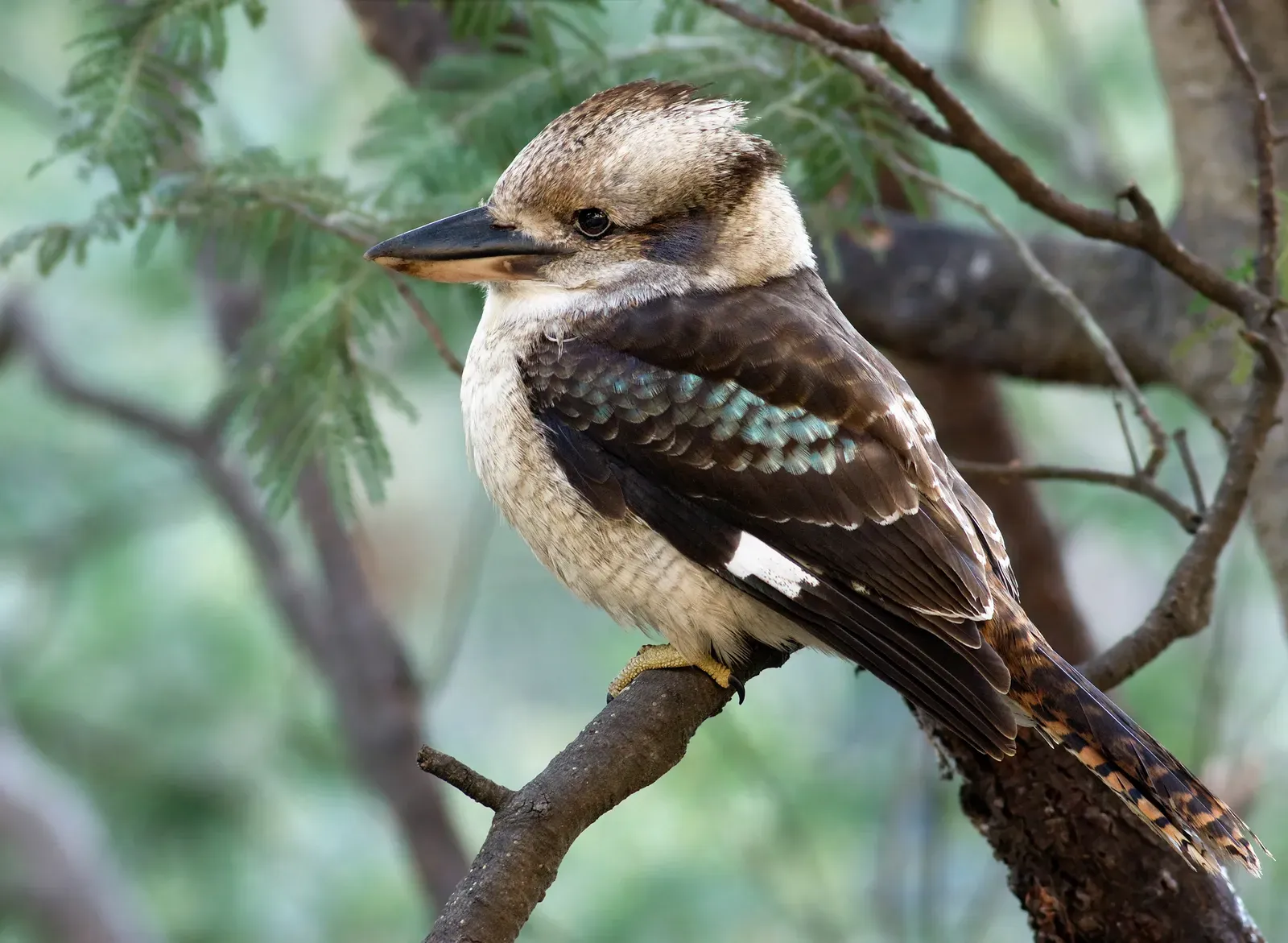
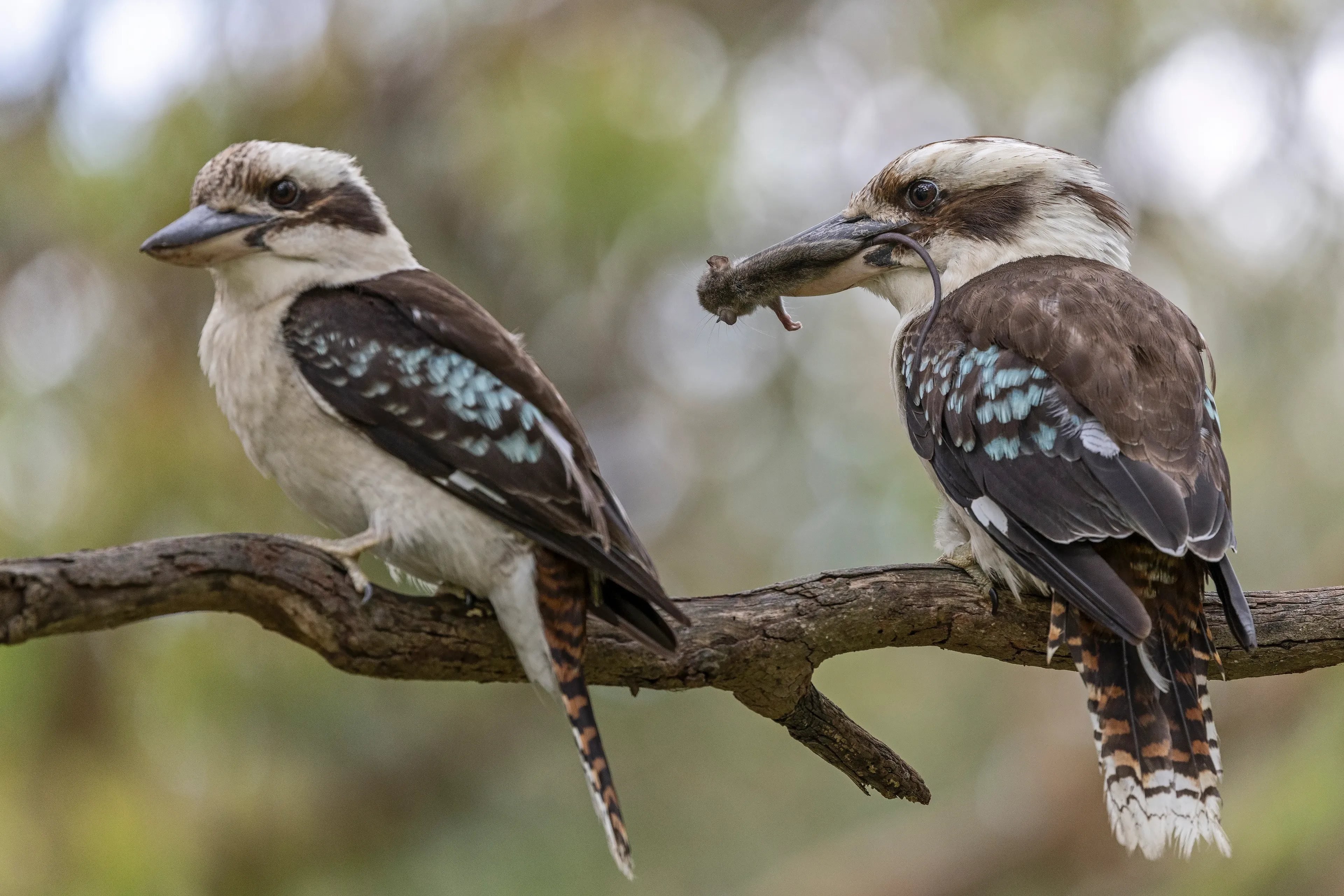
The laughing kookaburra is a chunky brown-and-white bird from Australia. It has a big head, a strong beak, and a loud voice that everyone remembers. When a kookaburra calls, it sounds just like a person laughing, starting with soft chuckles and rising into a wild "koo-koo-ka-ka-ka."
A whole family of kookaburras will often laugh together, especially in the early morning and again at dusk. This song is their way of telling other kookaburras, "This is our home, and we look after it." Their laughing calls carry a long way across the treetops.
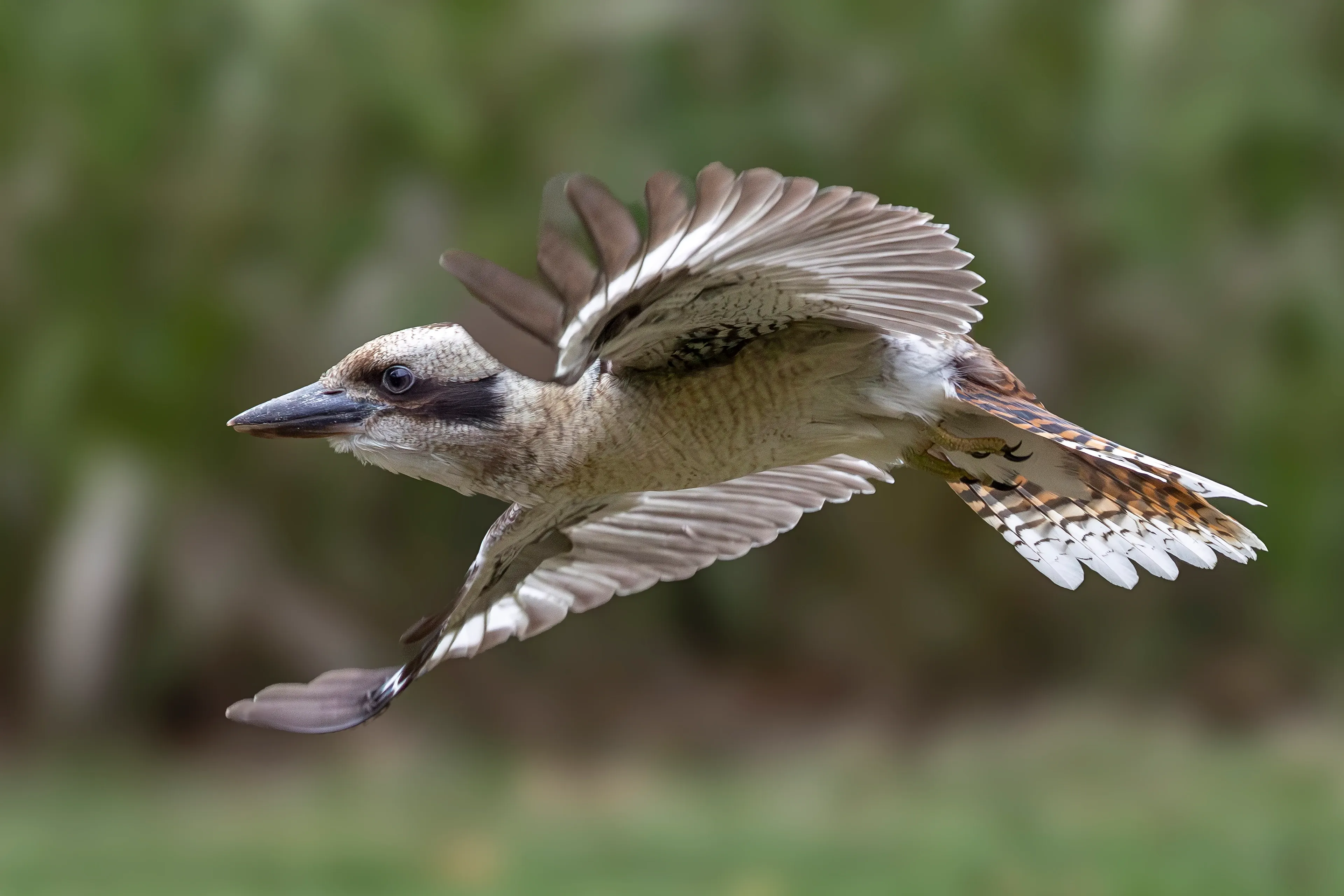
Even though the kookaburra belongs to a group of birds called kingfishers, it does not usually catch fish. Instead it perches quietly on a branch and watches the ground below. When it spots an insect, worm, lizard, or snake, it swoops down, grabs the food in its beak, and flies back to its perch.
Kookaburras live in close family groups. When new chicks hatch, the older brothers and sisters do not fly away. They stay to help their parents guard the nest and bring food to the hungry babies. Sharing the work like this helps more young kookaburras grow up safely.
Laughing kookaburras are a common and much-loved sight in Australia, from the bush to city parks and gardens. Many people wake up to their happy laughing call, which is one of the most famous sounds of the Australian morning.
My home
Woodland, open forest, parks, gardens
Where I live
Oceania
What I eat
Insects, worms, lizards, snakes, small mammals
How long I am
0.4–0.47 m
How heavy I am
0.19–0.47 kg
How long I live
10–20 years
Its call sounds just like someone laughing out loud.
It is one of the biggest kingfishers, but it hunts on land instead of catching fish.
Older brothers and sisters help their parents feed the new baby birds.
Every laughing kookaburra can feel happy, scared and loved — just like you.
Looking after my friends
How many are there?
A rough range-wide calculation suggests as many as 65 million laughing kookaburras, but the true total may be much lower.
This rough calculation assumes an average density across a very large area and may severely overestimate the true population.
Estimate source: Laughing kookaburra
How are they doing?
Lower extinction riskThis species has a lower global extinction risk right now. Local populations can still grow or shrink.
You can help by learning their names, keeping wild places clean, and telling someone why this animal matters.
Where this came from
- Dacelo novaeguineae (Laughing Kookaburra) — Red List Assessment — IUCN Red List of Threatened Species
- Laughing Kookaburra (Dacelo novaeguineae) — Australian Museum
- Laughing Kookaburra Dacelo novaeguineae — Species Factsheet — BirdLife International
- Laughing kookaburra — Wikipedia