 ← All animals
 other invertebrate · Diploria labyrinthiformis
Grooved brain coral
Gallery
4 photos Real photograph 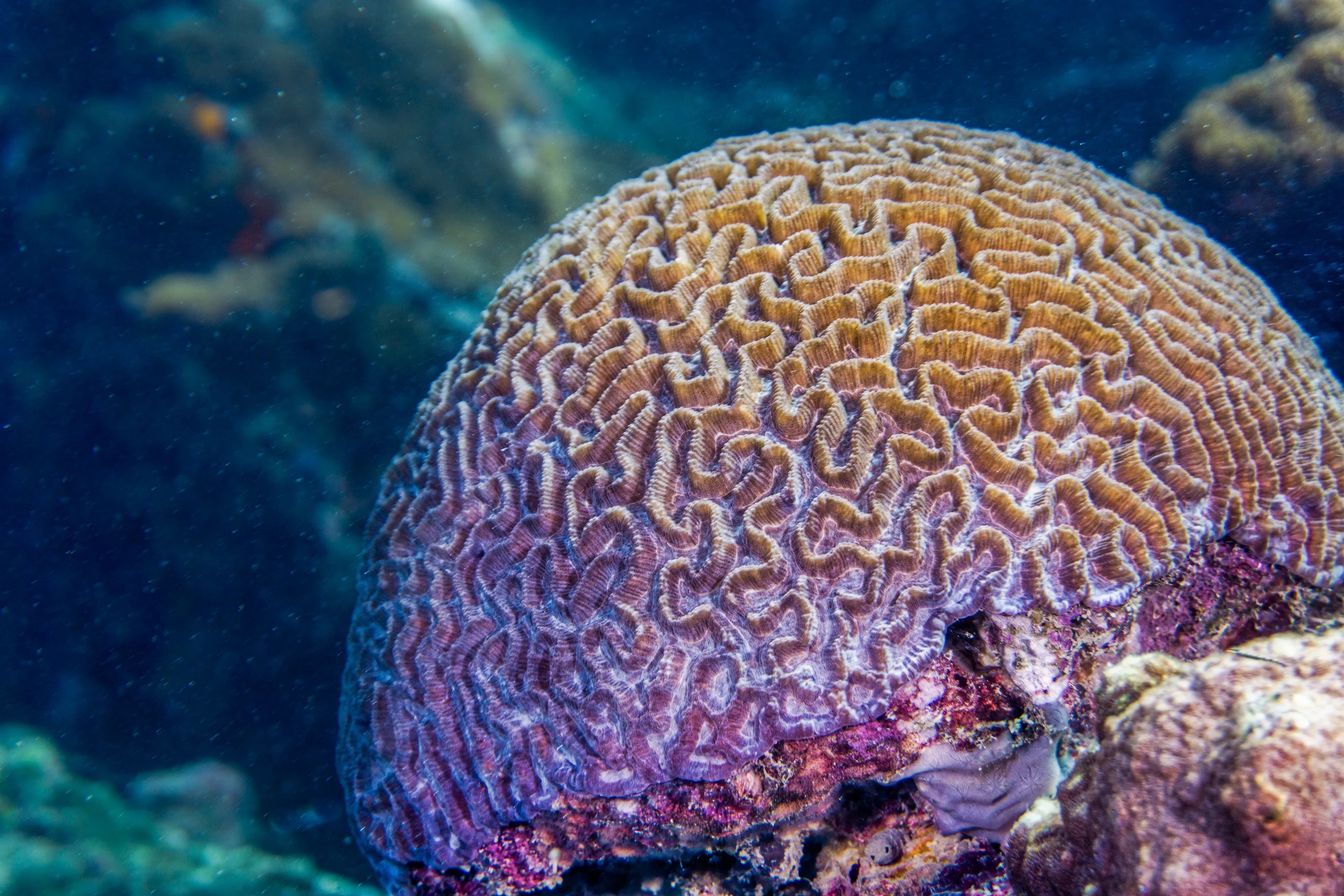 Real photograph
  Real photograph
  Real photograph
 Why we love them
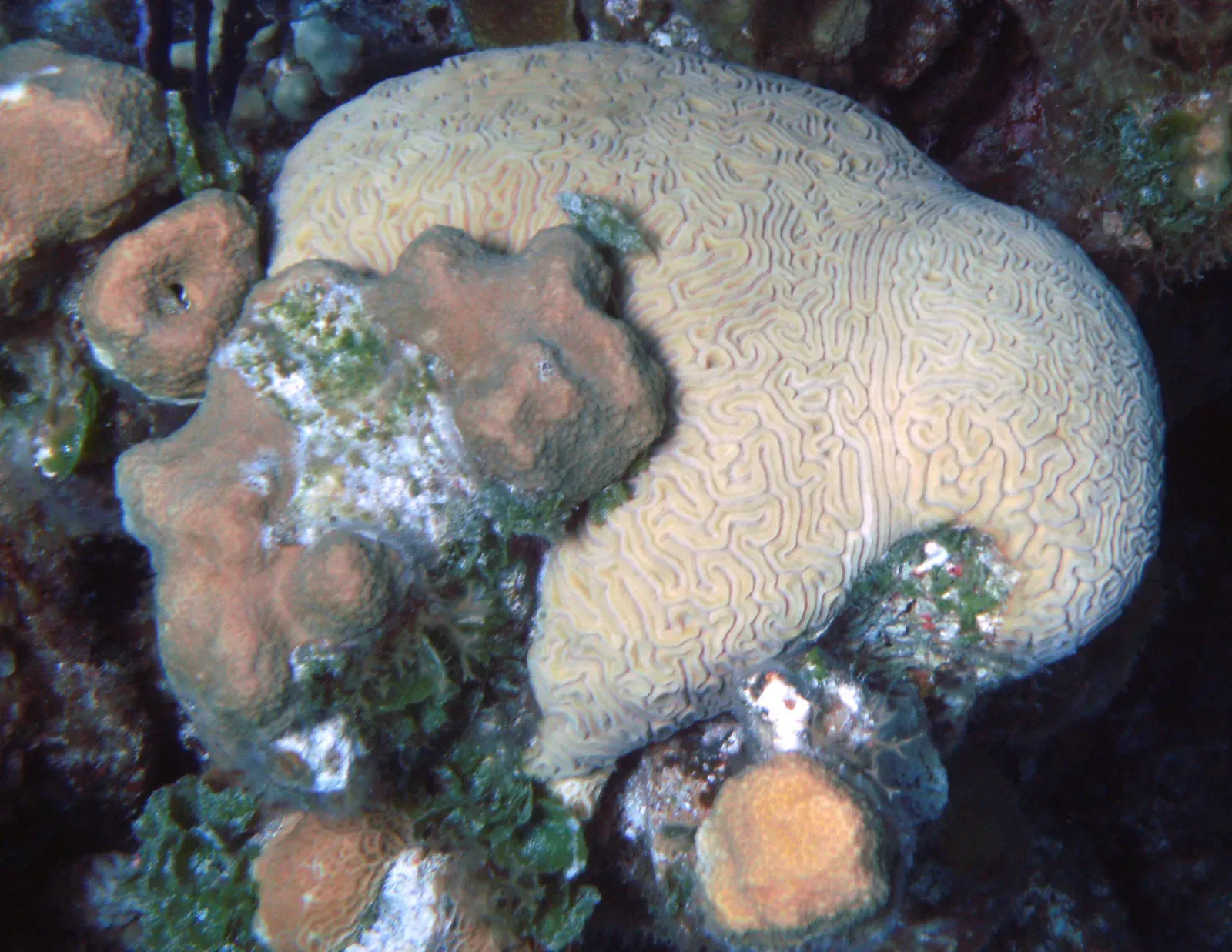
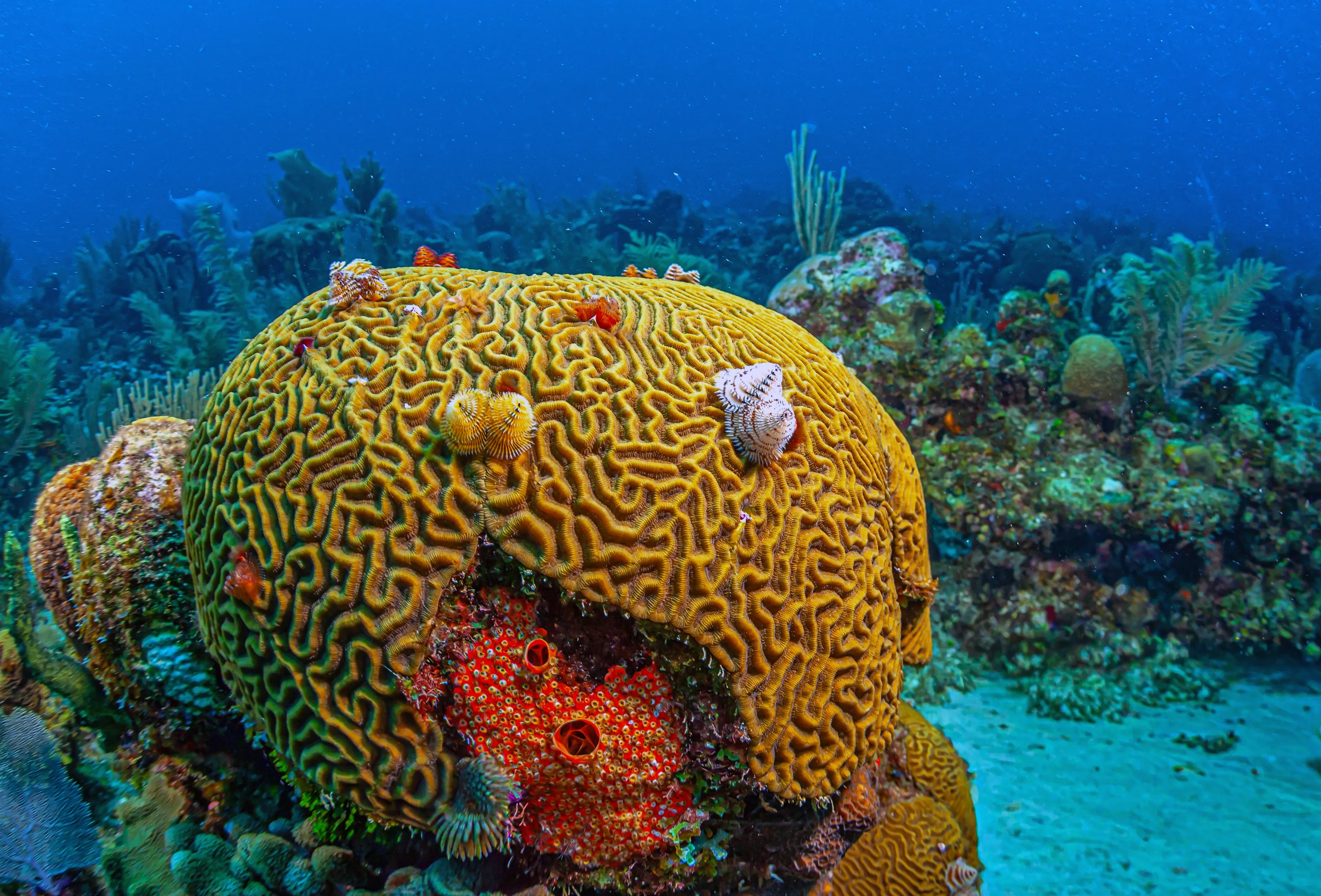
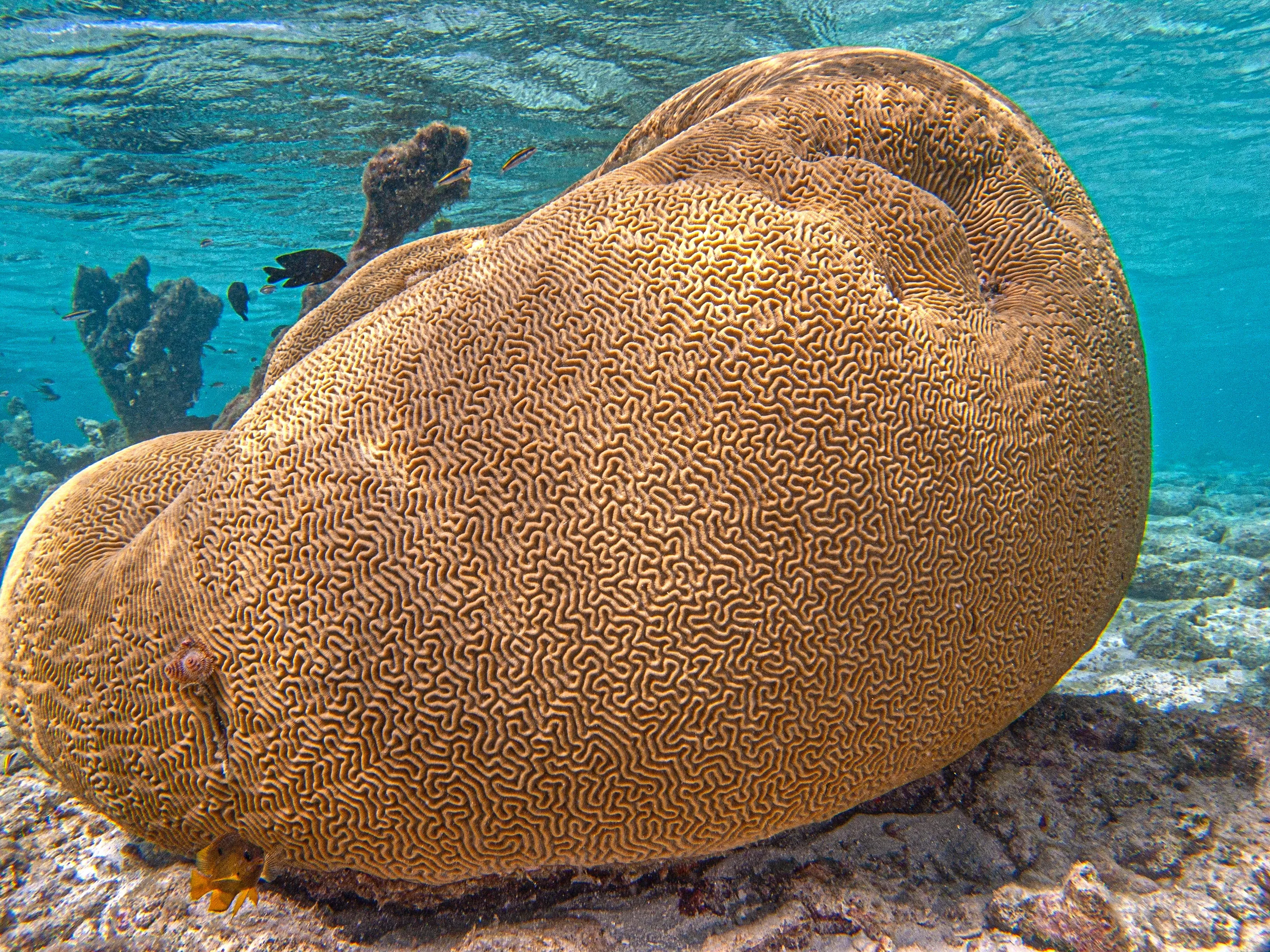
The grooved brain coral is a big, round coral that really does look like a brain! Its surface is covered in curvy ridges and deep grooves that twist and turn like a maze. It comes in gentle shades of brown, yellow, and grey, and it sits like a giant boulder on sunny reefs in the warm Caribbean Sea and the western Atlantic Ocean.
Even though it looks like one big rock, a brain coral is really a whole team of tiny animals called polyps. Each polyp is soft and small, with a ring of little tentacles, and together thousands of them build a hard, stony home. Slowly, layer by layer, they grow the maze of ridges we see, all sharing one enormous skeleton.
Brain corals are patient builders. This one grows only about three and a half millimetres taller each year — slower than your fingernails! Because it grows so gently, a coral the size of a beach ball can be many, many years old. Little by little, it can spread to about two metres across, as wide as a doorway is tall.
At night, the polyps stretch out their tiny tentacles to catch drifting food from the water, like specks of plankton floating by. Inside their bodies live even tinier helpers — special algae that soak up sunshine and share food with the coral, a bit like a garden growing right inside the animal.
Grooved brain corals give the reef its shape, making nooks and shelters where fish, crabs, and shrimp can live and hide. They are listed as Least Concern, which is good news, but warm seas and coral illnesses can still trouble them. When we keep the ocean clean and cool, we help these gentle, brain-shaped builders keep growing for years to come. </content>
My home
Coral reef, reef slope, lagoon
Where I live
Atlantic Ocean
What I eat
Zooplankton, tiny floating animals
How long I am
2 m
This round coral is covered in twisting ridges and deep grooves that really do look like the folds of a brain, which is how it got its name.
A whole grooved brain coral is built by thousands of tiny animals called polyps, all sharing one stony skeleton, and the round colony can grow to about 2 metres across.
It grows very slowly, only about three and a half millimetres taller each year, so a big brain coral can be many, many years old.
Every grooved brain coral can feel happy, scared and loved — just like you.
Looking after my friends
How many are there?
One mapped Caribbean reef plot held about 0.38 grooved brain-coral colonies per square metre.
This is a historical density from one reef plot, not a Caribbean-wide colony estimate.
Estimate source: A comparison of coral reef survey methods
How are they doing?
Lower extinction riskThis species has a lower global extinction risk right now. Local populations can still grow or shrink.
You can help by learning their names, keeping wild places clean, and telling someone why this animal matters.
Where this came from
- Diploria labyrinthiformis (Grooved Brain Coral) — Red List Assessment — IUCN Red List of Threatened Species
- Diploria labyrinthiformis (Grooved brain coral) — Animal Diversity Web, University of Michigan Museum of Zoology
- Diploria — Wikipedia
- A comparison of coral reef survey methods — Bijdragen tot de Dierkunde