 ← All animals
 reptile · Chelonia mydas
Green sea turtle
Gallery
2 photos Real photograph 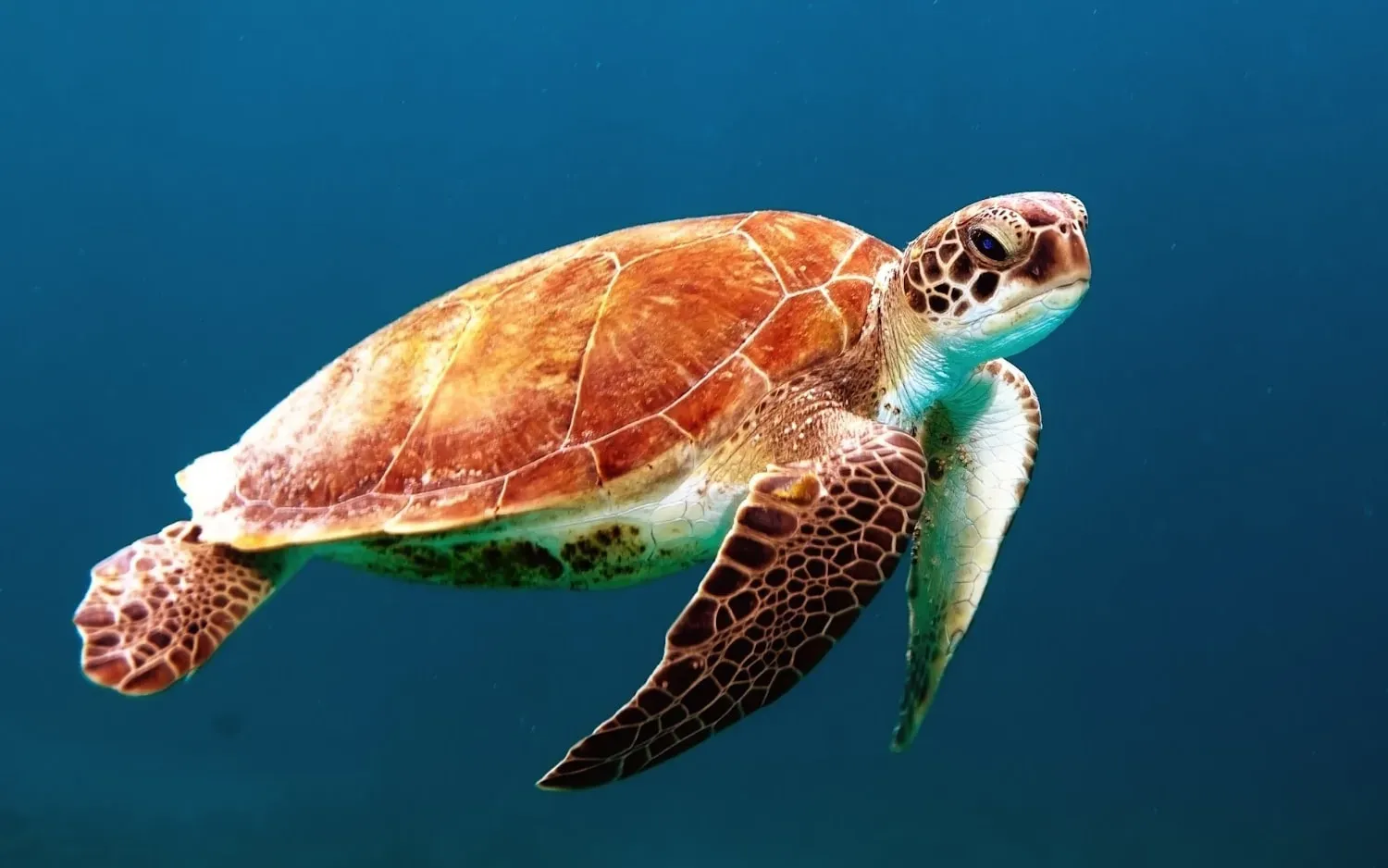 Real photograph
 Why we love them
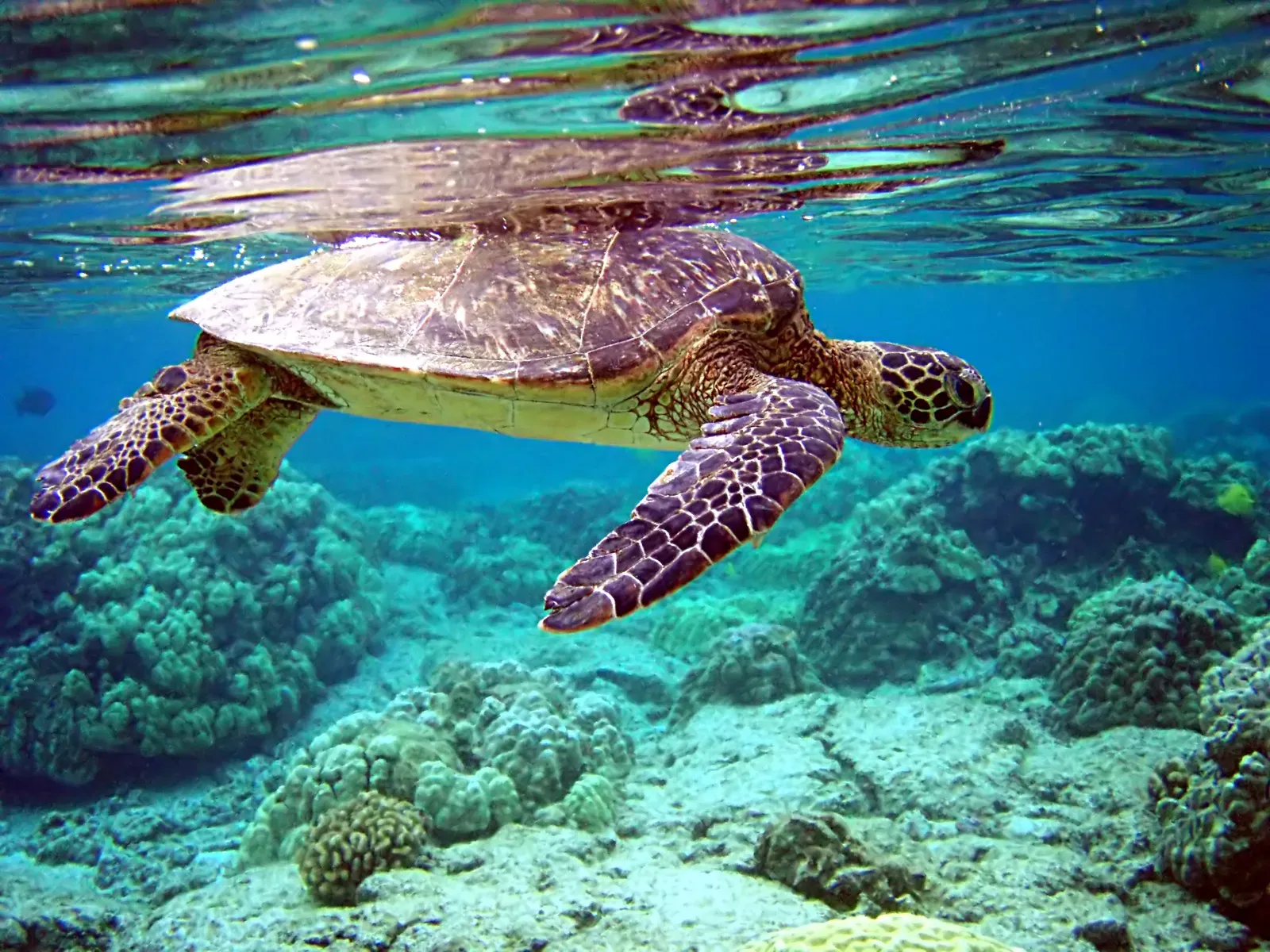
The green sea turtle is a large, gentle turtle that lives in warm seas all around the world. It has a smooth, rounded shell and flat, paddle-shaped flippers that help it glide through the water like a slow, graceful swimmer. Even though it is called green, its shell is usually brown or olive. The name comes from the green colour of the fat inside its body.
Green sea turtles are special because grown-ups mostly eat plants. They munch on seagrass and soft algae along the sea floor, almost like cows grazing in a field underwater. When they are very young they nibble tiny sea animals too, and they eat more and more plants as they grow up.
A sea turtle must come up to the top of the water to breathe air, just like you do. But it can hold its breath for a long time and even sleep tucked under a rock below the surface for hours before coming up for a new breath.
When it is time to lay eggs, a mother turtle swims a very long way back to the same sandy beach where she hatched long ago. She digs a nest, lays her round eggs in the warm sand, and covers them up. About two months later the tiny babies hatch and hurry down to the sea.
There are fewer green sea turtles than there once were, so they need our care. Their sandy nesting beaches, calm seas, and healthy seagrass are all important to keep safe. Many countries now protect these turtles and their eggs so that more babies can grow up and swim in the ocean.
My home
Coastal waters, seagrass beds, coral reefs, open ocean, sandy beaches
Where I live
Pacific Ocean, Atlantic Ocean, Indian Ocean, Arctic Ocean, Southern Ocean
What I eat
Seagrass, algae, seaweed
How long I am
0.8–1.5 m
How heavy I am
68–190 kg
How long I live
70 years
The green sea turtle gets its name from the green colour of the fat inside its body, not from its shell.
Grown-up green sea turtles are gentle plant-eaters that graze on seagrass and algae, a bit like underwater cows.
A mother turtle swims all the way back to the same beach where she hatched to lay her own eggs in the sand.
Green sea turtles can live to be 70 years old or even older.
Every green sea turtle can feel happy, scared and loved — just like you.
Looking after my friends
How many are there?
More than 37,000 green sea turtle nests were recorded on Florida beaches in 2015.
This is a nest count from one place and year; females can lay several nests, so it is not a turtle head count.
Estimate source: Green sea turtle
How are they doing?
EndangeredThis species has a very high risk of extinction in the wild, so protecting it matters greatly.
You can help by learning their names, keeping wild places clean, and telling someone why this animal matters.
Where this came from
- Chelonia mydas (Green Turtle) — Red List Assessment — IUCN Red List of Threatened Species
- Green Turtle — NOAA Fisheries (U.S. National Oceanic and Atmospheric Administration)
- Green sea turtle — Wikipedia