 ← All animals
 amphibian · Phyllobates terribilis
Golden poison frog
Gallery
5 photos Real photograph 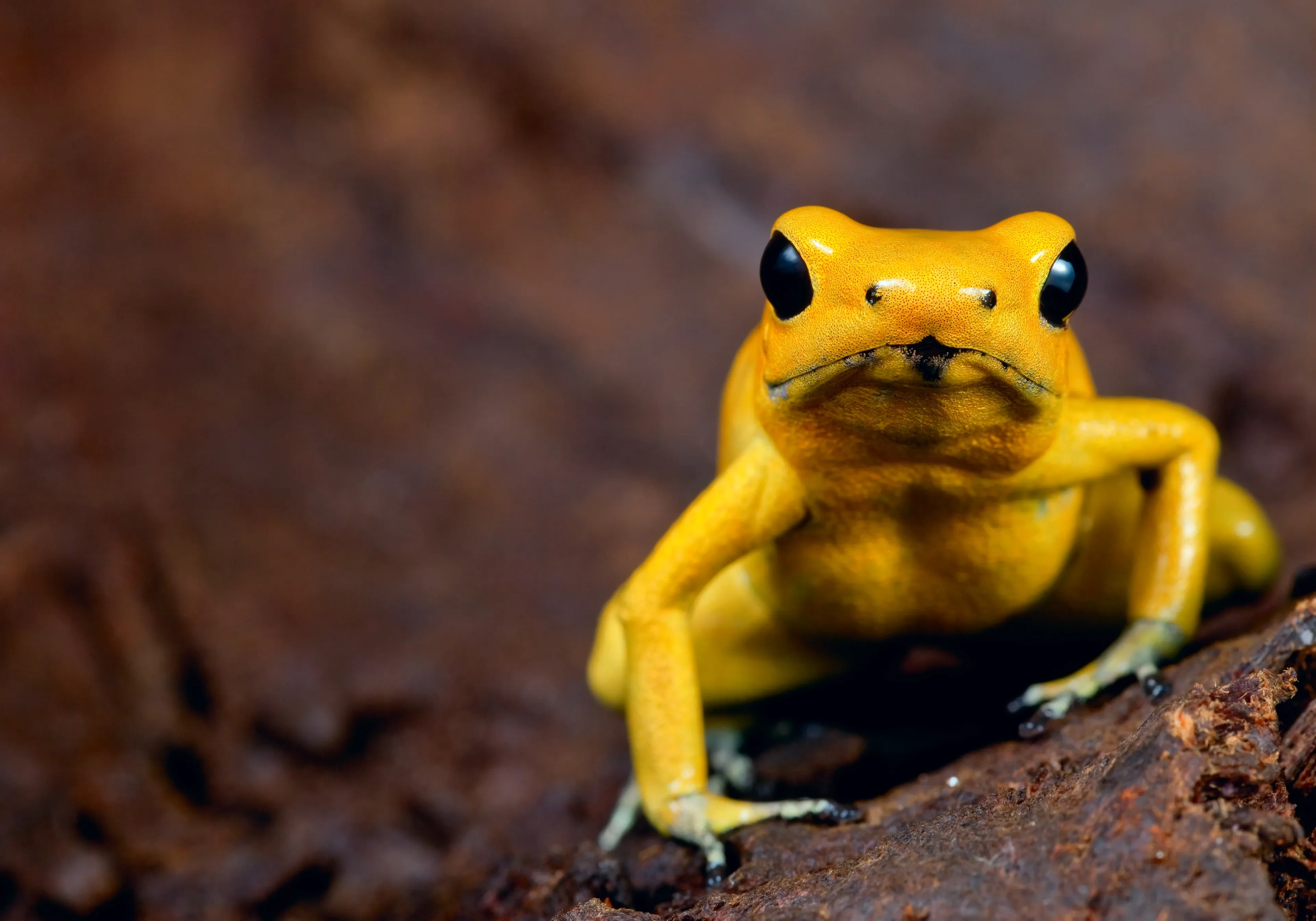 Real photograph
 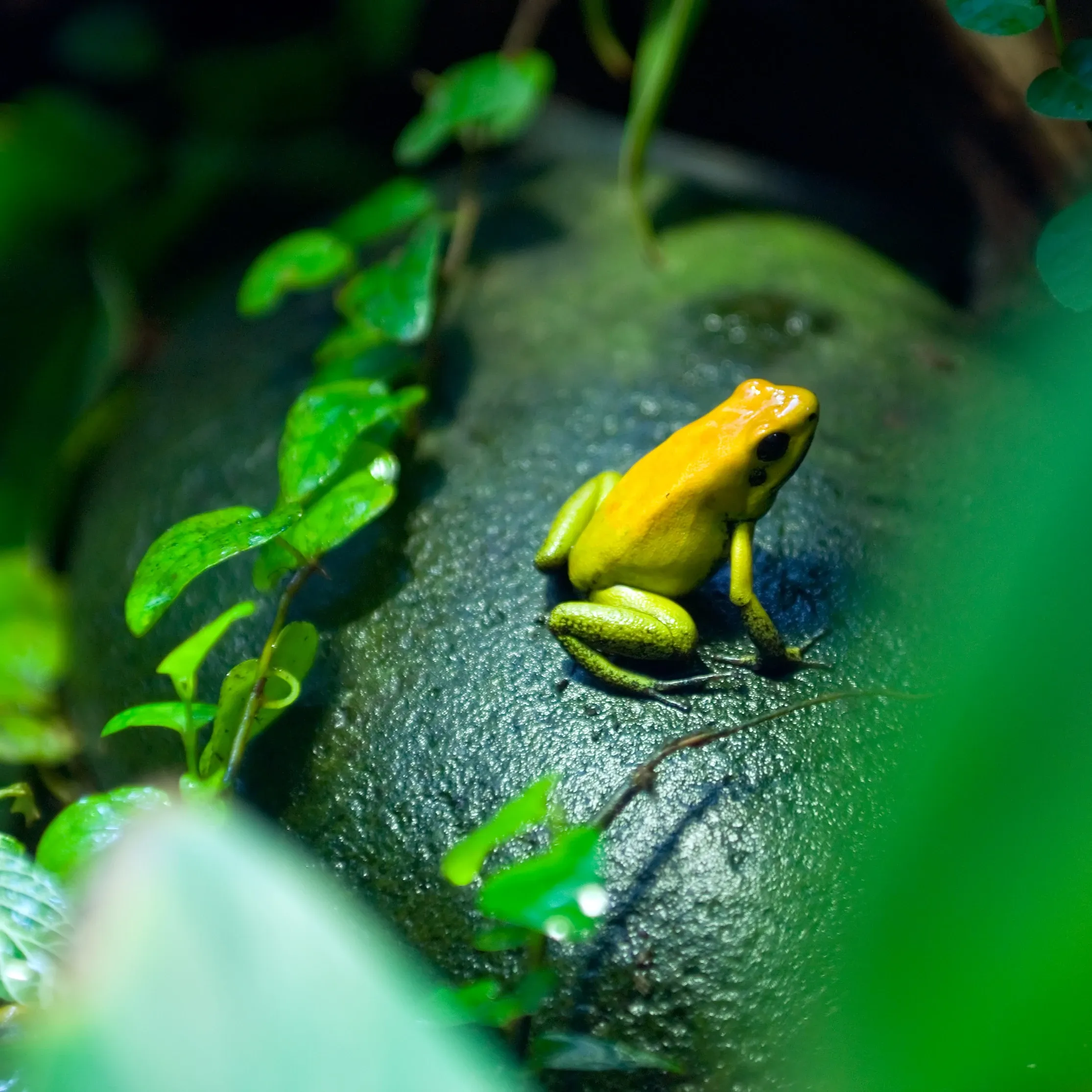 Real photograph
 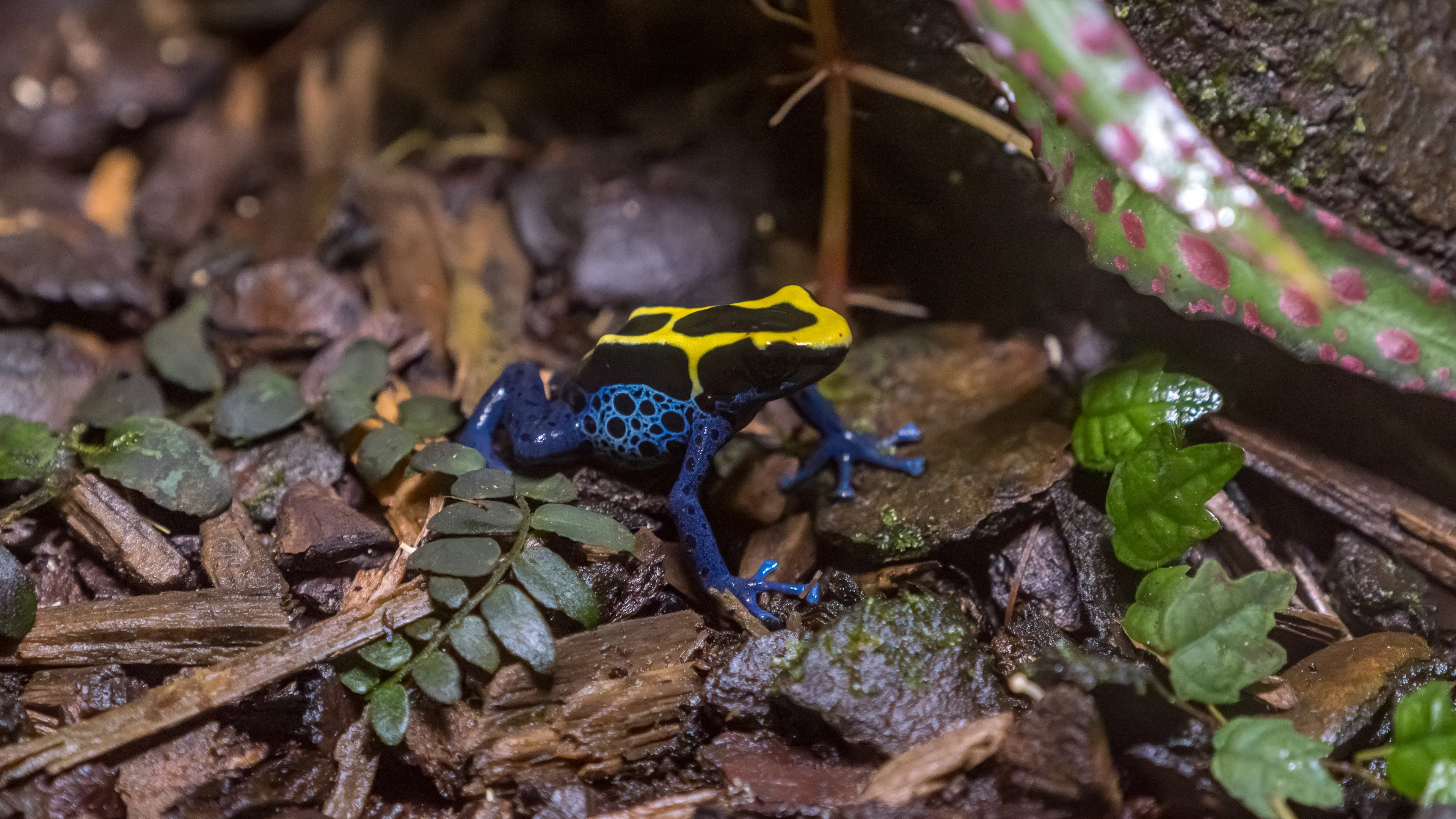 Real photograph
 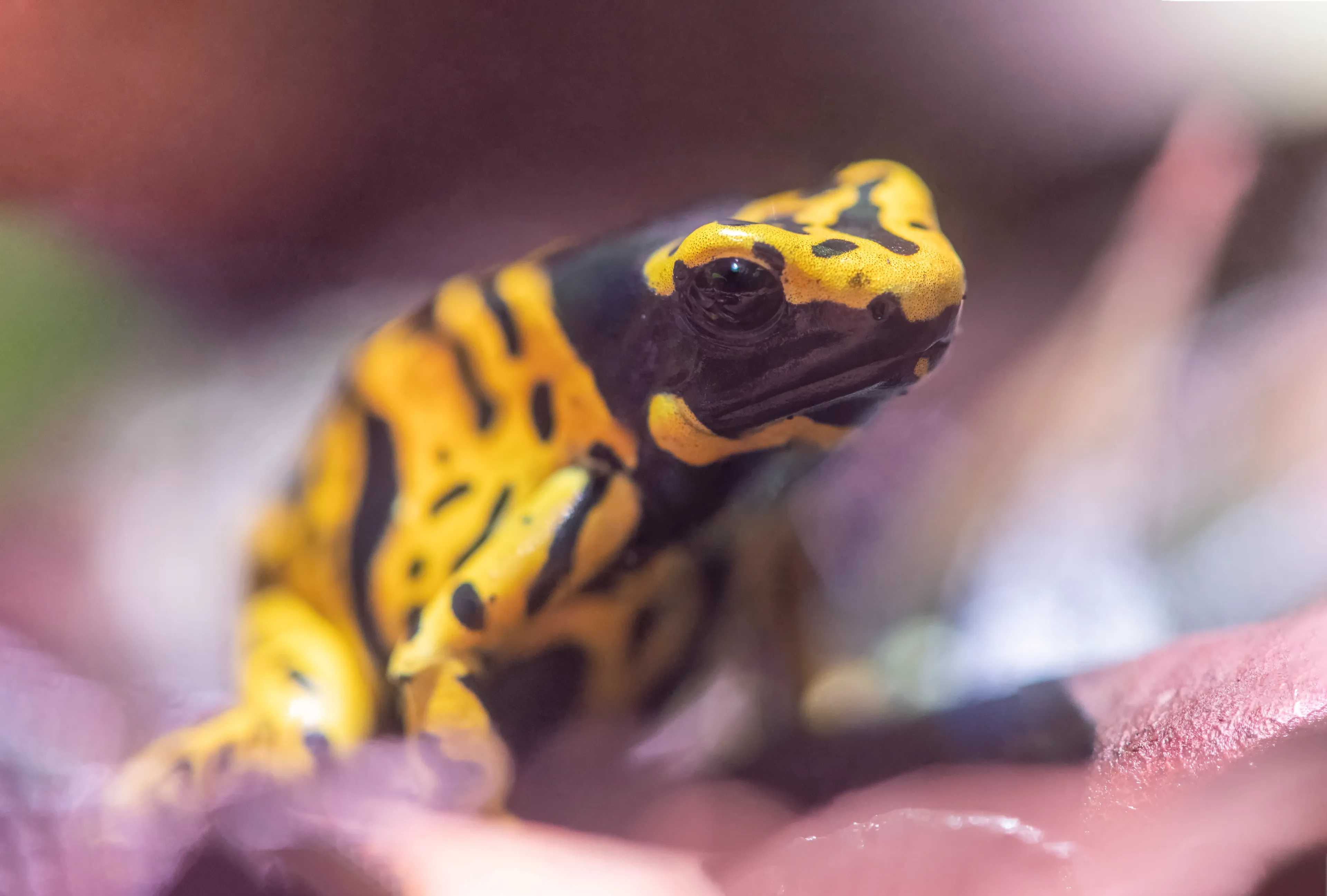 Real photograph
 Why we love them
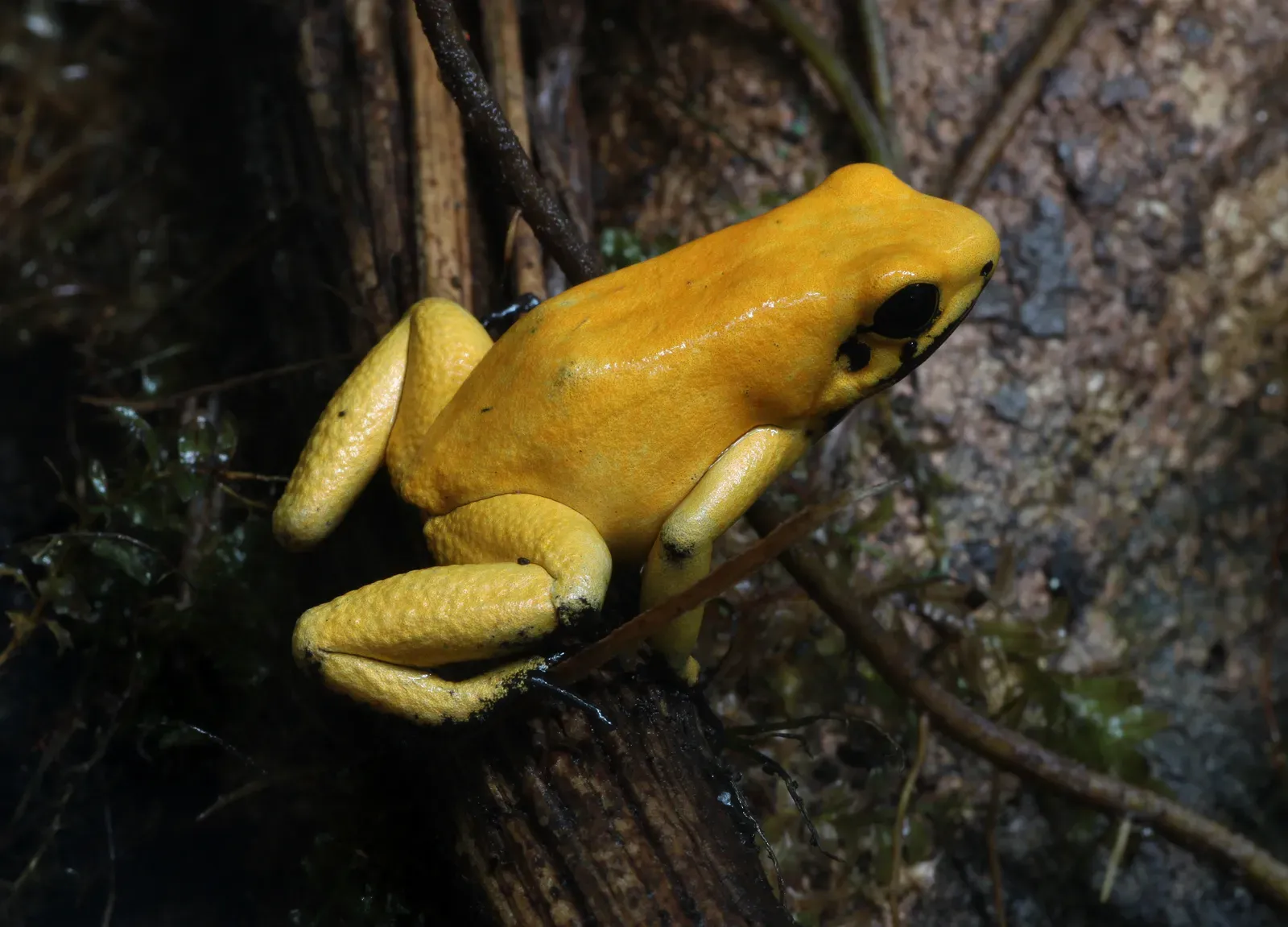
The golden poison frog is one of the tiniest, brightest frogs in the world. A grown-up is only about as long as your thumb, and it shines in a bold colour like sunny yellow, orange, or minty green. It lives in the warm, rainy forests along the Pacific coast of Colombia, in South America.
Even though it is small, this little frog carries a big secret in its skin. Its skin makes a special substance that keeps hungry animals from wanting to eat it. That is exactly what the bright colour is for: it is a warning sign. In nature, flashy colours often mean "I taste terrible, so please leave me alone." Animals that see the frog learn to stay away, and the frog stays safe.
Here is the surprising part: the frog does not make its skin protection all by itself. It gets it from the tiny wild insects it eats, like little ants and beetles in the forest. Frogs that are raised on different food grow up completely harmless. So the golden poison frog is not looking for any trouble — it just wants to hop about and hunt bugs in peace.
Golden poison frogs are caring parents. After the eggs hatch on the forest floor, the wriggly tadpoles climb onto a parent's back and hitch a ride. The grown-up carries them up into the plants and gently pops them into little pools of water that collect inside the leaves, where the tadpoles can grow.
Sadly, these frogs live in only a small patch of forest, and much of that forest is being cut down. Because their home is shrinking, the golden poison frog is listed as Endangered. The good news is that people are protecting the rainforest and raising these frogs safely, so this dazzling little jewel of the forest can keep on shining.
My home
Rainforest, forest floor, leaf litter
Where I live
South America
What I eat
Ants, termites, small beetles, tiny insects
How long I am
0.05–0.06 m
How heavy I am
0.03 kg
The golden poison frog's bright colour is a warning sign that tells other animals "please don't eat me" — so if you leave it alone, it leaves you alone.
This frog gets its powerful skin from the tiny wild insects it eats, so frogs raised on other food grow up completely harmless.
Golden poison frog parents are wonderful helpers — they carry their wriggly tadpoles on their backs up to little pools of water tucked inside plants.
Every golden poison frog can feel happy, scared and loved — just like you.
Looking after my friends
How many are there?
A research colony established from wild-caught golden poison frogs contained 18 frogs.
This is a historical research-colony count, not the number of frogs in the wild.
Estimate source: Golden poison frog
How are they doing?
EndangeredThis species has a very high risk of extinction in the wild, so protecting it matters greatly.
You can help by learning their names, keeping wild places clean, and telling someone why this animal matters.
Where this came from
- Phyllobates terribilis (Golden Poison Frog) — IUCN Red List status (Endangered) — IUCN Red List of Threatened Species
- Phyllobates terribilis (Golden Poison Frog) — Animal Diversity Web, University of Michigan Museum of Zoology
- Golden poison frog — Wikipedia