 ← All animals
 mammal · Myrmecophaga tridactyla
Giant anteater
Gallery
4 photos Real photograph 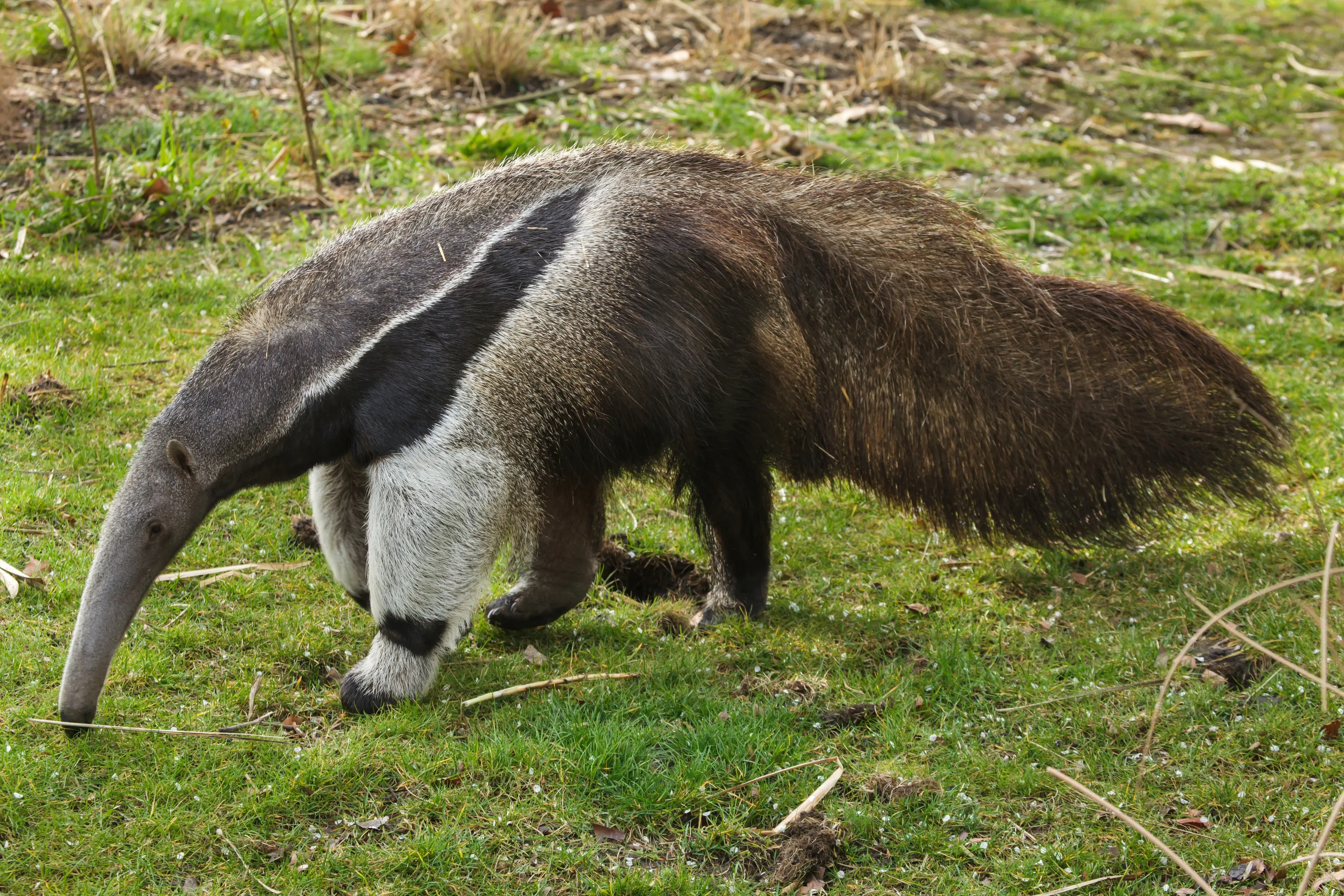 Real photograph
  Real photograph
  Real photograph
 Why we love them
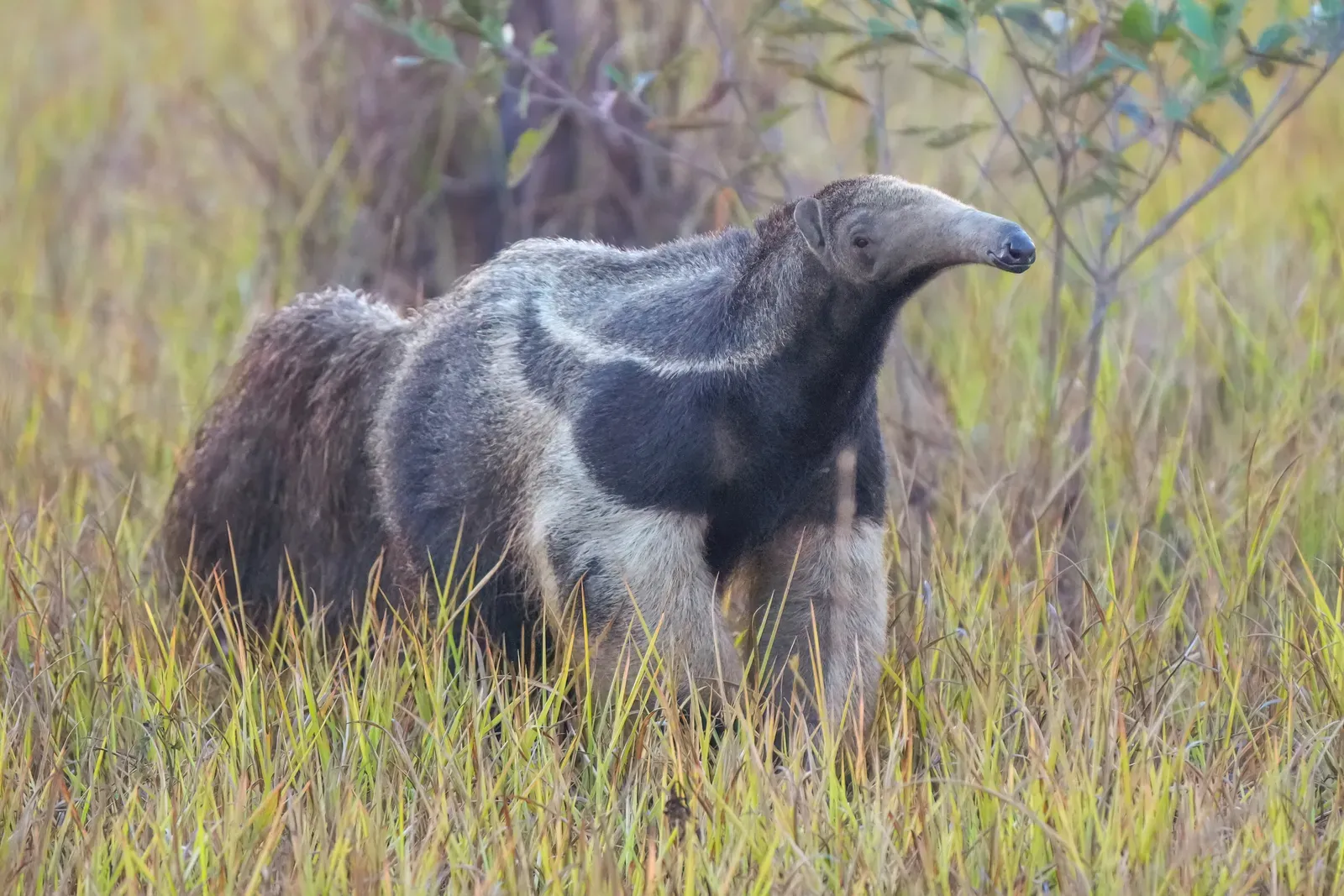
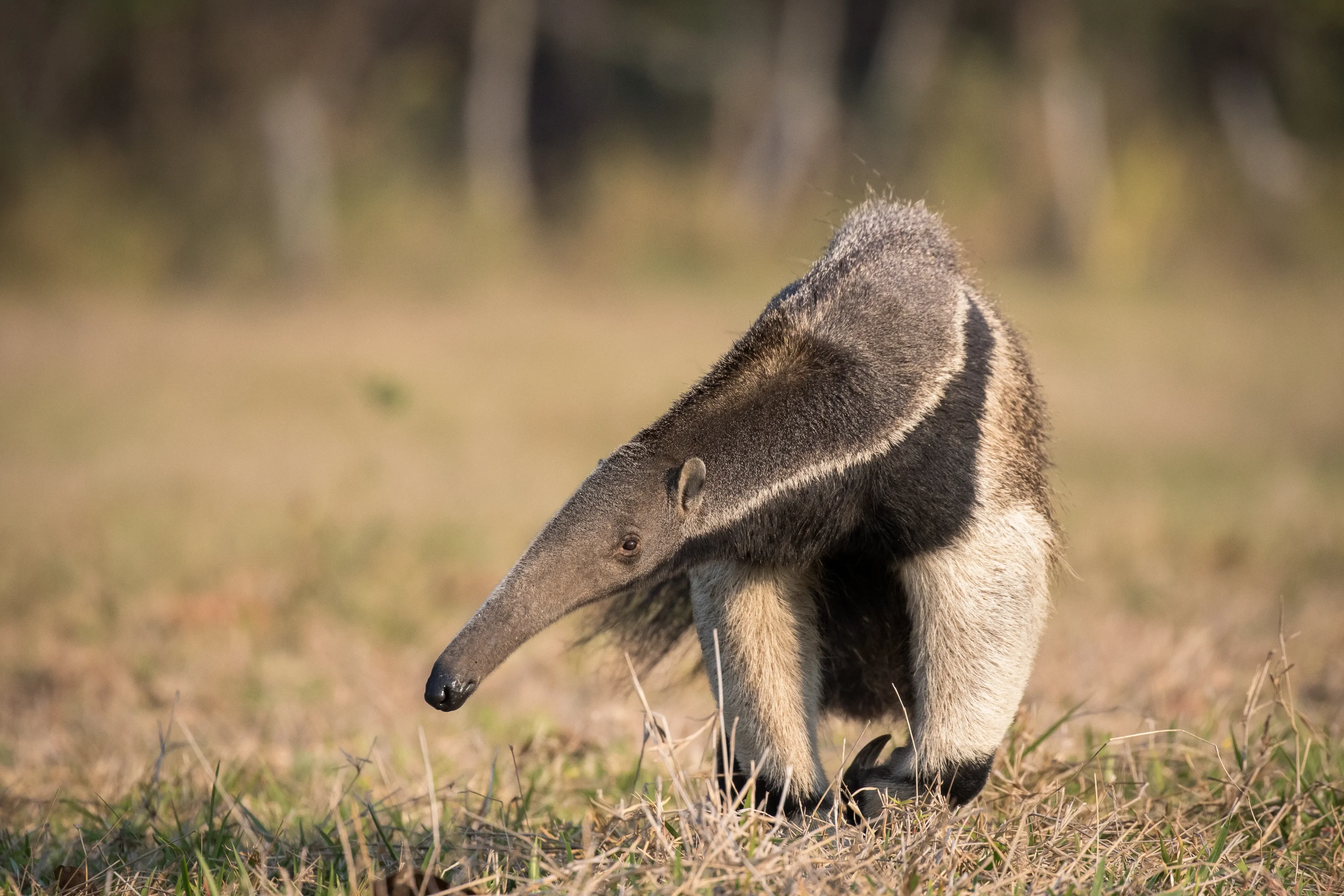
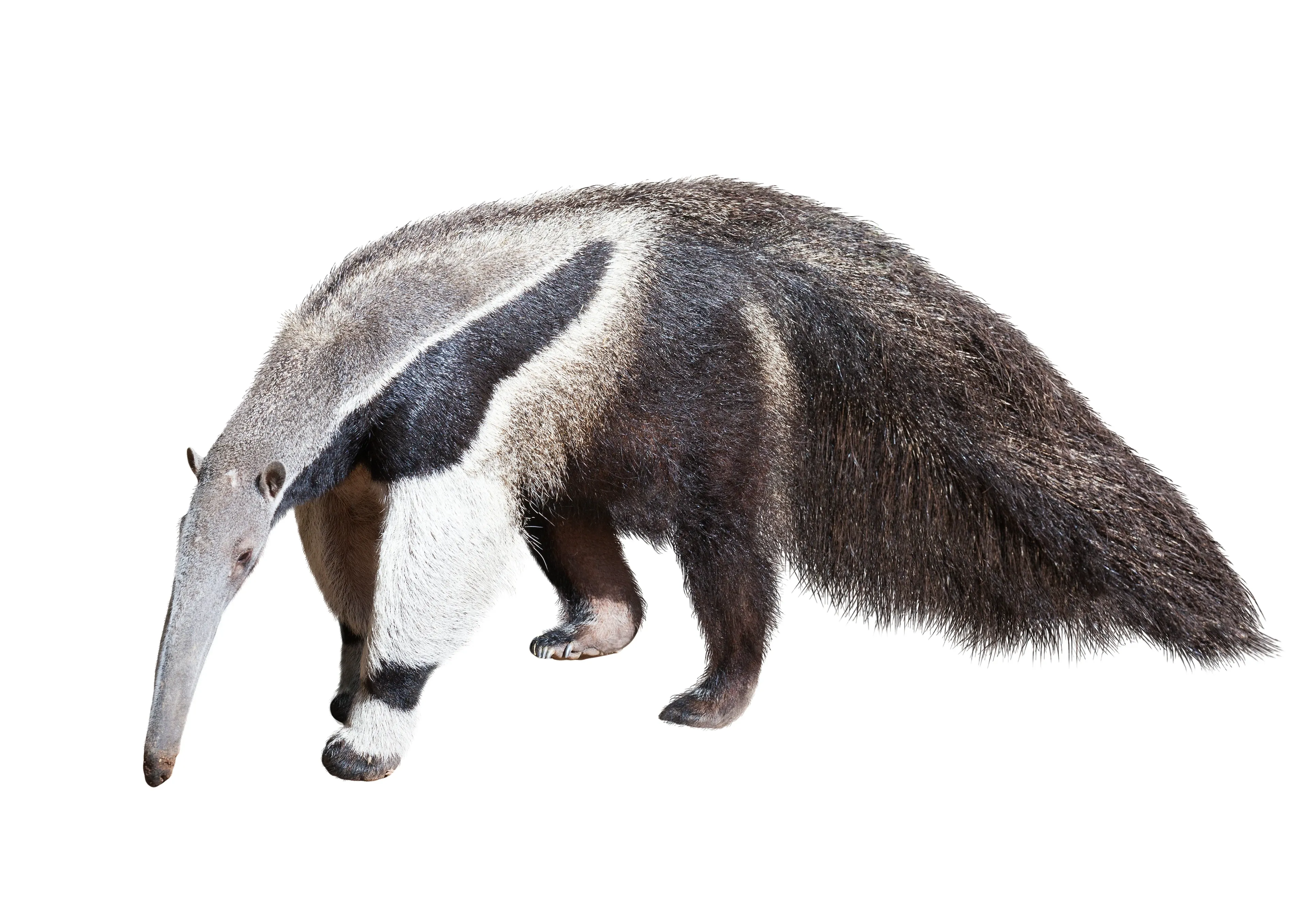
The giant anteater is a wonderfully strange-looking animal with a very long nose, a big bushy tail, and a coat of grey fur with bold black-and-white stripes across its shoulders. It lives in the grasslands and forests of Central and South America, and it is the biggest of all the anteaters.
As its name tells you, this animal loves to eat ants and termites. It has a brilliant tongue that can be about 60 centimetres long, longer than your arm. The tongue is covered in sticky spit, and it flicks in and out very fast to gather up thousands of tiny insects.
Giant anteaters have strong front legs and big curved claws. They use these claws to gently open up an ant or termite nest, take a quick snack, and then move on to the next one. Because they never stay long at one nest, the insect homes are not destroyed and can be visited again another day. Anteaters have no teeth, so they simply swallow their little meals whole.
A mother anteater usually has one baby at a time. The tiny pup climbs straight onto her back after it is born and holds on tight. It travels everywhere with her for months, and its stripy fur lines up so neatly with its mother's that the baby is very hard to see riding along.
Giant anteaters have become rarer in some places, mostly because the wild grasslands they roam are being turned into farms, and because they can be hurt by grass fires and busy roads. Many parks now protect them, giving these gentle, long-nosed animals plenty of space to snuffle for their insect dinners.
My home
Grassland, savanna, tropical rainforest
Where I live
North America, South America
What I eat
Ants, termites, grubs
How long I am
1–1.2 m
How heavy I am
18–39 kg
How long I live
26 years
A baby anteater rides on its mother's back for many months, and its stripy fur lines up with hers so it is hard to see.
A giant anteater's sticky tongue can be about 60 centimetres long and flick in and out very fast to scoop up ants and termites.
Giant anteaters have no teeth at all, so they swallow their tiny insect meals whole.
Every giant anteater can feel happy, scared and loved — just like you.
Looking after my friends
How many are there?
Different survey methods estimated about 260–530 giant anteaters in Brazil's Emas National Park.
This is one protected population; the wide range reflects different aerial and ground survey methods.
Estimate source: Giant Anteater Population Survey in Emas National Park, Brazil — A Proposed Monitoring Program
How are they doing?
VulnerableThis species has a high risk of extinction in the wild unless the pressures on it improve.
You can help by learning their names, keeping wild places clean, and telling someone why this animal matters.
Where this came from
- Myrmecophaga tridactyla (Giant Anteater) — Red List Assessment — IUCN Red List of Threatened Species
- Myrmecophaga tridactyla (giant anteater) — Animal Diversity Web, University of Michigan Museum of Zoology
- Giant anteater — Wikipedia
- Giant Anteater Population Survey in Emas National Park, Brazil — A Proposed Monitoring Program — Endangered Species Update