 ← All animals
 mollusc · Achatina fulica
Giant African land snail
Gallery
2 photos Real photograph 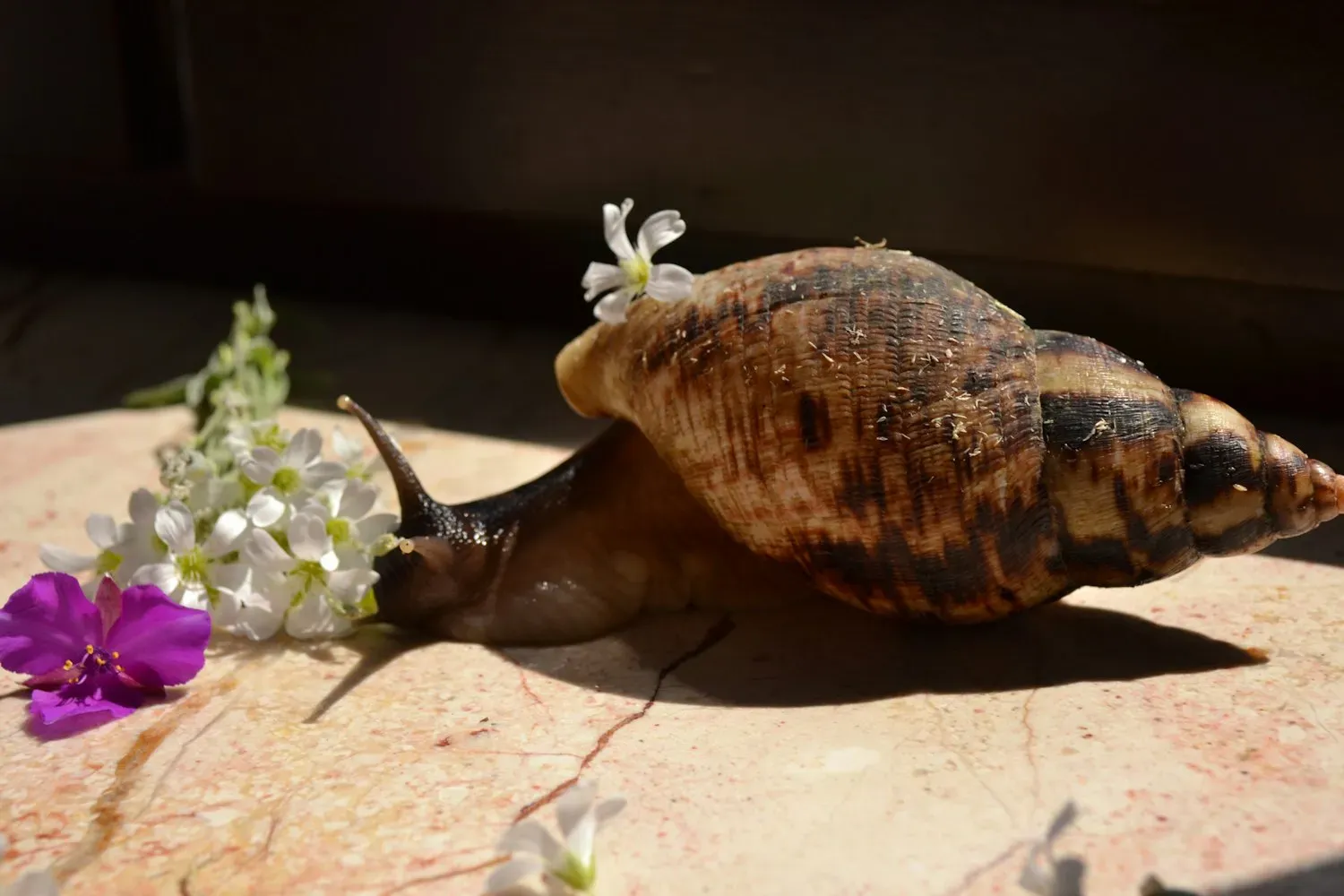 Real photograph
 Why we love them
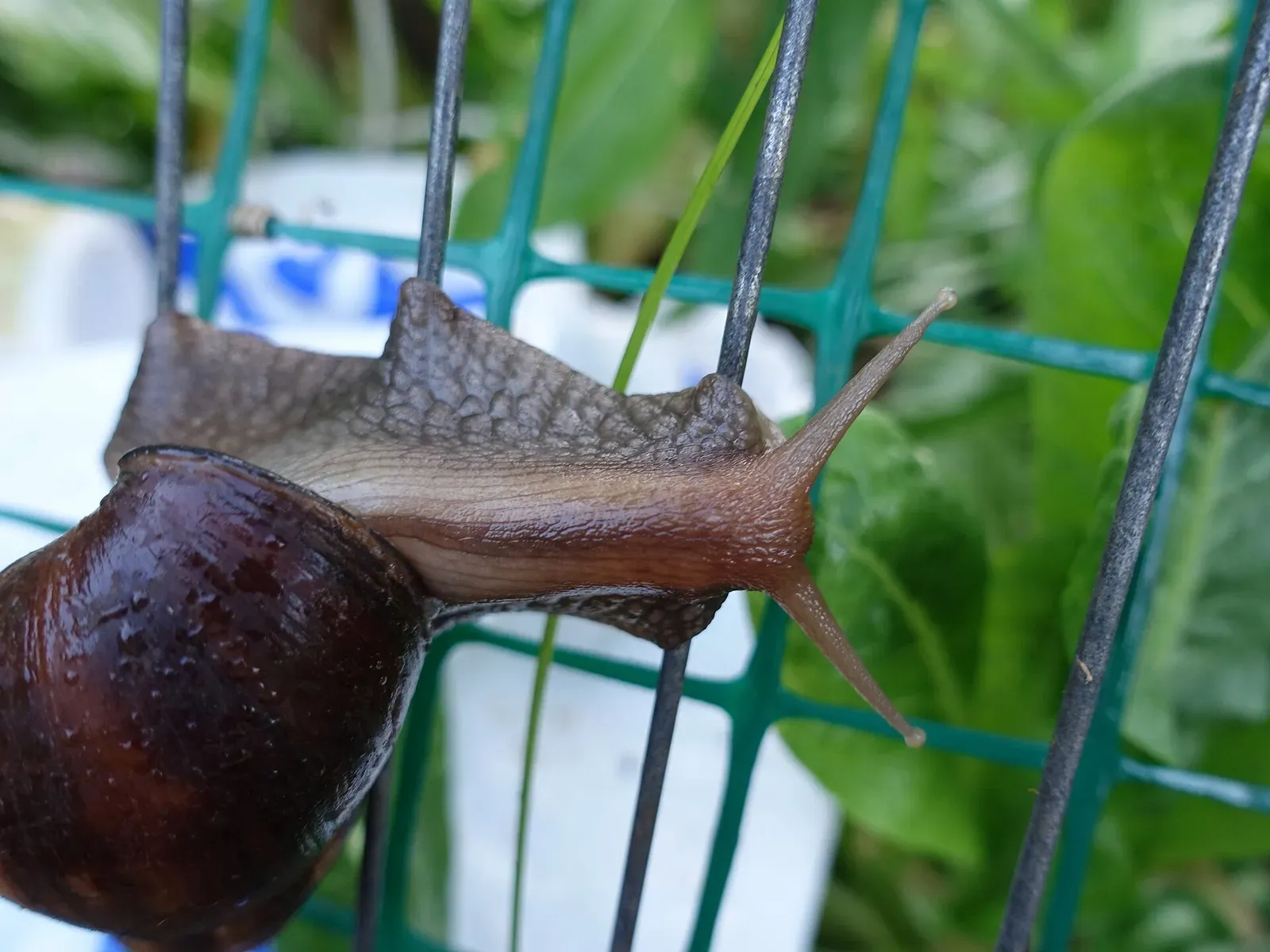
The giant African land snail is one of the largest snails that lives on land. A full-grown one can be around 20 centimetres long — longer than your hand — with a tall, brown-and-cream shell that spirals round and round. It carries this shell on its back and can tuck its soft body safely inside.
This snail is a plant-eater with a big appetite. It munches on leaves, fruit, vegetables, and flowers, and it will also nibble old, rotting plants. Young snails even eat a little soil to help build their shells strong. Most of the feeding happens at night, when the air is cool and damp.
Giant African land snails are famous for laying lots of eggs. A single snail can lay up to about a hundred eggs in its first year and even more in its second. Over its whole life, which can last up to about five years, one snail may lay close to a thousand eggs in total.
These snails first come from the warm lands of East Africa, in places like Kenya, Tanzania, and Ethiopia. People have carried them to many other countries, and in those new homes they can become a problem, eating farm crops and garden plants. It is not the snail's fault — it is just doing what snails do — but it is why many countries ask people not to keep or move them.
Because it is such a common and widespread snail, it has not been given a conservation rating on the main list of threatened animals. In its faraway new homes it is often seen as a pest rather than an animal that needs protecting.
My home
Forest edge, farmland, gardens, urban areas
Where I live
Africa
What I eat
Leaves, fruit, vegetables, flowers, decaying plants
How long I am
0.07–0.2 m
How long I live
5 years
The giant African land snail is one of the biggest land snails in the world, growing up to about 20 centimetres long.
One snail can lay a great many eggs in its life — up to about a thousand — which is why it spreads to new places so easily.
It comes out mostly at night to feed on leaves, fruit, and vegetables.
Every giant african land snail can feel happy, scared and loved — just like you.
Looking after my friends
How many are there?
A giant African land snail lays about 200 eggs in an average clutch and may lay 5–6 clutches a year.
This is average reproduction by one snail, not a wild population estimate.
Estimate source: Achatina fulica — Global Invasive Species Database
How are they doing?
No global assessmentThis animal does not have a global extinction-risk assessment recorded in this system.
You can help by learning their names, keeping wild places clean, and telling someone why this animal matters.
Where this came from
- Achatina fulica — Global Invasive Species Database — ISSG (Invasive Species Specialist Group), IUCN SSC
- Lissachatina fulica — Wikipedia