 ← All animals
 mollusc · Sepia officinalis
Common cuttlefish
Gallery
2 photos Real photograph 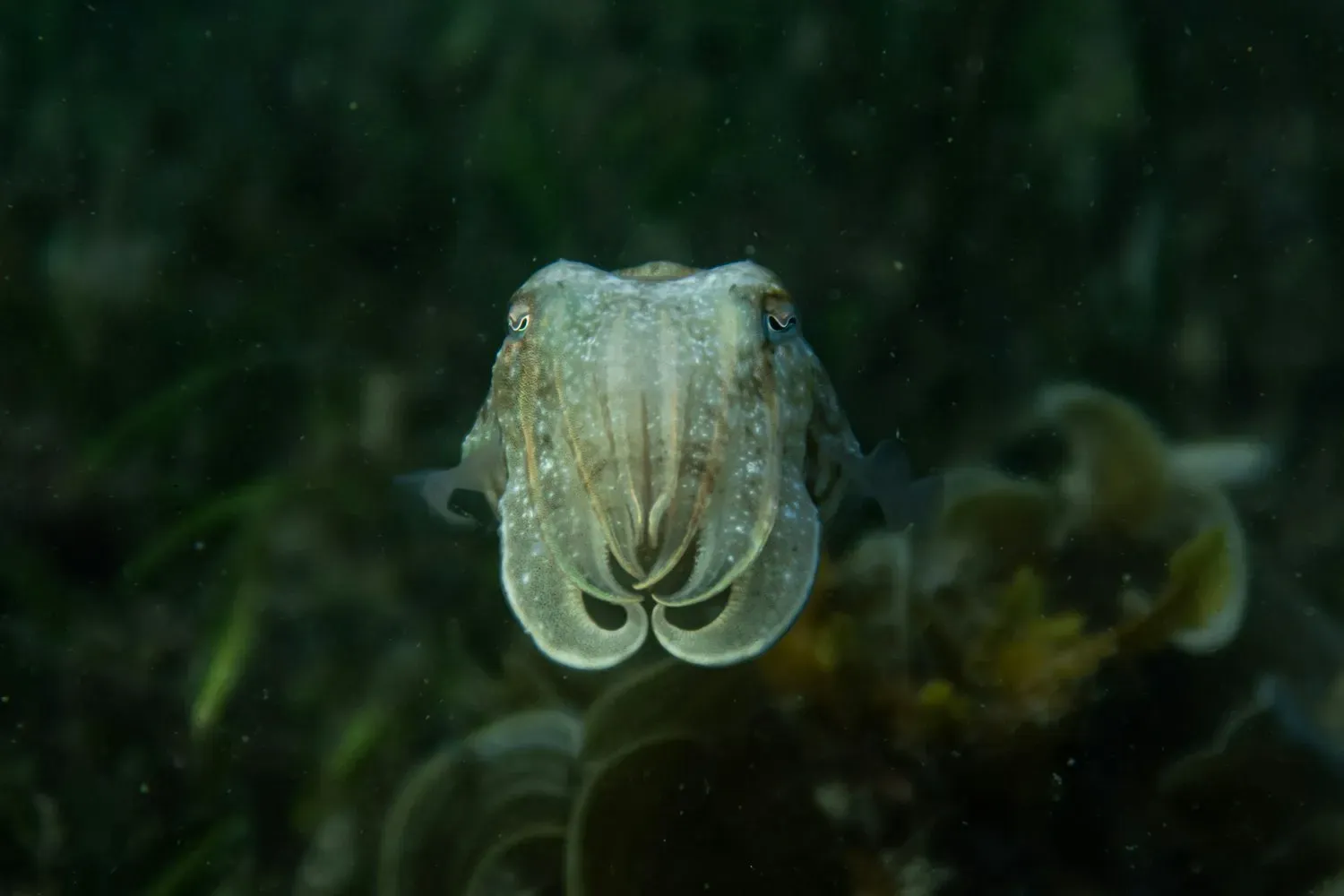 Real photograph
 Why we love them
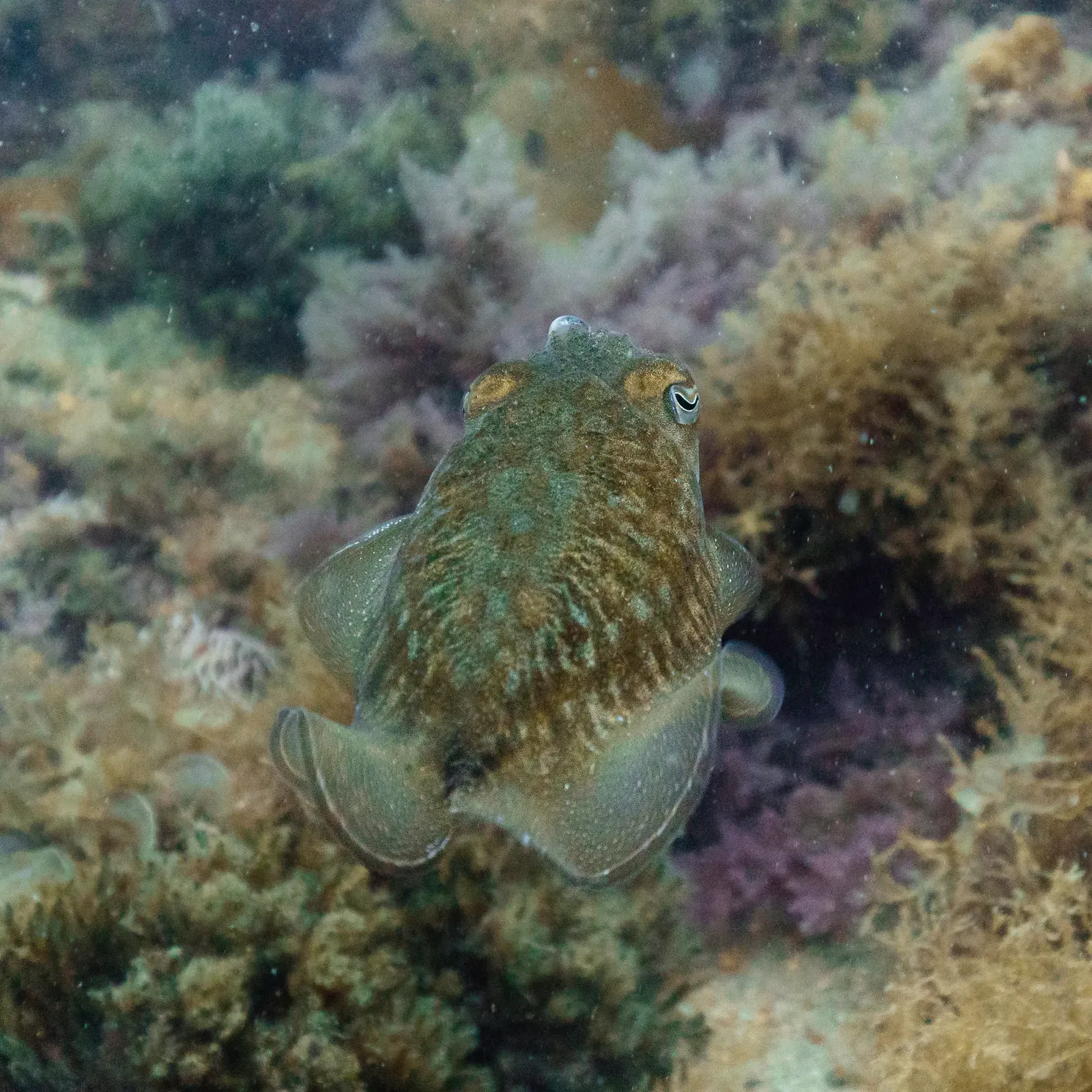
The common cuttlefish is a soft sea animal with a big head, large eyes, and a frill of fin around its body. It is not a fish at all — it is a cephalopod, a cousin of the octopus and the squid. It glides over the seabed looking for its next meal.
The cuttlefish is a master of disguise. In the blink of an eye it can change the colour of its skin, and even make it smooth or bumpy, to match the sand or rocks below. It uses this magic to hide from hungry animals, to surprise its dinner, and to send flashing signals to other cuttlefish.
To catch food, the cuttlefish has eight arms and two extra-long tentacles hidden away. When a crab or a little fish comes close, the tentacles shoot out in a flash and pull the meal back to its beak. Common cuttlefish are the biggest kind in British seas and are bold hunters.
Hidden inside its body is a light, chalky shell called a cuttlebone. It is full of tiny air spaces that help the cuttlefish float without sinking. You may have seen a white cuttlebone washed up on a beach, or hanging in a pet bird's cage.
Cuttlefish do not live very long, usually only a year or two. In spring the mother lays clusters of eggs that she stains black with her own ink, so they look like little bunches of grapes. They remain common in many UK seas, and careful fishing and healthy shallow breeding waters help keep them that way.
My home
Ocean, seabed, coastal waters
Where I live
Atlantic Ocean
What I eat
Crabs, fish, small cuttlefish, shrimp
How long I am
0.3–0.45 m
How heavy I am
4 kg
How long I live
1–2 years
A cuttlefish can change the colour and even the bumpiness of its skin in less than a second to hide.
Inside its soft body is a chalky cuttlebone that helps it float, and you can find these washed up on beaches.
It has eight arms and two long tentacles that shoot out to grab crabs and fish.
Every common cuttlefish can feel happy, scared and loved — just like you.
Looking after my friends
How many are there?
A mature common cuttlefish in an Aegean Sea study carried the potential for about 3,700–8,000 eggs.
This is potential egg production in mature females from one region, not a count of cuttlefish or eggs actually laid.
Estimate source: Fecundity of the common cuttlefish, Sepia officinalis: a new look at the old problem
How are they doing?
Lower extinction riskThis species has a lower global extinction risk right now. Local populations can still grow or shrink.
You can help by learning their names, keeping wild places clean, and telling someone why this animal matters.
Where this came from
- Common cuttlefish (Sepia officinalis) — Wikipedia
- Common cuttlefish — The Wildlife Trusts
- Fecundity of the common cuttlefish, Sepia officinalis: a new look at the old problem — Scientia Marina