 ← All animals
 mammal · Bos taurus
Cow
Gallery
2 photos Real photograph 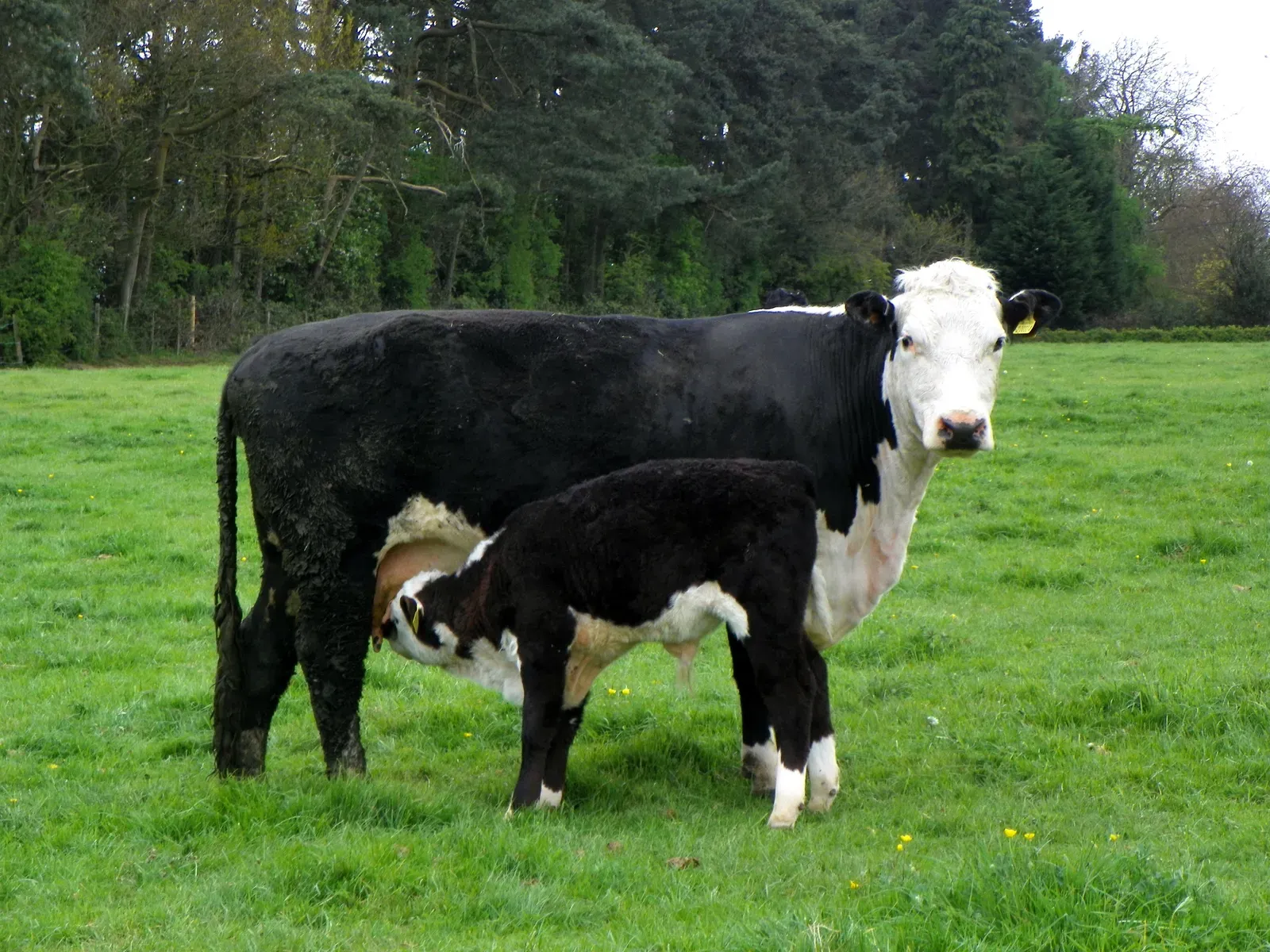 Real photograph
 Why we love them
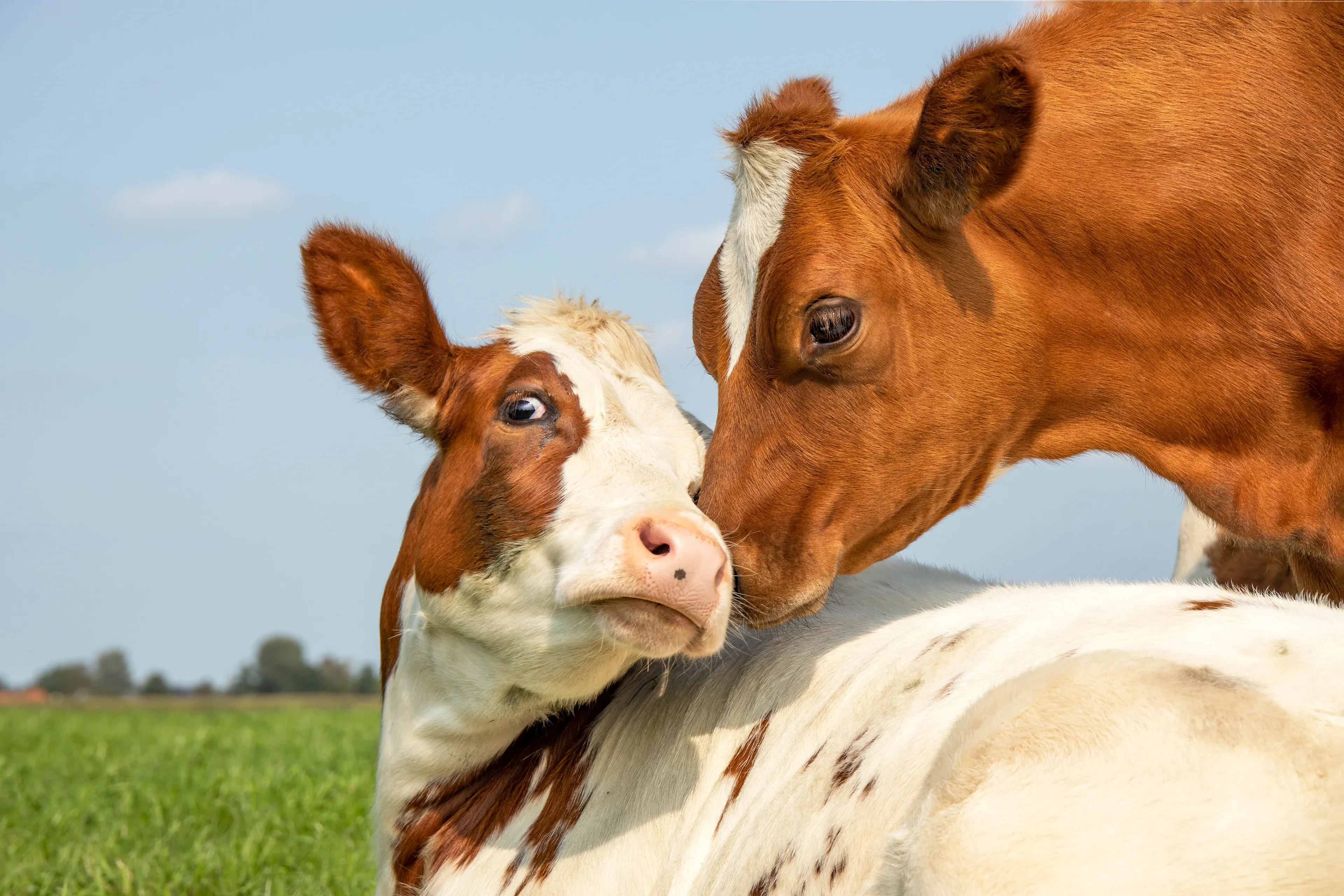
Cows are big, gentle farm animals with wide bodies, soft eyes, and a slow, swishing tail. People keep them on farms all over the world, and you can find them munching grass in green fields on almost every continent.
Long ago, cattle came from a huge wild animal called the aurochs, which is no longer around today. Over thousands of years, people raised cattle on farms, and the friendly cows and bulls we know now became calmer and happy to live alongside people.
Cows are herbivores, which means they eat only plants. They spend much of the day grazing on grass and clover. A single cow can nibble a big pile of grass in one day. Then it rests and chews its food all over again, a clever trick called chewing the cud that helps it get every bit of goodness from the grass.
Cows have a very special stomach with four rooms inside. The grass they swallow gets softened in the first room, then comes back up as a mouthful called cud so the cow can chew it a second time. This slow, careful way of eating lets cattle turn tough grass into all the energy they need.
A baby cow is called a calf. After growing inside its mother for about nine months, a calf can stand up and walk within a few hours of being born. It drinks its mother's milk and stays close by her side, and it can even tell her moo apart from all the other cows in the herd.
Cows like to live together in a family group called a herd. There are around a billion cattle in the world, which makes them one of the most common big animals on Earth. People give them wide fields, fresh water, and shade, and the cattle give us milk in return.
My home
Farmland, grassland, pasture
Where I live
Africa, Asia, Europe, North America, South America, Oceania, Antarctica
What I eat
Grass, clover, hay, leafy plants
How long I am
2–3.5 m
How heavy I am
600–1200 kg
How long I live
15–25 years
Cows have a special stomach with four rooms, and they chew their food twice by bringing it back up to chew again, which is called chewing the cud.
A baby cow is called a calf, and a calf can stand up and walk within a few hours of being born.
A calf knows its own mother's moo and can pick her voice out from all the other cows in the herd.
Every cow can feel happy, scared and loved — just like you.
Looking after my friends
How many are there?
About 1.6 billion cattle were recorded worldwide in 2023.
FAO describes this as almost 1.6 billion. It combines countries' stock records and estimates, so it is a rounded snapshot rather than one worldwide head count.
The population in the world was increasing in 2023.
How are they doing?
No global assessmentThis animal does not have a global extinction-risk assessment recorded in this system.
You can help by learning what good care looks like, treating animals gently, and supporting people who protect their wellbeing.
Where this came from
- Bos taurus (domestic cattle) — conservation status — IUCN Red List of Threatened Species
- Bos taurus (aurochs, domesticated cattle) — Animal Diversity Web, University of Michigan Museum of Zoology
- Cattle (Bos taurus) — Wikipedia
- The state of livestock diversity — species diversity and distribution — Food and Agriculture Organization of the United Nations