 ← All animals
 amphibian · Bufo bufo
Common Toad
Gallery
5 photos Real photograph 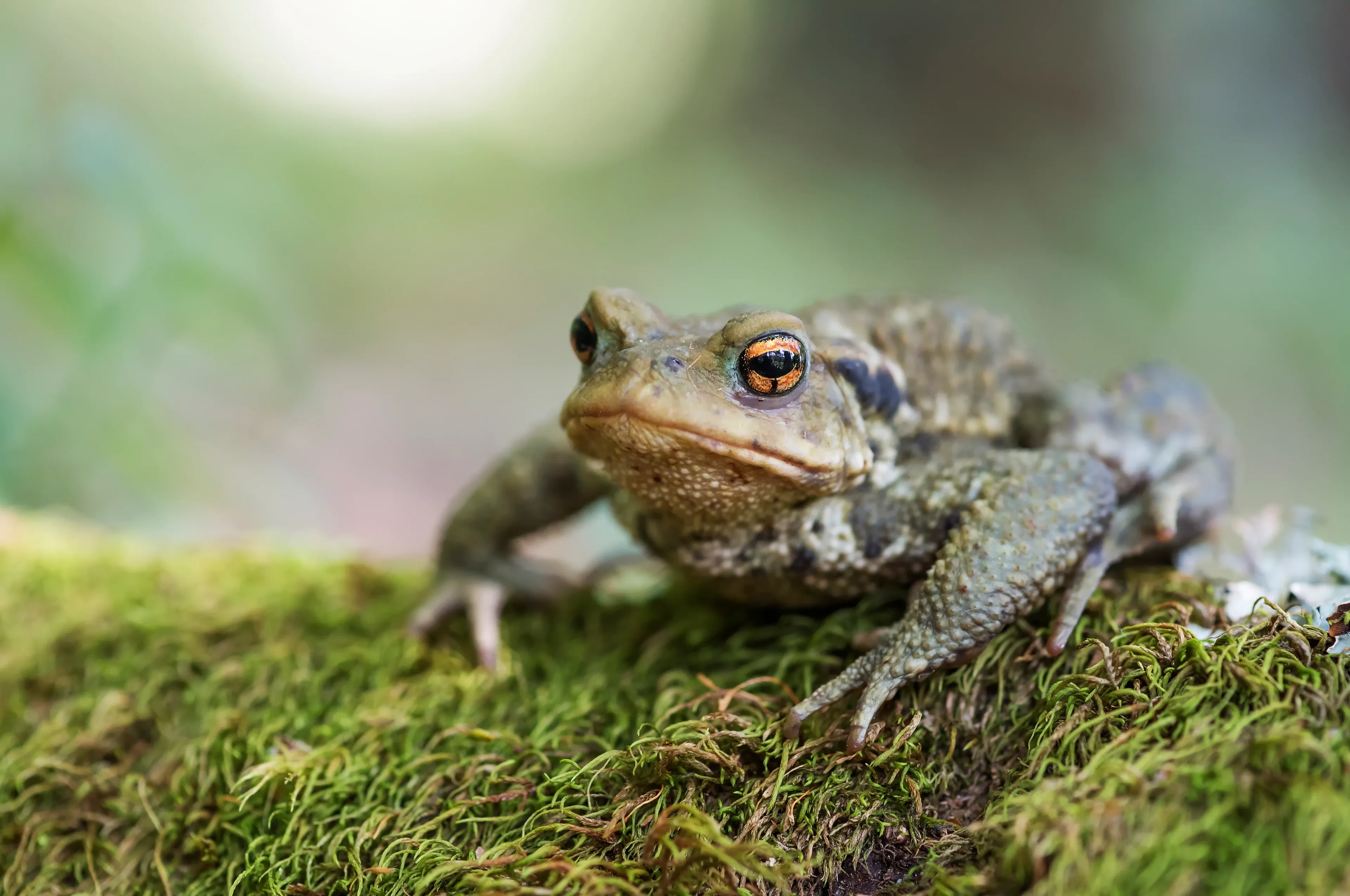 Real photograph
  Real photograph
  Real photograph
  Real photograph
 Why we love them
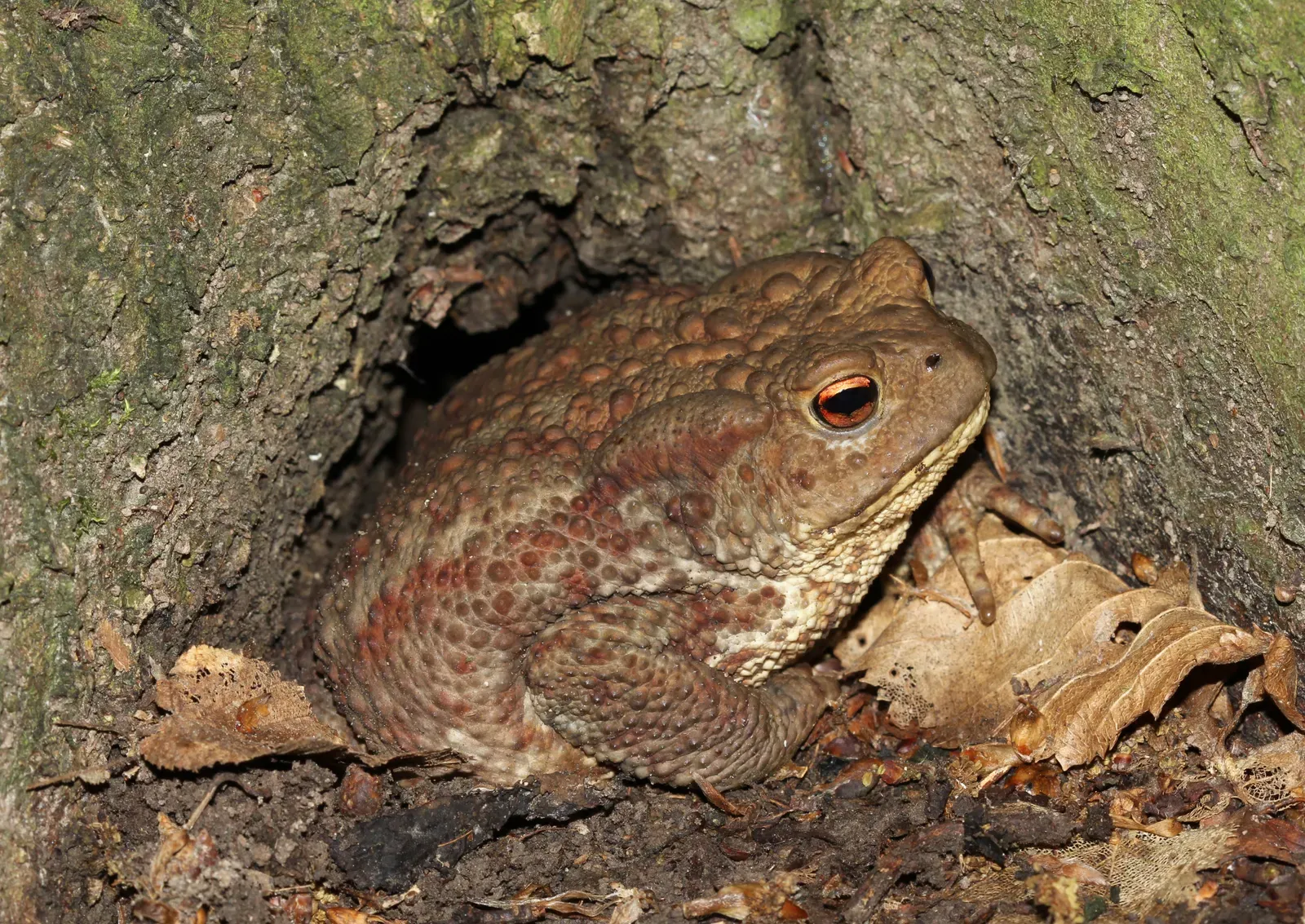
The common toad is a sturdy little amphibian with dry, bumpy skin the colour of earth. You can find it across much of Europe and into western Asia, tucked away in woods, hedges, meadows, and even quiet garden corners. It has a broad head, a wide mouth, and beautiful coppery eyes. During the day it stays hidden under a log or a stone, and it comes out at dusk to hunt.
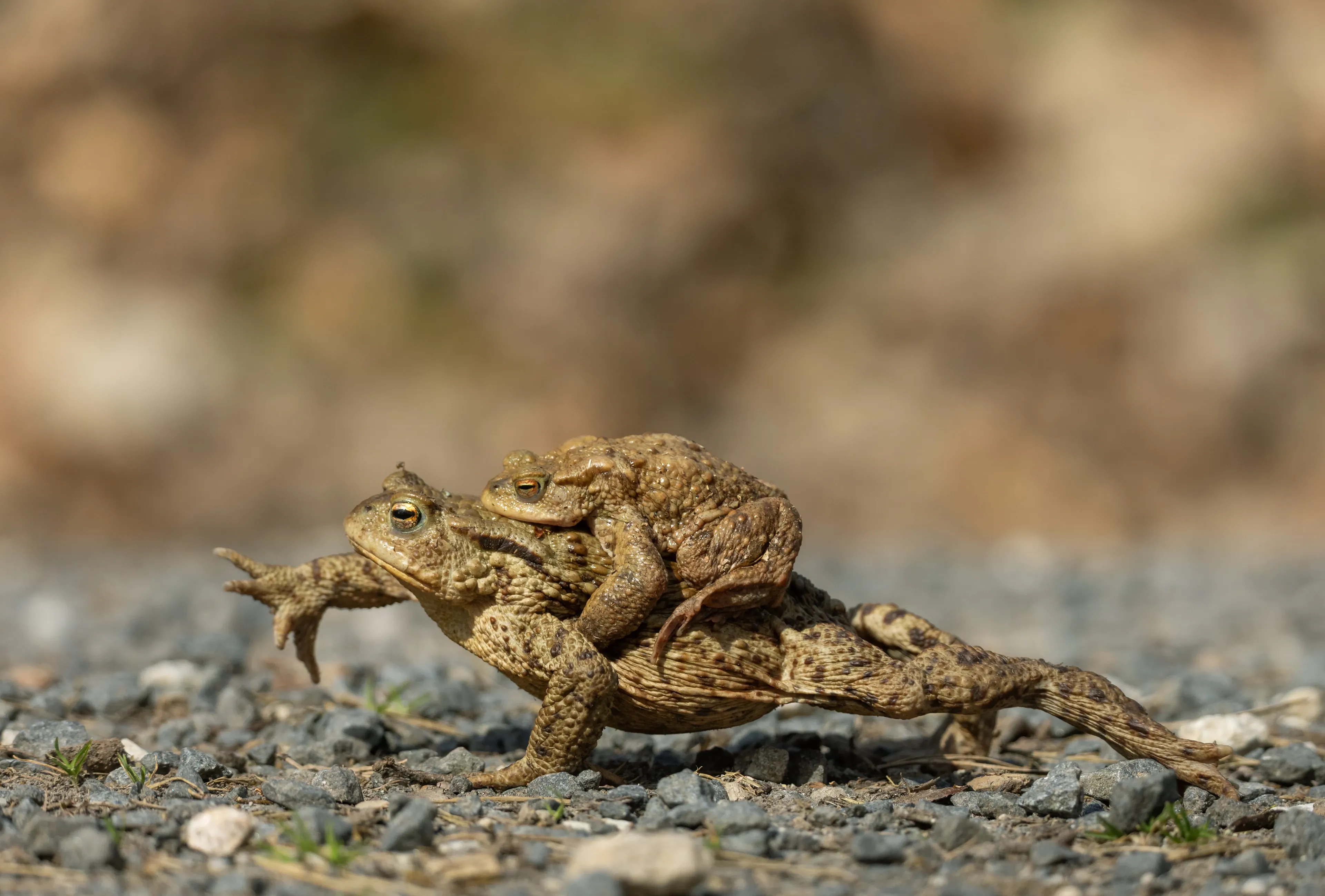
Toads are gentle, slow-moving creatures. Instead of leaping about like a frog, a common toad usually plods along on all four legs or makes small shuffling hops. This calm, steady walk is one of the easiest ways to tell a toad from a frog. It spends its evenings creeping through the grass, searching in the dark for its supper.
For food, the common toad snaps up all sorts of small creatures. It eats beetles, caterpillars, woodlice, slugs, earthworms, ants, and spiders. Fast little bugs are caught with a quick flick of its sticky tongue, while bigger mouthfuls are grabbed with its jaws. A hungry toad in a garden is a wonderful helper, quietly clearing away many creatures that nibble plants.
The toad has a clever, peaceful way of staying safe. Its warty skin can make a bitter-tasting substance, so most animals that take a nibble quickly decide to leave it alone. This means the toad does not need to fight or race away. It is always best just to look at a toad and let it go calmly on its way.
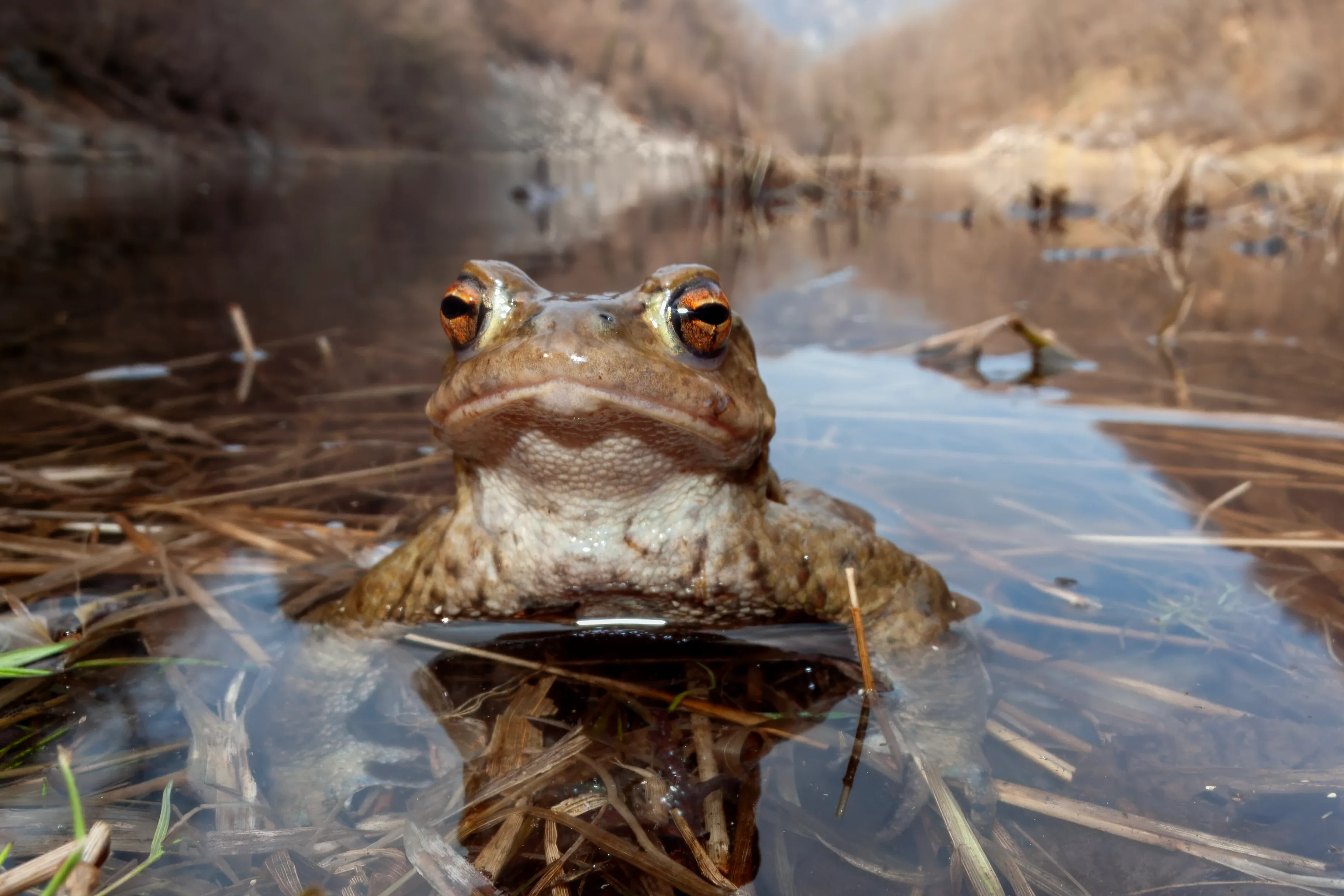
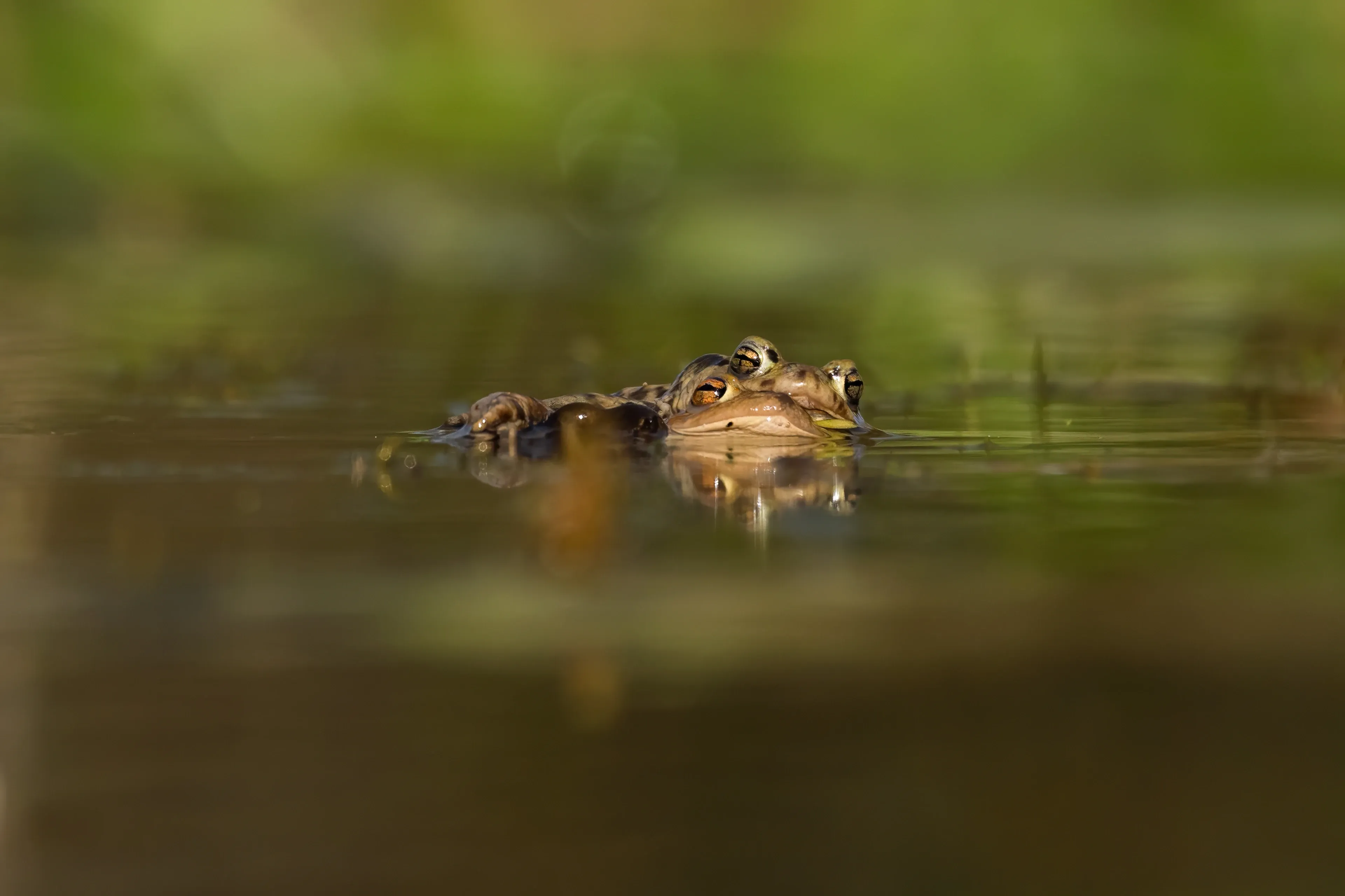
One of the most amazing things toads do happens each spring. Toads travel back to the pond where they hatched, sometimes walking a long way to reach the same water year after year. There they lay long strings of eggs that hatch into tiny tadpoles. Common toads can live for around ten to twelve years in the wild, and even longer when cared for.
Common toads are found over a wide area and are still fairly common, so on the whole they are doing all right. Even so, they can lose the ponds where they breed, and some are hurt crossing roads during their spring journeys. In many places, kind people build little tunnels and carry toads safely across busy roads, helping these patient travellers reach their ponds and thrive.
My home
Woodland, forest, scrubland, meadow, garden, near fresh water
Where I live
Asia, Europe
What I eat
Beetles, caterpillars, woodlice, slugs, earthworms, ants, spiders
How long I am
0.15 m
How long I live
10–12 years
Every spring, common toads set off on a journey back to the very pond where they were born, and many return to the same water year after year.
A common toad usually walks slowly on all four legs or makes little shuffling hops, instead of the big leaps that a frog makes.
Its bumpy, wart-like skin can make a bitter-tasting substance that puts hungry animals off, so the toad can stay safe without having to run away.
Every common toad can feel happy, scared and loved — just like you.
Looking after my friends
How many are there?
One female common toad can lay more than 8,000 eggs in long jelly strings.
This is the number of eggs in a large clutch, not the number of adult toads; most eggs do not reach adulthood.
Estimate source: Common Toad
How are they doing?
Lower extinction riskThis species has a lower global extinction risk right now. Local populations can still grow or shrink.
You can help by learning their names, keeping wild places clean, and telling someone why this animal matters.
Where this came from
- Bufo bufo (Common Toad) — Red List Assessment — IUCN Red List of Threatened Species
- Bufo bufo — Classification — Animal Diversity Web, University of Michigan Museum of Zoology
- Common toad — Wikipedia
- Common Toad — Ministry of Environment and Physical Planning, North Macedonia