 ← All animals
 mollusc · Octopus vulgaris
Common octopus
Gallery
5 photos Real photograph 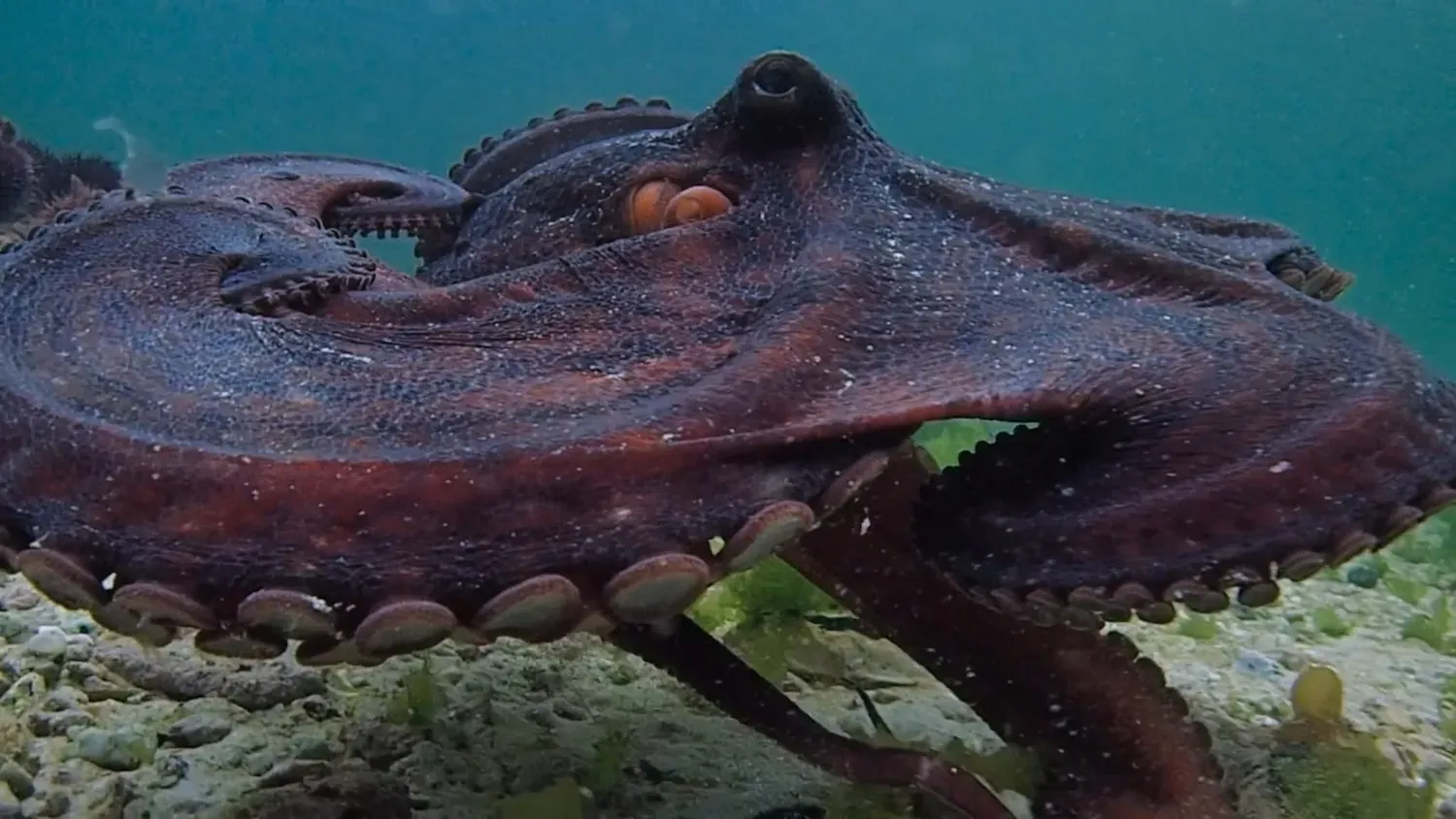 Real photograph
 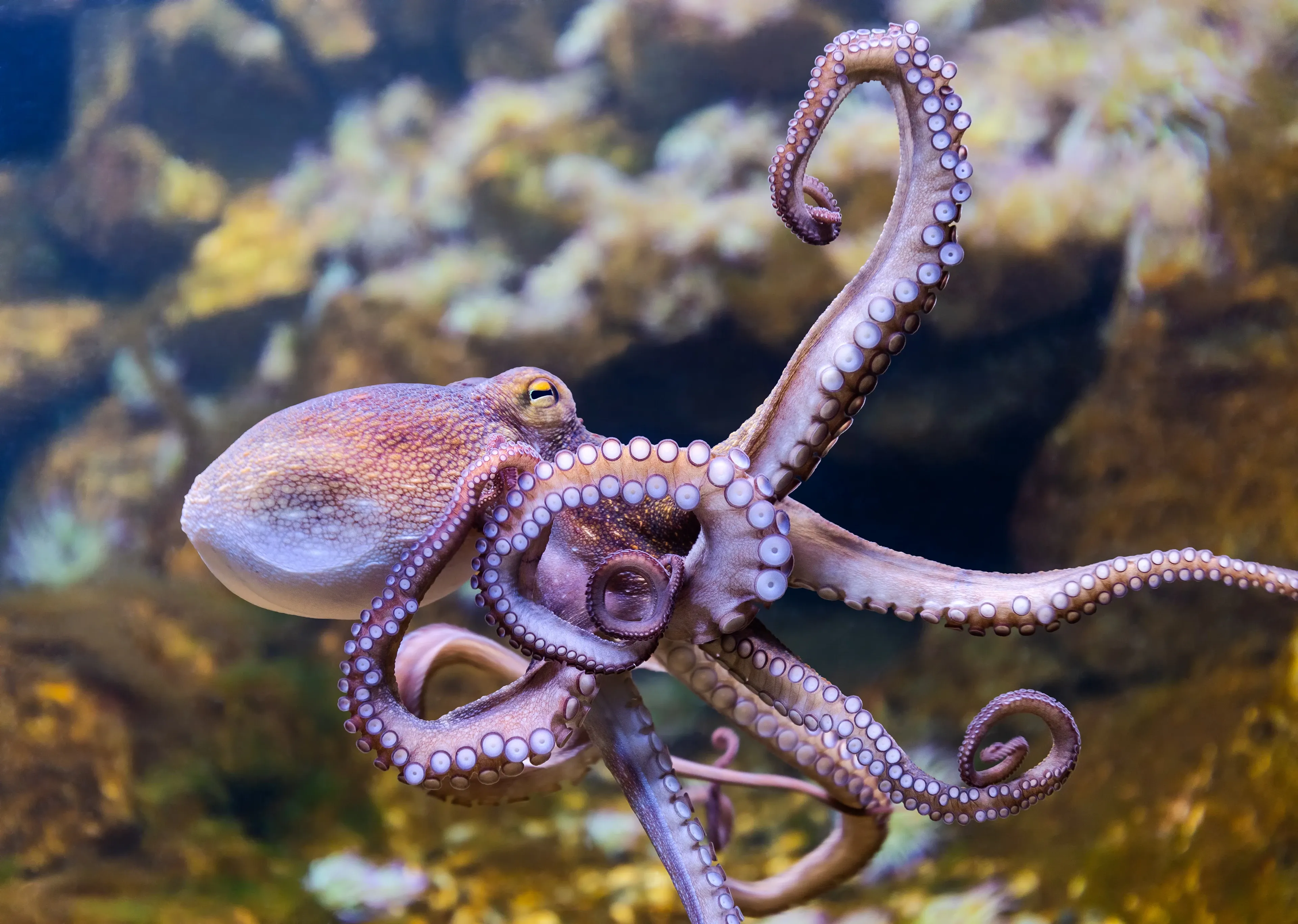 Real photograph
 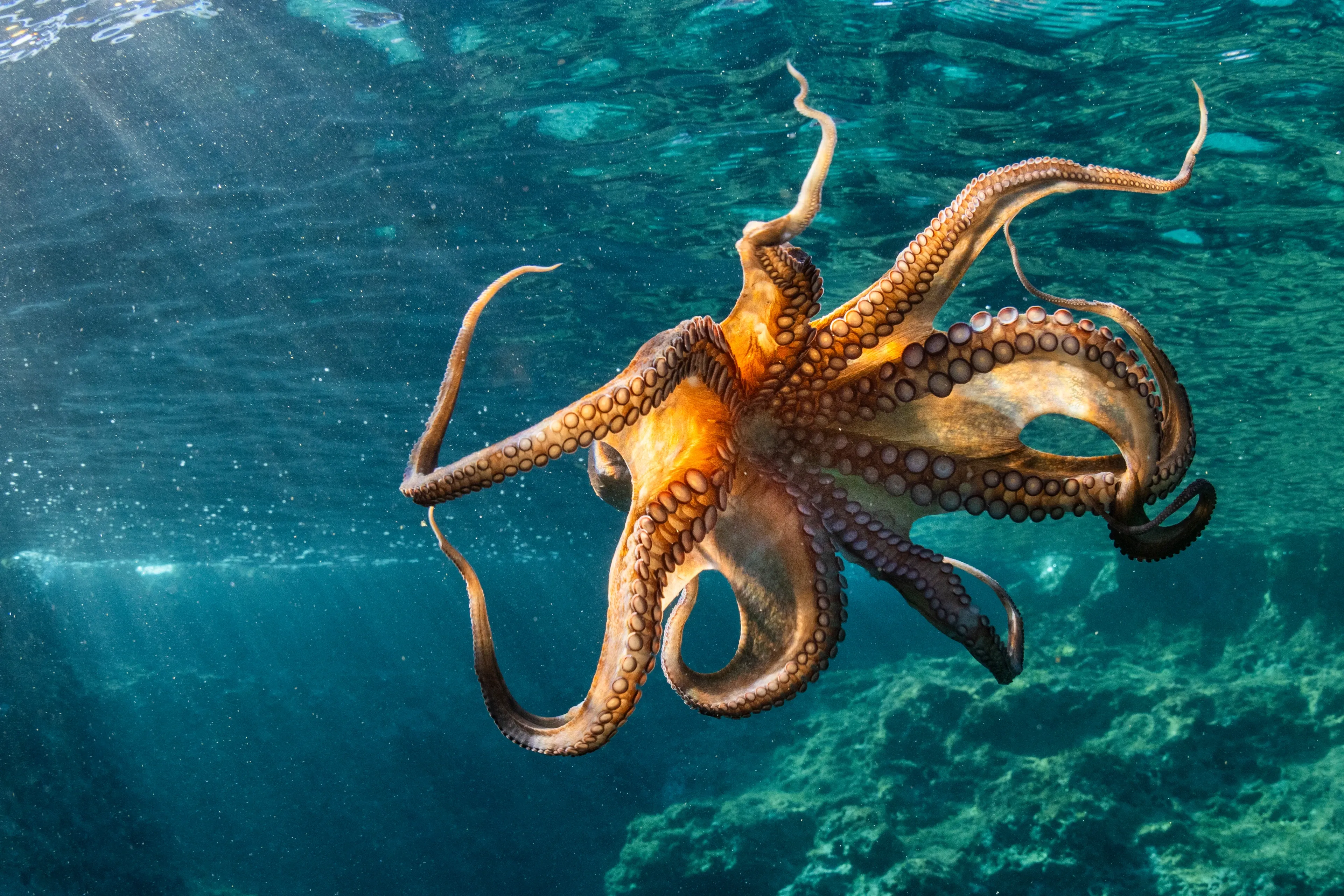 Real photograph
 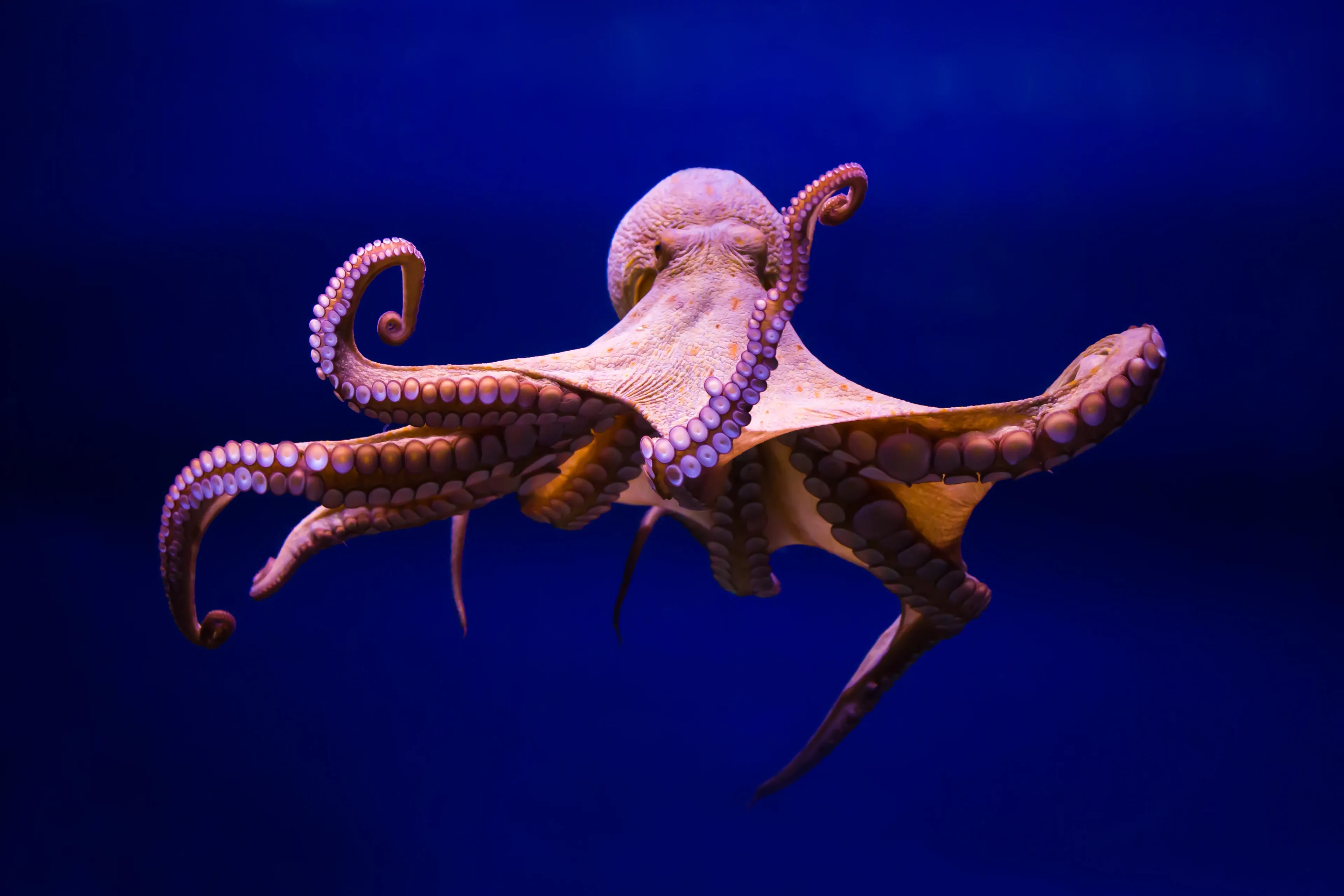 Real photograph
 Why we love them
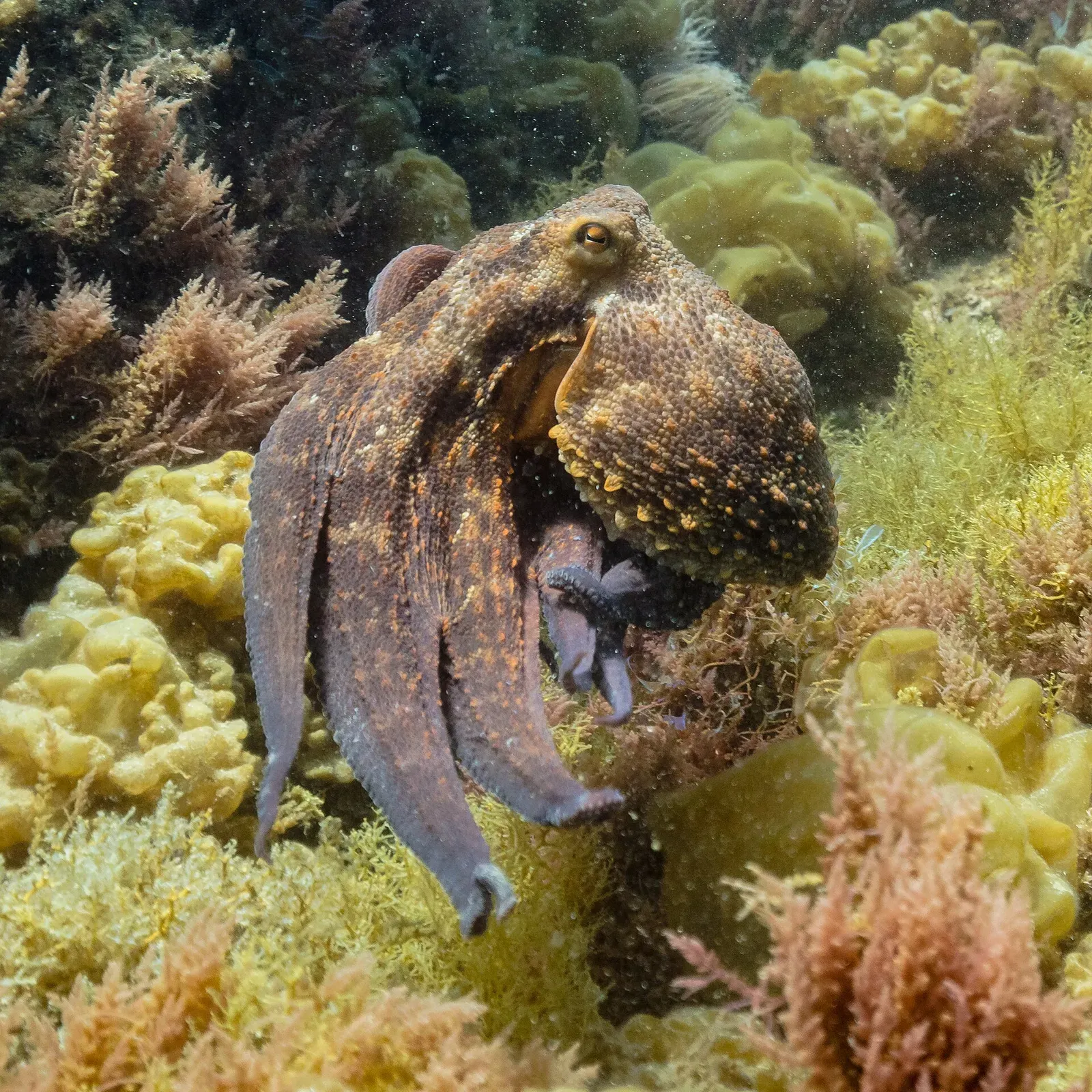
The common octopus is a soft, clever animal that lives in the sea. It has no bones at all, so it can squeeze its whole body through a gap no bigger than its eye. Eight long arms trail behind it as it glides over the rocks, searching for crabs and shells to eat.
Common octopuses are flexible hunters. They leave a den around dusk to search for crabs and shellfish, then may leave opened shells in a pile outside the entrance. Most live alone and defend a small area rather than forming a group.
The cleverest trick of all is hiding. In less than a second, an octopus can change the colour of its skin — and even make it bumpy or smooth — to match the sand, the coral, or a rock. If a hungry fish comes too close, the octopus can puff out a cloud of dark ink and jet away.
A common octopus does not live very long, usually only a year or two. A mother octopus guards her eggs carefully and does not leave them, even to eat. When the tiny babies finally hatch and float away, her long job is done.
Octopuses are not fierce and they are not monsters. They are curious, gentle neighbours of the sea — and one of the most surprising animals you will ever meet.
My home
Ocean, coral reef, rocky seabed
Where I live
Atlantic Ocean
What I eat
Crabs, clams, snails, small fish
How long I am
0.3–1.3 m
How long I live
1–2 years
An octopus has three hearts and blue blood.
It can change the colour and even the texture of its skin to hide in a blink.
Each of its eight arms can taste what it touches.
Every common octopus can feel happy, scared and loved — just like you.
Looking after my friends
How many are there?
Female common octopuses in a South African study produced about 42,000–790,000 eggs each.
Egg production varies greatly with female size and location; this is not a population count.
Estimate source: Population biology of Octopus vulgaris on the temperate south-eastern coast of South Africa
How are they doing?
Lower extinction riskThis species has a lower global extinction risk right now. Local populations can still grow or shrink.
You can help by learning their names, keeping wild places clean, and telling someone why this animal matters.
Where this came from
- Octopus vulgaris (Common Octopus) — Red List Assessment — IUCN Red List of Threatened Species
- Giant Pacific and common octopus — species profile — Monterey Bay Aquarium
- Octopus vulgaris — Animal Diversity Web — University of Michigan Museum of Zoology
- Common octopus (Octopus vulgaris) — Species profile — Marine Life Information Network, Marine Biological Association
- Population biology of Octopus vulgaris on the temperate south-eastern coast of South Africa — Journal of the Marine Biological Association of the United Kingdom