 ← All animals
 mammal · Bradypus variegatus
Brown-throated sloth
Gallery
4 photos Real photograph 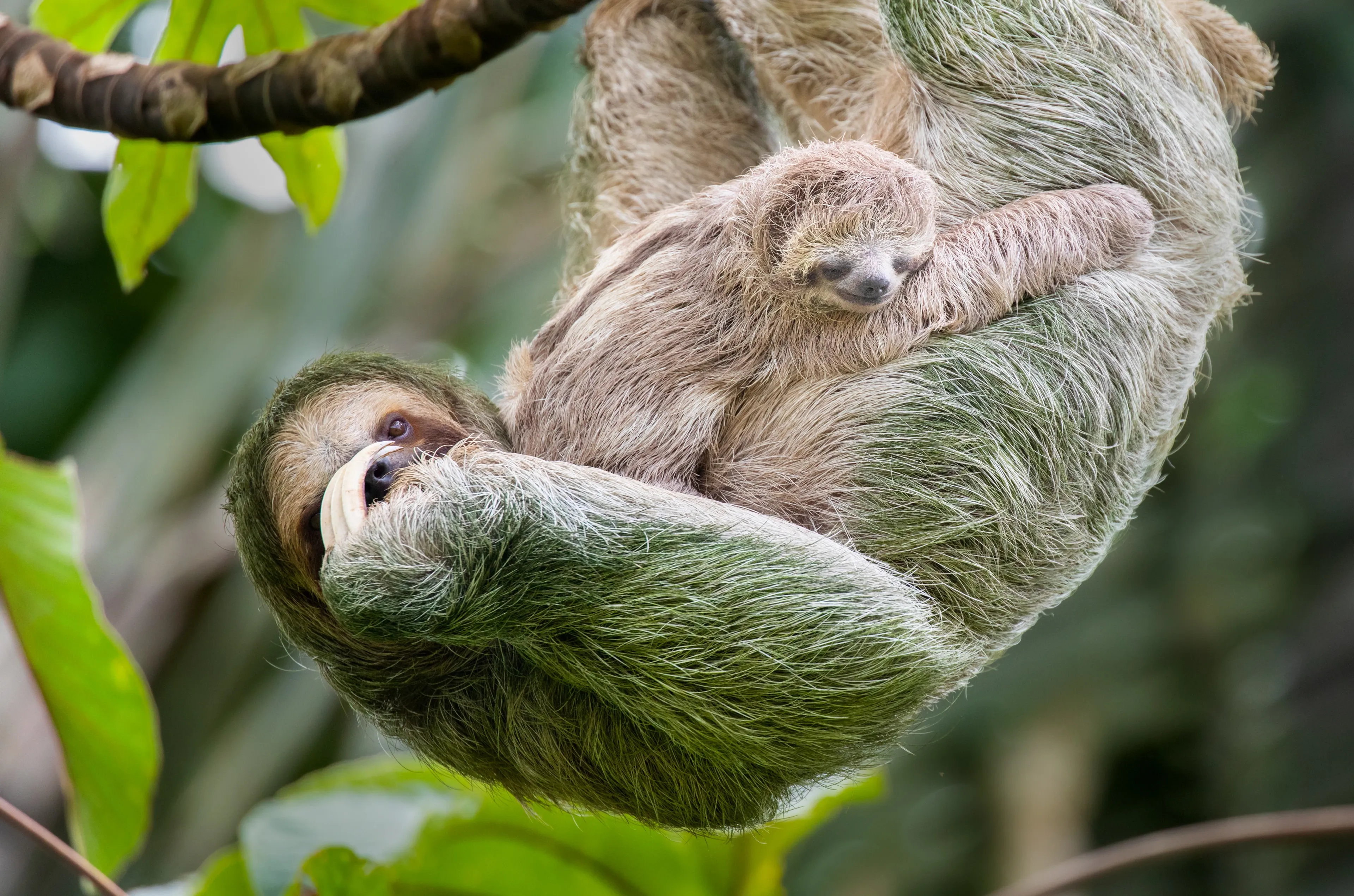 Real photograph
 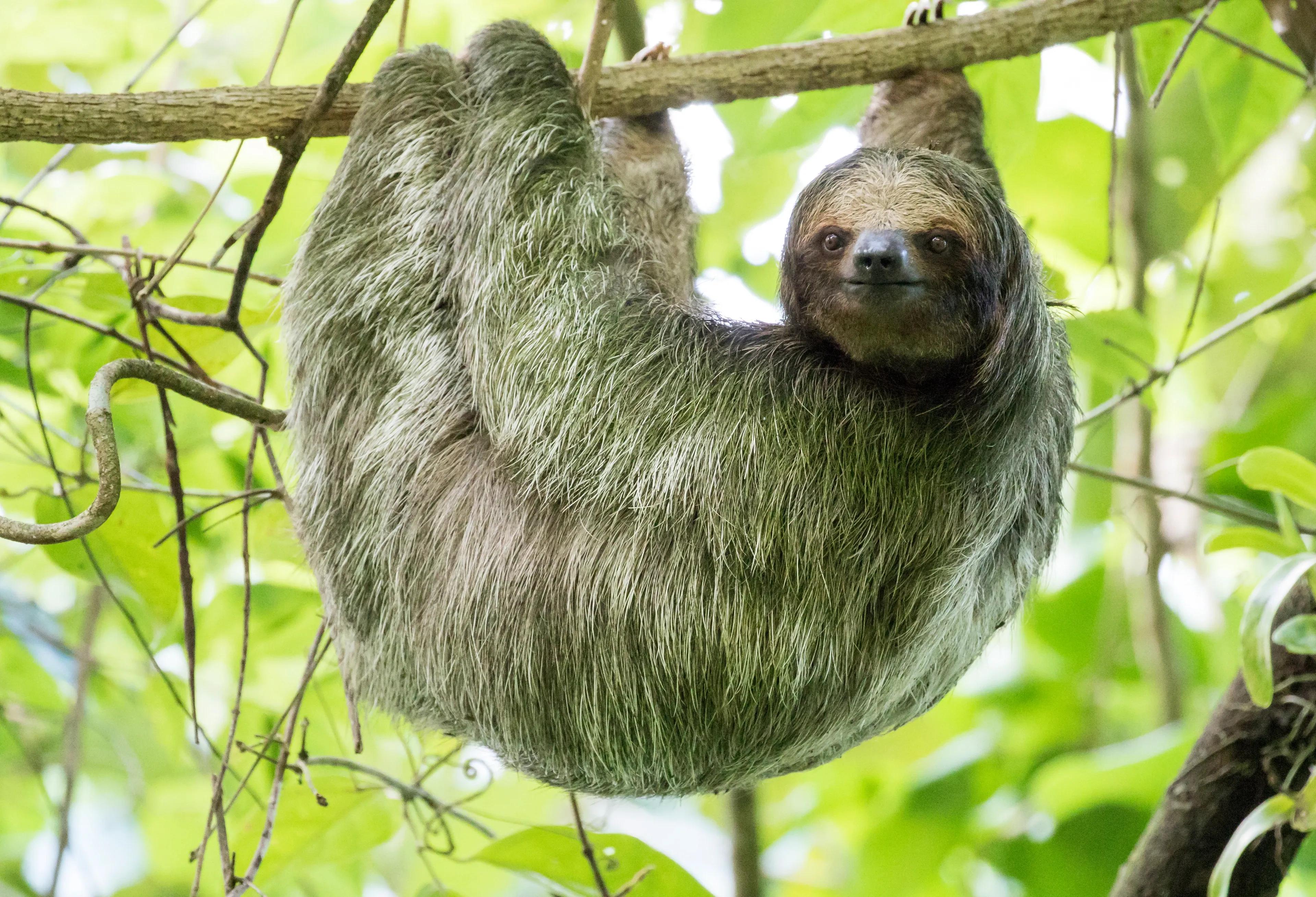 Real photograph
 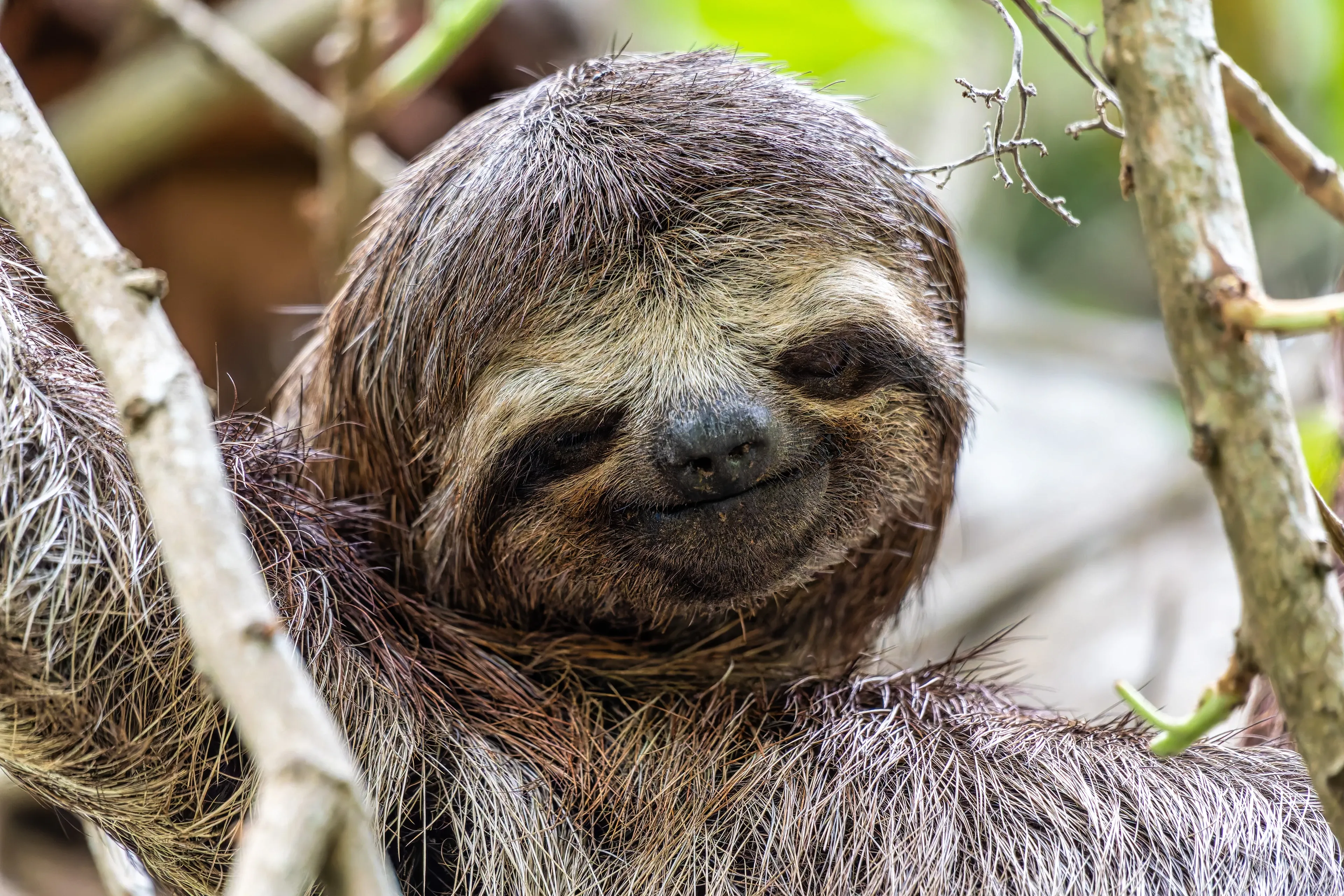 Real photograph
 Why we love them
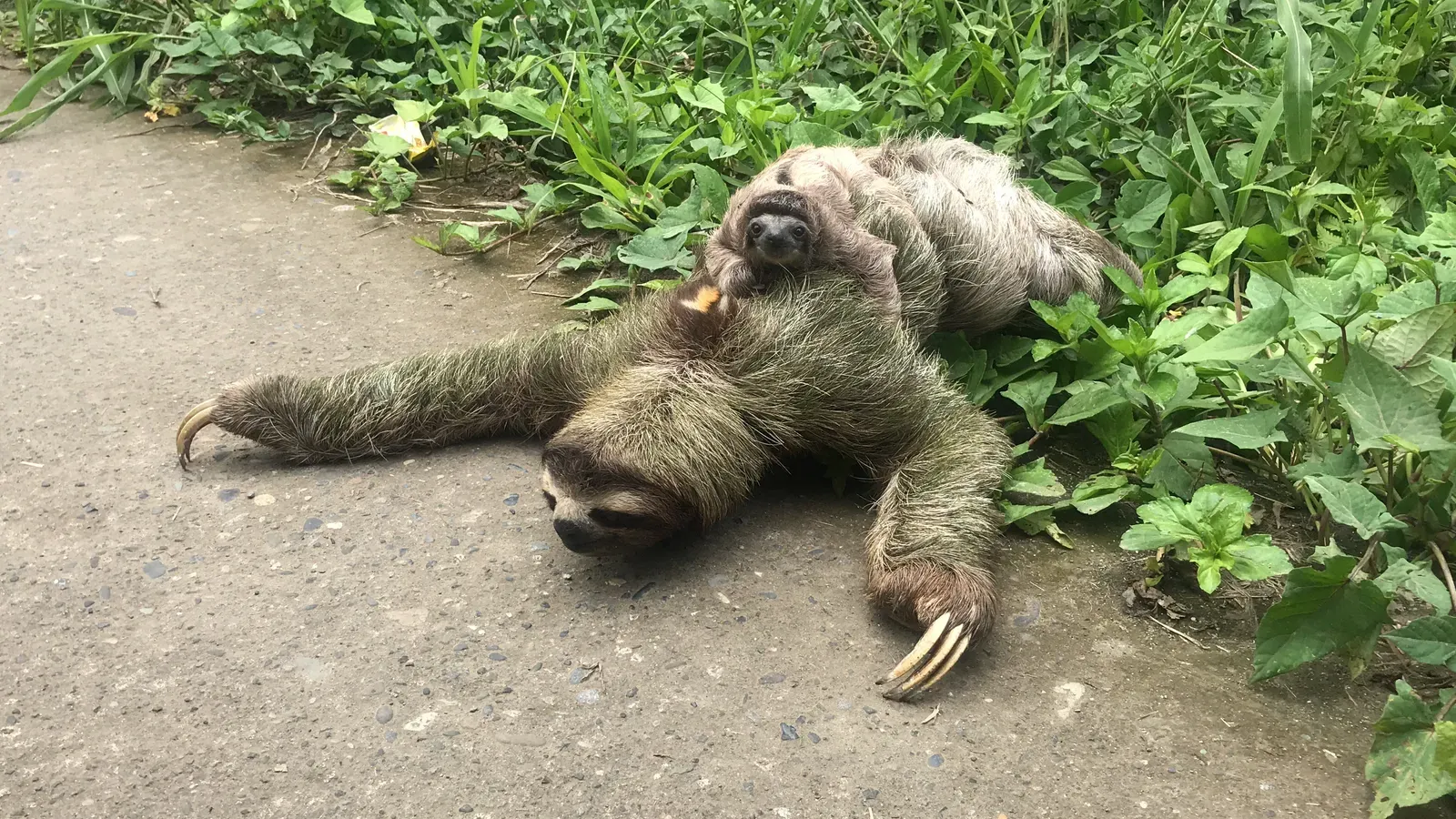
The brown-throated sloth is a slow, gentle animal that lives high up in the rainforest trees of Central and South America. It has long arms, curved claws, and a round face that always looks a little bit sleepy. It is one of the three-toed sloths, which means it has three curved claws on each hand.
Sloths are famous for taking life very, very slowly. They spend most of the day hanging upside down among the branches, munching young leaves, flowers, and fruit. Moving slowly helps them save energy, because leaves are not a very filling meal. A sloth can spend a long time in just one favourite tree.
Sloths are such gentle, slow movers that tiny green plants called algae can grow right in their shaggy fur. This gives them a greenish tint that blends in with the leaves, so they are tricky for other animals to spot high in the canopy. Little moths even like to live in a sloth's cosy coat.
A mother sloth usually has one baby at a time. The newborn is born up in the trees with its fur and claws already grown, and it clings to its mother's tummy for protection. It rides along with her for the first months of its life, learning which leaves are good to eat before it heads off on its own.
Sloths climb down from their trees only about once a week, to go to the toilet on the forest floor. It is one of the few times they leave the safety of the canopy, and then they slowly climb right back up again.
Brown-throated sloths are still quite common across the rainforest, so they are not in danger overall. The biggest thing that helps them is looking after the tall forests where they live, because a sloth needs plenty of leafy trees to call home.
My home
Tropical rainforest, rainforest, forest
Where I live
North America, South America
What I eat
Young leaves, Cecropia leaves, flowers, fruit
How long I am
0.5–0.6 m
How heavy I am
3.5–5.2 kg
How long I live
30–40 years
A baby sloth is born high in the trees and rides along by clinging to its mother's tummy for the first few months of its life.
Sloths move so slowly and stay so still that tiny green plants called algae can grow in their fur, giving them a leafy green tint that helps them hide.
Sloths only need to come down to the ground about once a week to go to the toilet, and the rest of the time they stay up in the treetops.
Every brown-throated sloth can feel happy, scared and loved — just like you.
Looking after my friends
How many are there?
Studies have found about 2.2–8.5 brown-throated sloths per hectare in suitable habitat.
Density varies greatly by habitat, so this cannot be multiplied into a reliable worldwide head count.
Estimate source: Bradypus variegatus (brown-throated three-toed sloth)
How are they doing?
Lower extinction riskThis species has a lower global extinction risk right now. Local populations can still grow or shrink.
You can help by learning their names, keeping wild places clean, and telling someone why this animal matters.
Where this came from
- Bradypus variegatus (Brown-throated Three-toed Sloth) — Red List Assessment — IUCN Red List of Threatened Species
- Bradypus variegatus (brown-throated three-toed sloth) — Animal Diversity Web, University of Michigan Museum of Zoology
- Brown-throated sloth — Wikipedia