 ← All animals
 fish · Paracanthurus hepatus
Blue tang
Gallery
2 photos Real photograph 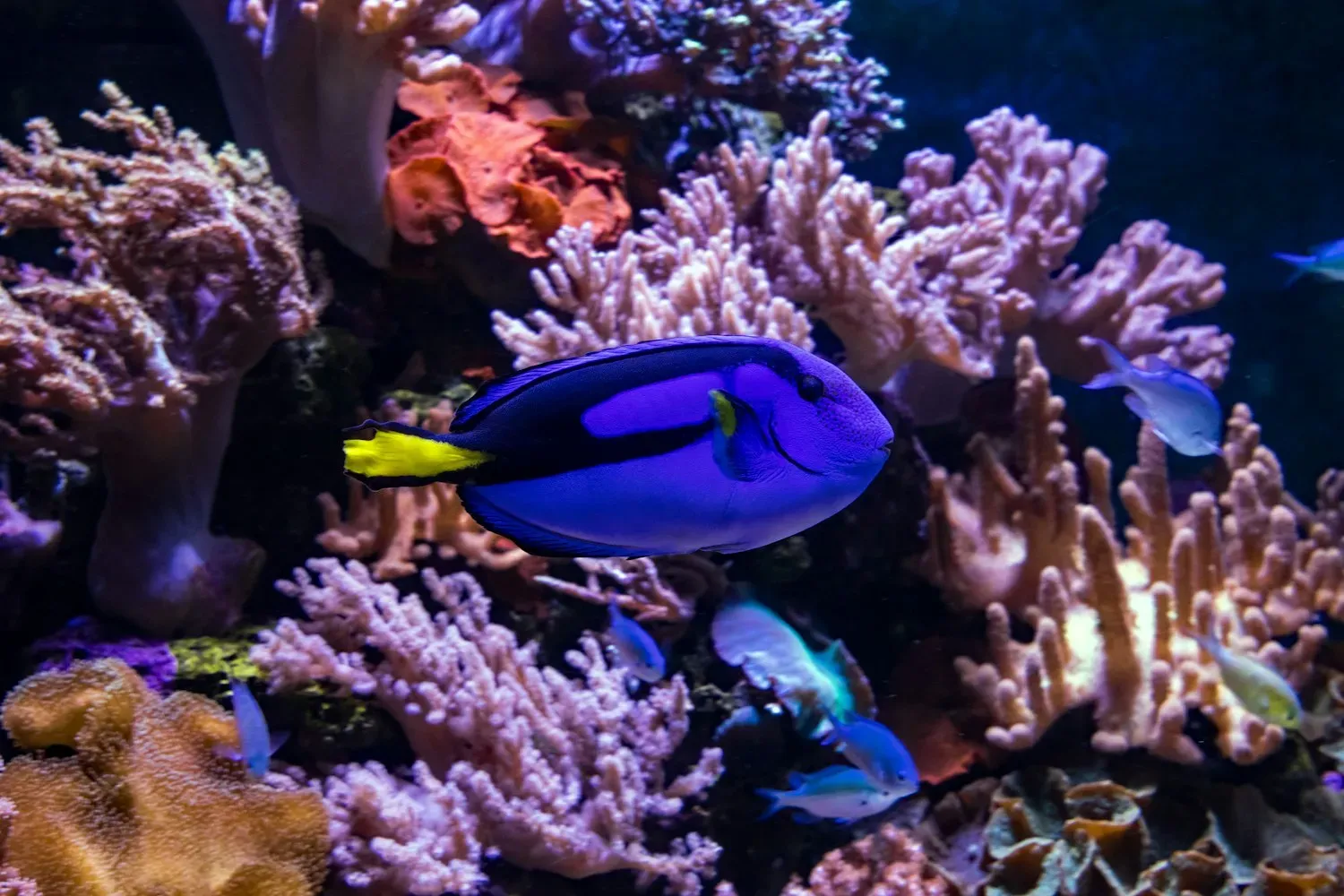 Real photograph
 Why we love them
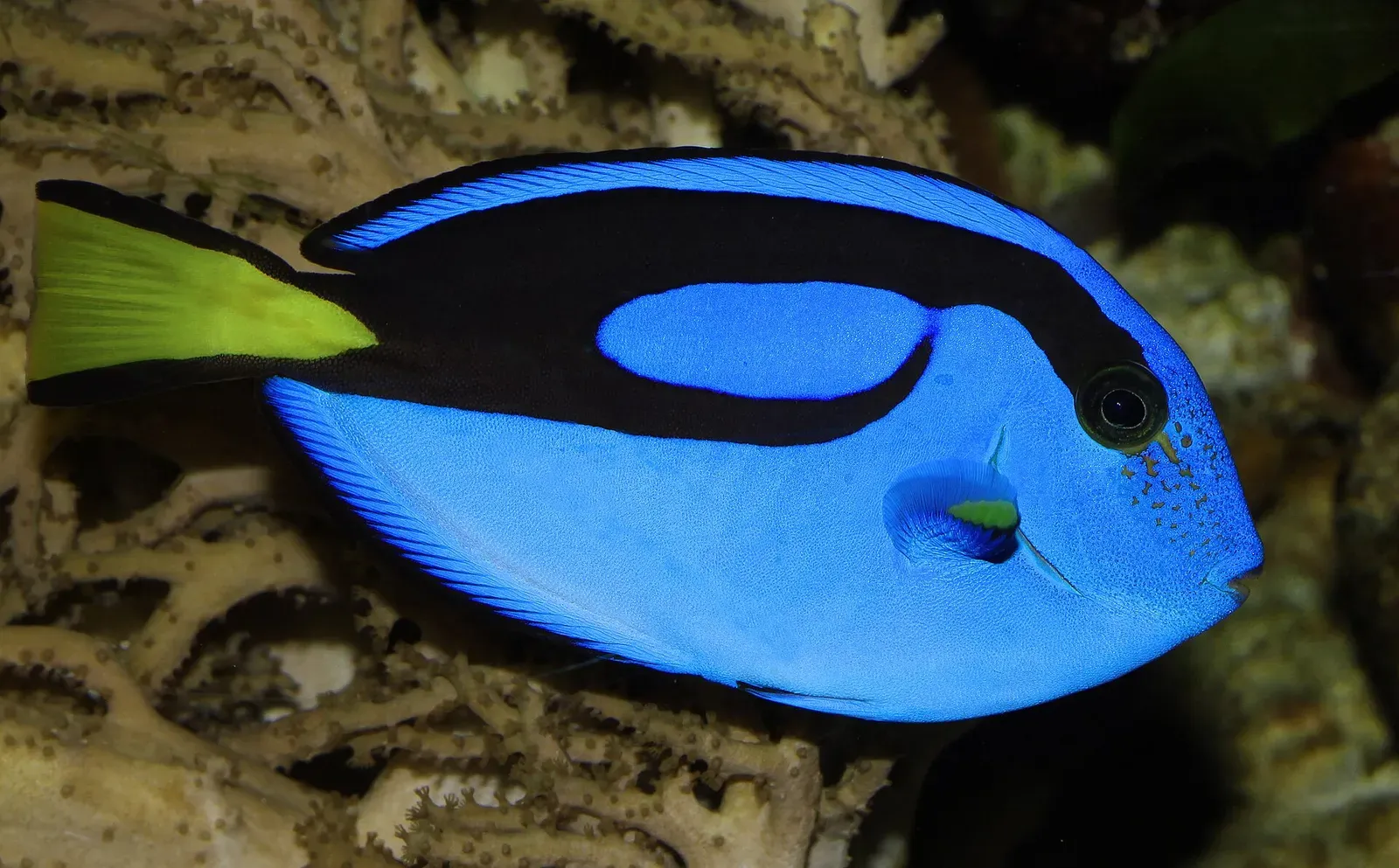
The blue tang is a bright, royal-blue fish with a sunny yellow tail. Along each side it has a bold black mark that curves like a painter's palette, which is why some people call it the palette surgeonfish. It lives on warm coral reefs in the Indian and Pacific Oceans.
This fish likes reefs where the water keeps moving and brings fresh food. When a bigger animal comes near, the blue tang darts in among the branches of the coral to hide. The coral makes a safe little shelter until the danger swims away.
Young blue tangs eat tiny floating plankton. As they grow up, they nibble even more: they pick small drifting creatures from the water and graze soft, thread- like algae off the rocks and reef.
Near its tail the blue tang keeps a small, sharp spine on each side. Most of the time the spine lies flat and hidden. If another fish pesters it, the blue tang can lift the spine to protect itself. It is only for keeping safe, never for starting trouble.
There are still plenty of blue tangs living across the warm oceans today, so scientists list them as Least Concern. Even so, many are caught from the wild to be sold for home fish tanks, and they need healthy coral to live. Looking after reefs helps keep blue tangs safe for a long time to come.
My home
Coral reef, ocean
Where I live
Pacific Ocean, Indian Ocean
What I eat
Plankton, zooplankton, algae
How long I am
0.31 m
The blue tang has a bright yellow tail and a black marking on its side shaped a little like a painter's palette.
If a bigger fish bothers it, it can raise a small sharp spine near its tail, which it uses only to keep itself safe.
When it feels scared, it can slip in among the branches of coral to hide.
Every blue tang can feel happy, scared and loved — just like you.
Looking after my friends
How many are there?
Blue tangs often live in pairs or small groups of about 8–14 fish.
This is the size of one social group, not the number of blue tangs on a reef or worldwide.
Estimate source: Paracanthurus — Wikipedia
How are they doing?
Lower extinction riskThis species has a lower global extinction risk right now. Local populations can still grow or shrink.
You can help by learning their names, keeping wild places clean, and telling someone why this animal matters.
Where this came from
- Paracanthurus — Wikipedia — Wikipedia
- Paracanthurus hepatus (Flagtail surgeonfish) — Animal Diversity Web, University of Michigan Museum of Zoology
- Paracanthurus hepatus — IUCN Red List assessment — IUCN Red List of Threatened Species
- Paracanthurus hepatus, Palette surgeonfish — FishBase