 ← All animals
 bird · Gymnorhina tibicen
Australian magpie
Gallery
4 photos Real photograph 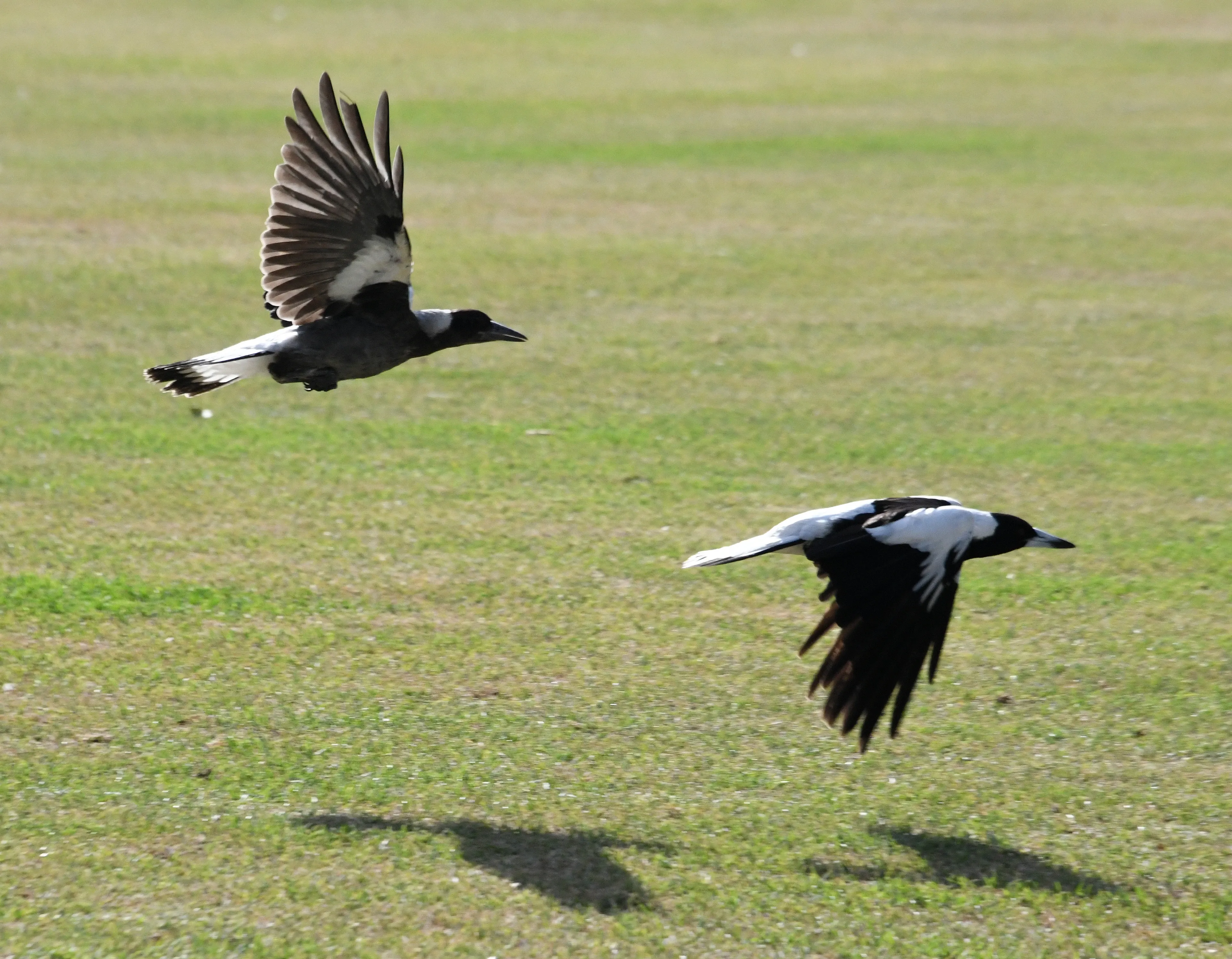 Real photograph
 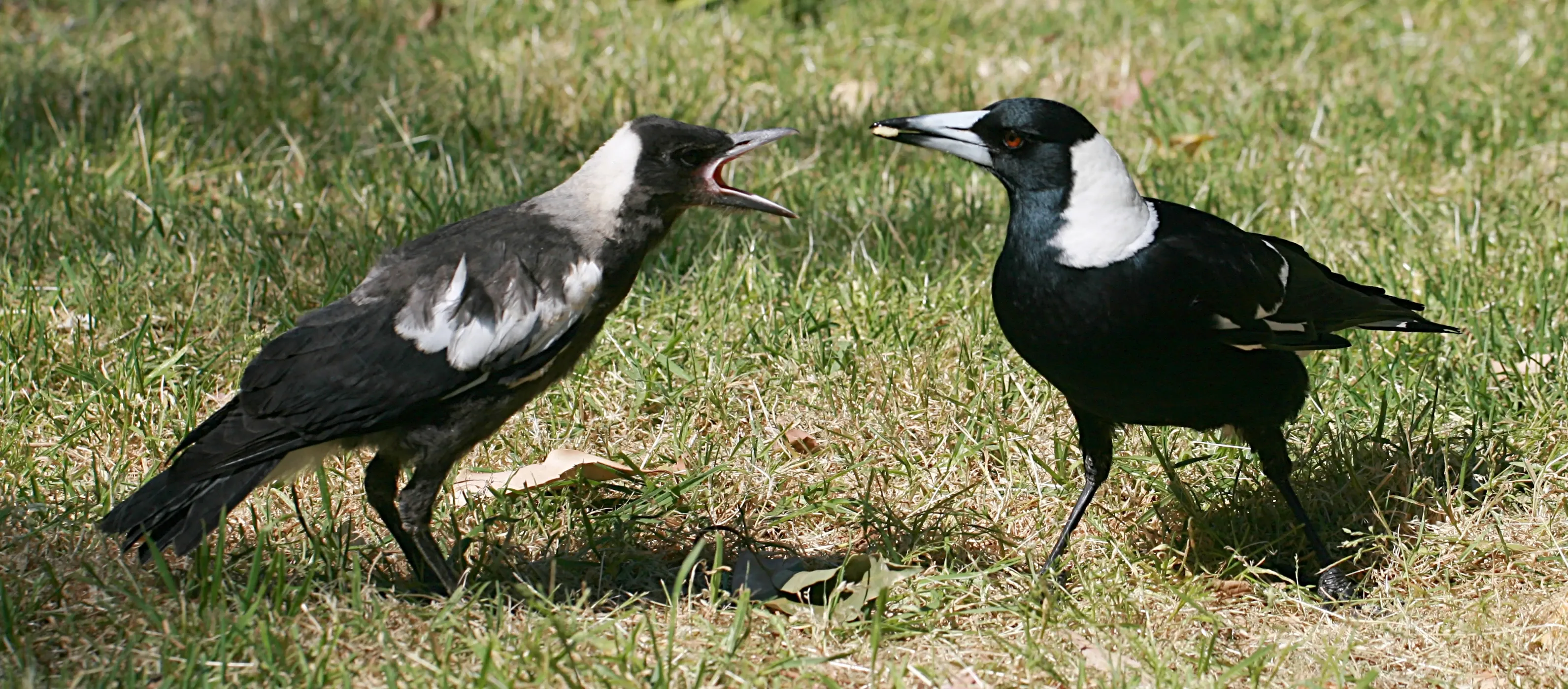 Real photograph
 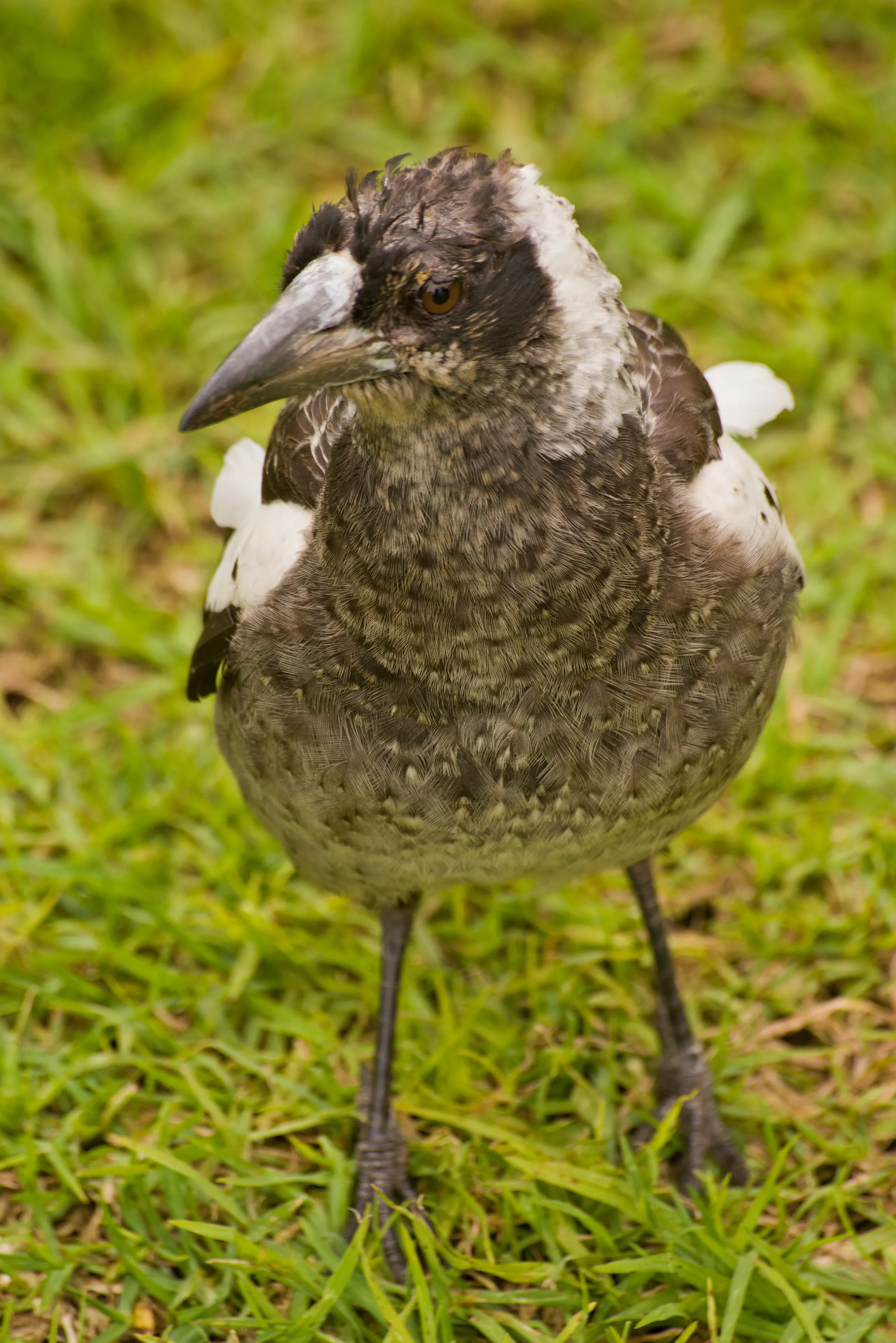 Real photograph
 Why we love them
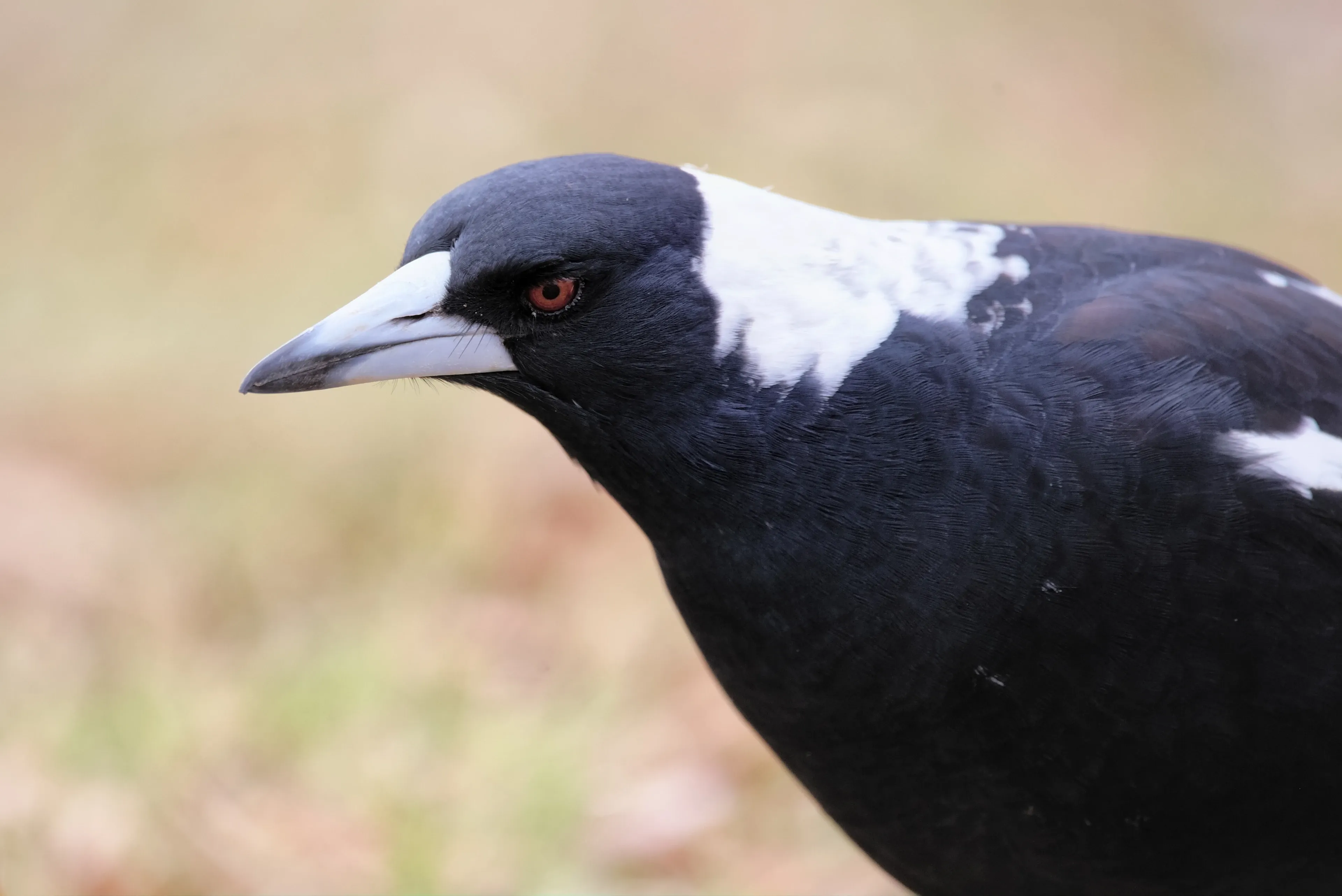
The Australian magpie is a sturdy black-and-white songbird with a strong, pointed bill. It lives across most of Australia and in southern New Guinea, and people have also introduced it to New Zealand. Despite its name, it is not a close relative of the magpies found across Europe and Asia.
Its rich, flute-like carolling is one of Australia's best-known bird sounds. Magpies use songs and many other calls to communicate. A family may use the same patch of open ground and trees throughout the year, although their social life differs from place to place. Some live mainly as pairs, while others form groups with several adults.
During the day, a magpie walks across lawns, fields and woodland clearings, watching and listening for food. Insects make up much of its diet. It also eats spiders, earthworms, seeds, fruit, carrion and occasional small animals. Some beetle grubs are hidden under the soil, but a magpie can hear their tiny movements and dig down with its bill.
Australian magpies are careful learners. In a Western Australian experiment, females paid more attention when they heard an unfamiliar human voice than when they heard a familiar one. Some groups also have helpers that bring food to chicks, but cooperative care varies between families and regions.
A female builds a bowl-shaped stick nest high in a tree and usually lays three to five eggs. Most magpies never swoop people. A small minority defend the area around their nest or young for a short part of the breeding season. Giving nesting birds room and following local safety advice helps people and magpies share parks and streets calmly.
The species is assessed globally as Least Concern, and its overall trend is listed as increasing. That does not mean scientists know exactly how many Australian magpies exist. Long-term studies of particular neighbourhoods help researchers understand how families, survival and breeding change over time.
My home
Open woodland, grassland, farmland, parks and gardens, suburbs
Where I live
Oceania
What I eat
Beetles and other insects, spiders, earthworms, seeds and fruit, small animals, carrion
How long I am
0.36–0.44 m
How heavy I am
0.212–0.41 kg
How long I live
25 years
Australian magpies are songbirds in the woodswallow family, not close relatives of the Eurasian magpies that belong to the crow family.
A magpie can hear some beetle grubs moving underground, then probe the soil with its bill to find them.
Female magpies in one Western Australian study reacted differently to familiar and unfamiliar human voices.
Only a small minority of Australian magpies swoop people, usually while guarding a nest or recently fledged young.
Every australian magpie can feel happy, scared and loved — just like you.
Looking after my friends
How many are there?
Researchers counted an average of 90 magpies across a 200-hectare study area in Guildford, Western Australia; yearly counts ranged from 81 to 95 birds.
This is the average from annual counts between 1996 and 2007 in one urban population of the western subspecies, not an estimate for Australia. Density and social organisation differ in other places.
Estimate source: A long-term study of a Western Magpie Gymnorhina tibicen dorsalis population: group structure and demography
The population in the species' global range was increasing in 2018.
How are they doing?
Lower extinction riskThis species has a lower global extinction risk right now. Local populations can still grow or shrink.
You can help by learning their names, keeping wild places clean, and telling someone why this animal matters.
Where this came from
- Australian Magpie Gymnorhina tibicen — IOC World Bird List
- Diversity in the Australian Magpie Gymnorhina tibicen: a taxonomic review — South Australian Ornithologist
- Australian Magpie — Australian Museum
- Australian Magpie — BirdLife Australia
- Why do Magpies swoop? — Australian Museum
- Australian Magpie — Bird in the Hand — Australian Bird Study Association
- Food of the Black-backed Magpie, Gymnorhina t. tibicen, at Canberra — CSIRO Publishing
- Localization of soil dwelling scarab larvae by the black-backed magpie — Animal Behaviour
- Social and Individual Factors Influence Variation in Offspring Care — Frontiers in Ecology and Evolution
- Female Western Australian magpies discriminate between familiar and unfamiliar human voices — Ethology
- Australian Magpie (Gymnorhina tibicen), version 1.0 — Cornell Lab of Ornithology
- Audition and Hemispheric Specialization in Songbirds and New Evidence from Australian Magpies — Symmetry
- A long-term study of a Western Magpie Gymnorhina tibicen dorsalis population: group structure and demography — Australian Bird Study Association
- A long-term study of a Western Magpie Gymnorhina tibicen dorsalis population: breeding and productivity — Australian Bird Study Association
- Gymnorhina tibicen — IUCN Red List assessment — IUCN Red List of Threatened Species