Today's animal friend · 6 October 2026
Meet the Weka: New Zealand’s Cheeky Forest Walker
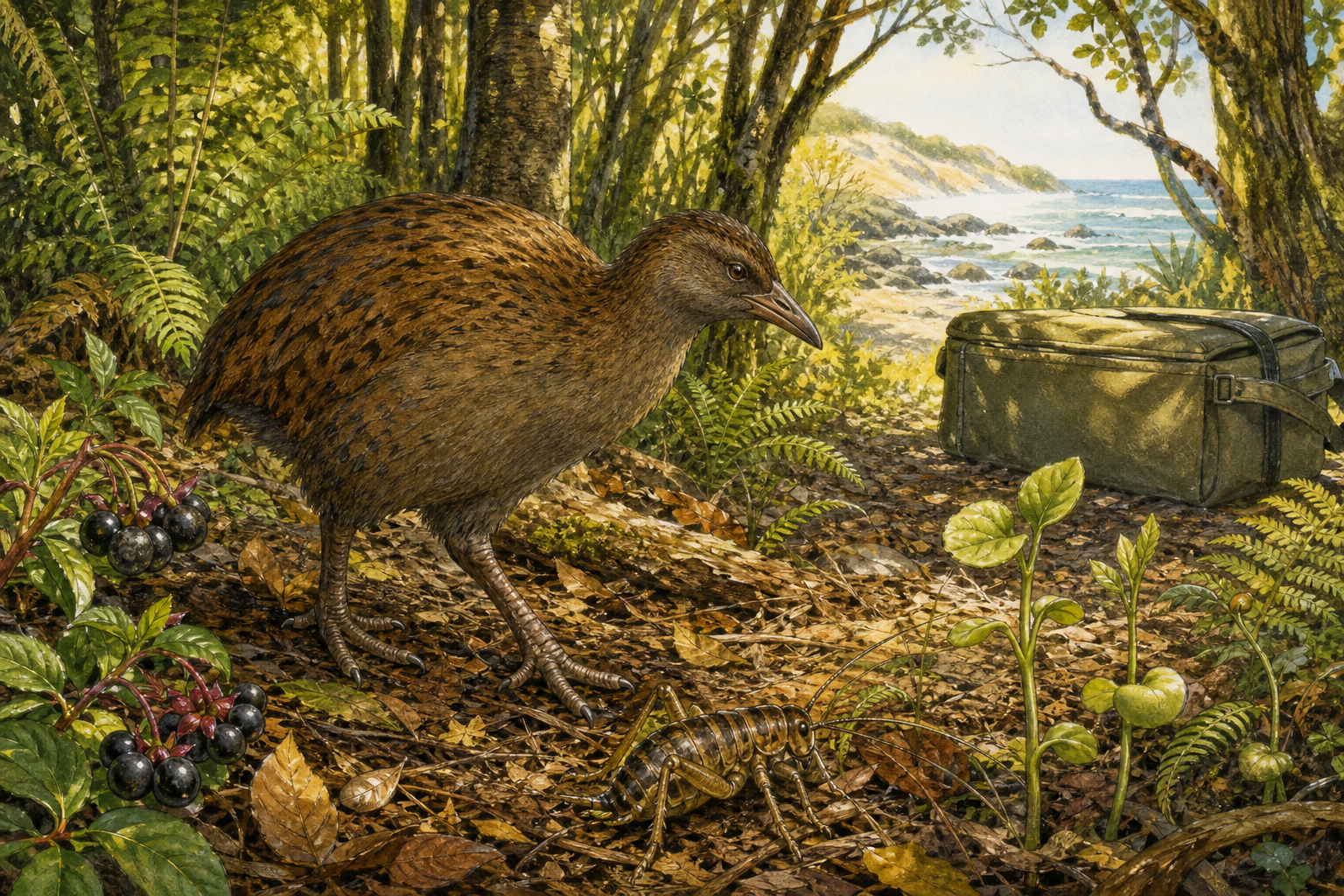
Imagine hearing a rustle beside your picnic bag, then spotting a bird striding away as if it owns the trail. That bold explorer may be a weka: a flightless rail with strong legs, an omnivore’s appetite, and an important job as a forest seed

Imagine hearing a rustle beside your picnic bag, then spotting a bird striding away as if it owns the trail. That bold explorer may be a weka: a flightless rail with strong legs, an omnivore’s appetite, and an important job as a forest seed
A rustle by the picnic bag!
The forest path is quiet—until there is a scratch, a shuffle, and a quick little rustle in the leaves. A weka steps out, peering around with the serious expression of someone checking whether you packed snacks. This bird, also called a woodhen, lives only in New Zealand. Its scientific name is Gallirallus australis, and it belongs to the rail family, a group of birds built for busy lives close to the ground.
Here is the surprise: a weka cannot fly. No swooping into a treetop, no flapping away over the hill. Instead, it walks and runs through its world on strong legs, weaving among ferns and bushes. At about 50–60 centimetres long, it is a substantial trail-side neighbour—rather like a farmyard chicken in length, but with its own wild, wonderfully nosy personality.
Weka are active in the daytime, when a curious explorer can notice the tiny movements that other people might miss: a beetle under a leaf, a berry on a low branch, or an unfamiliar object near a campsite. If you ever meet one, remember that its curiosity is not an invitation to feed it. Wild animals do best when people let them find their natural food and keep their belongings safely packed away.
Evidence: IUCN Red List of Threatened Species / BirdLife International (Red List Authority for birds): Gallirallus australis (Weka) — Red List Assessment; New Zealand Birds Online (Te Papa / Ornithological Society of New Zealand): Weka — Gallirallus australis; Wikipedia: Weka
Why walk when you could fly?
For a weka, the ground is not second-best. It is a whole treasure map. Forests, grasslands, sandy dunes, rocky shores, and even some edges where people live can all offer places to explore. The weka’s sturdy walking-and-running style helps it travel through thick plants where a flying bird might find the going awkward.
Picture a small brown explorer threading through a maze of roots, stones, and fallen leaves. A weka does not need to be high in the sky to be adventurous. It can dash through cover, poke its pointed beak into the leaf litter, and keep moving. Its tucked-away wings are part of a body made for life at foot level.
Weka may be seen as pairs or family groups, and they are territorial. That means a patch of ground is not just scenery; it is home. The next time you walk outdoors, try looking at the world from weka height. A fallen twig can be a bridge. A clump of grass can be a hiding place. One berry can be breakfast.
Evidence: New Zealand Birds Online (Te Papa / Ornithological Society of New Zealand): Weka — Gallirallus australis; Wikipedia: Weka
The bird with a very broad menu
What does a weka eat? The short answer is: lots of things. Weka are omnivores, meaning they eat both plant foods and animals. Their menu can include earthworms, insects, wētā, beetles, larvae, snails, spiders, berries, seeds, leaves, and small animals. That makes the forest floor feel a bit like a café with no printed menu—just keep looking carefully.
This varied diet matters because weka are ground foragers. As they search, they eat invertebrates such as insects and worms, as well as plant foods. A wētā, with its large cricket-like body, would be a memorable find. A juicy berry might be a sweeter snack. The weka does not have to choose one kind of food all the time.
But here is the clever part. When a weka eats large berries, it can carry the seeds inside it to another place. Smaller birds may not be able to swallow some of those big fruits, but a weka can. Later, the seeds are left behind away from the parent plant. In this way, one hungry bird can help new plants get started. It is a forest gardener with muddy feet and no watering can.
Evidence: Wikipedia: Weka; New Zealand Birds Online (Te Papa / Ornithological Society of New Zealand): Weka — Gallirallus australis
Would a weka borrow your spoon?
Possibly! Weka are famous for investigating houses and campsites and may carry away unfamiliar objects that they can pick up. A shiny spoon, a sock, or another small item might seem interesting to an inquisitive weka. It is funny to imagine a bird setting off with a mystery treasure—but it is also a good reminder to be a thoughtful visitor outdoors.
Keep food packed, do not leave litter, and watch from a respectful distance. These simple choices protect the bird from food that is not part of its natural diet, and they help people avoid turning wild places into accidental snack bars. If a weka approaches, enjoy the moment quietly. Let the bird decide where to walk next.
Its boldness can make the weka feel almost like a tiny neighbour with a very confident stride. Yet it is still a wild animal with important work to do: foraging, finding safe cover, and helping spread seeds. The best kind of friendship lets a friend be themselves. For a weka, that means being free to rummage through leaves, not through our lunch bags.
Evidence: Wikipedia: Weka; New Zealand Birds Online (Te Papa / Ornithological Society of New Zealand): Weka — Gallirallus australis
A wonderful walker that needs our care
The weka’s story is not the same everywhere. It is found only in New Zealand, and its numbers and presence vary sharply from region to region. In some places weka are doing well; in others they have disappeared. Globally, the IUCN lists the species as Vulnerable. New Zealand’s own threat system has listed it as Not Threatened, so the labels can sound confusing. Both facts point to the same important idea: local places matter, and weka populations need careful attention rather than guesses.
Weka face introduced mammal predators, including ferrets, cats, stoats, rats, and dogs. Drought, road vehicles, habitat loss, and other dangers where people and weka overlap can also make life harder. Because weka cannot fly away, safe ground and safe routes matter a great deal.
There is hope in careful action. Protecting places where weka remain strong, controlling predators, reducing dog and vehicle risks, and making thoughtful, evidence-based decisions about moving birds can all help. Moving animals is not a magic trick: past translocation attempts have had mixed results. That is why patient conservation work matters. It listens, checks what is working, and keeps trying to make a safer future for this bright-eyed walker.
Evidence: IUCN Red List of Threatened Species / BirdLife International (Red List Authority for birds): Gallirallus australis (Weka) — Red List Assessment; New Zealand Birds Online (Te Papa / Ornithological Society of New Zealand): Weka — Gallirallus australis; Wikipedia: Weka
Try a weka-sized adventure
You do not need to travel across New Zealand to practise weka-style noticing. On a walk, pause for one minute. Which plants hold seeds? Which insects might be hiding under a stone? Never disturb an animal or turn over rocks and leave them messy; simply notice the busy world already there. You may discover that the ground is not boring at all.
If you visit weka country, follow local guidance, keep dogs under control where required, drive carefully, carry out every scrap of rubbish, and never offer wildlife a snack. A respectful visit leaves the place feeling as though you had never been there—except perhaps for your happy memories.
The weka reminds us that being unable to fly does not mean being ordinary. It runs, investigates, eats, plants, and persists. Somewhere under ferns or beside a windswept shore, a weka may be marching along with purpose. What has caught its attention now? Maybe a berry. Maybe a beetle. Please let it be a wild, safe, and curious mystery.
Evidence: New Zealand Birds Online (Te Papa / Ornithological Society of New Zealand): Weka — Gallirallus australis; Wikipedia: Weka
A kind choice can begin at lunch
A weka’s forest home is full of lives that matter: plants growing from carried seeds, insects under leaves, and birds striding along their own busy paths. Caring about animals can include choosing meals that leave more room for wild habitats. With a parent or trusted adult, you might try a plant-forward or fully vegan meal now and then—perhaps beans, lentils, vegetables, fruit, whole grains, nuts, or seeds. There is no need to be perfect; curiosity is a fine place to start.
The World Health Organization describes healthy diets as varied and rich in foods such as vegetables, fruit, whole grains, pulses, nuts, and seeds. The IPCC reports that shifts toward sustainable, healthy, more plant-based diets can reduce food-system emissions and pressure on land and biodiversity. Every family has different needs, so food changes are best discussed with trusted adults and qualified health professionals. A gentle question—“What plant meal could we make together?”—can be one small kindness for animals, people, and the living world.
Evidence: World Health Organization: Healthy diet; Intergovernmental Panel on Climate Change: Climate Change 2022: Mitigation of Climate Change — Chapter 7
Questions people ask
Can a weka fly?
No. Weka are flightless birds. They get around by walking and running strongly through ground-level cover.
Evidence: New Zealand Birds Online (Te Papa / Ornithological Society of New Zealand): Weka — Gallirallus australis; Wikipedia: Weka
Why are weka so interested in campsites?
They are famously curious and may investigate unfamiliar objects, sometimes carrying away items they can pick up. Keeping food and belongings packed protects both people’s things and the bird.
Evidence: Wikipedia: Weka; New Zealand Birds Online (Te Papa / Ornithological Society of New Zealand): Weka — Gallirallus australis
How does a weka help plants?
It can swallow large berries and disperse their seeds in new places, helping some plants spread beyond the parent plant.
Evidence: Wikipedia: Weka
Are weka endangered?
The global IUCN category is Vulnerable, while New Zealand’s national classification has listed weka as Not Threatened. Their situation differs greatly from place to place, so protecting local populations is important.
Evidence: IUCN Red List of Threatened Species / BirdLife International (Red List Authority for birds): Gallirallus australis (Weka) — Red List Assessment; New Zealand Birds Online (Te Papa / Ornithological Society of New Zealand): Weka — Gallirallus australis; Wikipedia: Weka
Read the evidence
Sources behind this story
- Gallirallus australis (Weka) — Red List Assessment — IUCN Red List of Threatened Species / BirdLife International (Red List Authority for birds)
- Weka — Gallirallus australis — New Zealand Birds Online (Te Papa / Ornithological Society of New Zealand)
- Weka — Wikipedia
- Healthy diet — World Health Organization
- Climate Change 2022: Mitigation of Climate Change — Chapter 7 — Intergovernmental Panel on Climate Change
Health information is general education, not personal medical advice. Young readers should make food choices with a trusted adult and qualified health professional.