Today's animal friend · 31 August 2026
Tuatara: The Night-Walking Dinosaur Cousin
Meet the tuatara: a slow-growing, long-living night explorer that is not a lizard, has a light-sensing “third eye” as a youngster, and needs safe island homes.
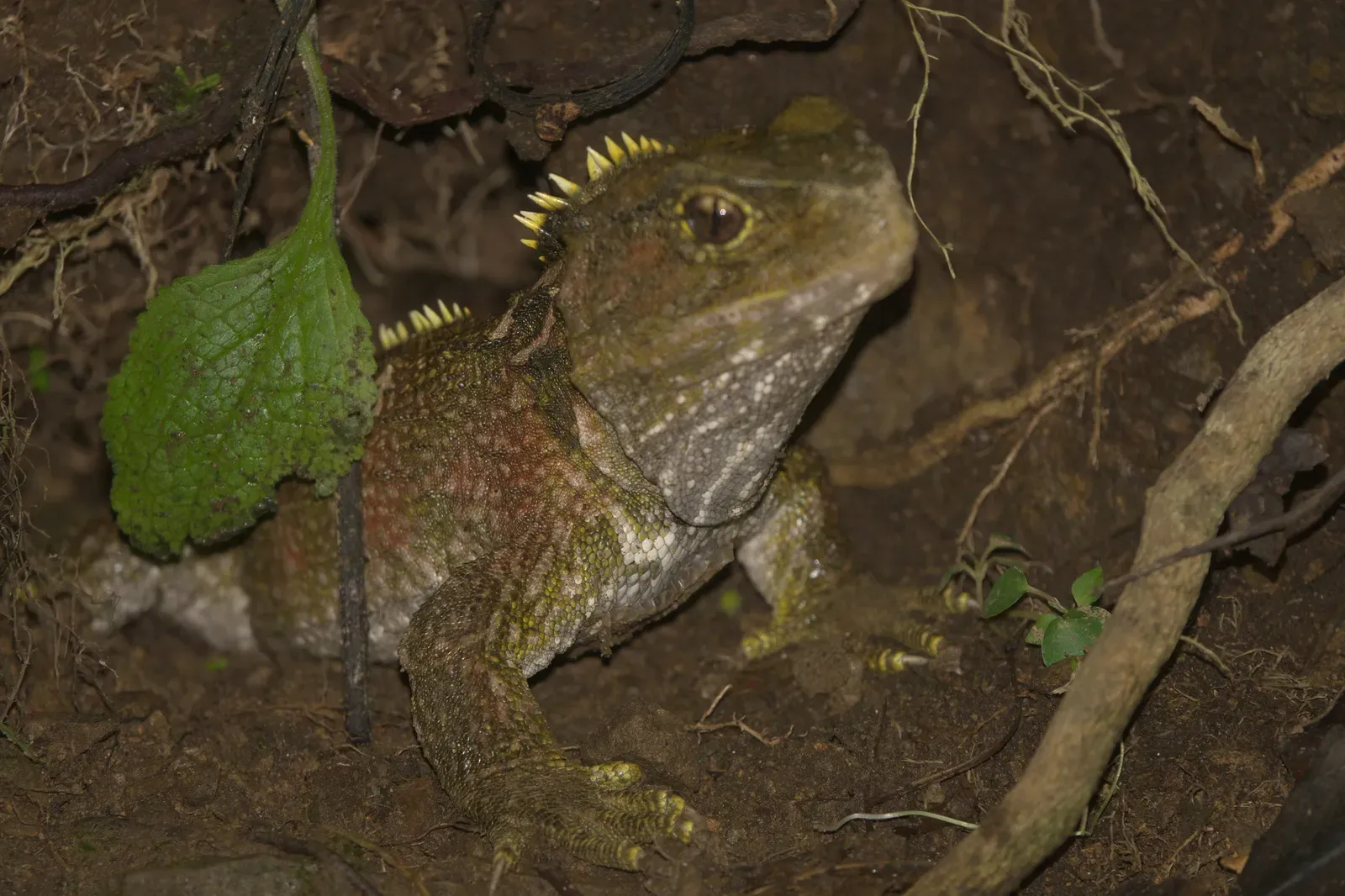
Meet the tuatara: a slow-growing, long-living night explorer that is not a lizard, has a light-sensing “third eye” as a youngster, and needs safe island homes.
A rustle beside the burrow
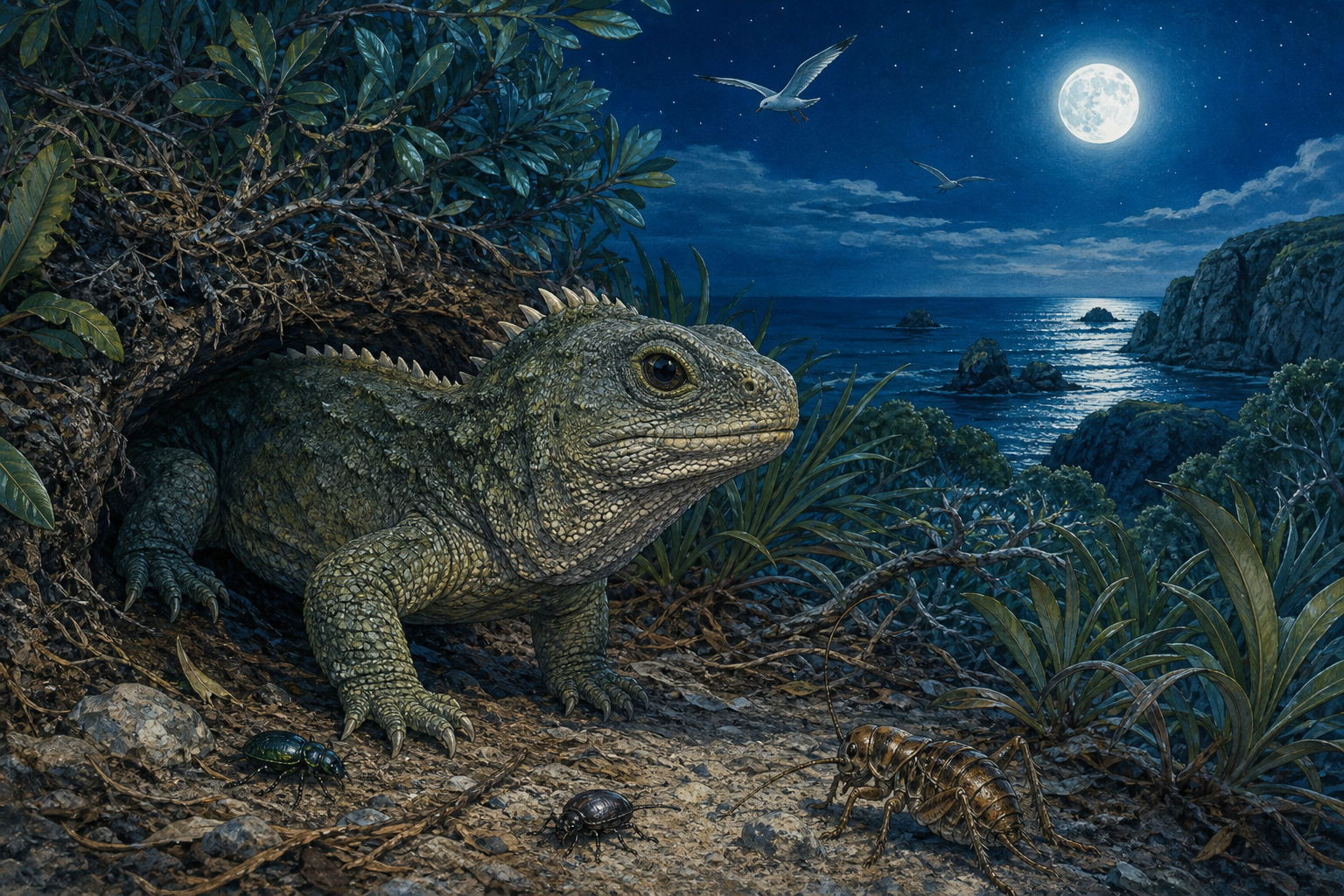
Imagine walking along a cool coastal path after sunset. The scrub is whispering in the wind. Somewhere nearby, an insect clicks, a seabird calls, and then—rustle—something stout and scaly noses out of a burrow.
It has a chunky body, a row of little spines along its neck and back, and the look of a lizard who has just remembered an extremely important appointment. But this is a tuatara, or Sphenodon punctatus, and it is not actually a lizard.
Tuatara live only in Aotearoa New Zealand, mainly on offshore islands. They use coastal forest, scrubland, and burrows as their homes. Night is their time to explore, which is sensible if you are hoping to avoid the daytime bustle and perhaps locate a crunchy beetle supper.
Here is the jaw-dropping part: the tuatara is the only living member of an ancient reptile group called Rhynchocephalia. Its long-vanished relatives lived when dinosaurs were alive. So meeting one can feel a little like finding a tiny, living message from a wildly distant past—except this message has feet and would rather you did not interrupt dinner.
Evidence: IUCN Red List of Threatened Species: Sphenodon punctatus (Tuatara) — IUCN Red List status (Least Concern); Animal Diversity Web, University of Michigan Museum of Zoology: Sphenodon punctatus (Tuatara); Wikipedia: Tuatara
Not a lizard—and proud of it
Why does a tuatara look so much like a lizard if it is not one? Nature enjoys a good look-alike. Tuatara and lizards are both reptiles, but the tuatara belongs to its own surviving branch of the reptile family tree. It is the last living representative of its family, Sphenodontidae.
That does not make a tuatara a museum object. It is a real animal with a real life: sheltering in a burrow, sensing the weather, searching for food, and navigating an island world shared with insects and seabirds.
An adult tuatara can be about as long as a large school ruler and a bit more—roughly 0.45 to 0.8 metres from nose to tail. It may weigh around as much as a small bag of flour, though bodies vary. Its spines are especially noticeable along the back, giving it a slightly dragonish silhouette without any fire-breathing fuss.
Tuatara also take the long view. They grow slowly, for around their first 35 years, and can live for more than a century. A tuatara that hatched when someone’s great-grandparent was young might still be padding around its island home. That is a lot of moonlit walks.
Evidence: IUCN Red List of Threatened Species: Sphenodon punctatus (Tuatara) — IUCN Red List status (Least Concern); Animal Diversity Web, University of Michigan Museum of Zoology: Sphenodon punctatus (Tuatara); Wikipedia: Tuatara
The secret spot on a baby’s head
A baby tuatara arrives with one of the animal kingdom’s most surprising features: a tiny light-sensing spot on top of its head. It is often called a “third eye.” No, it does not peer around corners or read homework upside down.
This special patch can sense light. As the young tuatara grows, scales cover it, so it becomes hidden. Scientists connect this light-sensing feature with keeping track of light and dark, and perhaps the rhythms of days and seasons.
That hidden head-top sensor is a lovely reminder that animals notice the world in ways we may not. We use our eyes to watch a sunrise. A young tuatara has an extra little light detector quietly joining in.
Tuatara have another unexpected talent: they cope with cool conditions that would make many reptiles want to find a warm rock and refuse to move. They can be active at unusually low temperatures. On a chilly island night, that gives the tuatara its own kind of superpower—not speedy superhero zooming, but calm, cold-weather determination.
Evidence: Animal Diversity Web, University of Michigan Museum of Zoology: Sphenodon punctatus (Tuatara); Wikipedia: Tuatara
What is on the midnight menu?
A tuatara is a carnivore, which means it eats animals rather than plants. Its menu includes beetles, crickets, wētā, spiders, earthworms, and snails. Wētā are large insects from New Zealand, and their name is fun to say almost as much as they are impressive to see.
Tuatara may also eat birds’ eggs, small lizards, and seabird chicks. On their offshore islands, they are part of a busy food web: many living things sharing space, food, shelter, and the night.
It is tempting to imagine every wild animal as either a hero or a villain, but nature is not a costume contest. A tuatara is simply doing what tuatara do—finding food and surviving. Its role as a predator of invertebrates is one thread in the island’s much bigger living tapestry.
If you ever visit wild places, the kindest detective work is quiet detective work. Notice tracks, burrows, plants, and calls from a respectful distance. Wild animals need room to make their own choices, including the choice not to be watched while they eat.
Evidence: Animal Diversity Web, University of Michigan Museum of Zoology: Sphenodon punctatus (Tuatara); Wikipedia: Tuatara
A small island can be a big safe place
Long ago, tuatara lived across a wider area of New Zealand’s mainland. Historic habitat loss and introduced mammal predators helped push them out of most of that former range. Today, wild populations are focused mainly on offshore islands.
Rats are a serious problem because they can eat tuatara eggs and young. For an animal that grows slowly and takes a long time to mature, protecting eggs and hatchlings matters enormously. A safe burrow is not just a hole in the ground; it can be the beginning of a century-long life.
There is hopeful news, too. Tuatara are listed as Least Concern on the IUCN Red List, while New Zealand’s classification also reflects how much of their former range has been lost. Both ideas can be true at once: the species has important protections and stable support, yet its island homes remain precious and limited.
Predator-free island sanctuaries, efforts to control introduced mammals, and carefully moving or breeding tuatara to support safe populations all help. These actions are not about making the islands perfectly tidy. They are about giving a unique native animal a fair chance to keep rustling through the dark for generations to come.
Evidence: IUCN Red List of Threatened Species: Sphenodon punctatus (Tuatara) — IUCN Red List status (Least Concern); Animal Diversity Web, University of Michigan Museum of Zoology: Sphenodon punctatus (Tuatara); Wikipedia: Tuatara
How to be a tuatara ally
You do not need to travel to an offshore island to care about tuatara. Start with curiosity. Learn the names of animals that live near you. Ask why native habitats matter. Share the fact that a spiky reptile from New Zealand is the last living member of a whole ancient group. That fact deserves a small gasp.
Then think of wildlife as neighbours, not decorations. Neighbours need safe places to sleep, find food, and raise young. Supporting conservation groups, following rules in nature reserves, and listening to local Indigenous and community knowledge are practical ways people can show respect for living places.
The tuatara’s story is also a cheerful nudge to slow down. It does not rush through life. It takes decades to grow and may live beyond 100 years. In a world that often shouts “Faster!”, this quiet night-walker seems to say, “Perhaps check the burrow first.”
Evidence: IUCN Red List of Threatened Species: Sphenodon punctatus (Tuatara) — IUCN Red List status (Least Concern); Animal Diversity Web, University of Michigan Museum of Zoology: Sphenodon punctatus (Tuatara); Wikipedia: Tuatara
One gentle choice that reaches beyond our plate
Caring about a tuatara can begin with caring about all the animals and habitats that make our planet lively. At home, meals can be one peaceful place to practise that care. The World Health Organization describes healthy diets as including plenty of foods such as vegetables, fruit, whole grains, pulses, nuts, and seeds.
Choosing more plant-based meals can be a kind, practical adventure: try bean tacos, lentil pasta sauce, chickpea sandwiches, or a fruit-and-oat snack with a trusted adult. It is not about being perfect or judging what another family eats. It is about noticing that delicious choices can include more plants and fewer animal products.
The IPCC reports that shifts toward sustainable, healthy, more plant-based diets can lower food-system emissions and reduce pressure on land and biodiversity. A small choice will not magically protect an island overnight—but many thoughtful choices can help make room for wild neighbours, from the tiniest beetle to the ancient tuatara.
Evidence: World Health Organization: Healthy diet; Intergovernmental Panel on Climate Change: Climate Change 2022: Mitigation of Climate Change — Chapter 7
Questions people ask
Is a tuatara a dinosaur?
No. A tuatara is a reptile, not a dinosaur. But its ancient relatives lived alongside dinosaurs, and it is the only living member of its reptile group.
Evidence: Animal Diversity Web, University of Michigan Museum of Zoology: Sphenodon punctatus (Tuatara); Wikipedia: Tuatara
Can a tuatara really live for 100 years?
Yes, tuatara can live for more than 100 years. They grow very slowly, continuing to grow for about their first 35 years.
Evidence: Animal Diversity Web, University of Michigan Museum of Zoology: Sphenodon punctatus (Tuatara); Wikipedia: Tuatara
What does the tuatara’s third eye do?
In hatchlings, the small patch on top of the head can sense light. Scales grow over it as the animal gets older.
Evidence: Animal Diversity Web, University of Michigan Museum of Zoology: Sphenodon punctatus (Tuatara); Wikipedia: Tuatara
Why are rats dangerous to tuatara?
Introduced rats can eat tuatara eggs and young. Keeping island habitats safer from introduced mammal predators is an important conservation action.
Evidence: Animal Diversity Web, University of Michigan Museum of Zoology: Sphenodon punctatus (Tuatara); Wikipedia: Tuatara
Read the evidence
Sources behind this story
- Sphenodon punctatus (Tuatara) — IUCN Red List status (Least Concern) — IUCN Red List of Threatened Species
- Sphenodon punctatus (Tuatara) — Animal Diversity Web, University of Michigan Museum of Zoology
- Tuatara — Wikipedia
- Healthy diet — World Health Organization
- Climate Change 2022: Mitigation of Climate Change — Chapter 7 — Intergovernmental Panel on Climate Change
Health information is general education, not personal medical advice. Young readers should make food choices with a trusted adult and qualified health professional.