Today's animal friend · 13 August 2026
The Pine-Needle City of the Red Wood Ant
A red wood ant may be smaller than a fingernail, but together these woodland neighbours build a home that is part apartment block, part picnic basket, and part very busy road network.
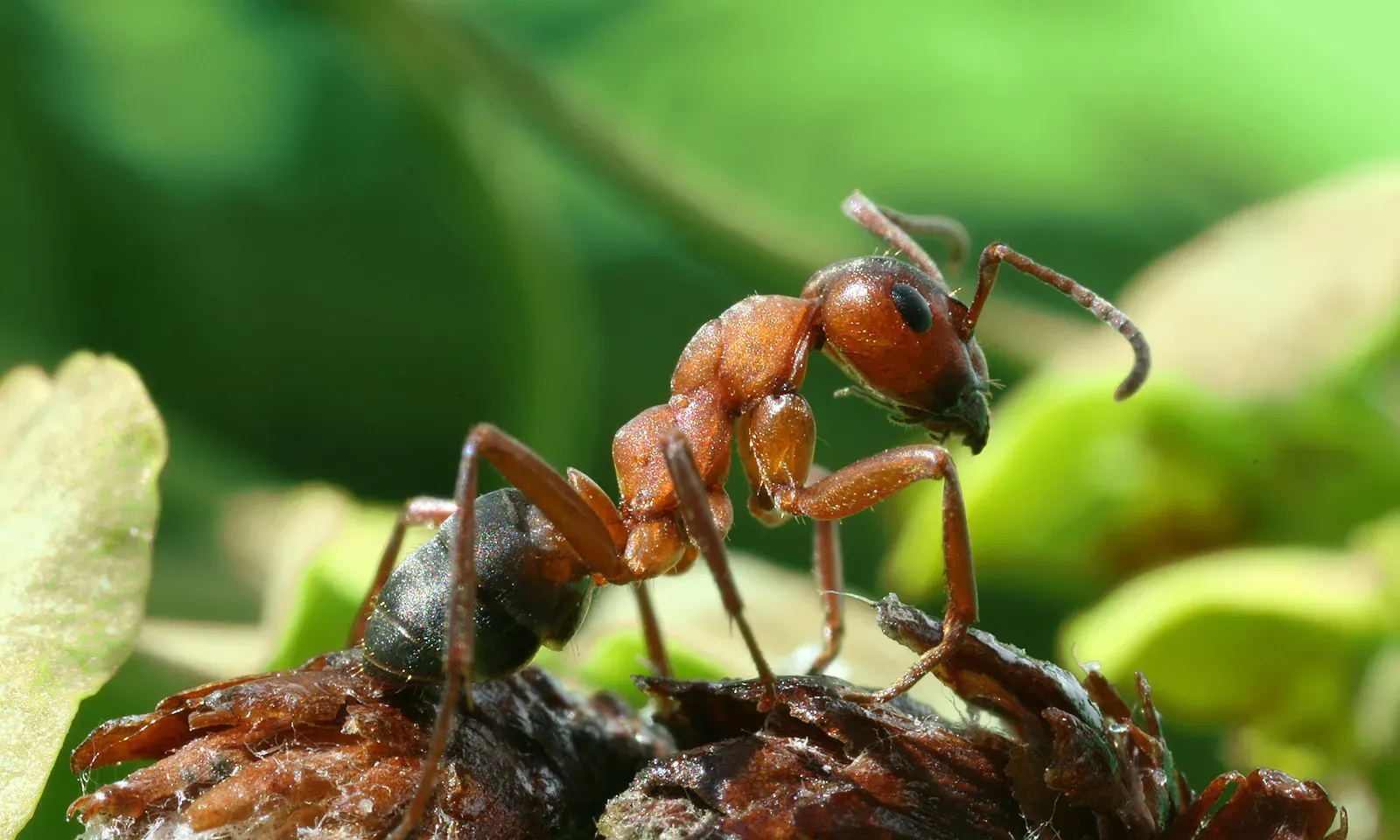
A red wood ant may be smaller than a fingernail, but together these woodland neighbours build a home that is part apartment block, part picnic basket, and part very busy road network.
A rustle under the pines
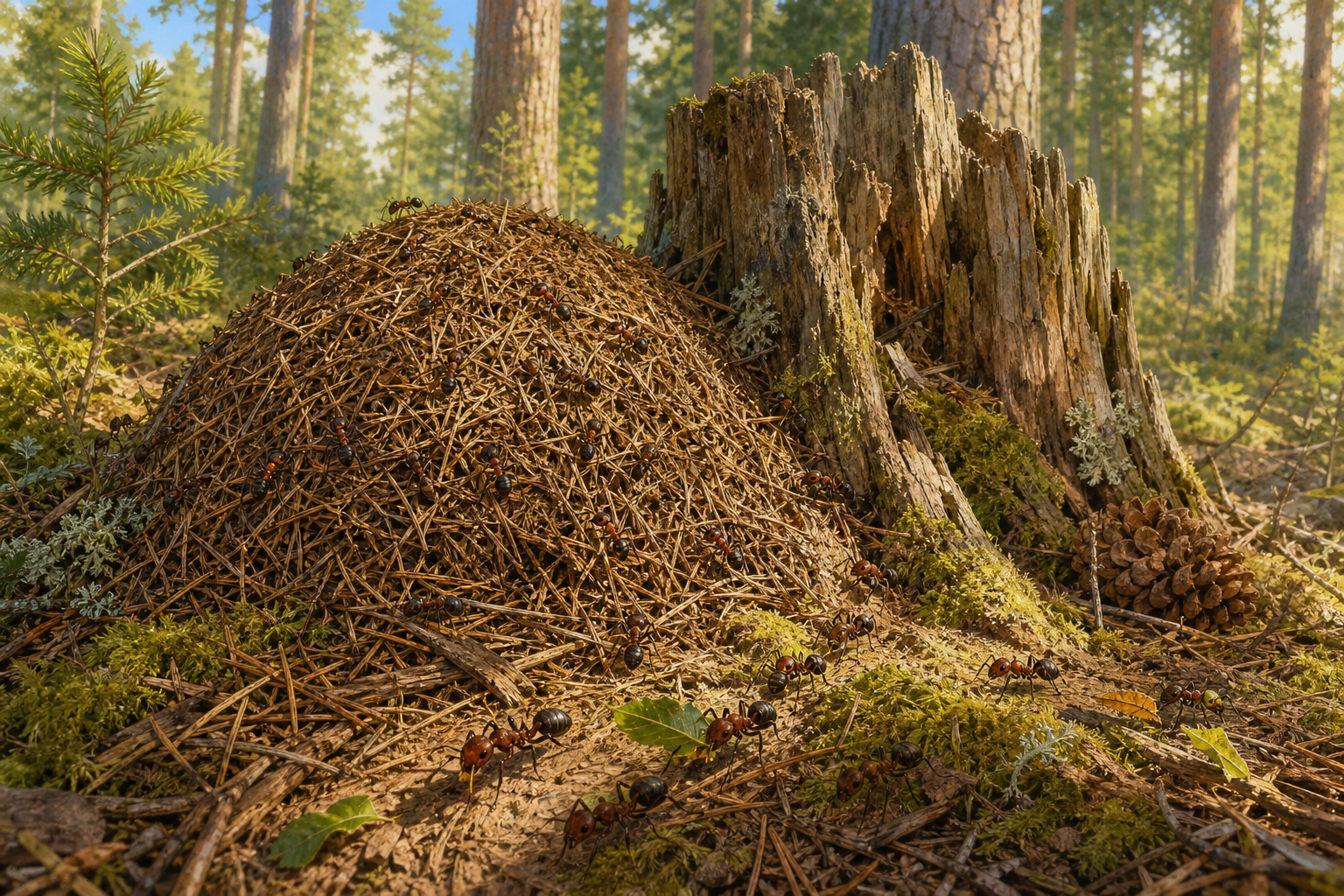
Imagine walking through a woodland clearing on a warm day. Pine needles prickle softly under your shoes. A twig snaps. Then you notice a brown-and-red dome beside an old stump, apparently made from the forest’s leftover bits and bobs.
It is not a heap. It is a city: the nest of red wood ants, also called southern wood ants or horse ants. Each worker is only about 4.5 to 9 millimetres long—tiny enough to seem like a moving comma on a leaf. Yet thousands upon thousands can make their home together in one busy mound.
Watch for a moment and the ground seems to grow legs. Ants hurry along paths, carrying food or nest materials. There is no tiny traffic officer with a whistle, thankfully. Somehow, the colony keeps moving.
The red wood ant’s scientific name is Formica rufa. It is an insect, and it belongs to the ant family, Formicidae. Knowing its long name is not required for being impressed by it. The mound does that job very nicely.
Evidence: IUCN Red List of Threatened Species: Formica rufa (Red Wood Ant) — Red List Assessment; Animal Diversity Web, University of Michigan Museum of Zoology: Formica rufa; Wikipedia: Formica rufa
Not a pile of needles—a warm, working home
Red wood ants build large dome-shaped mounds from grass, twigs, and conifer needles. They often choose sunny woodland clearings, where sunlight can warm their home. Some nests are built against a rotting stump, like a clever use of an already-existing wall.
A mound may look loose and scratchy from outside, but it is a carefully made home. Worker ants continually gather materials and repair it. Picture a huge team building a blanket fort, except the builders are small, speedy, and determined to carry things much bigger than their own heads.
A nest can shelter hundreds of thousands of ants. That is an astonishing crowd for one woodland address. The ants are active in the daytime, when their trails can lead from the mound to places where food is waiting.
If you find a mound, enjoy it from a respectful distance. Its residents are at home, doing important work. A quiet look is much kinder than poking, kicking, or pulling away its roof.
Evidence: IUCN Red List of Threatened Species: Formica rufa (Red Wood Ant) — Red List Assessment; Animal Diversity Web, University of Michigan Museum of Zoology: Formica rufa; Wikipedia: Formica rufa
One home, many queens
You may have heard that an ant colony has a queen. Red wood ants add a surprising twist: one nest can have many egg-laying queens sharing the same home. That means the colony is not a fairy-tale castle with one royal character ordering everyone about.
Instead, it is a vast family of different jobs. Queens lay eggs. Workers care for the young, maintain the mound, search for food, and travel between the nest and feeding places. The colony’s strength comes from many ants doing many useful tasks.
Large colonies can contain roughly 100,000 to 400,000 workers, with many queens reported in a single nest. It is hard to picture that many tiny neighbours. Think of every seat in a big sports stadium being filled—not by people, but by ants with extremely important errands.
No worker has to understand the whole city plan for the colony to work. Each ant responds to what is nearby: a trail, a food smell, nest material, or young needing care. Together, those small choices create a remarkable community.
Evidence: IUCN Red List of Threatened Species: Formica rufa (Red Wood Ant) — Red List Assessment; Animal Diversity Web, University of Michigan Museum of Zoology: Formica rufa; Wikipedia: Formica rufa
The sweetest stop on the trail
Where are the ants rushing? Often, they are following foraging trails to food. Red wood ants chiefly collect honeydew, a sweet liquid made by tiny insects called aphids. To an ant, a droplet of honeydew may be like finding a favourite juice box in the woods.
They do not live on sweetness alone. Red wood ants also prey on and scavenge other invertebrates, including insects and spiders. In other words, their menu is varied—more woodland buffet than one-food-only restaurant.
Their trails can stretch as far as about 100 metres from the nest. For an ant only millimetres long, that is a serious journey. If you walked the same kind of distance compared with your body size, your snack trip would be wildly, ridiculously long.
By gathering honeydew and other small creatures, these ants are part of the woodland’s busy web of lives. We do not need to call them superheroes to see that their daily work matters: a forest is made of countless small relationships, and the ants are right in the middle of them.
Evidence: IUCN Red List of Threatened Species: Formica rufa (Red Wood Ant) — Red List Assessment; Animal Diversity Web, University of Michigan Museum of Zoology: Formica rufa; Wikipedia: Formica rufa
A woodland neighbour from Europe to Asia
Red wood ants are native across parts of Europe and Asia, from Great Britain and Scandinavia east toward Lake Baikal. They live in woodland and conifer forest, especially where there are clearings with sunlit places for their mound homes.
Their bodies match the name: workers have reddish heads and thoraxes, with darker brownish-black abdomens. But spotting one individual is only the first clue. Look nearby—without disturbing anything—and you may notice the larger story: trails, a mound, and a whole colony’s shared purpose.
Woodland clearings can sound like empty spaces, but they are not empty at all. Light reaches the ground. Plants grow. Insects move. A red wood ant colony can use this bright patch as a place to build and forage.
That makes a clearing feel less like a gap in the forest and more like a sunny room in a very large green house.
Evidence: IUCN Red List of Threatened Species: Formica rufa (Red Wood Ant) — Red List Assessment; Animal Diversity Web, University of Michigan Museum of Zoology: Formica rufa; Wikipedia: Formica rufa
Why this little city needs caring neighbours
The red wood ant is listed as Near Threatened on the IUCN Red List. Its future is linked to habitat loss and to changes in forest management that can reduce the suitable sunny clearings and nest sites it needs.
That can feel like a big problem for such a small creature. But noticing is a beginning. Healthy woodlands need room for all sorts of lives, from tall trees to the ants carrying one pine needle at a time. Looking after forests with sunny clearings can help keep suitable places for red wood ant mounds.
If you visit woods, be a gentle guest. Stay on paths where requested, leave nests and insects undisturbed, and share your discoveries with others. A friend who says, “Look, there’s a whole city under our feet,” may help another person see a forest differently.
Protecting wildlife is not only about famous animals with enormous eyes or magnificent antlers. Sometimes it is about respecting a mound that looks ordinary—until you realise it is full of families, trails, food-finders, and patient builders.
Evidence: IUCN Red List of Threatened Species: Formica rufa (Red Wood Ant) — Red List Assessment; Wikipedia: Formica rufa
Try the ant-eye-view challenge
Next time you are outdoors, pause beside a patch of ground and imagine you are 9 millimetres long. A pine needle becomes a log. A pebble becomes a boulder. A short walk becomes an expedition. What route would you choose? Where would you find warmth, shelter, and food?
You do not need to collect an ant or take apart a nest to become a brilliant observer. Bring your eyes, your patience, and perhaps a sketchbook. Draw the shapes of pine needles, the paths on the ground, or the colours around a clearing. Then ask: who else might use this place?
The red wood ant reminds us that being small does not mean being unimportant. Its colony turns twigs, needles, sunshine, and teamwork into a home. That is a splendid sort of outdoor magic—and it is real.
Evidence: IUCN Red List of Threatened Species: Formica rufa (Red Wood Ant) — Red List Assessment; Animal Diversity Web, University of Michigan Museum of Zoology: Formica rufa; Wikipedia: Formica rufa
Kind choices can begin with a tiny ant
A red wood ant is not a forest decoration or a pest to squash. It is an individual animal in a crowded, cooperative home, with places to travel, food to find, and a colony to return to. When we make room for wild animals and protect the places they need, we practise kindness that reaches beyond ourselves.
Our everyday food choices can be part of that kindness, too. The World Health Organization describes healthy diets as including a variety of whole grains, vegetables, fruit, pulses, nuts, and seeds. With a trusted adult, you might enjoy trying a plant-based meal or snack and discovering a new favourite flavour.
More plant-based diets can also help reduce food-system emissions and pressure on land and biodiversity, according to the IPCC. Nobody needs to be perfect to care. A bean burrito, lentil soup, crunchy seeds, or a fruit-and-oat breakfast can be a cheerful vote for a world with room for forests, ants, and other animal friends.
Evidence: IUCN Red List of Threatened Species: Formica rufa (Red Wood Ant) — Red List Assessment; Wikipedia: Formica rufa; World Health Organization: Healthy diet; Intergovernmental Panel on Climate Change: Climate Change 2022: Mitigation of Climate Change — Chapter 7
Questions people ask
Are red wood ants really red?
They have reddish heads and thoraxes, while their abdomens are darker brownish-black. Their colouring can help make one worker stand out against pale pine needles or soil—if it ever pauses long enough to be noticed.
Evidence: Wikipedia: Formica rufa
Why do red wood ants build their nests in sunny clearings?
Their large mounds are documented in sunlit woodland clearings. Sunlight reaches the nest there, helping make these open patches suitable places for their remarkable grass, twig, and conifer-needle homes.
Evidence: Wikipedia: Formica rufa
What should I do if I see a red wood ant mound?
Observe kindly from a distance and leave the mound undisturbed. These homes hold a huge community of ants, and their nest materials, trails, and nearby clearing are all part of the colony’s habitat.
Evidence: IUCN Red List of Threatened Species: Formica rufa (Red Wood Ant) — Red List Assessment; Wikipedia: Formica rufa
Read the evidence
Sources behind this story
- Formica rufa (Red Wood Ant) — Red List Assessment — IUCN Red List of Threatened Species
- Formica rufa — Animal Diversity Web, University of Michigan Museum of Zoology
- Formica rufa — Wikipedia
- Healthy diet — World Health Organization
- Climate Change 2022: Mitigation of Climate Change — Chapter 7 — Intergovernmental Panel on Climate Change
Health information is general education, not personal medical advice. Young readers should make food choices with a trusted adult and qualified health professional.