Today's animal friend · 24 November 2026
Red Panda: The Bamboo-Branch Acrobat
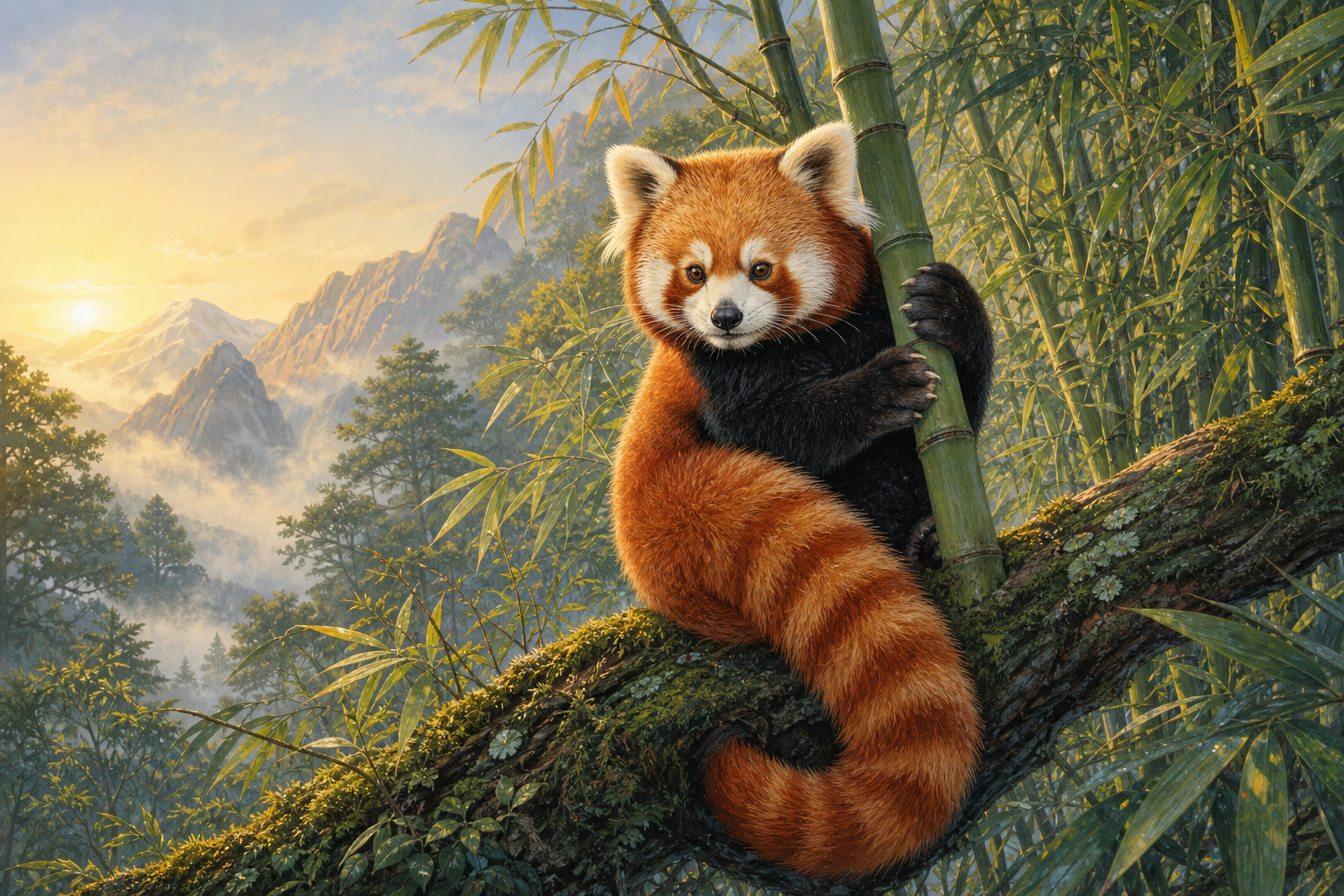
A small red panda pads along a branch in Asia’s mountain forests—then climbs down the trunk headfirst, because ordinary rules are clearly not its style.
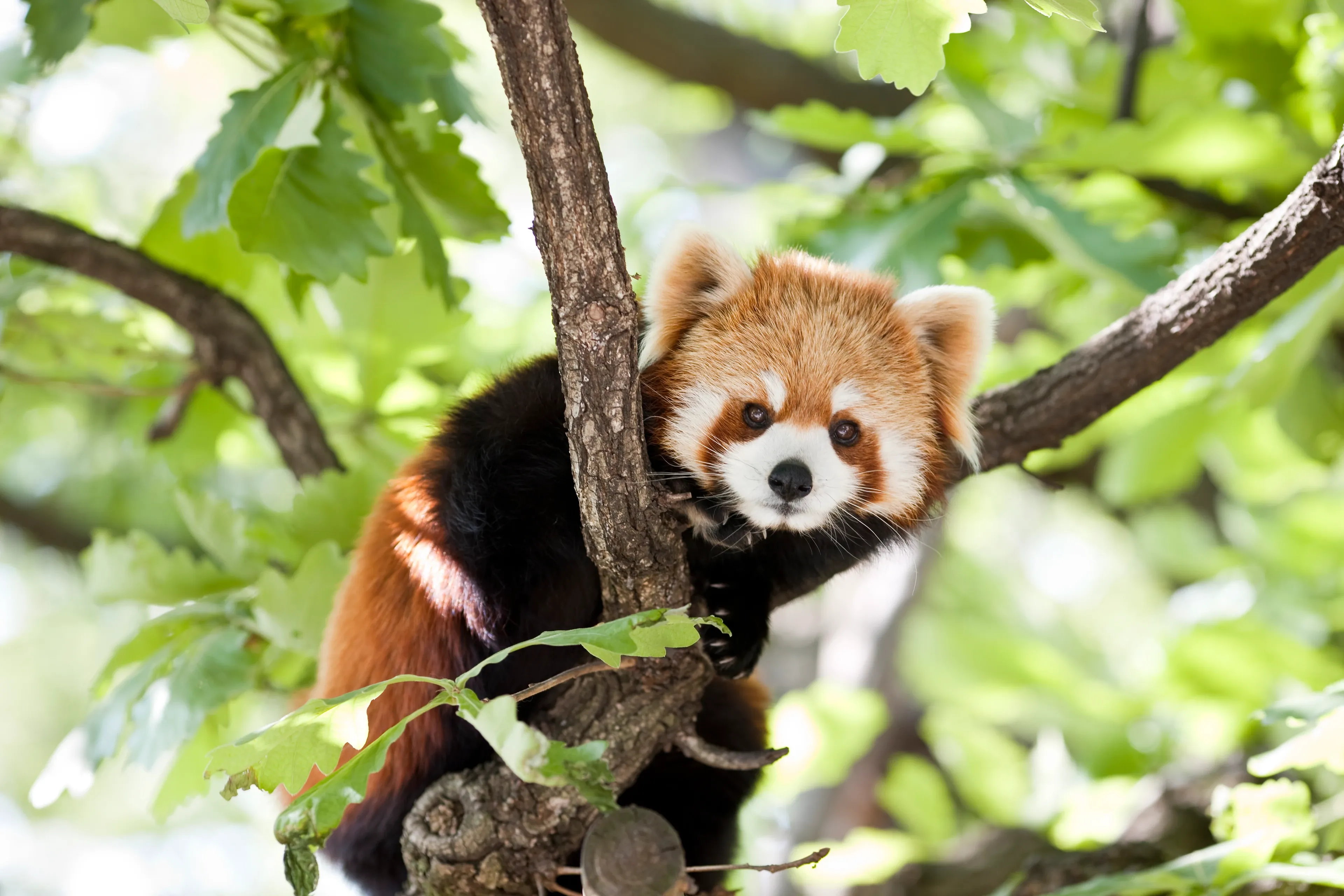
A small red panda pads along a branch in Asia’s mountain forests—then climbs down the trunk headfirst, because ordinary rules are clearly not its style.
A rustle in the bamboo
Imagine a cool mountain forest in Asia. Bamboo leaves whisper below tall trees. A branch gives the tiniest bounce—and there, wrapped in russet fur, is a red panda. Its pale face looks as if someone has painted it with a very careful little brush.
The red panda, or Ailurus fulgens, is not a bear, even though one old nickname is “red cat-bear.” It is the only living member of its own family, Ailuridae. And here is a funny bit of naming history: it was called a panda before the giant panda got that name.
Red pandas live mainly in mountain forests with thick bamboo underneath the trees. Suitable habitat stretches from Nepal, India and Bhutan through northern Myanmar to parts of China. That does not mean one enormous unbroken red-panda playground; they need the right patches of forest to travel, rest and find food.
A red panda may be active in daytime, at night, or around dawn and dusk. So if you were hoping it kept a tidy clock like a school timetable, sorry—this animal has a much more mysterious schedule.
Evidence: Smithsonian’s National Zoo and Conservation Biology Institute: Red panda; San Diego Zoo Wildlife Alliance: Red Panda Fact Sheet; American Society of Mammalogists, Mammal Diversity Database: Ailurus fulgens and Ailurus styani
Built for branches—and backwards climbing
A red panda is about as long in head-and-body length as a big skateboard, although its long tail adds even more length behind it. That tail is bushy, ringed and extremely useful. It helps the animal balance on branches, and in cold weather it can curl around its body like a fluffy scarf.
Look closely at its paws and you will find one of nature’s neatest tricks: a false thumb. This is not a true extra finger. It is a specially changed wrist bone that presses against the paw, helping the red panda grip bamboo. Think of trying to hold a slippery bunch of pencils with mittened hands—then suddenly discovering a handy little hook.
Its curved claws and flexible ankles help it climb down tree trunks headfirst. Headfirst! Furry soles add warmth and grip, like built-in woolly slippers that are much better at tree climbing than yours. These features help a red panda move through its leafy world with careful, quiet skill.
Its pale facial markings are different from one individual to another. For people studying or caring for red pandas, those patterns can help tell individuals apart—rather like recognising friends by their different smiles, eyebrows or favourite hair clips.
Evidence: Smithsonian’s National Zoo and Conservation Biology Institute: Red panda; San Diego Zoo Wildlife Alliance: Red Panda Fact Sheet
Wait—an animal in Carnivora that loves bamboo?
Yes! Red pandas belong to the order Carnivora, a group whose name means meat-eaters. Yet most of a red panda’s food is bamboo. Labels can be strange things. Being placed in Carnivora does not mean a red panda spends its day roaring after dinner; this one is far more likely to be choosing bamboo leaves and shoots.
And choose is the important word. Red pandas carefully pick tender leaves and shoots instead of munching every bit of bamboo they meet. They may also eat fruit, flowers, acorns, insects, eggs and small animal matter now and then. Still, bamboo is the star of the menu.
Picture the forest as a giant green café with a very picky customer. A red panda pauses, grips a stem with its false thumb, and selects a soft bite. Its food choices tie its life closely to forests where bamboo grows. When those forests are healthy and connected, there is more room for the red panda’s quiet branch-to-branch adventures.
Red pandas generally live alone outside breeding and a mother’s care of cubs. They leave scent marks that carry messages for other red pandas. We cannot read those messages, but they help adults communicate in the forest. A mother prepares a lined nest in a tree hollow or another sheltered spot, and cubs can stay with her for about a year as they grow.
Evidence: Smithsonian’s National Zoo and Conservation Biology Institute: Red panda; San Diego Zoo Wildlife Alliance: Red Panda Fact Sheet
Why a patchy forest is a hard map to cross
The red panda is listed as Endangered in the 2015 IUCN assessment, and its global population trend was judged to be decreasing. That is worrying, but it is also a reason to pay closer attention—not a reason to give up.
A mountain forest can be split by roads, agriculture and other changes to the land. Instead of one connected leafy route, the forest becomes separate islands. For a tree-dwelling animal that depends on suitable bamboo habitat, gaps can make finding food, shelter and other red pandas more difficult.
Livestock pressure, domestic dogs and disease, poaching and snares, and climate-related habitat change can also threaten red pandas in different places. The problems are not identical everywhere across their broad range. That is why protection needs local knowledge as well as care.
There is real work to cheer for: protecting and reconnecting habitat, partnering with local communities, caring responsibly for domestic dogs, preventing poaching, and coordinating wildlife monitoring. In Bhutan, a national survey used non-invasive genetic sampling to identify red pandas in surveyed areas. Careful monitoring helps conservation teams learn where help is needed, without treating a small survey result as a count for the whole world.
Evidence: International Union for Conservation of Nature: Ailurus fulgens; Bhutan Department of Forests and Park Services / WWF: Red Panda Status in Bhutan: National Red Panda Survey Report 2023
A small animal with a big question mark
Scientists agree that red pandas are remarkable mountain-forest mammals. They are still discussing exactly how to name some red panda lineages. Some research supports two species, Ailurus fulgens and Ailurus styani. Other research supports treating them as subspecies within one species. The answer is still being debated.
That is not science being muddled; it is science being honest. Researchers compare evidence, test ideas and sometimes revise their thinking. Meanwhile, the forest animals themselves are busy with the important business of gripping bamboo, balancing on branches and keeping their paws warm.
The red panda reminds us that being small does not make a creature unimportant. A face pattern, a scent mark, a careful bamboo bite—each is part of one animal’s life. Protecting forests means protecting the homes where those lives can continue.
Evidence: American Society of Mammalogists, Mammal Diversity Database: Ailurus fulgens and Ailurus styani; Science Advances: Genomic evidence for two phylogenetic species and long-term population bottlenecks in red pandas; Journal of Biogeography: Red Panda Phylogenetic Conundrum: Are There Two Distinct Species?; International Union for Conservation of Nature: Ailurus fulgens
One kind choice can begin at the table
Red pandas show how much a life can depend on plants: most of their meals are bamboo. Our food is different, of course, but we can still notice the connection between what is on a plate and the land, water and wildlife around us.
With a trusted adult, you might explore a cheerful plant-forward meal: beans in tacos, lentils in soup, peanut butter on toast, or a fruit-and-oat snack. The World Health Organization describes healthy diets as varied and rich in foods such as vegetables, fruit, whole grains, pulses, nuts and seeds. Food needs differ from person to person, so families can ask a qualified health professional for advice when needed.
Choosing more plant-based foods can be a gentle way to care about animals and habitats. The IPCC reports that shifts toward sustainable, healthy, more plant-based diets can reduce food-system emissions and pressure on land and biodiversity. No perfection contest required—just curious, compassionate choices, one meal at a time.
Evidence: World Health Organization: Healthy diet; Intergovernmental Panel on Climate Change: Climate Change 2022: Mitigation of Climate Change — Chapter 7
Questions people ask
Is a red panda related to a giant panda?
They share the word “panda” and both eat bamboo, but the red panda was given that name first. Red pandas belong to the family Ailuridae, not the giant panda’s family.
Evidence: San Diego Zoo Wildlife Alliance: Red Panda Fact Sheet; American Society of Mammalogists, Mammal Diversity Database: Ailurus fulgens and Ailurus styani
Can red pandas really climb down headfirst?
They can. Flexible ankles and curved claws help them descend a trunk headfirst, while furry soles help with grip and warmth.
Evidence: Smithsonian’s National Zoo and Conservation Biology Institute: Red panda; San Diego Zoo Wildlife Alliance: Red Panda Fact Sheet
What can people do for red pandas?
Support forest protection and community-led conservation, learn about wildlife respectfully, and never disturb wild animals or their habitat. Caring for domestic dogs and preventing poaching also matter in places where red pandas live.
Evidence: International Union for Conservation of Nature: Ailurus fulgens; Bhutan Department of Forests and Park Services / WWF: Red Panda Status in Bhutan: National Red Panda Survey Report 2023
Read the evidence
Sources behind this story
- Ailurus fulgens — International Union for Conservation of Nature
- Red panda — Smithsonian's National Zoo and Conservation Biology Institute
- Red Panda Fact Sheet — San Diego Zoo Wildlife Alliance
- Ailurus fulgens and Ailurus styani — American Society of Mammalogists, Mammal Diversity Database
- Red Panda Status in Bhutan: National Red Panda Survey Report 2023 — Bhutan Department of Forests and Park Services / WWF
- Genomic evidence for two phylogenetic species and long-term population bottlenecks in red pandas — Science Advances
- Red Panda Phylogenetic Conundrum: Are There Two Distinct Species? — Journal of Biogeography
- Healthy diet — World Health Organization
- Climate Change 2022: Mitigation of Climate Change — Chapter 7 — Intergovernmental Panel on Climate Change
Health information is general education, not personal medical advice. Young readers should make food choices with a trusted adult and qualified health professional.