Today's animal friend · 10 August 2026
The Red Lionfish’s Midnight Mane
At dusk on a warm reef, a red lionfish opens its feathery fins. Beautiful? Absolutely. Ordinary? Not a chance.
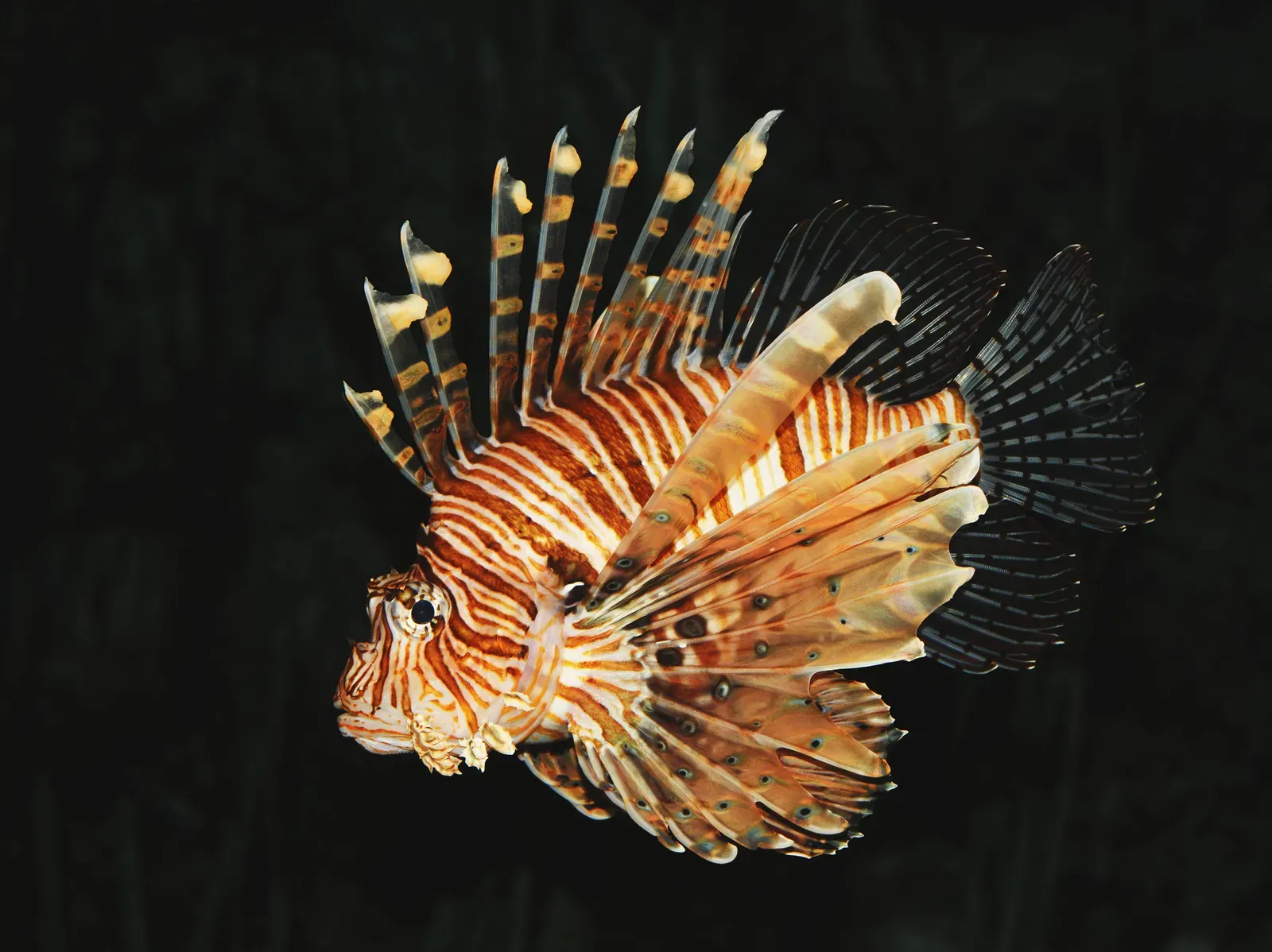
At dusk on a warm reef, a red lionfish opens its feathery fins. Beautiful? Absolutely. Ordinary? Not a chance.
A reef shadow grows a mane
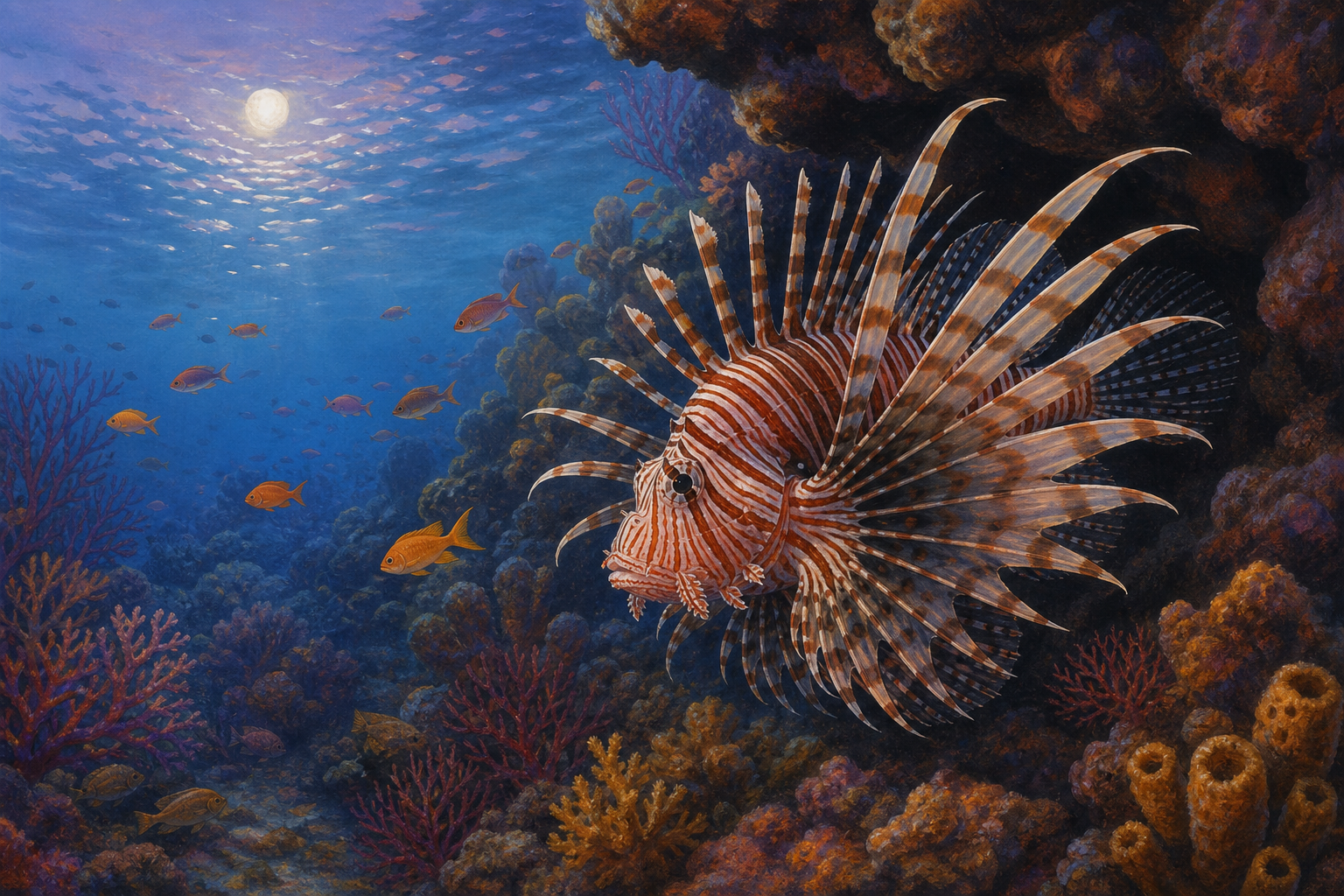
Picture yourself swimming above a coral reef as the daylight turns blue and soft. A rocky ledge makes a dark little cave. Then something glides out: red-brown and white stripes, fins streaming in every direction, and a silhouette like a tiny underwater lion wearing a feather boa.
This is the red lionfish, or Pterois volitans. It is also called a firefish, turkeyfish, or butterfly cod—proof that people have looked at this fish and thought, “Well, it certainly needs a dramatic name.” Its long fin rays spread around its body like a lion’s mane, giving it the name lionfish.
It does not zoom about like a speedy tuna. Instead, it drifts with a calm, floaty confidence, almost like a swimming flower. But beneath that fancy outfit is a watchful reef hunter, ready for the busy hours of dusk and night.
Evidence: IUCN Red List of Threatened Species: Pterois volitans (Red Lionfish) — Red List Assessment; Animal Diversity Web, University of Michigan Museum of Zoology: Pterois volitans (Red firefish); Wikipedia: Red lionfish
Where does this fancy fish call home?
Red lionfish belong to warm seas of the Indo-Pacific—the huge ocean region that includes the Indian and Pacific Oceans. There, they live around coral reefs and rocky reefs, and can also be found in lagoons and open water. A reef is not simply a pile of colourful rocks. It is more like a crowded neighbourhood, full of nooks, ledges, tunnels, and animals with places to be.
During the day, a lionfish often rests in a sheltered crack, cave, or crevice. Imagine finding the shadiest cubby in a playground on a hot day. When twilight arrives, the fish becomes more active and moves over the reef structure.
A red lionfish can grow to several tens of centimetres long—about the length of a school ruler, or a bit more. That may not sound enormous, but on a reef, its wide-spread fins make it look much grander. It can live for around a decade, and sometimes longer, so one fish may watch many seasons pass over its coral home.
Evidence: Animal Diversity Web, University of Michigan Museum of Zoology: Pterois volitans (Red firefish); Wikipedia: Red lionfish
What is on the midnight menu?
The answer is small fish and crustaceans such as shrimp and crabs. Lionfish are carnivores. At sunset, they stalk their prey with patient, slow movements. Then those big pectoral fins can fan outward, helping herd a smaller animal toward a corner or disguising the lionfish’s approach.
That is a clever trick, but it is not magic. It is a hunter using the body it has. Reef animals are constantly noticing one another: who is hiding, who is nibbling, who is hunting, and who should probably be given some space.
In its native Indo-Pacific reefs, the lionfish is one predator among many in a complicated food web. A food web is like a giant, invisible set of connections: plants and tiny animals, little fish, bigger fish, and all the creatures that depend on one another. Every creature has a role, even the stripey ones with show-off fins.
Evidence: Animal Diversity Web, University of Michigan Museum of Zoology: Pterois volitans (Red firefish); Wikipedia: Red lionfish
Are those spines a superpower? Kind of.
Along the lionfish’s back are thin, sharp spines containing venom. This is a defence tool, used mainly to discourage animals that come too close. Since lionfish are slow swimmers, they cannot always escape trouble by racing away. Their message is more like, “Please admire the mane from over there.”
The spines are not decorations, and they are not something people should touch. If you are ever lucky enough to see a lionfish while swimming, diving, or visiting an aquarium, give it respectful room—just as you would avoid poking a hedgehog, except this hedgehog is underwater and much more fashionable.
Its warning spines and bold pattern help make the lionfish memorable. Yet being beautiful does not mean an animal is asking to be handled. One way to be a good animal friend is to notice wildlife carefully, leave it comfortable, and let it choose where to go.
Evidence: Animal Diversity Web, University of Michigan Museum of Zoology: Pterois volitans (Red firefish); Wikipedia: Red lionfish
How can one fish be at home—and far from home?
Here is the big twist in the lionfish story. Red lionfish are native to the Indo-Pacific, but they are now established in parts of the western Atlantic, the Gulf of Mexico, and the Caribbean. In those places, they are called invasive because they did not naturally live in those reefs before.
Why does that matter? In a new reef neighbourhood, lionfish can eat local small fish and compete with local predators. The local food web may not be prepared for this elegant newcomer. It is a bit like a new player joining a game without knowing the rules—except the game is the survival of many reef animals, so the consequences can be serious.
This does not make an individual lionfish “bad.” A fish cannot study a map and decide where it ought to live. The important lesson is that wild animals need their homes protected, and people need to act carefully so animals are not moved into places where they can upset an existing community.
Evidence: Animal Diversity Web, University of Michigan Museum of Zoology: Pterois volitans (Red firefish); Wikipedia: Red lionfish
A problem with a practical response
In invaded Atlantic waters, people use organised removals and even lionfish-catching events to reduce local lionfish numbers and lessen pressure on native reef fish. Some programmes also promote eating lionfish. These efforts are about managing an introduced population in particular places, not about saying lionfish everywhere are in danger.
Globally, red lionfish are listed as Least Concern because they remain widespread and common in their native Indo-Pacific range. Still, their native reefs matter deeply. Reef degradation and the loss of the smaller fish and crustaceans they eat can create long-term worries for reef life.
The lionfish story asks us to hold two thoughts at once: this animal is astonishing and deserving of respect, and ecosystems need balance. Nature is rarely a story with a simple hero or villain. It is more like a reef itself: many lives, many connections, and lots to look after.
Evidence: IUCN Red List of Threatened Species: Pterois volitans (Red Lionfish) — Red List Assessment; Animal Diversity Web, University of Michigan Museum of Zoology: Pterois volitans (Red firefish); Wikipedia: Red lionfish
Try a lionfish-style noticing walk—on land
You do not need flippers to practise reef curiosity. Next time you are outdoors, pause at twilight and look for animals beginning their evening: a bird settling into a tree, an insect flickering past, or a squirrel making one last dash. Which creatures are resting? Which are becoming active? A lionfish would approve of this excellent detective work.
You can also draw your own “animal warning sign.” It might be stripes, a spiky outline, a bright colour, or simply a sign that says, “I need space.” Then ask: what does this feature help the animal do? The answer will not always be obvious, and that is part of the fun.
The red lionfish invites us to look twice. At first we see the mane. Then we notice the hunter, the homebody in a reef crevice, the creature living inside a web of other lives. The ocean is full of neighbours we have not met yet—and each one is worth a careful hello from a distance.
Evidence: Animal Diversity Web, University of Michigan Museum of Zoology: Pterois volitans (Red firefish); Wikipedia: Red lionfish
A kind choice can ripple outward
When we care about a lionfish, we can care about the whole reef neighbourhood too: the small fish, crabs, shrimp, corals, and people who depend on healthy seas. One gentle everyday way to help is to explore more plant-forward meals with your family—perhaps beans, lentils, vegetables, fruit, whole grains, nuts, and seeds. The World Health Organization includes these foods in guidance for varied healthy diets.
Plant-based choices can be a quiet vote for a lighter footprint on land and wildlife habitats. The IPCC reports that shifts toward sustainable, healthy, more plant-based diets can reduce food-system emissions and pressure on land and biodiversity. There is no need for perfection or for judging anyone’s plate; curious, kind choices can start with one tasty meal and a conversation with a trusted adult.
Evidence: World Health Organization: Healthy diet; Intergovernmental Panel on Climate Change: Climate Change 2022: Mitigation of Climate Change — Chapter 7
Questions people ask
Why is it called a lionfish?
Its long fin rays fan around its striped body like a lion’s mane. Other names include firefish, turkeyfish, and butterfly cod.
Evidence: Animal Diversity Web, University of Michigan Museum of Zoology: Pterois volitans (Red firefish); Wikipedia: Red lionfish
Do red lionfish hunt in daytime?
They commonly shelter in reef crevices by day and become active at dusk and night, when they hunt small fish and crustaceans.
Evidence: Animal Diversity Web, University of Michigan Museum of Zoology: Pterois volitans (Red firefish); Wikipedia: Red lionfish
Is a lionfish dangerous to people?
Its back spines contain venom and are mainly defensive. The sensible rule is simple: never touch one, and give wildlife space.
Evidence: Animal Diversity Web, University of Michigan Museum of Zoology: Pterois volitans (Red firefish); Wikipedia: Red lionfish
Are red lionfish endangered?
They are globally listed as Least Concern because they are widespread and common in their native Indo-Pacific range. But reef habitats and food webs still need care.
Evidence: IUCN Red List of Threatened Species: Pterois volitans (Red Lionfish) — Red List Assessment; Animal Diversity Web, University of Michigan Museum of Zoology: Pterois volitans (Red firefish); Wikipedia: Red lionfish
Read the evidence
Sources behind this story
- Pterois volitans (Red Lionfish) — Red List Assessment — IUCN Red List of Threatened Species
- Pterois volitans (Red firefish) — Animal Diversity Web, University of Michigan Museum of Zoology
- Red lionfish — Wikipedia
- Healthy diet — World Health Organization
- Climate Change 2022: Mitigation of Climate Change — Chapter 7 — Intergovernmental Panel on Climate Change
Health information is general education, not personal medical advice. Young readers should make food choices with a trusted adult and qualified health professional.