Today's animal friend · 4 September 2026
Platypus: The River’s Secret Spark-Finder
With a soft bill that can detect tiny electrical signals underwater, the platypus turns an ordinary riverbed into a hidden treasure hunt.
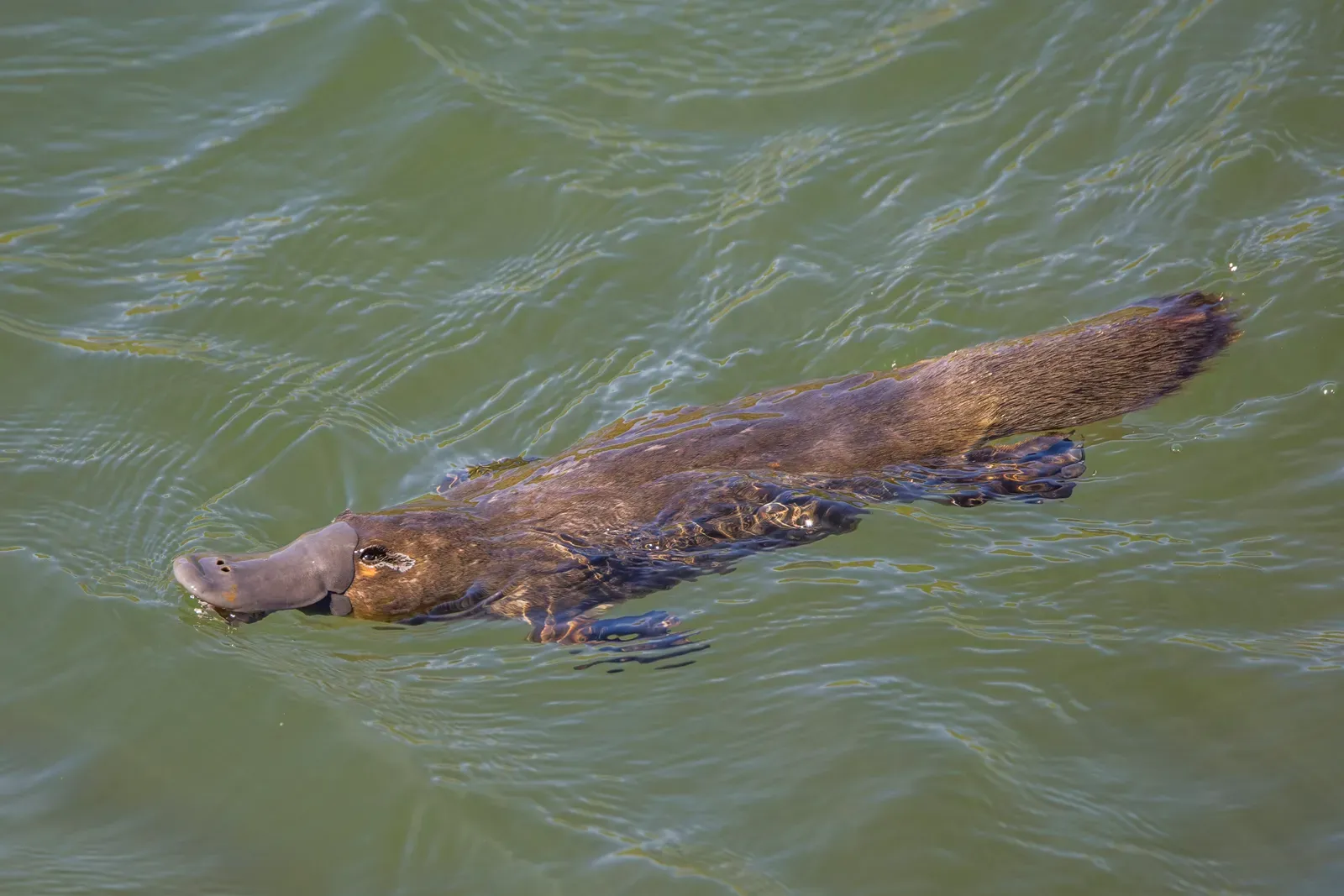
With a soft bill that can detect tiny electrical signals underwater, the platypus turns an ordinary riverbed into a hidden treasure hunt.
A ripple, a plop, and a very odd silhouette
Picture a river at dusk in eastern Australia. The light is going purple, the water is wrinkling around stones, and—plop!—a small furry swimmer slips below the surface. For a moment you might spot a flat tail, webbed feet, and a broad bill that looks borrowed from a duck. Then the river keeps its secret.
That secret is the platypus, or duck-billed platypus: Ornithorhynchus anatinus. It is a mammal, yet it lays eggs. That sounds a bit like a joke invented by someone mixing up animal stickers, but it is true. Platypuses belong to a special mammal group called monotremes, and only a handful of mammals in the world lay eggs.
A platypus is not huge—roughly the length of a school ruler plus a little extra—but its mix-and-match look makes it unforgettable. It lives around freshwater rivers, streams, and lakes, where it swims, dives, and shelters in burrows. If you were hoping to see one on a sunny lunchtime walk, you may need patience: platypuses are mostly active at night and around twilight.
Evidence: IUCN Red List of Threatened Species: Ornithorhynchus anatinus (Platypus) — Red List Assessment; Animal Diversity Web, University of Michigan Museum of Zoology: Ornithorhynchus anatinus (duck-billed platypus); Wikipedia (English): Platypus
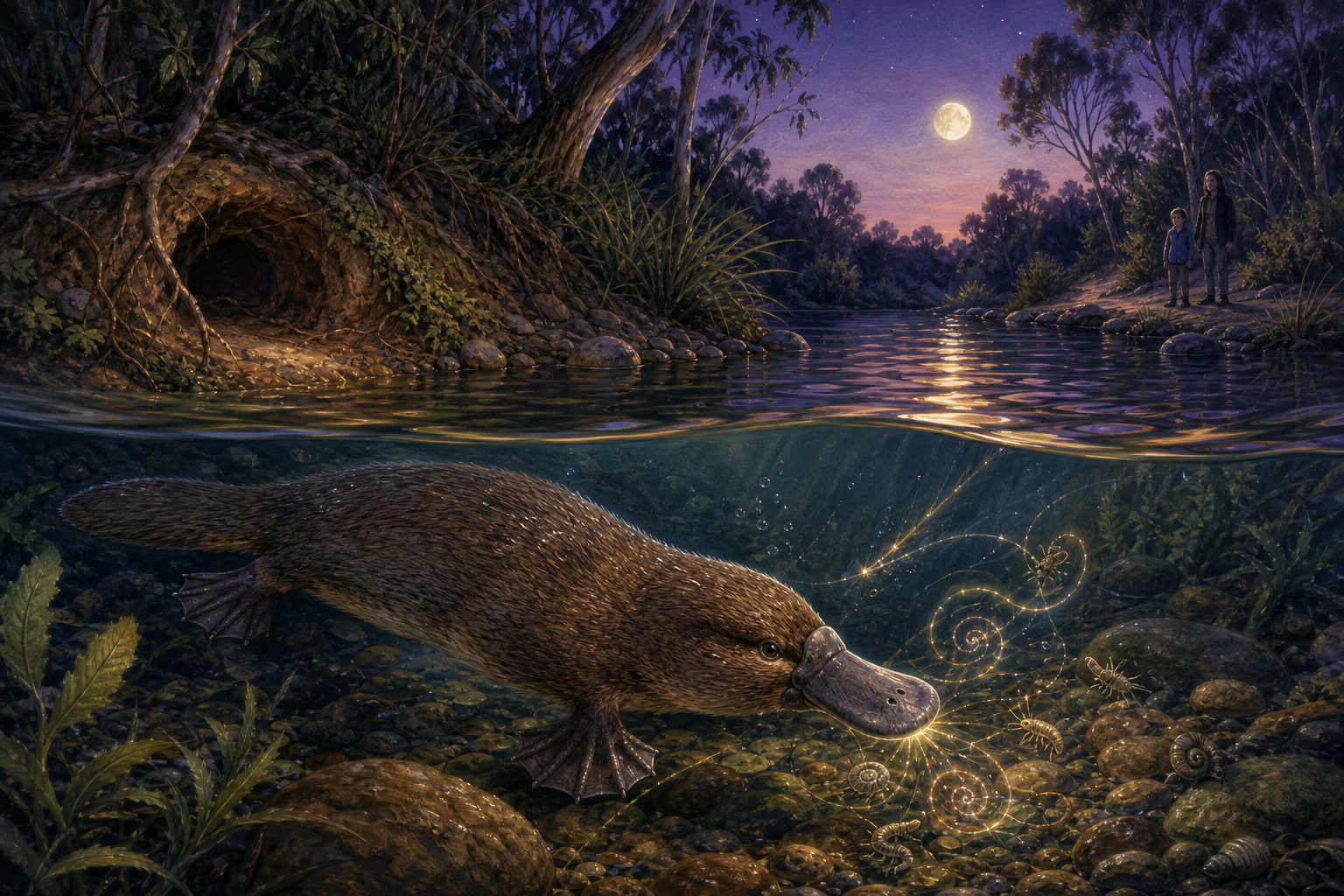
How do you hunt when the river is murky? Use a bill!
Underwater, a platypus searches for a meal of insect larvae, freshwater worms, shrimp, crayfish, and snails. Those are all small creatures, so finding them along a muddy river bottom could be like trying to locate one particular crumb in a dark carpet.
Here comes the superpower. The platypus’s soft, rubbery bill can sense tiny bursts of electricity made by swimming creatures. In other words, its bill helps it detect prey even when eyesight is not doing the job. The riverbed is full of secret signals, and the platypus is an expert listener—just not with ears.
As it dives, it collects food in cheek pouches. Later, it can munch its gathered snacks. This makes every dive feel a little like packing a tiny underwater lunch bag, except the lunch bag is built into your cheeks. Nature is wonderfully strange sometimes.
Because a platypus eats freshwater invertebrates, it is part of the busy food web of a river or stream. Even a quiet patch of water can be a neighbourhood full of wrigglers, swimmers, hunters, and hiding places.
Evidence: Wikipedia (English): Platypus
Eggs? From a mammal? Absolutely.
Most mammals give birth to live young, which is why the platypus can make people blink twice. A mother platypus lays eggs and cares for her young in a burrow. It is one of the features that makes this animal such an extraordinary branch of the mammal family tree.
That does not mean a platypus is a bird in disguise. It is still a mammal, with fur and milk for its young. It is simply a mammal with its own ancient-looking way of beginning a family. The platypus and the echidna are the mammal cousins famous for this egg-laying surprise.
Platypuses are not described as animals that form lasting social groups. Instead, their lives centre on the watery places they need for finding food and on burrows used for shelter and raising young. A riverbank, then, is much more than mud and plants: for a platypus, it can be a home address.
Evidence: Animal Diversity Web, University of Michigan Museum of Zoology: Ornithorhynchus anatinus (duck-billed platypus); Wikipedia (English): Platypus
One ankle warning: admire from a distance
There is another plot twist. Male platypuses have a small spur on each back ankle that can deliver a painful venomous sting. This is a real reason to give any wild platypus plenty of space—not a reason to panic about one.
The best wildlife encounter is a respectful one. Watch quietly if you are lucky enough to see a platypus, never try to touch it, and let it choose where to swim. That is good manners for people, good safety for people, and a much calmer day for the platypus.
Its shy, low-splash river life is part of the magic. A platypus does not need to perform tricks for us. It has already mastered a harder trick: moving through water at twilight, reading signals we cannot feel, and vanishing beneath a ripple like a furry little mystery.
Evidence: Wikipedia (English): Platypus
Why clean, living rivers matter
The platypus is listed as Near Threatened on the IUCN Red List, with a decreasing population trend in the 2016 assessment. Its challenges include habitat loss, changes to rivers and droughts, plus risks from fishing nets and traps. When a river changes or dries, a platypus can lose the places it needs to forage, swim, and shelter.
This can feel like a big problem, but caring begins with noticing. Rivers are not just blue lines on a map. They are homes with underwater food cupboards, muddy banks, and secret travel routes. Protecting and restoring freshwater habitat, reducing harmful changes to rivers, and lowering entanglement risks from nets and traps all match the pressures recorded for platypuses.
You do not have to be a grown-up river scientist to be on Team Platypus. Learn the name of a local creek. Notice where water comes from and where it goes. Join a trusted community clean-up with an adult if one is available. Most of all, carry this thought with you: a healthy river has room for lives we may never see.
The platypus is worth protecting not because it is odd—although its egg-laying, spark-sensing bill is delightfully odd—but because it is a fellow traveller on Earth. A river that can support a platypus is a river full of connections.
Evidence: IUCN Red List of Threatened Species: Ornithorhynchus anatinus (Platypus) — Red List Assessment; Wikipedia (English): Platypus
A small kindness that reaches beyond the river
Caring about platypuses can also make us wonder about the animals connected to our own plates. The platypus itself eats small river creatures, but people can choose meals differently. The World Health Organization describes healthy diets as varied and rich in foods such as whole grains, vegetables, fruit, pulses, nuts, and seeds. Families can explore tasty plant-forward meals together—perhaps bean tacos, lentil soup, crunchy veggie wraps, or a favourite fruit-and-oat breakfast.
Choosing more plant-based foods can be a gentle kindness to animals and the living places they depend on. The IPCC reports that shifts toward sustainable, healthy, more plant-based diets can reduce food-system emissions and pressure on land and biodiversity. That is not about being perfect or judging anyone’s family dinner. It is about noticing that kind choices can add up.
If you want to try a new plant-based food, make it an adventure with a trusted adult. Ask what grows nearby, help stir something colourful, and celebrate the first brave bite—even if the result is not your new favourite. A curious eater and a curious river-watcher have something in common: both are learning to pay attention to a bigger world.
Evidence: World Health Organization: Healthy diet; Intergovernmental Panel on Climate Change: Climate Change 2022: Mitigation of Climate Change — Chapter 7
Kind choices can start with a question
What might a meal look like if we try to leave more room for wild neighbours, from platypuses to pollinators? The World Health Organization includes whole grains, vegetables, fruit, pulses, nuts, and seeds in its general guidance on healthy diets. With a trusted adult, trying more of these foods can be a cheerful kitchen experiment rather than a rulebook.
The IPCC finds that sustainable, healthy, more plant-based dietary shifts can reduce food-system emissions and pressure on land and biodiversity. So a bowl of chickpeas or a veggie-filled sandwich can be a small, practical vote for a world with more flourishing habitats. Choose with curiosity, share what you enjoy, and let kindness be delicious.
Everyone’s needs and family traditions are different, so food choices deserve care and conversation. The important idea is simple: animals are not props in our story. They are fellow lives, each with a place to swim, scuttle, grow, and belong.
Evidence: World Health Organization: Healthy diet; Intergovernmental Panel on Climate Change: Climate Change 2022: Mitigation of Climate Change — Chapter 7
Questions people ask
Is a platypus really a mammal?
Yes. The platypus is a mammal, even though it lays eggs. It belongs to the monotremes, a small group of egg-laying mammals.
Evidence: Animal Diversity Web, University of Michigan Museum of Zoology: Ornithorhynchus anatinus (duck-billed platypus); Wikipedia (English): Platypus
What does a platypus eat?
It eats animals such as insect larvae, freshwater worms, shrimp, crayfish, and snails. It can hold food in cheek pouches while diving.
Evidence: Wikipedia (English): Platypus
Can a platypus sting?
Male platypuses have venomous spurs on their back ankles that can cause a painful sting. Wild platypuses should always be watched from a respectful distance.
Evidence: Wikipedia (English): Platypus
Why are platypuses threatened?
Recorded pressures include habitat loss, river changes and droughts, and entanglement risks from fishing nets and traps. The IUCN assessed the species as Near Threatened in 2016.
Evidence: IUCN Red List of Threatened Species: Ornithorhynchus anatinus (Platypus) — Red List Assessment; Wikipedia (English): Platypus
Read the evidence
Sources behind this story
- Ornithorhynchus anatinus (Platypus) — Red List Assessment — IUCN Red List of Threatened Species
- Ornithorhynchus anatinus (duck-billed platypus) — Animal Diversity Web, University of Michigan Museum of Zoology
- Platypus — Wikipedia (English)
- Healthy diet — World Health Organization
- Climate Change 2022: Mitigation of Climate Change — Chapter 7 — Intergovernmental Panel on Climate Change
Health information is general education, not personal medical advice. Young readers should make food choices with a trusted adult and qualified health professional.