Today's animal friend · 12 November 2026
Ocean Sunfish: The Giant Sea Pancake on a Secret Dive
It can look like a drifting dinner plate with fins, but the ocean sunfish is a powerful open-ocean traveller with a very big job: finding food, avoiding nets and plastic, and keeping the sea’s wild web of life humming.
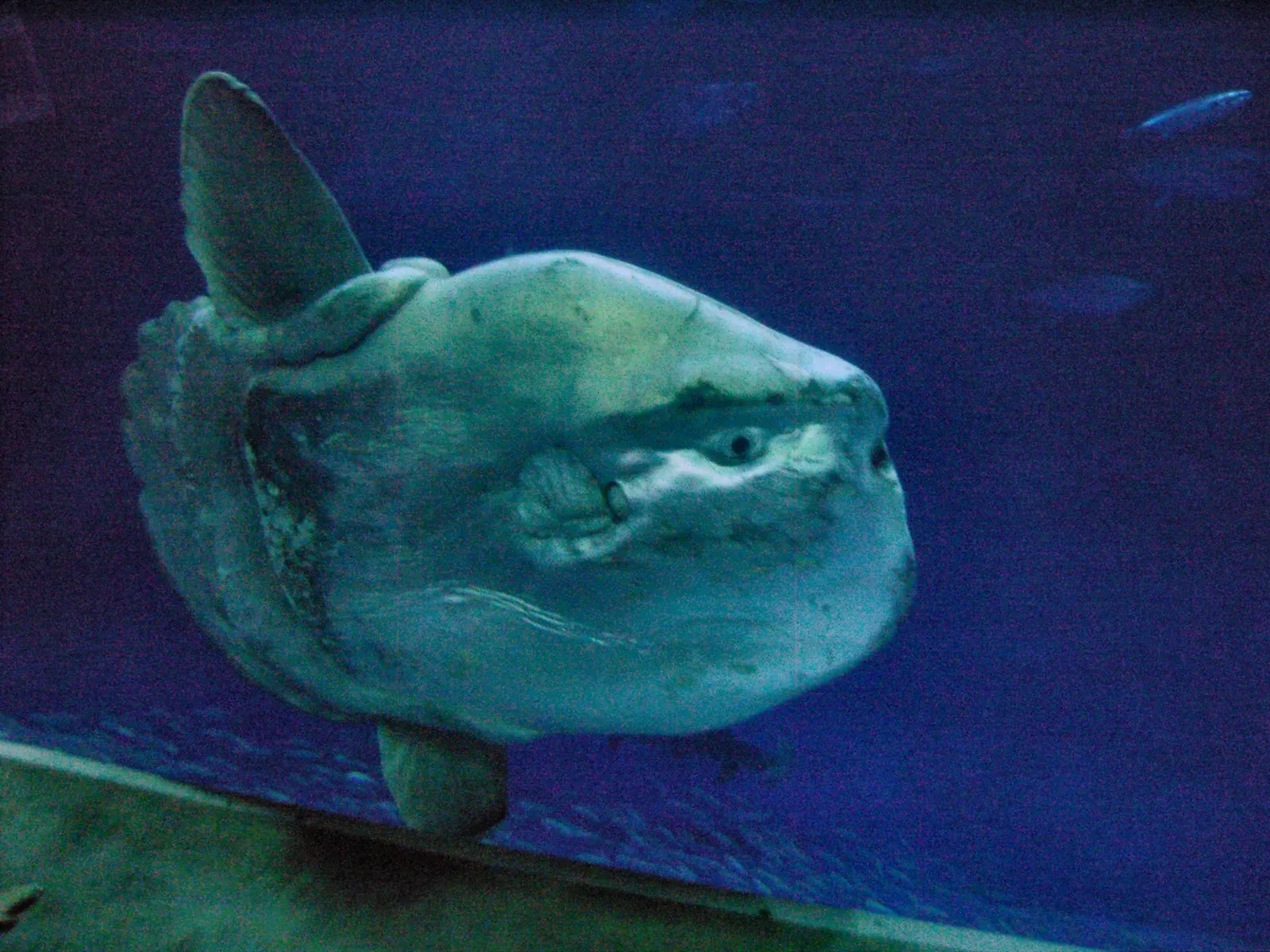
It can look like a drifting dinner plate with fins, but the ocean sunfish is a powerful open-ocean traveller with a very big job: finding food, avoiding nets and plastic, and keeping the sea’s wild web of life humming.
A fin breaks the bright blue water
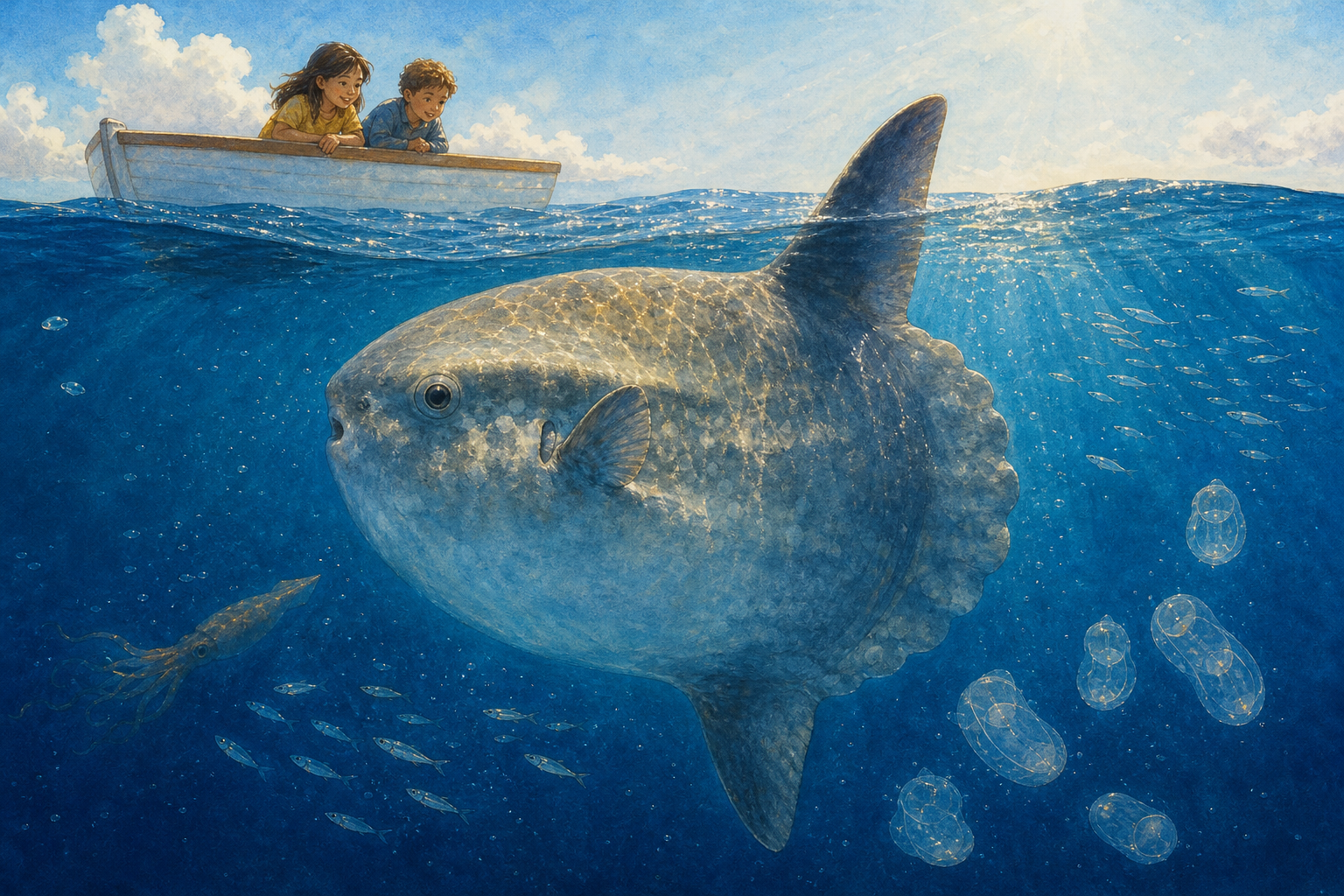
Imagine you are bobbing in a boat on a quiet ocean morning. The waves go shush, shush against the side. Then something tall and dark slices through the glittering surface. Is it a shark? Nope. It might be an ocean sunfish, lying on its side like a giant, silvery pancake that has decided the sea is its frying pan.
Ocean sunfish, also called common molas or simply molas, are Mola mola. They are large bony fish in the mola family. Their body is surprisingly flat and round-looking, with a tall fin above and another below. Instead of swishing a long tail like many fish, a sunfish moves by sculling those fins through the water—rather like rowing with two giant paddles.
This is not a tiny pond fish having a holiday. Adult ocean sunfish average about 1.8 metres long, and their fin-to-fin height can be around 2.5 metres. They are among the world’s heaviest bony fish. A record-sized Mola mola was about 3.3 metres long and weighed around 2,300 kilograms: heavier than a small car. That is a lot of fishy wobble to fit beneath one patch of sunshine.
Evidence: IUCN Red List of Threatened Species: Mola mola (Ocean Sunfish) — Red List Assessment; Animal Diversity Web, University of Michigan Museum of Zoology: Mola mola (Ocean Sunfish); Wikipedia: Ocean sunfish
Why is it called a sunfish?
The name makes sense when you spot one near the surface. Ocean sunfish often bask flat on their sides in the sunlit water. Scientists think this may help them warm up after dives into deeper, colder water. Think of coming inside to warm your hands after building a snow fort—except your warming room is the sparkling top layer of the ocean.
The word “may” matters here. Nature still holds secrets, and scientists are careful not to pretend they know every reason a sunfish basks. Yet we do know these fish use both the ocean surface and deeper layers. One moment, a sunfish can be a shining, strange shape near the waves; another, it can be travelling through blue water far below where a swimmer could see.
Ocean sunfish live in temperate and tropical waters across the Atlantic, Pacific and Indian Oceans, including the Mediterranean. They are creatures of the open ocean, but they may also visit kelp beds and reefs, where other animals can help remove parasites. Even a giant traveller sometimes needs a tidy-up stop.
Evidence: Animal Diversity Web, University of Michigan Museum of Zoology: Mola mola (Ocean Sunfish); Wikipedia: Ocean sunfish
What is on a sunfish menu? More than jelly!
For years, ocean sunfish were often described as jellyfish specialists. They do eat jellyfish and salps, which are small, jelly-like animals floating in the sea. But newer genetic research suggests the menu is much more varied. Sunfish are generalist predators: they also eat small fish, squid and other molluscs, crustaceans, and soft-bodied invertebrates.
That makes sense for an ocean explorer. A picky eater might pass a whole underwater buffet and go hungry. A sunfish can search different ocean layers for different kinds of prey. Its meals link it to lots of neighbours in the open-ocean food web—not as a monster, but as one large animal finding the food it needs to live.
And here is a useful reminder: a creature can look goofy and still be brilliantly suited to its home. The sunfish’s tall fins, flat body, and willingness to explore surface and depth are all part of its very unusual way of being a fish.
Evidence: Wikipedia: Ocean sunfish; Animal Diversity Web, University of Michigan Museum of Zoology: Mola mola (Ocean Sunfish)
The astonishing egg-cloud mystery
Here is a fact that sounds like it belongs in a tall tale, but it is real: a female ocean sunfish can release up to about 300 million eggs at one time. That is more eggs than any other known animal with a backbone. If you tried to count them one by one, you would be there for a very, very long time—possibly until your snacks went stale.
Why so many? Life in the ocean is tough for tiny young animals. Many eggs and young fish are eaten, so only a small number survive and grow into enormous adults. Scientists still have much to learn about sunfish mating and spawning, which makes these huge fish feel a little bit mysterious even now.
Adult sunfish are usually seen alone, though pairs sometimes appear together, and young sunfish may school. A big, solitary sunfish drifting under a wide sky can seem almost like a floating moon: quiet, peculiar, and completely at home in a world that is mostly water.
Evidence: Wikipedia: Ocean sunfish; Animal Diversity Web, University of Michigan Museum of Zoology: Mola mola (Ocean Sunfish)
A gentle giant needs a safer ocean
Ocean sunfish are listed as Vulnerable on the IUCN Red List, with a decreasing population trend. “Vulnerable” means the species faces a high risk and needs attention before its situation becomes worse. It is a serious label, but it is also a reason to care and act—not a reason to give up.
One danger is accidental capture in fishing gear, including gillnets. A sunfish searching for food cannot read a warning sign underwater or untangle every net it meets. Floating plastic litter is another problem because a plastic bag can resemble jelly-like prey. Something tossed away on land can travel through drains and rivers, then become a dangerous trick in the sea.
The hopeful part is that people can make kinder choices. Keeping rubbish out of waterways helps, and fishery rules that limit trade in sunfish products can help too. When we notice that an odd-looking animal has a life, a journey, and a place in the ocean, protecting it starts to feel less like homework and more like being a good neighbour.
Evidence: IUCN Red List of Threatened Species: Mola mola (Ocean Sunfish) — Red List Assessment; Wikipedia: Ocean sunfish
Try the sunfish way of noticing
Next time you see a piece of litter near a drain, beach, stream, or park, picture where rainwater could carry it. The best litter is the litter that never reaches the water. With an adult, you could use a bin, join a local clean-up, or choose reusable items when that is possible for your family.
You can also practise sunfish curiosity. Ask: What lives below the surface of a place that looks empty? The open ocean is not blank blue space. It is a moving neighbourhood full of small fish, squid, crustaceans, jelly-like creatures, seabirds, and remarkable travellers like Mola mola.
The ocean sunfish does not need to be sleek, speedy-looking, or famous in a cartoon to deserve protection. Its strange outline is exactly the point. The sea is more imaginative than we are—and every time a sunfish lifts a fin into the sunshine, it proves it.
Evidence: IUCN Red List of Threatened Species: Mola mola (Ocean Sunfish) — Red List Assessment; Animal Diversity Web, University of Michigan Museum of Zoology: Mola mola (Ocean Sunfish); Wikipedia: Ocean sunfish
A kind plate can be part of an ocean-sized kindness
Caring about a sunfish can begin with a simple thought: this enormous, odd, bright-ocean traveller is someone, not something. We can choose habits that leave more room for wild animals to live their own lives—such as wasting less, keeping plastic out of water, and enjoying plant-forward meals together sometimes.
The World Health Organization describes healthy diets as varied and rich in foods such as whole grains, vegetables, fruit, pulses, nuts, and seeds. The IPCC reports that shifts toward sustainable, healthy, more plant-based diets can reduce food-system emissions and pressure on land and biodiversity. Families have different needs and traditions, so this is an invitation to explore delicious plant foods with a trusted adult, not a rulebook. A bean burrito, lentil soup, veggie pasta, or peanut-butter sandwich can be one small, cheerful vote for a gentler world.
Evidence: World Health Organization: Healthy diet; Intergovernmental Panel on Climate Change: Climate Change 2022: Mitigation of Climate Change — Chapter 7
Questions people ask
Are ocean sunfish really fish?
Yes. Ocean sunfish are bony fish called Mola mola. Their unusual, flattened shape may look unlike the fish in a storybook, but their fins carry them through the open ocean.
Evidence: Animal Diversity Web, University of Michigan Museum of Zoology: Mola mola (Ocean Sunfish); Wikipedia: Ocean sunfish
Do ocean sunfish only eat jellyfish?
No. They eat jellyfish and salps, but evidence also shows a broader diet that includes small fish, squid, molluscs, crustaceans, and other soft-bodied invertebrates.
Evidence: Wikipedia: Ocean sunfish
Why might a sunfish float on its side at the surface?
Scientists think basking in sunlight may help it rewarm after hunting in cold, deep water. It is a strong idea, but still a scientific “may,” not a final answer.
Evidence: Wikipedia: Ocean sunfish; Animal Diversity Web, University of Michigan Museum of Zoology: Mola mola (Ocean Sunfish)
What can children do for ocean sunfish?
Keep plastic and other litter out of drains, streams, and beaches; reuse what you can; and share what you learn. Safer, cleaner oceans help sunfish and many other animals.
Evidence: IUCN Red List of Threatened Species: Mola mola (Ocean Sunfish) — Red List Assessment; Wikipedia: Ocean sunfish
Read the evidence
Sources behind this story
- Mola mola (Ocean Sunfish) — Red List Assessment — IUCN Red List of Threatened Species
- Mola mola (Ocean Sunfish) — Animal Diversity Web, University of Michigan Museum of Zoology
- Ocean sunfish — Wikipedia
- Healthy diet — World Health Organization
- Climate Change 2022: Mitigation of Climate Change — Chapter 7 — Intergovernmental Panel on Climate Change
Health information is general education, not personal medical advice. Young readers should make food choices with a trusted adult and qualified health professional.