Today's animal friend · 10 November 2026
The Garden’s Red Whistle: Meet the Northern Cardinal
Step outside with the northern cardinal, Cardinalis cardinalis: a daytime songbird of leafy edges and busy gardens, where both members of a pair can turn an ordinary morning into a whistle-filled conversation.
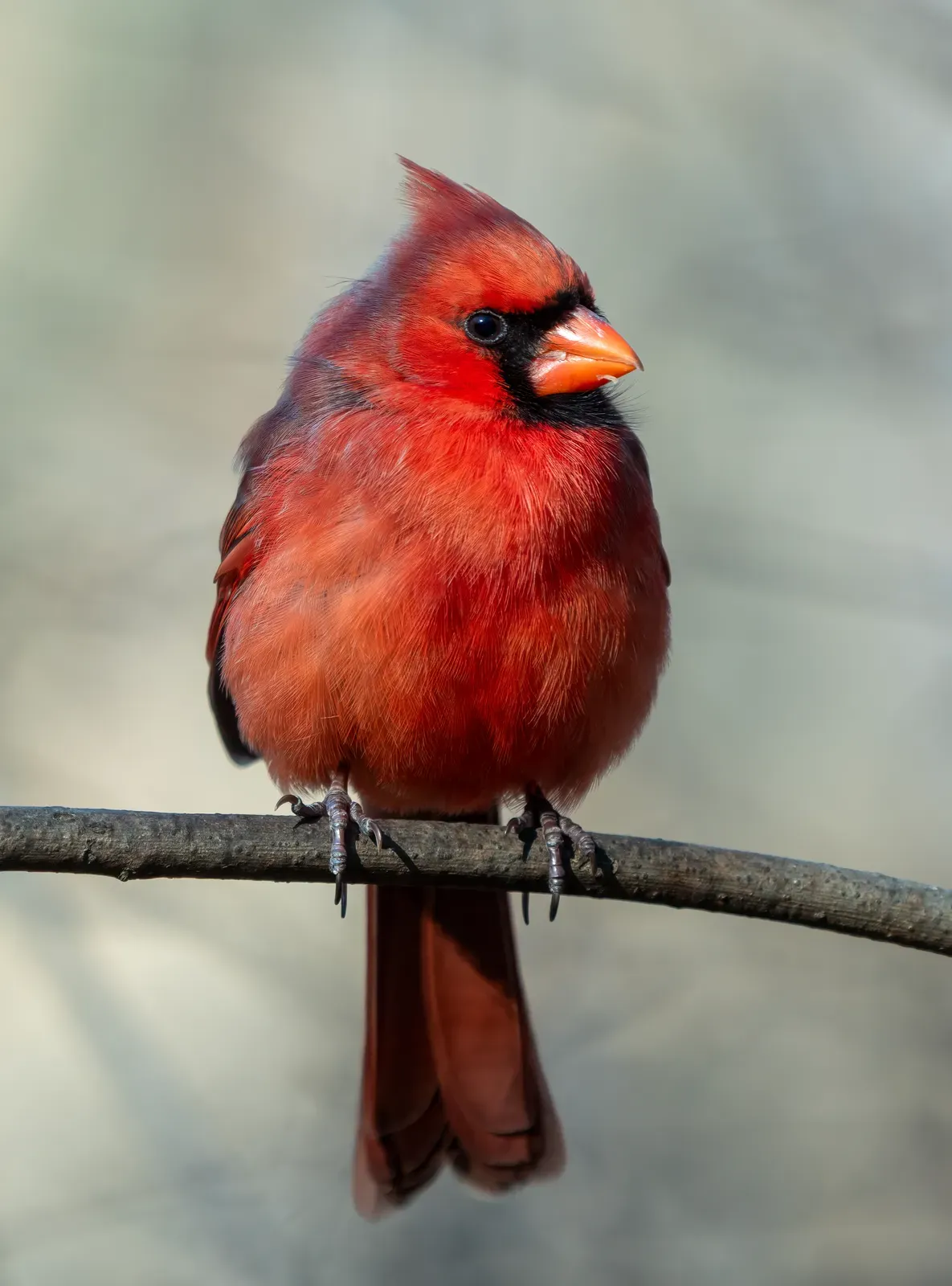
Step outside with the northern cardinal, Cardinalis cardinalis: a daytime songbird of leafy edges and busy gardens, where both members of a pair can turn an ordinary morning into a whistle-filled conversation.
A red flash in the leaves
Imagine you are carrying out the recycling on a grey morning. The hedge rustles. Then—zip!—a bird as red as a dropped crayon lands on a branch. It lifts the little point of feathers on its head, gives a clear whistle, and suddenly the garden feels as if it has switched its lights on.
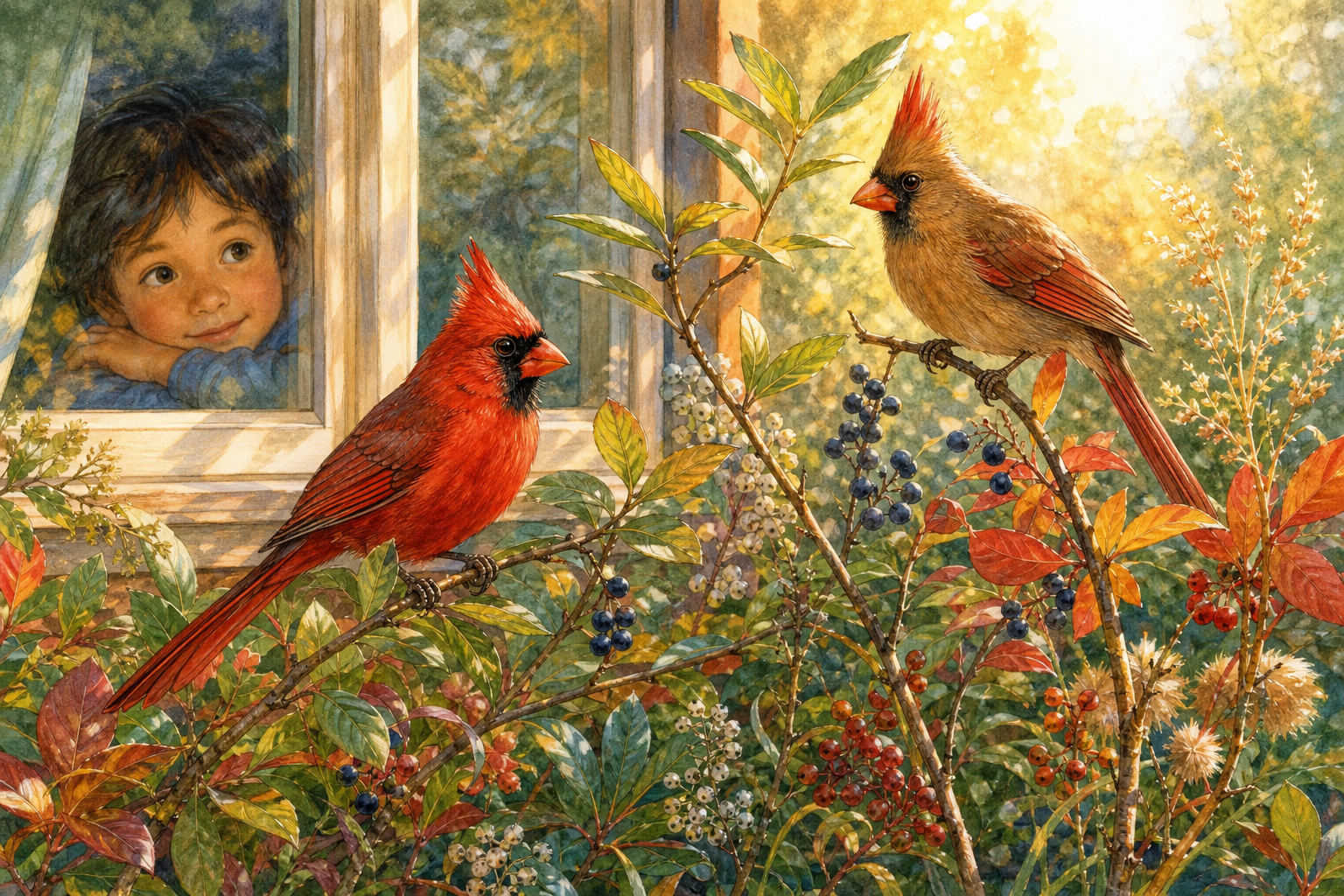
That may be a male northern cardinal. He is famously bright red from head to tail, with a dark patch around his beak. Female cardinals have a softer brown coat, warmed by red touches on the wings, tail, and crest. Both wear that jaunty pointed crest, as though each bird has put on a tiny feather hat for an important appointment.
The northern cardinal’s scientific name is Cardinalis cardinalis, and it is a mid-sized songbird in the cardinal family. People also call it a common cardinal, red cardinal, or simply cardinal. Whatever name you use, this is a bird built for being noticed—without needing to be enormous. Adults are about 21 to 23.5 centimetres long, roughly the length of a small school ruler.
A cardinal is awake in the daytime, when we are most likely to meet one. So the next time a bright shape darts through a bush, pause before deciding it is just a red leaf with very ambitious plans. It might be a cardinal heading for breakfast.
Evidence: IUCN Red List of Threatened Species / BirdLife International (Red List Authority for birds): Cardinalis cardinalis (Northern Cardinal) — Red List Assessment; Animal Diversity Web, University of Michigan Museum of Zoology: Cardinalis cardinalis (northern cardinal); Wikipedia: Northern cardinal
Why does the garden sound like it has two whistlers?
Listen carefully in a cardinal neighbourhood. A male may sing loudly to defend his territory, but here is the delightful twist: female northern cardinals sing too. In many songbirds, the male is the best-known singer. Cardinals politely ignore that expectation.
Both sexes sing through the year, not only in spring. A pair may whistle back and forth across the garden, sounding a little like neighbours calling hello from opposite sides of a fence. We cannot turn their songs into exact human sentences, but the back-and-forth is a real part of their social life.
Cardinals are generally non-migratory, meaning they do not make a regular long seasonal journey away from their home range. A pair can often stay together year-round, and both parents feed their young. Outside the breeding season, cardinals may gather and roost with other birds in winter. Even a bold red bird sometimes appreciates company.
Their voices are a fine reminder that a garden is not silent just because it looks still. A twig can be a stage. A shrub can be an apartment building. And one whistle can be the start of a conversation we are lucky enough to overhear.
Evidence: Animal Diversity Web, University of Michigan Museum of Zoology: Cardinalis cardinalis (northern cardinal); Wikipedia: Northern cardinal
A beak made for cracking snacks
A cardinal’s beak is short, sturdy, and cone-shaped: a handy tool for opening seeds, much as your fingers might peel open a pistachio shell. Seeds and grains are important food for adult cardinals. They also eat fruit, and sunflower seeds are a favourite at feeders.
But the menu is not all crunch. Cardinals eat insects too, especially when feeding hungry chicks. That makes sense: growing birds need plenty of food, and insects are part of the buffet. Because cardinals eat seeds, fruit, and insects, they are called omnivores.
This varied diet also gives cardinals a quiet job in woodland edges and gardens. By eating fruit, they may help move seeds from place to place. By eating insects, they can be part of the lively food web around plants, bugs, and birds. A food web is like a giant neighbourhood lunch table, except nobody gets assigned a seat.
If you see a cardinal below a feeder, watch its method. It may pick up a seed, work at the shell with its bill, and move on to the next tasty piece. There is no need to rush closer. Watching from a respectful distance lets a wild bird concentrate on the serious business of snacks.
Evidence: Animal Diversity Web, University of Michigan Museum of Zoology: Cardinalis cardinalis (northern cardinal); Wikipedia: Northern cardinal
Where can this feather-hatted neighbour live?
Northern cardinals are native across southeastern Canada, much of the eastern and central United States, Mexico, Belize, and Guatemala. They live in North America, in places that offer both cover and room to search for food.
Their favourite sorts of places include woodlands, woodland edges, gardens, shrublands, wetlands, and thick tangles of plants near more open ground. In other words, a cardinal seems to appreciate a good bushy hideout as much as an open patch where it can look for seeds.
That is why a leafy garden can be such a good place to spot one. Native shrubs can provide cover, while plants and open ground can offer foraging spaces. Feeders have also been linked with the cardinal’s northward range expansion, and sunflower seeds can attract these birds.
A kind cardinal-watching plan is simple: grow or protect plant cover where possible, enjoy birds from indoors or at a distance, and keep pet cats indoors. Cats and window collisions can be local dangers for cardinals and other birds. The goal is not to turn a garden into a museum where nothing moves. It is to make it a safer shared place, full of leaves, insects, and surprise songs.
Evidence: Animal Diversity Web, University of Michigan Museum of Zoology: Cardinalis cardinalis (northern cardinal); Wikipedia: Northern cardinal
Seven states chose this bird—and it is still wonderfully wild
The northern cardinal is the official state bird of seven U.S. states, more than any other bird. That is quite a fan club for a creature that weighs only about 42 to 48 grams—lighter than many small apples.
People may put cardinals on flags, sports logos, or greeting cards, yet the real bird is not a decoration. It is an alert, busy individual, choosing branches, searching for food, singing, and raising young. Seeing one outside is much better than owning a picture of one, because the bird gets to carry on with its own cardinal business.
Globally, the northern cardinal is listed as Least Concern by the IUCN. Its population is described as very large and increasing, with an estimate often given around 100 million birds. That is hopeful news, but it does not mean we should stop caring. Abundant wildlife still needs places to live, safe windows, and respectful human neighbours.
Protecting everyday birds matters because everyday wonder matters. A cardinal does not have to be rare to deserve a safe hedge, a quiet moment, and our attention.
Evidence: IUCN Red List of Threatened Species / BirdLife International (Red List Authority for birds): Cardinalis cardinalis (Northern Cardinal) — Red List Assessment; Animal Diversity Web, University of Michigan Museum of Zoology: Cardinalis cardinalis (northern cardinal); Wikipedia: Northern cardinal
Your next cardinal quest
Try a five-minute listening walk in daylight. Stand still near a shrub, park edge, or garden. Can you hear a whistle before you see the singer? Can you spot a pointed crest, a warm red flicker in the tail, or a bird using thick cover like a secret hallway?
Bring curiosity, not a chase. Wild animals get to decide how close is close enough. If a cardinal flies away, that is not a failed observation—it is the bird making a sensible choice. You can wait, look elsewhere, and let the garden settle again.
Then share what you noticed: perhaps a red male, perhaps a brown-and-red female, perhaps only a sharp whistle from behind the leaves. The best nature discoveries often begin with “What was that?” and end with “Let’s look again tomorrow.”
Evidence: Animal Diversity Web, University of Michigan Museum of Zoology: Cardinalis cardinalis (northern cardinal); Wikipedia: Northern cardinal
A lunch choice that leaves more room for birds
A cardinal’s garden reminds us that every creature needs food, cover, and space to get on with life. One caring choice people can make is to enjoy more plant-based meals—things such as beans, lentils, whole grains, vegetables, fruit, nuts, and seeds. The World Health Organization includes these foods in guidance about healthy diets. Food choices are personal, so children can explore new meals with their families and, when needed, a qualified health professional.
Choosing more plant foods can be a gentle kindness beyond our own plates, too. The IPCC says shifts toward sustainable, healthy, more plant-based diets can reduce food-system emissions and pressure on land and biodiversity. It is a hopeful idea: a bean burrito or lentil soup can be one small way to cheer for habitats where birds can whistle, hide, and find their own wild meals.
Evidence: World Health Organization: Healthy diet; Intergovernmental Panel on Climate Change: Climate Change 2022: Mitigation of Climate Change — Chapter 7
Questions people ask
Do female northern cardinals really sing?
Yes. Both sexes sing year-round, and a female may answer a male’s whistle. That makes a cardinal pair especially fun to listen for in a garden or thicket.
Evidence: Animal Diversity Web, University of Michigan Museum of Zoology: Cardinalis cardinalis (northern cardinal); Wikipedia: Northern cardinal
What do northern cardinals eat?
Adults eat many seeds and grains, along with fruit. They also eat insects, which are especially important when adults feed their chicks. Sunflower seeds are a well-known feeder favourite.
Evidence: Animal Diversity Web, University of Michigan Museum of Zoology: Cardinalis cardinalis (northern cardinal); Wikipedia: Northern cardinal
Are northern cardinals in danger of disappearing?
The species is listed as Least Concern globally, with a very large and increasing population. Still, local problems such as window collisions and free-roaming cats can harm individual birds, so safer shared spaces help.
Evidence: IUCN Red List of Threatened Species / BirdLife International (Red List Authority for birds): Cardinalis cardinalis (Northern Cardinal) — Red List Assessment; Animal Diversity Web, University of Michigan Museum of Zoology: Cardinalis cardinalis (northern cardinal); Wikipedia: Northern cardinal
Why is it called a northern cardinal?
It is a bird native across parts of southeastern Canada, the United States, Mexico, Belize, and Guatemala. “Northern” helps distinguish it from other cardinal species, even though this bird also lives well south of the United States.
Evidence: Animal Diversity Web, University of Michigan Museum of Zoology: Cardinalis cardinalis (northern cardinal); Wikipedia: Northern cardinal
Read the evidence
Sources behind this story
- Cardinalis cardinalis (Northern Cardinal) — Red List Assessment — IUCN Red List of Threatened Species / BirdLife International (Red List Authority for birds)
- Cardinalis cardinalis (northern cardinal) — Animal Diversity Web, University of Michigan Museum of Zoology
- Northern cardinal — Wikipedia
- Healthy diet — World Health Organization
- Climate Change 2022: Mitigation of Climate Change — Chapter 7 — Intergovernmental Panel on Climate Change
Health information is general education, not personal medical advice. Young readers should make food choices with a trusted adult and qualified health professional.