Today's animal friend · 8 September 2026
The Moonlit Snuffle of the North Island Brown Kiwi
When the forest gets quiet, a flightless bird with shaggy-looking feathers comes alive. Meet the North Island brown kiwi: a nighttime soil detective with an important home to protect.
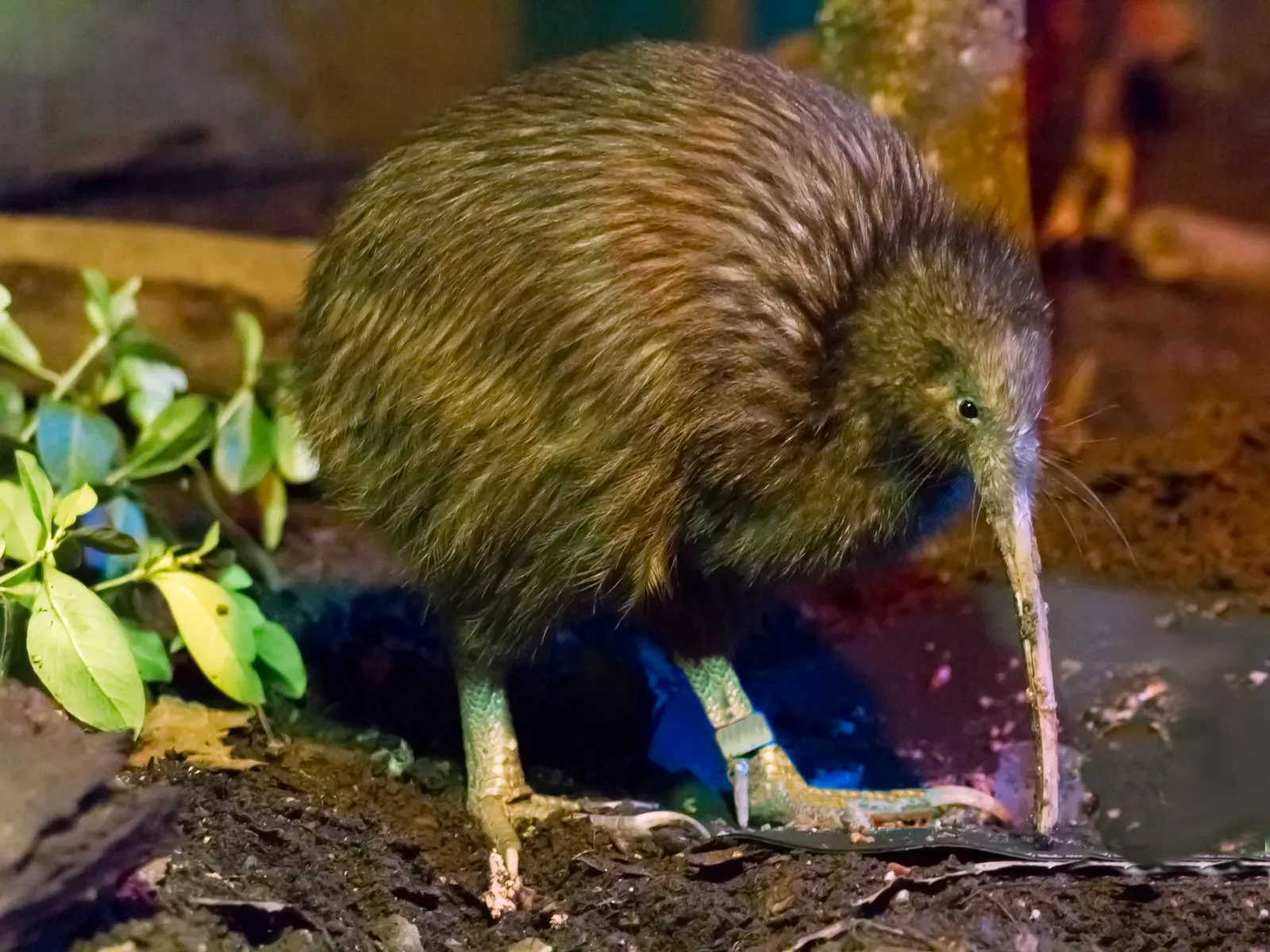
When the forest gets quiet, a flightless bird with shaggy-looking feathers comes alive. Meet the North Island brown kiwi: a nighttime soil detective with an important home to protect.
Shhh—something is poking around in the leaves
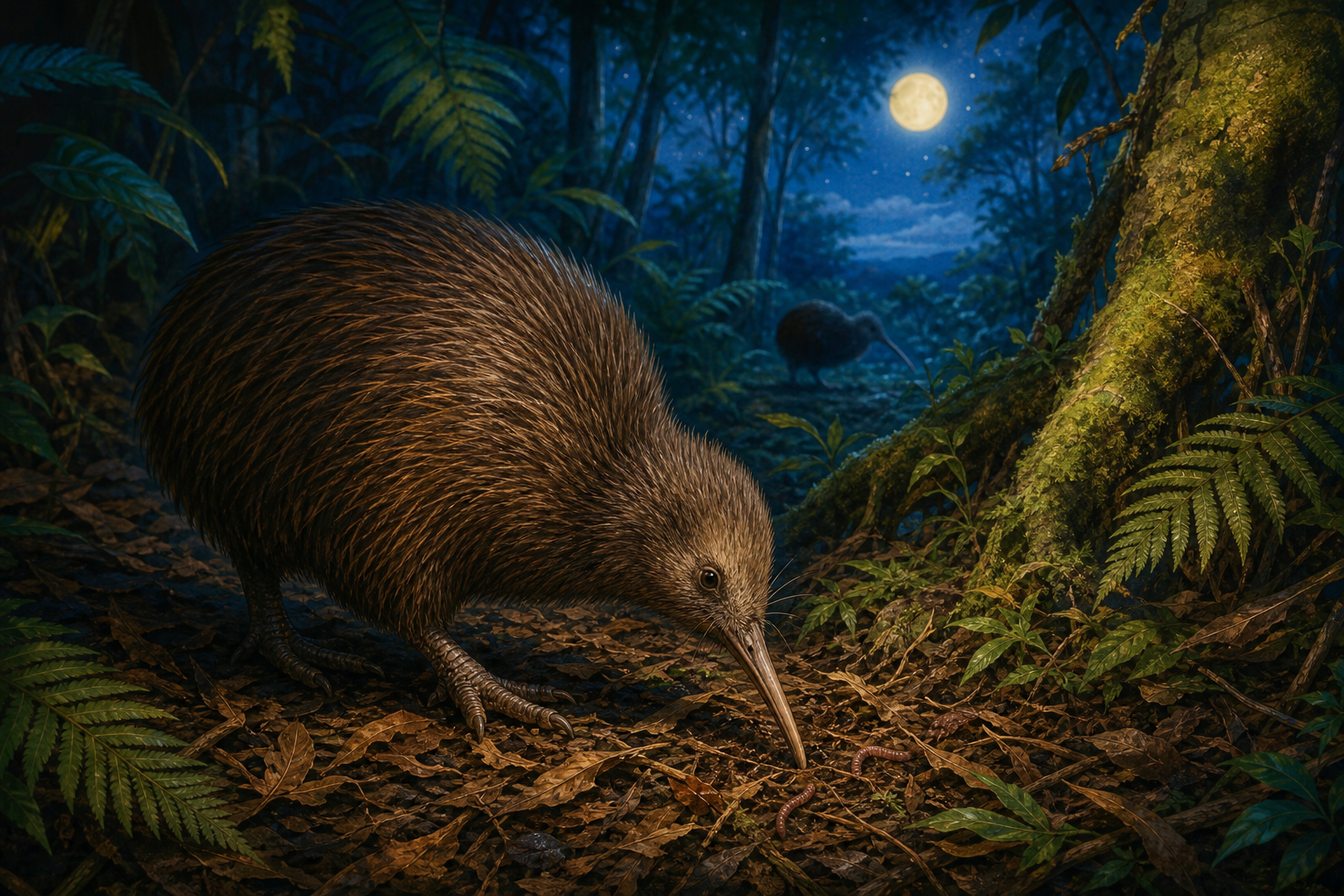
Imagine walking through a forest after sunset. The trees are dark shapes overhead, the ground feels springy with old leaves, and every tiny rustle sounds enormous. Then—tap, poke, snuffle! A North Island brown kiwi is at work.
This bird does not swoop from a branch or zoom across the sky. In fact, it cannot fly. Instead, it trots over the forest floor, its brown, spiky-looking feathers helping it melt into the shadowy scene. A kiwi is a bird, all right, but it can look a little as if a fuzzy leaf pile suddenly grew legs and decided to go exploring.
The North Island brown kiwi, whose scientific name is Apteryx mantelli, lives in the northern two-thirds of Aotearoa New Zealand’s North Island. It is mainly active at night, so the moonlit forest is its kind of place. While many people are brushing their teeth or dreaming, a kiwi is beginning its busy shift.
Being flightless is not a mistake that the kiwi forgot to fix. It is simply part of this remarkable bird’s life. Down on the ground, it can search among roots, leaf litter, and soft soil—the forest’s very own crumbly, wriggly dinner table.
Evidence: IUCN Red List of Threatened Species / BirdLife International (Red List Authority for birds): Apteryx mantelli (North Island Brown Kiwi) — Red List Assessment; New Zealand Department of Conservation (Te Papa Atawhai): Kiwi — New Zealand native land birds; Wikipedia: North Island brown kiwi
A bill that works like a tiny treasure finder
What is the kiwi hunting for in all that dirt? Mostly small forest-floor creatures. Worms and spiders make up much of its food, along with insects and grubs. Plant material is on the menu too, but little wrigglers and crawlers are the big attraction.
A kiwi’s long bill is its super-useful tool. It taps and probes into the soil, as if the bird were checking every pocket in an old winter coat. But this is not a game of spot-the-worm. In the dim forest, kiwi rely more on smell and touch at the tip of the bill than on sight to locate food.
That makes a kiwi a patient explorer. It does not need to race through the woods in a flap. It can listen, sniff, poke, and investigate. Every patch of earth may hold a surprise. To us, leaf litter can look like a messy brown carpet. To a hungry kiwi, it is a whole neighbourhood full of clues.
Kiwi weigh roughly as much as a small house cat, though females are bigger than males. This is one of those wonderful reminders that nature does not always follow our guesses: in this kiwi species, the mother is the larger bird.
Evidence: IUCN Red List of Threatened Species / BirdLife International (Red List Authority for birds): Apteryx mantelli (North Island Brown Kiwi) — Red List Assessment; New Zealand Department of Conservation (Te Papa Atawhai): Kiwi — New Zealand native land birds; Wikipedia: North Island brown kiwi
Home is not one kind of forest
A North Island brown kiwi needs places to hide, rest, and find food. It uses densely vegetated lowland and coastal native forest, as well as scrub. Where suitable food and shelter remain, kiwi may also use regenerating areas, forest remnants, pasture edges, and some pine forest.
During the day, a kiwi usually shelters in a burrow or thick cover. Think of it as a daytime hideout, tucked away from the bright bustle above. When night arrives, the bird can head back out across its familiar patch of ground.
Kiwi are not lonely little forest robots. They are usually found in long-term pairs. Mates can make soft grunts and use bill displays, and they may call as a duet. It is rather lovely to picture two birds answering each other through the dark, like neighbours saying, “I’m here!” without needing a torch.
In a kiwi family, the male usually incubates the egg. After chicks hatch, they become independent quite quickly—within about ten days. That does not make their world easy, though. A young kiwi still needs a safe place to grow into a forest explorer of its own.
Evidence: IUCN Red List of Threatened Species / BirdLife International (Red List Authority for birds): Apteryx mantelli (North Island Brown Kiwi) — Red List Assessment; New Zealand Department of Conservation (Te Papa Atawhai): Kiwi — New Zealand native land birds; Wikipedia: North Island brown kiwi
Why does this nighttime friend need help?
The North Island brown kiwi is listed as Vulnerable on the IUCN Red List, and its overall population has been declining. Older estimates in the available records changed from around 35,000 birds in 2000 to about 20,000 in 2006, but counting shy, night-active birds across forests is a tricky job. The important point is clear: this species needs careful protection.
One huge challenge comes from introduced mammal predators, including dogs, cats, and stoats. Kiwi evolved in Aotearoa New Zealand, where their ground-based way of life was very different before these predators arrived. Now, especially without pest control, many kiwi chicks do not survive long enough to breed.
Habitat loss is another problem. When native forest and thick shelter disappear, so do the places where kiwi can rest and search for food. A forest is not just a collection of trees. It is shade, soil, burrows, worms, cover, and safe routes through the night.
That might sound worrying, but it is also a reason for hope and teamwork. People can notice a problem, learn what the animals need, and make room for a better future.
Evidence: IUCN Red List of Threatened Species / BirdLife International (Red List Authority for birds): Apteryx mantelli (North Island Brown Kiwi) — Red List Assessment; New Zealand Department of Conservation (Te Papa Atawhai): Kiwi — New Zealand native land birds; Wikipedia: North Island brown kiwi
The good news: people are making safer night walks
Across managed places, predator control, sanctuaries, island refuges, and reintroductions have helped kiwi chicks survive better. In areas where predators are controlled, local kiwi populations can grow. That is a powerful lesson: practical care can give a vulnerable animal a real chance.
You do not have to be a scientist in giant boots to be part of caring. Communities that support habitat protection and conservation programmes help make space for native wildlife. If you are visiting natural places, following local rules and listening to rangers helps too. Wildlife needs calm, respectful neighbours.
A kiwi is worth protecting not because it is famous, though it certainly is beloved. It is worth protecting because it is a living, searching, calling individual with a nighttime life all its own. It belongs in the forest just as moonlight belongs on a path.
Next time you hear a faint rustle outside, you can wonder: who is on the night shift? Somewhere in North Island forest, a brown kiwi may be tapping its bill into the soil, proving that an adventure does not always need wings.
Evidence: IUCN Red List of Threatened Species / BirdLife International (Red List Authority for birds): Apteryx mantelli (North Island Brown Kiwi) — Red List Assessment; New Zealand Department of Conservation (Te Papa Atawhai): Kiwi — New Zealand native land birds; Wikipedia: North Island brown kiwi
A kind choice can begin at the dinner table
Caring about a kiwi can make us notice how many animals have their own important lives: sniffing, nesting, finding food, and raising young. One gentle way to practise that care is to enjoy more meals built around plants—such as beans, lentils, vegetables, fruit, whole grains, nuts, and seeds—with a trusted adult helping choose foods that work for your family.
The World Health Organization describes healthy diets as varied and rich in foods like these. The IPCC also reports that sustainable, healthy diets with more plant-based foods can reduce pressure from food systems on the climate, land, and biodiversity. You do not need to be perfect to be kind; trying a colourful plant-powered meal can be one small, hopeful step for animals and wild homes.
Evidence: World Health Organization: Healthy diet; Intergovernmental Panel on Climate Change: Climate Change 2022: Mitigation of Climate Change — Chapter 7
Questions people ask
Can North Island brown kiwi fly?
No. They are birds, but they are flightless. Rather than flying through the trees, they travel on the forest floor, where they search through soil and leaf litter for food.
Evidence: IUCN Red List of Threatened Species / BirdLife International (Red List Authority for birds): Apteryx mantelli (North Island Brown Kiwi) — Red List Assessment; New Zealand Department of Conservation (Te Papa Atawhai): Kiwi — New Zealand native land birds; Wikipedia: North Island brown kiwi
Why are kiwi out at night?
North Island brown kiwi are nocturnal, meaning they are mainly active at night. They forage in the dark by using smell and touch with their long bills instead of depending mainly on sight.
Evidence: IUCN Red List of Threatened Species / BirdLife International (Red List Authority for birds): Apteryx mantelli (North Island Brown Kiwi) — Red List Assessment; New Zealand Department of Conservation (Te Papa Atawhai): Kiwi — New Zealand native land birds; Wikipedia: North Island brown kiwi
What do kiwi eat?
They eat mostly small invertebrates on the forest floor, including worms and spiders, plus insects and grubs. Plant material is also part of their diet.
Evidence: IUCN Red List of Threatened Species / BirdLife International (Red List Authority for birds): Apteryx mantelli (North Island Brown Kiwi) — Red List Assessment; New Zealand Department of Conservation (Te Papa Atawhai): Kiwi — New Zealand native land birds; Wikipedia: North Island brown kiwi
How are people helping kiwi?
Conservation work includes controlling introduced predators, protecting sanctuary and island refuges, and reintroducing kiwi into managed landscapes. These actions can improve chick survival where they are in place.
Evidence: IUCN Red List of Threatened Species / BirdLife International (Red List Authority for birds): Apteryx mantelli (North Island Brown Kiwi) — Red List Assessment; New Zealand Department of Conservation (Te Papa Atawhai): Kiwi — New Zealand native land birds; Wikipedia: North Island brown kiwi
Read the evidence
Sources behind this story
- Apteryx mantelli (North Island Brown Kiwi) — Red List Assessment — IUCN Red List of Threatened Species / BirdLife International (Red List Authority for birds)
- Kiwi — New Zealand native land birds — New Zealand Department of Conservation (Te Papa Atawhai)
- North Island brown kiwi — Wikipedia
- Healthy diet — World Health Organization
- Climate Change 2022: Mitigation of Climate Change — Chapter 7 — Intergovernmental Panel on Climate Change
Health information is general education, not personal medical advice. Young readers should make food choices with a trusted adult and qualified health professional.