Today's animal friend · 9 September 2026
The Morepork’s Midnight “More-Pork!”
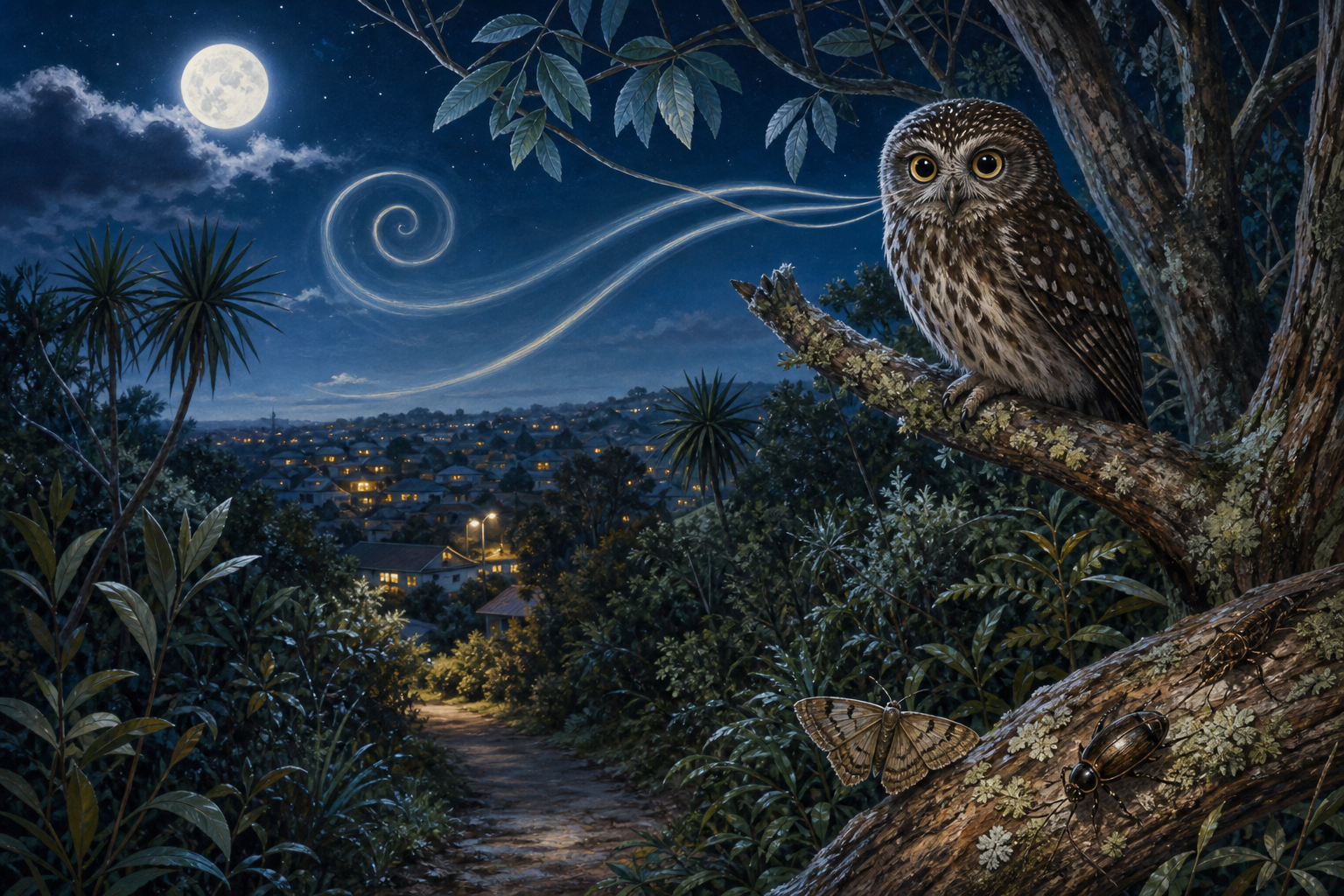
A soft two-note call, a quiet perch, and a sudden pounce: the morepork turns an ordinary leafy night into an adventure.
A soft two-note call, a quiet perch, and a sudden pounce: the morepork turns an ordinary leafy night into an adventure.
Listen: the forest is saying “more-pork!”
The evening path is turning blue-grey. Leaves feel cool and papery under your shoes. Somewhere above, hidden in a tangle of branches, a voice floats out: “more-pork!” It is soft, round, and a little bit funny—like a tiny owl has become very interested in dinner.
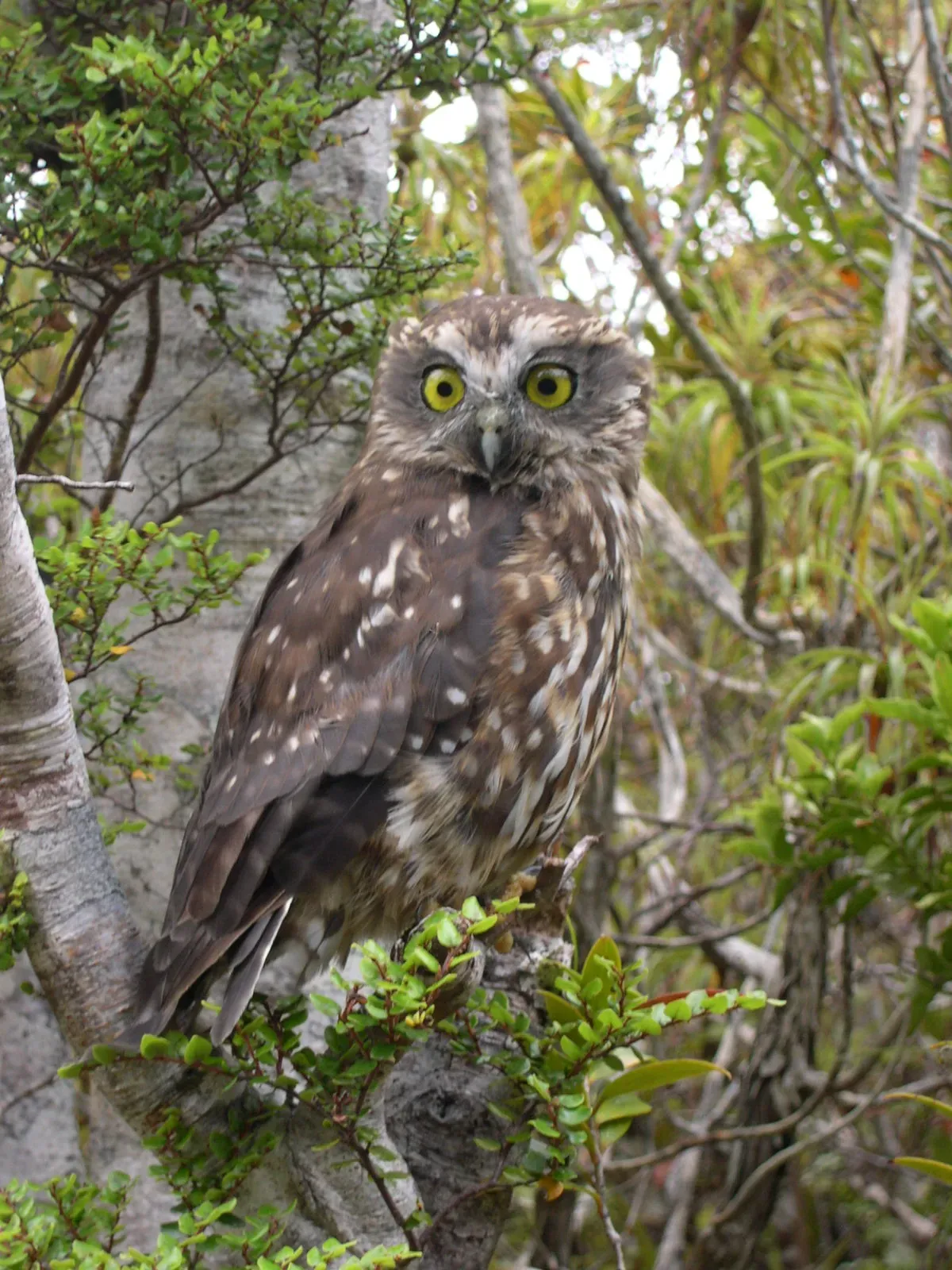
That call belongs to a morepork, also called a ruru. It is Aotearoa New Zealand’s own small native owl, a dark brown bird with big, round, watchful eyes. You may hear one long before you see one. That is part of its night-time magic: the ruru can make the trees seem full of secret conversations.
Its famous two-note call gave the bird its English name. But “more-pork” is not its only sound. Moreporks can make up to about eleven different calls, including yelps, whistles, and a low, rumbly “quork-quork.” Imagine having a sound toolbox with a whistle, a squeak, and a miniature engine in it. A ruru uses calls to communicate with mates and nearby moreporks in the dark.
Evidence: IUCN Red List of Threatened Species / BirdLife International (Red List Authority for birds): Ninox novaeseelandiae (Morepork) — Red List Assessment; New Zealand Birds Online (Te Papa / Ornithological Society of New Zealand): Ruru | Morepork — Ninox novaeseelandiae; Wikipedia: Morepork
A small owl with a very big night shift
A morepork is about 29 centimetres long and weighs roughly 175 grams. That means it is far smaller than many people picture when they hear the word “owl.” It is a compact woodland neighbour, built for slipping through the night rather than starring in a giant-bird contest.
During the day, a morepork rests in quiet, shady cover. When night arrives, it becomes active. Forests, forest remnants, plantations, and leafy suburbs can all provide places for a ruru to live. So a patch of trees near homes may be more than scenery: for a nocturnal owl, it can be part of a world of resting spots, lookout branches, and calling places.
Moreporks are native across much of Aotearoa New Zealand. They belong to the owl order, Strigiformes, and their scientific name is Ninox novaeseelandiae. “Ruru,” “morepork,” “boobook,” and “New Zealand owl” are names you may hear, but ruru is a wonderful one to remember when you are listening outside after sunset.
Evidence: IUCN Red List of Threatened Species / BirdLife International (Red List Authority for birds): Ninox novaeseelandiae (Morepork) — Red List Assessment; New Zealand Birds Online (Te Papa / Ornithological Society of New Zealand): Ruru | Morepork — Ninox novaeseelandiae; Wikipedia: Morepork
How does a ruru find supper? Wait… wait… POUNCE!
Picture a morepork on a branch. It is still. Very still. Still enough that a beetle, moth, wētā, or spider might not notice it at first. Then the owl pounces. This perch-and-pounce style of hunting is a clever way to search the night without zooming around all the time like a feathered pinball.
Moreporks are carnivores. Large invertebrates—including beetles, moths, wētā, and spiders—are among their foods. They may also catch small birds and mammals such as mice. A ruru is not being mean when it hunts; it is doing the essential work of an owl, finding the food it needs to live.
That hunt connects the ruru to many other creatures in the woodland food web. A forest is not quiet simply because humans have gone indoors. Under bark, among leaves, and through the air, night-time animals are moving. The morepork is one of the watchful hunters in that busy after-dark neighbourhood.
If you want to be a respectful ruru detective, do not try to lure one closer or search around its daytime roost. Instead, pause somewhere safe and quiet with an adult, listen carefully, and let the owl choose how near or far it wants to be. Wild animals deserve room for their own adventures.
Evidence: New Zealand Birds Online (Te Papa / Ornithological Society of New Zealand): Ruru | Morepork — Ninox novaeseelandiae; Wikipedia: Morepork
Why old trees are like owl-sized apartment buildings
A grand old tree can look like one sturdy trunk from the ground. To a morepork, it can be a whole building: shady places to roost, branches for watching, and habitat woven into the surrounding forest. Keeping old trees and connected native forest standing helps ruru retain places to rest, hunt, and call.
The morepork is listed as Least Concern on the IUCN Red List, and it is also listed as Not Threatened in New Zealand’s classification. That is encouraging news. Yet “not threatened” does not mean “nothing matters.” Local pressures can include introduced predators, the loss of old forest trees, and risk from rodent poison.
Here is the hopeful bit: caring can be practical. Communities and families can support the protection of old trees and native bush, and can learn about safer ways to reduce rodent risks around wildlife habitat. Kids can help too—by noticing trees, asking questions, joining suitable local nature projects with adults, and reminding people that a night call in the branches is something worth making space for.
A morepork does not need applause. It needs a living, leafy home and a night that is safe enough for its voice to travel. Still, if you hear that gentle “more-pork!” you may feel like giving the forest a quiet round of claps.
Evidence: IUCN Red List of Threatened Species / BirdLife International (Red List Authority for birds): Ninox novaeseelandiae (Morepork) — Red List Assessment; New Zealand Birds Online (Te Papa / Ornithological Society of New Zealand): Ruru | Morepork — Ninox novaeseelandiae; Wikipedia: Morepork
The sound-map game: can your ears explore?
Next time you are outside at dusk, make a sound map. Stand or sit safely with a trusted adult. In the middle of a piece of paper, draw yourself as a dot. Each time you hear something—a bicycle, a breeze, a dog, a bird—make a tiny mark in the direction of the sound. You do not have to identify everything. Wondering is allowed.
If you hear a two-note owl call, treat it like a gift, not a clue to chase. Stay calm, keep lights low, and do not disturb trees or nests. A morepork is most likely busy communicating or hunting, not putting on a concert especially for humans. Although, honestly, it does have excellent stage presence.
Then ask: What creatures might be awake while I am getting ready for bed? A ruru can remind us that familiar places change after dark. The same suburban tree that holds a noisy daytime bird may become an owl’s lookout after the sun disappears.
Evidence: New Zealand Birds Online (Te Papa / Ornithological Society of New Zealand): Ruru | Morepork — Ninox novaeseelandiae; Wikipedia: Morepork
A kind choice can begin on your plate
Liking a ruru can make us notice how many animals have their own busy lives: calling, resting, finding food, and keeping close to home. We can let that feeling grow into everyday kindness, including choosing plant-based foods more often when they work for our family.
The World Health Organization describes healthy diets as including a variety of whole grains, vegetables, fruit, pulses, nuts, and seeds. The IPCC says shifts toward sustainable, healthy, more plant-based diets can reduce food-system emissions and pressure on land and biodiversity. You do not need to be perfect or boss anyone around. Perhaps you could try a bean snack, a vegetable-filled meal, or a new fruit with a trusted adult—and save a little more room in the world for wild neighbours such as the ruru.
Evidence: World Health Organization: Healthy diet; Intergovernmental Panel on Climate Change: Climate Change 2022: Mitigation of Climate Change — Chapter 7
Questions people ask
Why is it called a morepork?
Its English name comes from its soft, two-note “more-pork” call. The bird is also widely known as ruru.
Evidence: New Zealand Birds Online (Te Papa / Ornithological Society of New Zealand): Ruru | Morepork — Ninox novaeseelandiae; Wikipedia: Morepork
Are moreporks awake in the day?
They are mainly nocturnal. During the day, they roost in quiet, shady cover, then become active at night.
Evidence: New Zealand Birds Online (Te Papa / Ornithological Society of New Zealand): Ruru | Morepork — Ninox novaeseelandiae; Wikipedia: Morepork
What do moreporks eat?
They eat animals such as beetles, moths, wētā, and spiders, and may also take small birds and mammals such as mice.
Evidence: Wikipedia: Morepork
Are moreporks endangered?
The species is listed as Least Concern globally by the IUCN, and as Not Threatened in New Zealand. Protecting habitat and reducing local risks still matters.
Evidence: IUCN Red List of Threatened Species / BirdLife International (Red List Authority for birds): Ninox novaeseelandiae (Morepork) — Red List Assessment; New Zealand Birds Online (Te Papa / Ornithological Society of New Zealand): Ruru | Morepork — Ninox novaeseelandiae; Wikipedia: Morepork
Read the evidence
Sources behind this story
- Ninox novaeseelandiae (Morepork) — Red List Assessment — IUCN Red List of Threatened Species / BirdLife International (Red List Authority for birds)
- Ruru | Morepork — Ninox novaeseelandiae — New Zealand Birds Online (Te Papa / Ornithological Society of New Zealand)
- Morepork — Wikipedia
- Healthy diet — World Health Organization
- Climate Change 2022: Mitigation of Climate Change — Chapter 7 — Intergovernmental Panel on Climate Change
Health information is general education, not personal medical advice. Young readers should make food choices with a trusted adult and qualified health professional.