Today's animal friend · 5 September 2026
Koi: The Pond’s Living Patchwork
Koi are colourful, domesticated forms of Amur carp. Their story begins with observant farmers in Japan and continues wherever a quiet pond gives them room to glide.
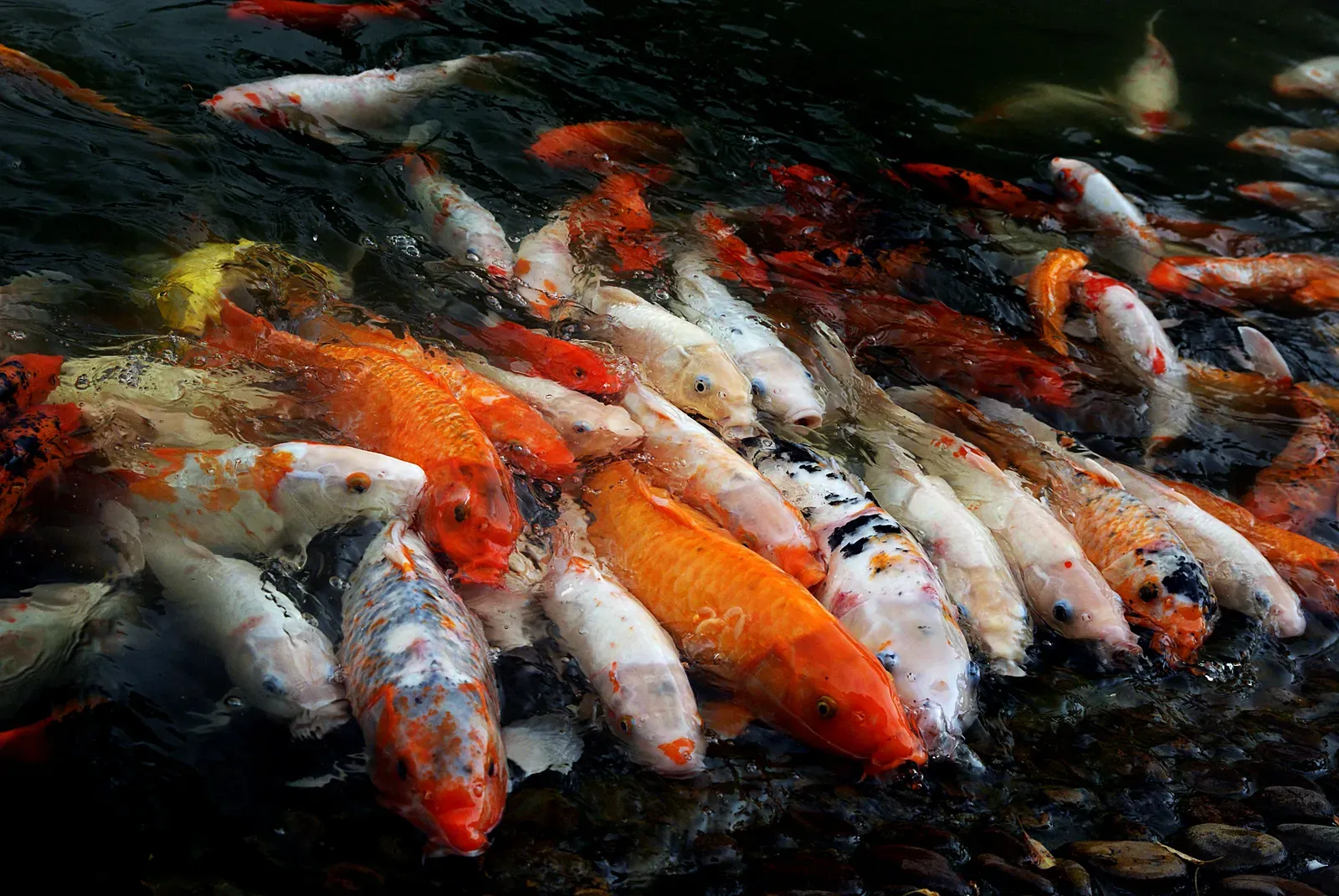
Koi are colourful, domesticated forms of Amur carp. Their story begins with observant farmers in Japan and continues wherever a quiet pond gives them room to glide.
A flash of gold under the lily leaves
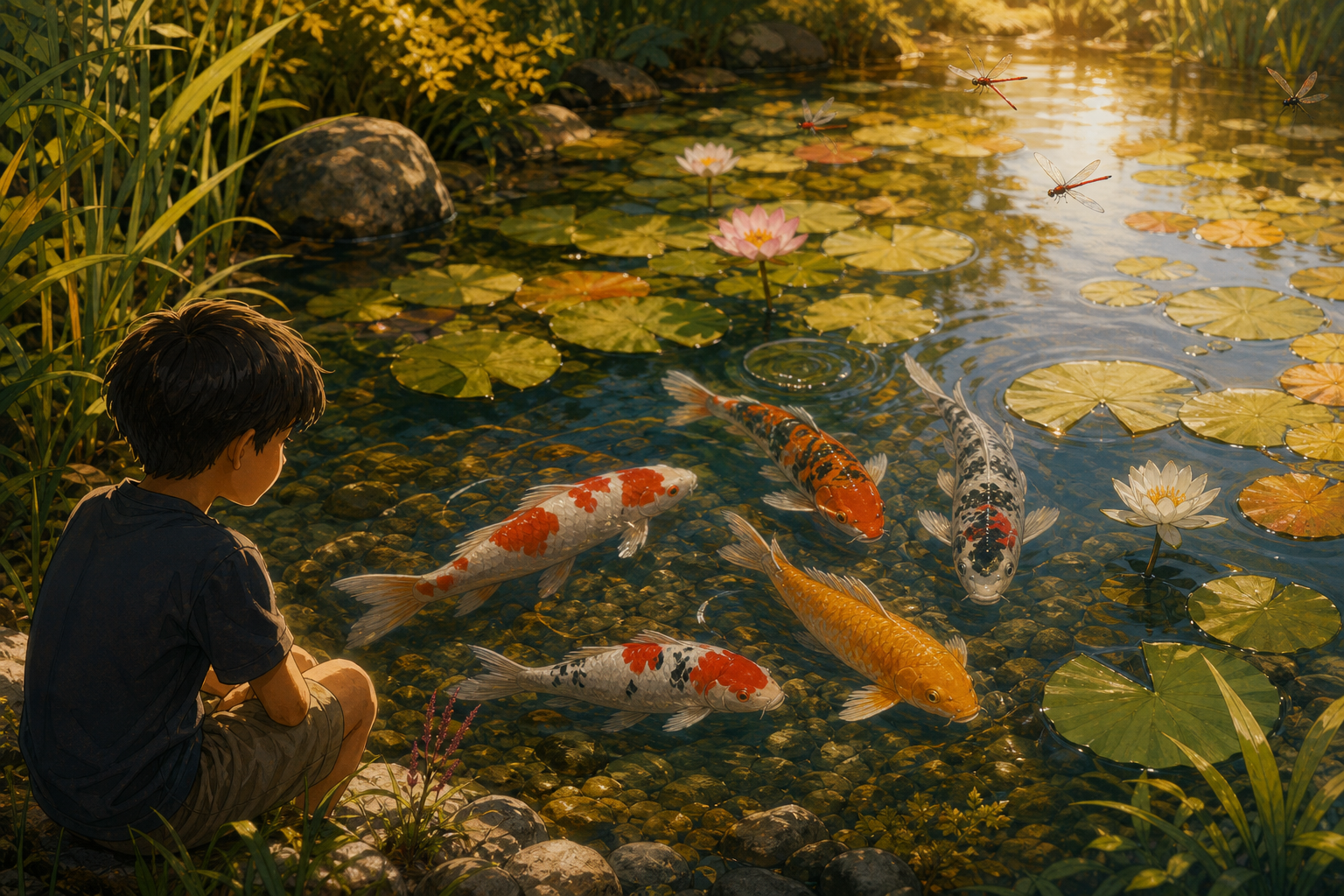
The pond looks still enough to be holding its breath. Then—swish!—a bright orange-and-white koi slips from beneath a leaf, followed by a black-and-gold one. Their fins wave like tiny flags, and rings spread across the water as though someone has dropped a handful of invisible marbles.
Koi are ornamental, or specially bred, forms of the Amur carp, Cyprinus rubrofuscus. In Japan they are called nishikigoi, meaning “brocaded carp.” A brocade is patterned cloth, and that name makes perfect sense: a koi can look as if someone painted a swimming scarf with red, white, yellow, black, orange, or shiny gold.
These fish did not begin as a separate wild species wearing party clothes. Long ago, farmers in Niigata, Japan, noticed unusual splashes of colour among carp. From the early 1800s onward, they bred colourful fish together over many generations. Today there are more than one hundred named varieties. Imagine choosing a favourite pattern when every swimmer is a moving work of art—very tricky pond business indeed.
Evidence: Animal Diversity Web, University of Michigan Museum of Zoology: Cyprinus carpio (common carp); Wikipedia: Koi; Wikipedia: Cyprinus rubrofuscus
Not just a pretty face: meet the carp cousin
Behind all those dazzling patterns is a sturdy cold-water fish. Ornamental koi are usually kept in outdoor ponds and water gardens. Their wild Amur carp relatives belong in eastern Asia, where they live in lakes and slower-moving rivers. It helps to keep those stories separate: a garden koi is a carefully bred pond companion, while Amur carp are the wild form.
Koi can grow into substantial fish, not little goldfish-sized decorations. Carp accounts describe typical wild Amur carp as roughly 30 to 60 centimetres long, though larger individuals occur. That means a well-grown koi may be as long as a school ruler—or longer—so a small bowl is definitely not a suitable home.
They are social fish and commonly gather in groups. Watch a pond at mealtime and you may see several varieties arrive together, nosing through the water like friends hurrying toward the snack table. Some learn to take food gently from a hand. It is a lovely moment, but it also asks us to be calm, patient visitors rather than splashy giants looming overhead.
Evidence: Animal Diversity Web, University of Michigan Museum of Zoology: Cyprinus carpio (common carp); Wikipedia: Koi; Wikipedia: Cyprinus rubrofuscus
What is a koi searching for down there?
A koi’s menu is wonderfully mixed. Koi are omnivores, which means they eat plant foods and animal foods. In ponds and waterways, carp forage for aquatic plants, algae, tiny water-living creatures, insect larvae, and other bits found around the bottom. Pond keepers may offer prepared fish food, too.
Picture a koi cruising along the pond floor. Its mouth is not a straw, exactly, but it can suck up material and sort through it for edible pieces. This bottom-feeding habit makes the fish seem a little like an underwater vacuum cleaner with excellent taste in soggy salad. Wild carp can also stir up sediment while they search.
A thoughtful keeper remembers that feeding is about the fish’s needs, not about putting on a show. Food left uneaten can make pond water less pleasant. In cold water, koi digestion and feeding slow sharply, so keepers adjust feeding carefully rather than expecting summer-style appetites all year round.
Evidence: Animal Diversity Web, University of Michigan Museum of Zoology: Cyprinus carpio (common carp); Wikipedia: Koi; Wikipedia: Cyprinus rubrofuscus
Where do the bright swimmers go in winter?
Here is a pond mystery with a quiet answer. When winter chills the water, koi do not zip about as they might on a warm day. As cold-water carp, they slow down and rest near the pond bottom, where conditions can be steadier. They are not having a fishy sleepover with blankets and cocoa—sadly, no one has reported tiny mugs—but their bodies become far less active.
That is why pond depth and cold-weather care matter. Koi need a secure, appropriately deep pond so they can manage seasonal changes safely. Keeping water conditions suitable is part of respecting an animal who depends on us for a home.
In warmer weather, a koi may return to the surface and join the bustling feeding-time crowd. A long-lived fish can become a familiar face: carp accounts describe captive lifespans reaching several decades, with some records longer still. Before bringing any animal home, it is wise for families to ask a big question: can we offer good care for all those years?
Evidence: Animal Diversity Web, University of Michigan Museum of Zoology: Cyprinus carpio (common carp); Wikipedia: Koi; Wikipedia: Cyprinus rubrofuscus
A bright fish, a careful responsibility
Koi themselves are an ornamental colour form, so they do not have their own distinct IUCN conservation assessment. Their wild ancestor, the Amur carp, is listed as Least Concern. That does not mean every individual fish can look after itself, though. A pond koi still relies on people for a safe home and patient daily care.
One especially kind rule is simple: never release a pet koi into a stream, lake, or river. An outdoor pond fish belongs in a secure pond, not in a local waterway where it may not belong. If a family cannot keep a koi, a responsible adult can seek expert help finding a suitable new home.
You do not need to own koi to be their friend. Visit a pond quietly. Notice which patterns appear first and how the fish move as a group. Keep litter away from drains and waterways. Let the sight of a fish’s shining scales remind you that water is somebody’s whole world, not just a background for our afternoon walk.
Evidence: Wikipedia: Koi; Wikipedia: Cyprinus rubrofuscus; Animal Diversity Web, University of Michigan Museum of Zoology: Cyprinus carpio (common carp)
Try the pond detective challenge
Next time you see koi, pause for one whole minute. Can you spot two fish with different patterns? Do they glide alone, or do they gather? Is one searching near the bottom while another waits near the surface? You are not trying to “solve” them. You are practising the superpower of noticing.
Then wonder outward. Those colourful fish began with farmers paying close attention to surprising colours in carp. Careful noticing can lead to art, science, kindness, and better questions. What does this animal need? Where did it come from? How can people share space responsibly?
Koi give us a gentle answer in every ripple: slow down, look closely, and remember that a pond is busy even when it seems quiet.
Evidence: Wikipedia: Koi; Wikipedia: Cyprinus rubrofuscus; Animal Diversity Web, University of Michigan Museum of Zoology: Cyprinus carpio (common carp)
Kind choices can ripple outward
Watching koi can make us think about the lives behind all the foods on our plates. Fish are not decorations or ingredients first; they are living animals with needs, senses, and their own ways of moving through the world. One gentle way to practise kindness is to enjoy more plant-based meals—perhaps beans, lentils, vegetables, fruit, whole grains, nuts, or seeds—with your family.
The World Health Organization describes healthy diets as varied and rich in foods such as vegetables, fruit, whole grains, pulses, nuts, and seeds. The IPCC explains that shifts toward sustainable, healthy, more plant-based diets can reduce pressure from food systems on the climate, land, and biodiversity. No guilt trip required: trying a colourful plant-based dish can be its own small, tasty ripple of care. If you want to make food changes, chat with a trusted adult and a qualified health professional.
Evidence: World Health Organization: Healthy diet; Intergovernmental Panel on Climate Change: Climate Change 2022: Mitigation of Climate Change — Chapter 7
Questions people ask
Are koi and goldfish the same animal?
No. Koi are ornamental forms of Amur carp, while goldfish are a different kind of carp. Koi are known for their large size potential, long-term pond care, and many named colour varieties.
Evidence: Wikipedia: Koi; Wikipedia: Cyprinus rubrofuscus; Animal Diversity Web, University of Michigan Museum of Zoology: Cyprinus carpio (common carp)
Why do koi gather when someone approaches the pond?
Koi are social fish that commonly live in groups, and they may learn that a person near the pond means feeding time. It is best to approach gently and let their behaviour guide the moment.
Evidence: Wikipedia: Koi; Wikipedia: Cyprinus rubrofuscus
Do koi need help in winter?
They slow down greatly as water becomes cold, including eating less. Good cold-weather care and a suitable pond are important, so a child who cares for koi should always work with a knowledgeable adult.
Evidence: Wikipedia: Koi; Wikipedia: Cyprinus rubrofuscus
Can I set a koi free in a nearby river?
No. Pet koi should not be released into local waterways. They need responsible care in a secure, suitable pond, and releasing animals can create problems outside the home pond.
Evidence: Wikipedia: Koi; Wikipedia: Cyprinus rubrofuscus
Read the evidence
Sources behind this story
- Cyprinus carpio (common carp) — Animal Diversity Web, University of Michigan Museum of Zoology
- Koi — Wikipedia
- Cyprinus rubrofuscus — Wikipedia
- Healthy diet — World Health Organization
- Climate Change 2022: Mitigation of Climate Change — Chapter 7 — Intergovernmental Panel on Climate Change
Health information is general education, not personal medical advice. Young readers should make food choices with a trusted adult and qualified health professional.