Today's animal friend · 7 September 2026
Kākāpō: The Parrot That Walks Through the Night
It cannot fly, but this owl-faced parrot has found its own remarkable way through the forest—one careful climb, crunchy leaf, and midnight call at a time.
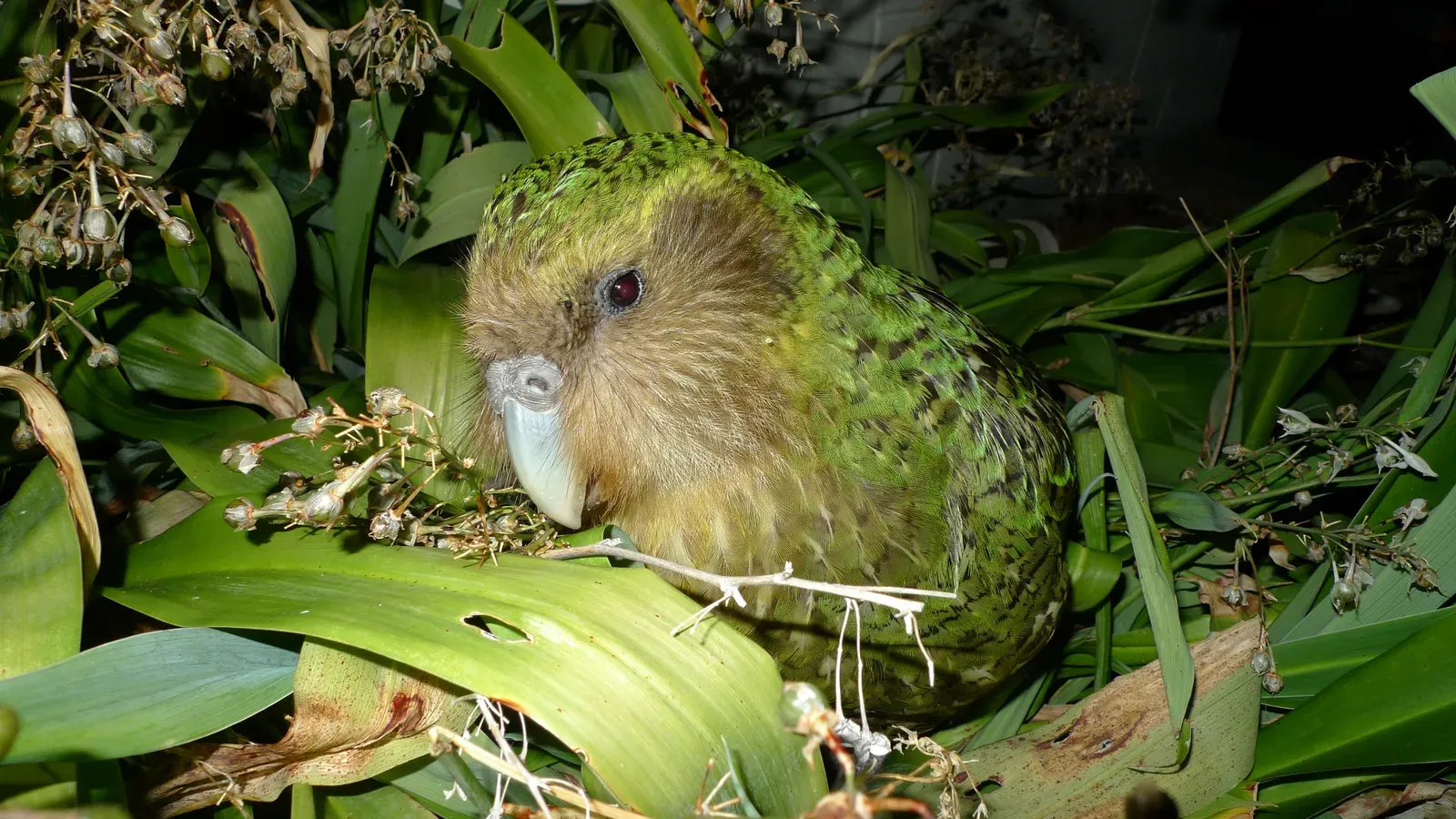
It cannot fly, but this owl-faced parrot has found its own remarkable way through the forest—one careful climb, crunchy leaf, and midnight call at a time.
A rustle under the rimu tree
Picture a forest after dark. The air is cool, the ground is springy with moss, and something greenish is shuffling through the leaves. Not a hedgehog. Not a tiny dinosaur in pyjamas. It is a kākāpō, a big parrot that comes out at night.
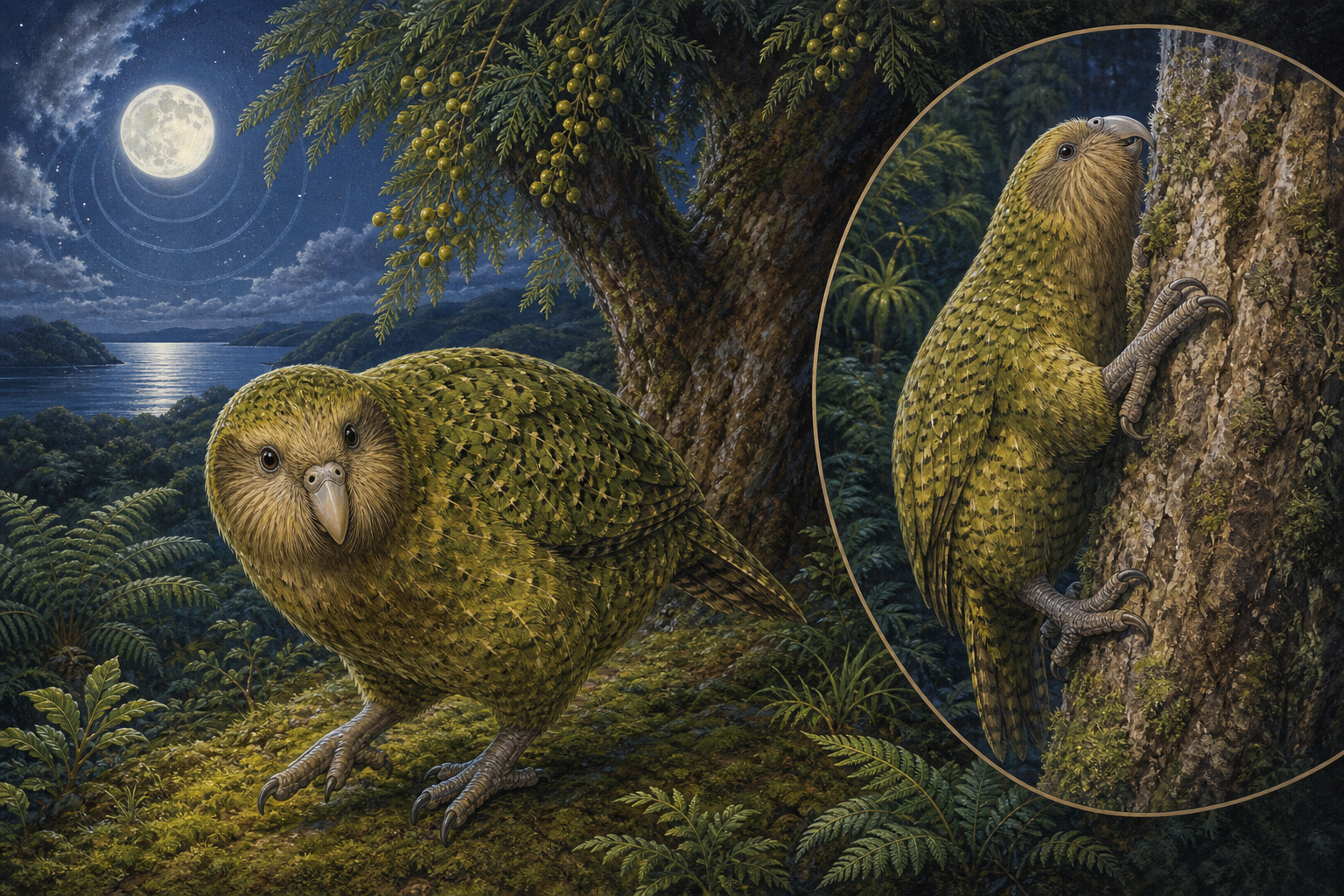
Here is the surprise that makes people blink: the kākāpō is the only parrot in the world that cannot fly. Instead of zipping over the treetops, it walks along the forest floor on strong legs and climbs with its beak and feet. It is also the heaviest parrot, with large males weighing up to about three kilograms—roughly like carrying a big bag of flour with feathers.
Its scientific name is Strigops habroptilus, but “kākāpō” is much more fun to say. It is also called the owl parrot, because its round face and soft-looking feathers can give it an owl-like look. Its green-and-yellow colouring helps it disappear among plants. A forest floor can be an excellent hiding place when you are a parrot who has decided that flying is overrated.
Evidence: IUCN Red List of Threatened Species: Strigops habroptilus (Kakapo) — Red List Assessment; Animal Diversity Web, University of Michigan Museum of Zoology: Strigops habroptilus (kakapo); Wikipedia (Wikimedia Foundation): Kākāpō
Why walk when you can climb?
A kākāpō may not fly, but it is not stuck at ankle height. It can clamber into trees, using its beak and feet like a determined little mountaineer. Adults can grow up to about 64 centimetres long, so this is no pocket-sized parrot. Imagine a sturdy, leafy-green bird about as long as a school ruler plus a bit more.
Night is its time. During the day, a kākāpō rests tucked away; after dark, it explores. Being awake when many daytime birds are quiet may sound peaceful, but the forest is never truly silent. Leaves whisper, branches creak, and a careful walker has plenty to investigate.
Kākāpō live only in Aotearoa New Zealand. They use forest and scrubland habitat, but the surviving birds are now kept on carefully managed, predator-free islands rather than roaming their former mainland range. Their world is precious, and every safe path through it matters.
Evidence: IUCN Red List of Threatened Species: Strigops habroptilus (Kakapo) — Red List Assessment; Wikipedia (Wikimedia Foundation): Kākāpō
The world’s slowest parrot snack run
What is on a kākāpō menu? Plants, plants, and more plants. Kākāpō are herbivores. They eat leaves, shoots, seeds, fruit, rhizomes, tubers, moss, and fungi. That is a forest buffet with no need for a shopping trolley.
One especially important treat is the fruit of the rimu tree. In years when rimu trees produce lots of fruit, kākāpō breeding is closely tied to that abundance. So a rimu fruiting year is not just a tasty season; it can be an important moment in the kākāpō calendar.
This plant-eating life links the bird closely to its forest home. It moves through a place full of textures: smooth fruit, crunchy seeds, soft moss, and fresh shoots. With so few kākāpō remaining, their influence on the forest is now limited, but their food story reminds us that an animal’s home is not merely where it sleeps. It is also its dining room, climbing gym, and night-time neighbourhood.
Evidence: Animal Diversity Web, University of Michigan Museum of Zoology: Strigops habroptilus (kakapo); Wikipedia (Wikimedia Foundation): Kākāpō
Boom! A love song you can feel
When breeding season arrives, male kākāpō make one of the forest’s most unusual sounds. They gather loosely in display areas called leks and make deep booming calls. A male puffs himself up and sends his boom through the night, hoping a female will hear. It is less like a cheerful tweet and more like someone gently thumping a giant, feathery drum.
Most of the time, kākāpō are mostly solitary. During breeding, males call and display, females choose mates, and females care for the young on their own. The booming is a reminder that animals can communicate in wonderfully different ways. Some sing, some flash bright colours, and some turn the dark forest into a low, echoing concert hall.
Kākāpō can live a long time—many decades. That makes each bird’s future especially meaningful. A young kākāpō is not simply a new face in the flock; it may be part of the forest’s story for a very long while.
Evidence: Wikipedia (Wikimedia Foundation): Kākāpō
Why are these feathered friends so rare?
The kākāpō is listed as Critically Endangered on the IUCN Red List. A 2018 assessment described a tiny, intensively managed population of around 250 known adult birds, though the exact number can change as birds hatch and die. That is why it is better to picture a small, carefully watched community than to treat one number as permanent.
Introduced predators, including cats, rats, and stoats, helped push kākāpō close to extinction. A bird that nests and walks on the ground is especially vulnerable to animals that hunt there. Kākāpō also breed slowly, and their breeding is connected to plentiful rimu fruit, so rebuilding their population is not a quick job.
But this is not only a sad story. Conservation teams use predator-free island refuges, monitor individual birds, and support recovery efforts, including supplementary feeding in important rimu-fruiting years. The population trend has been increasing under this intensive care. That is hopeful news: patient, skilled people can give a rare animal room to keep being itself.
Evidence: IUCN Red List of Threatened Species: Strigops habroptilus (Kakapo) — Red List Assessment; Wikipedia (Wikimedia Foundation): Kākāpō
A friend worth making space for
The kākāpō does not need to be fast or flashy to be astonishing. Its superpower is being unmistakably itself: a heavy parrot that walks, climbs, munches plants, and booms into the darkness. It shows that the natural world has room for odd, quiet, magnificent specialists.
You do not have to visit a faraway island to practise kākāpō-style care. You can notice birds and plants where you live, ask good questions about wildlife, and support adults who protect habitats. You can also remember that small choices add up. A kinder world is made from many ordinary moments of paying attention.
Next time you hear leaves rustle at dusk, imagine a mossy-green parrot setting off on its snack run. No flying required. Just steady feet, a brave forest, and a very big boom.
Evidence: IUCN Red List of Threatened Species: Strigops habroptilus (Kakapo) — Red List Assessment; Wikipedia (Wikimedia Foundation): Kākāpō
A gentle choice: share the plant buffet
A kākāpō’s forest menu is a lovely reminder that plants can be interesting, colourful, and full of variety. At home, trying more plant-based meals or snacks—such as fruit, vegetables, beans, whole grains, nuts, or seeds when they are suitable for you—can be one kind way to think about animals and the planet. The World Health Organization includes these foods in guidance about healthy diets.
Food choices belong to families, cultures, budgets, and growing bodies, so there is no need for perfection or pressure. You might ask a trusted adult to help you try one new plant-forward recipe. The IPCC reports that shifts toward sustainable, healthy, more plant-based diets can help reduce food-system emissions and pressure on land and biodiversity. A bowl of beans will not single-handedly save a kākāpō, of course—but thoughtful choices can be part of caring for the wider living world.
Evidence: World Health Organization: Healthy diet; Intergovernmental Panel on Climate Change: Climate Change 2022: Mitigation of Climate Change — Chapter 7
Questions people ask
Can a kākāpō fly even a tiny bit?
No. The kākāpō is the only parrot in the world that cannot fly. It gets around by walking and climbing with its strong feet and beak.
Evidence: Animal Diversity Web, University of Michigan Museum of Zoology: Strigops habroptilus (kakapo); Wikipedia (Wikimedia Foundation): Kākāpō
What does a kākāpō eat?
It is a herbivore that eats plant foods such as leaves, shoots, seeds, fruit, rhizomes, tubers, moss, and fungi. Rimu fruit is especially important.
Evidence: Animal Diversity Web, University of Michigan Museum of Zoology: Strigops habroptilus (kakapo); Wikipedia (Wikimedia Foundation): Kākāpō
Why do male kākāpō boom?
During breeding seasons, males boom and display in lek areas to attract females. The deep call can travel through the night forest.
Evidence: Wikipedia (Wikimedia Foundation): Kākāpō
Are kākāpō safe now?
They are still Critically Endangered and need intensive protection. Predator-free islands, monitoring, and recovery work have helped their population trend increase, but the tiny population remains vulnerable.
Evidence: IUCN Red List of Threatened Species: Strigops habroptilus (Kakapo) — Red List Assessment; Wikipedia (Wikimedia Foundation): Kākāpō
Read the evidence
Sources behind this story
- Strigops habroptilus (Kakapo) — Red List Assessment — IUCN Red List of Threatened Species
- Strigops habroptilus (kakapo) — Animal Diversity Web, University of Michigan Museum of Zoology
- Kākāpō — Wikipedia (Wikimedia Foundation)
- Healthy diet — World Health Organization
- Climate Change 2022: Mitigation of Climate Change — Chapter 7 — Intergovernmental Panel on Climate Change
Health information is general education, not personal medical advice. Young readers should make food choices with a trusted adult and qualified health professional.