Today's animal friend · 31 October 2026
The Hippo’s Moonlit Grass Quest
By day, a hippo is a half-submerged river neighbour. By night, it is a determined plant-eater on a grassy expedition.

By day, a hippo is a half-submerged river neighbour. By night, it is a determined plant-eater on a grassy expedition.
A pair of ears in the river
Imagine a quiet African river near sunset. The water makes small shush-shush sounds against the bank. Then two round ears, two watchful eyes, and a pair of nostrils appear above the surface. The rest of the enormous animal is hidden below. Hello, hippopotamus!
A hippo can look like a giant muddy pebble that has decided to blink. But this is no rock. The common hippopotamus, also called the river hippopotamus, is a mammal named Hippopotamus amphibius. It belongs to the hippo family, Hippopotamidae, and is one of Africa’s great large land animals.
Hippos live in parts of sub-Saharan Africa where freshwater and nearby grazing places still fit together. Rivers, lakes, swamps, wetlands, and adjoining grasslands form the sort of neighbourhood a hippo needs. Water is its daytime resting room; grassland is its nighttime dining room. A hippo’s life is a little like having your bedroom and kitchen in different buildings—except the path between them may be wild, dark, and very muddy.
Evidence: IUCN Red List of Threatened Species: Hippopotamus amphibius (Hippopotamus) — Red List Assessment; Animal Diversity Web, University of Michigan Museum of Zoology: Hippopotamus amphibius (hippopotamus)
Why spend the day in a watery lounge?
Hippos are semi-aquatic, which means they live closely with water but also use land. During the day, they rest in rivers, lakes, and other freshwater places. This helps them stay cool. When the sun is blazing, a river can be a much better hangout than an open grassy bank.
They do not live underwater like fish, and they are not tiny swimmers doing endless laps for fun. Instead, freshwater is a crucial resting place. A hippo may keep much of its huge body in the water while its head stays above the surface. That makes the river seem almost magically crowded: a few ears here, a snout there, then—splash!—the owner of the ears shifts position.
Hippos are social animals. They live in groups, sometimes called pods, sharing stretches of water. We should not imagine every moment as a cheerful pool party; wild animals need space and can be unpredictable. The kindest way to admire hippos is from a safe distance, with expert local guidance, and without bothering their watery rest.
Evidence: Animal Diversity Web, University of Michigan Museum of Zoology: Hippopotamus amphibius (hippopotamus); IUCN Red List of Threatened Species: Hippopotamus amphibius (Hippopotamus) — Red List Assessment
When darkness rings the dinner bell
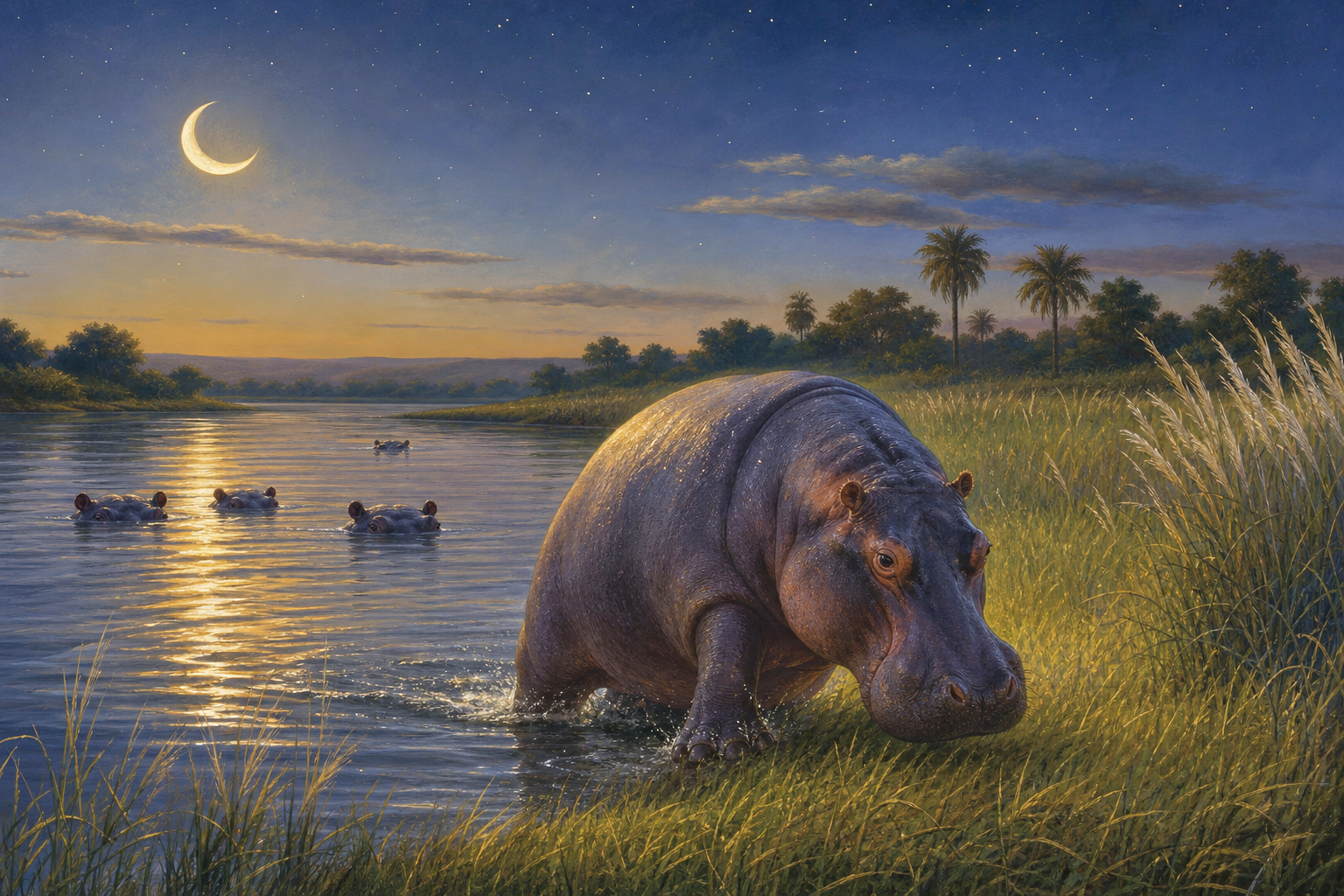
As evening arrives, the riverbank changes. Daytime heat eases. A hippo climbs out and begins its night journey toward nearby grass. Hippos mainly graze after dark or around twilight, following routes between freshwater resting spots and feeding areas.
So what is on the menu? Plants. Hippos are herbivores and mainly graze on grasses, along with related plant material. Their wide mouths and strong lips are made for pulling up a hearty mouthful. No midnight pizza delivery is needed when a meadow is nearby.
This nightly routine explains why both water and land matter. A river without accessible grazing ground is not a complete hippo home. Nor is a grassy area without the freshwater refuge a hippo depends on during the day. The animal’s journey quietly stitches these two habitats together: cool water behind, grass ahead, then back again before the next hot day.
A fully grown hippo is astonishingly large—among Africa’s heaviest land mammals. Rather than trying to picture a number, picture something as hefty as a small vehicle moving through moonlit grass, with no headlights and no hurry. That is why a hippo deserves not only our amazement, but our respect.
Evidence: Animal Diversity Web, University of Michigan Museum of Zoology: Hippopotamus amphibius (hippopotamus); IUCN Red List of Threatened Species: Hippopotamus amphibius (Hippopotamus) — Red List Assessment
A river horse that is not a horse
The word “hippopotamus” comes from Greek words often translated as “river horse.” It is a memorable nickname, but hippos are not horses. Their closest description is large, even-toed mammals in their own family. Nature loves a surprising name almost as much as people do.
One reason hippos feel so extraordinary is the contrast between their worlds. They are massive mammals resting in freshwater by day, then land grazers by night. A child watching a calm river might not guess that a hidden hippo could soon be strolling out to search for grass.
Their size does not make them toys, pets, or animals to approach. It makes them powerful wild neighbours. Caring about an animal means learning its boundaries. We can be delighted by the ears, the snorts, and the giant round shape while remembering that the best friendship with wildlife leaves the wildlife free to choose where to go.
Evidence: Animal Diversity Web, University of Michigan Museum of Zoology: Hippopotamus amphibius (hippopotamus); IUCN Red List of Threatened Species: Hippopotamus amphibius (Hippopotamus) — Red List Assessment
The map of a hippo home is getting harder to follow
Here is the worrying part of the adventure: the IUCN lists the common hippopotamus as Vulnerable in its 2017 assessment. The profile estimates roughly 115,000 to 130,000 hippos globally and records a decreasing trend. Those are not just marks on a chart. They represent animals that need safe water, safe routes, and places to graze.
Major pressures include loss of freshwater habitat and unregulated hunting, including hunting for meat and ivory-like teeth. When rivers and lakes are damaged or disappear, a hippo can lose the cool resting place at the centre of its day. When connected grassland is lost, its nightly food journey becomes harder too.
There is room for hope, because problems point toward useful actions. Protecting freshwater systems and the nearby grazing land that connects to them can help. Protected areas and effective enforcement can also reduce unregulated hunting. A hippo cannot send a letter requesting a healthier river, so people must notice what its home needs and act together.
Evidence: IUCN Red List of Threatened Species: Hippopotamus amphibius (Hippopotamus) — Red List Assessment; Animal Diversity Web, University of Michigan Museum of Zoology: Hippopotamus amphibius (hippopotamus)
Small choices, wide ripples
You may not live beside a hippo river, but you can still practise the habit that helps every wild neighbour: notice connections. A healthy river, a grassland, a grazing hippo, and the people who care for a place are all part of one living picture.
At meals, a plant-forward plate can be one gentle way to think about animals and habitats. The World Health Organization describes healthy diets in broad terms as including foods such as vegetables, fruit, whole grains, pulses, nuts, and seeds. The IPCC reports that shifts toward sustainable, healthy, more plant-based diets can reduce pressure on land and biodiversity and lower food-system emissions. That does not mean one lunch magically saves a river. It means kind, repeated choices can join bigger caring efforts.
Try a family “green explorer” challenge: notice a new bean, grain, vegetable, fruit, nut, or seed, and ask a trusted adult to help choose or prepare it. Families eat in many different ways, and no one needs a scolding at the table. Curiosity is a splendid first step. While you crunch a carrot or scoop up lentils, you can remember the hippo’s own nightly plant-powered feast—and wish it safe water and grassy paths under the moon.
Evidence: World Health Organization: Healthy diet; Intergovernmental Panel on Climate Change: Climate Change 2022: Mitigation of Climate Change — Chapter 7; IUCN Red List of Threatened Species: Hippopotamus amphibius (Hippopotamus) — Red List Assessment; Animal Diversity Web, University of Michigan Museum of Zoology: Hippopotamus amphibius (hippopotamus)
Choose curiosity—and leave room for every river neighbour
A hippo’s story invites a simple question: how can we make room for other animals to live their own lives? We can value hippos as feeling wild beings, not as things to use, and support protection for freshwater and connected grassland.
Food can be part of that caring practice. Enjoying more plant foods—such as pulses, vegetables, fruit, whole grains, nuts, and seeds—can fit within a varied healthy diet, while more plant-based dietary shifts can help lessen pressure on land and biodiversity. Talk with a trusted adult about choices for your family, and let kindness be the flavour you notice most.
Evidence: World Health Organization: Healthy diet; Intergovernmental Panel on Climate Change: Climate Change 2022: Mitigation of Climate Change — Chapter 7; IUCN Red List of Threatened Species: Hippopotamus amphibius (Hippopotamus) — Red List Assessment
Questions people ask
Are hippos fish because they spend so much time in water?
No. Hippos are mammals. They are semi-aquatic: they spend much of the day in freshwater but also walk onto land, especially at night, to graze.
Evidence: Animal Diversity Web, University of Michigan Museum of Zoology: Hippopotamus amphibius (hippopotamus); IUCN Red List of Threatened Species: Hippopotamus amphibius (Hippopotamus) — Red List Assessment
What do hippos eat?
They are herbivores. Their diet is mainly grasses and related plant material, eaten mostly during nighttime grazing trips near their freshwater resting sites.
Why do hippos need both rivers and grasslands?
Freshwater helps provide daytime resting habitat, while nearby grassy land provides food. The connection between these places is essential to a hippo’s everyday routine.
Evidence: Animal Diversity Web, University of Michigan Museum of Zoology: Hippopotamus amphibius (hippopotamus); IUCN Red List of Threatened Species: Hippopotamus amphibius (Hippopotamus) — Red List Assessment
Are common hippos doing okay in the wild?
They face serious pressures. The IUCN’s 2017 assessment lists them as Vulnerable and records a decreasing population trend, with habitat loss and unregulated hunting among the concerns.
Evidence: IUCN Red List of Threatened Species: Hippopotamus amphibius (Hippopotamus) — Red List Assessment
Read the evidence
Sources behind this story
- Hippopotamus amphibius (Hippopotamus) — Red List Assessment — IUCN Red List of Threatened Species
- Hippopotamus amphibius (hippopotamus) — Animal Diversity Web, University of Michigan Museum of Zoology
- Healthy diet — World Health Organization
- Climate Change 2022: Mitigation of Climate Change — Chapter 7 — Intergovernmental Panel on Climate Change
Health information is general education, not personal medical advice. Young readers should make food choices with a trusted adult and qualified health professional.