Today's animal friend · 28 August 2026
The Midnight Snuffle: Meet the European Hedgehog
When the garden goes quiet, a European hedgehog may be just beginning its very important, very sniffy night shift.
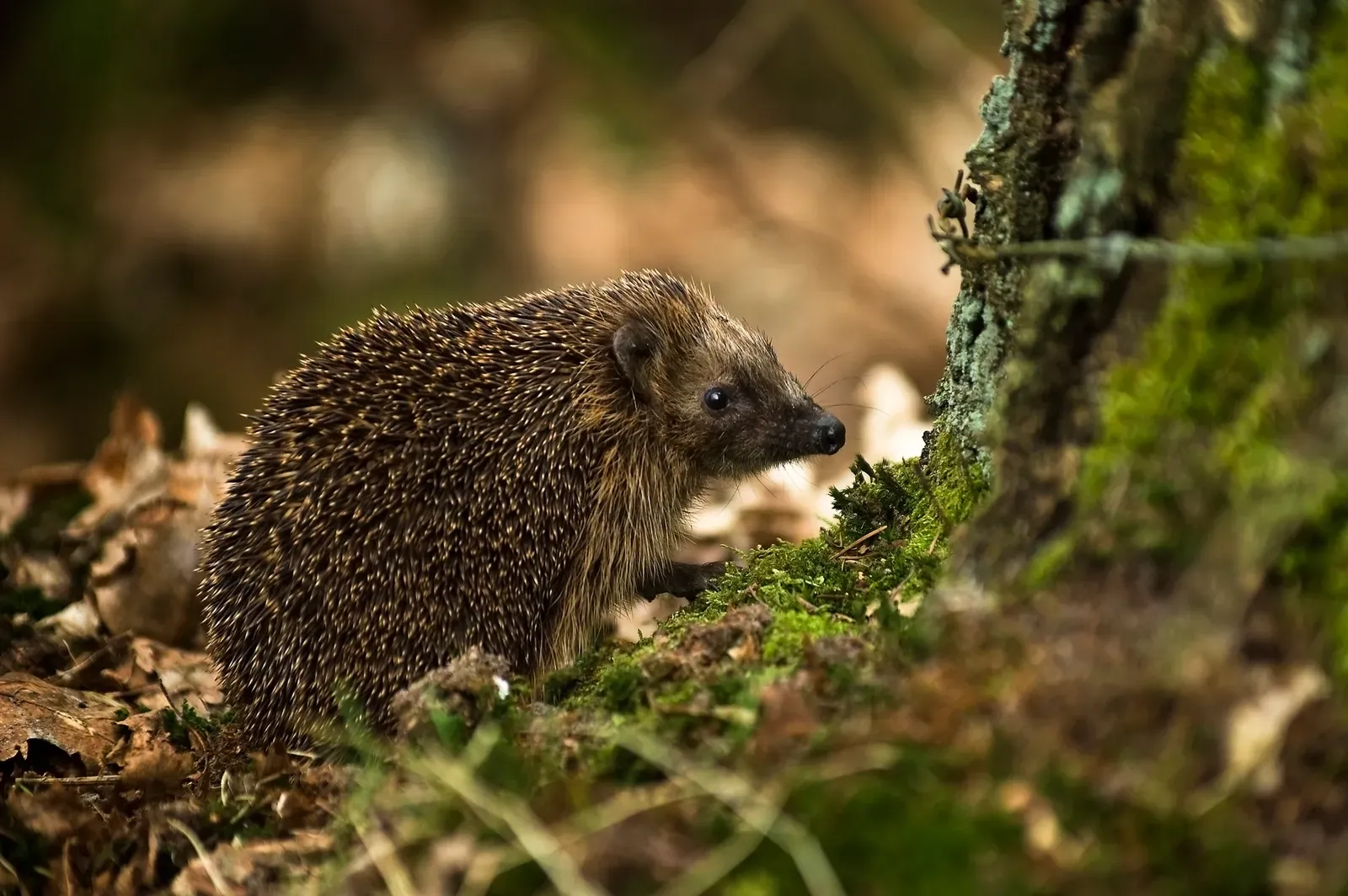
When the garden goes quiet, a European hedgehog may be just beginning its very important, very sniffy night shift.
A rustle in the leaves—then a tiny nose appears
Imagine you are outside after dusk. The sky is turning inky blue. A leaf scrapes across the path, a twig gives a soft tick, and something makes a determined snuffle-snuffle-snuffle in the hedge. Is it a wandering pinecone? A pocket-sized knight in a bristly coat?
It is a European hedgehog, Erinaceus europaeus: a small spiny mammal also called the western European hedgehog or common hedgehog. Its back is covered in short, stiff spines, while its face, tummy and little legs are furry. That makes it look rather like a prickly ball with a nose attached—an excellent design for a creature that spends the night exploring.
European hedgehogs live across much of Europe. They can be found around grassland, hedgerows, gardens, farmland and woodland edges, especially where there are tucked-away places to rest and make a nest. So an ordinary-looking garden can be part of a very extraordinary nighttime route.
Evidence: IUCN Red List of Threatened Species: Erinaceus europaeus (Western European Hedgehog) — Red List Assessment; Animal Diversity Web, University of Michigan Museum of Zoology: Erinaceus europaeus (western European hedgehog); Wikipedia: European hedgehog
Why is the garden busiest when we are asleep?
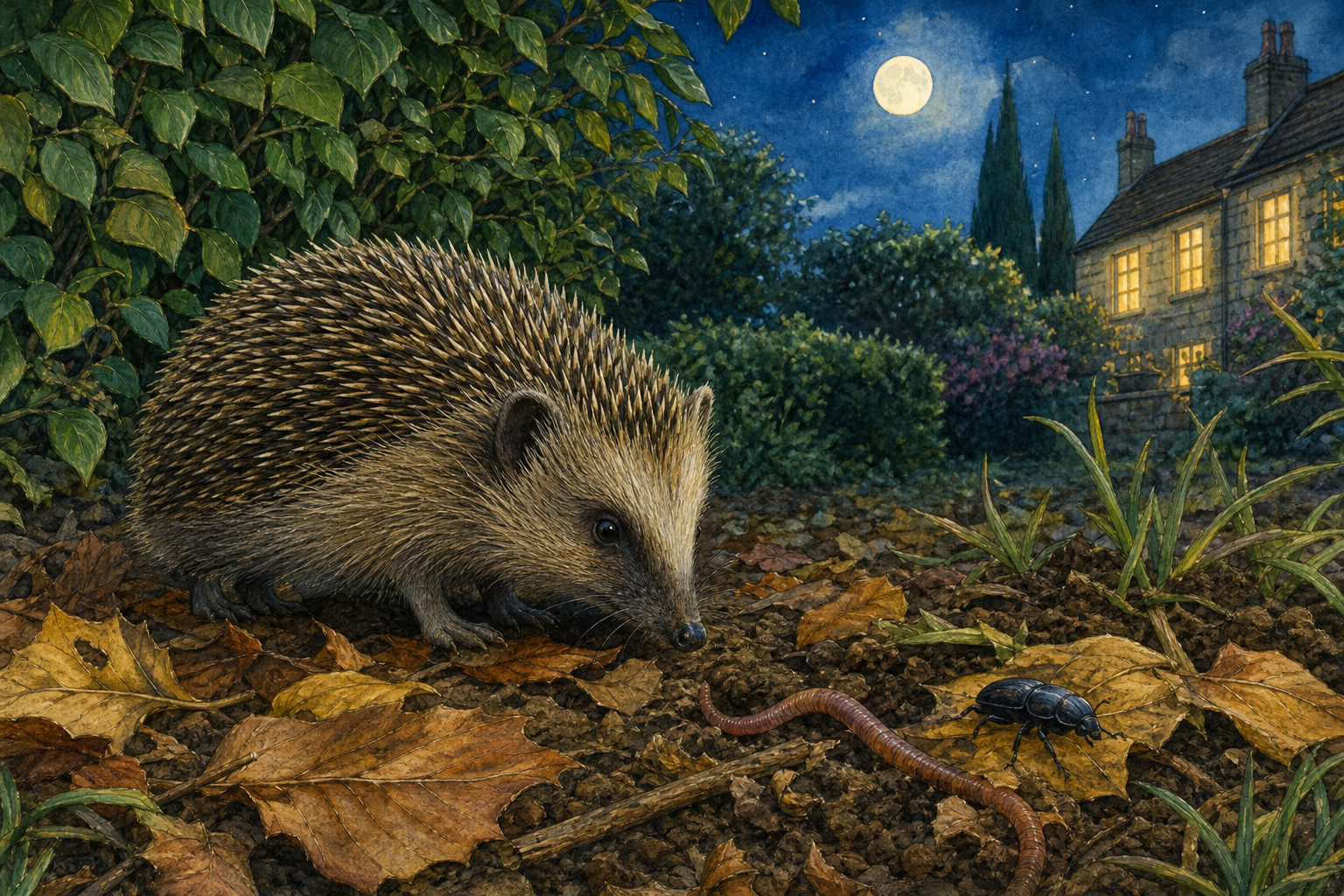
Because this little neighbour is mostly nocturnal: active at night. While many people are brushing their teeth or dreaming about breakfast, a hedgehog is out on patrol. During the day it rests in a nest of leaves and grass; after dark, it starts searching.
A European hedgehog is an omnivore, but much of its menu is made of small invertebrates. Beetles, earthworms, caterpillars, slugs and snails may be on the night’s menu. Picture a determined shopper moving along the ground, except the shopping basket is its nose and everything smells of damp soil.
This is more than random wandering. By eating insects and other invertebrates, hedgehogs can help keep some of these creatures in balance in gardens and farmland food webs. They are not garden employees in tiny uniforms, of course. They are wild animals simply getting on with the important business of finding supper.
Evidence: Animal Diversity Web, University of Michigan Museum of Zoology: Erinaceus europaeus (western European hedgehog); Wikipedia: European hedgehog; IUCN Red List of Threatened Species: Erinaceus europaeus (Western European Hedgehog) — Red List Assessment
The world’s prickliest emergency button
What happens if that snuffling explorer is frightened? A hedgehog can curl itself into a tight ball, with its soft face and tummy tucked safely inside and its spines facing outward. It is a remarkable defence: the animal becomes much harder for a threat to nibble or grab.
Its spines are hollow, helping keep them light. When the hedgehog raises them and rolls up, the result is less “cuddly toy” and more “please give me some space.” That is why a hedgehog seen curled in a ball should be admired quietly rather than poked, picked up or passed around.
Hedgehogs are small: their bodies are roughly 14 to 27 centimetres long, depending on the individual. That is about the length of a pencil to a school ruler. Yet being small does not mean being unimportant. A whole night-time life can fit into the quiet spaces between a hedge, a patch of grass and a garden fence.
Evidence: Animal Diversity Web, University of Michigan Museum of Zoology: Erinaceus europaeus (western European hedgehog); Wikipedia: European hedgehog; IUCN Red List of Threatened Species: Erinaceus europaeus (Western European Hedgehog) — Red List Assessment
Hoglets arrive with a clever secret
Here is a fact that sounds made up but is true: baby hedgehogs are called hoglets. They are born blind, and their first pale, soft spines are hidden beneath the skin. This helps make their birth safer for their mother. Soon those first spines emerge, and a darker coat of spines develops too.
A mother may have a litter of around four to six hoglets. At first, the babies need the safety and warmth of the nest. Later, they grow into explorers themselves, ready for their own snuffling adventures.
European hedgehogs are mostly solitary. In other words, they do not form a busy hedgehog club that meets every Tuesday under the compost heap. They usually live alone and mainly come together during the mating season. A lone hedgehog crossing a lawn is not necessarily lonely; it is behaving in its usual way.
Evidence: Animal Diversity Web, University of Michigan Museum of Zoology: Erinaceus europaeus (western European hedgehog); Wikipedia: European hedgehog; IUCN Red List of Threatened Species: Erinaceus europaeus (Western European Hedgehog) — Red List Assessment
Where do they go when winter feels enormous?
When cold winter weather makes food harder to find, European hedgehogs can hibernate. They make a snug nest, often from leaves, then enter a deep, long sleep that saves energy until warmer spring days return. It is not exactly like an afternoon nap—even the sleepiest Saturday nap cannot compete.
That makes fallen leaves more than garden mess. For a hedgehog, leaves can be building material: part of a sheltered, hidden nest. A wild corner of a garden may look untidy to us, but to a small animal it can be a busy landscape of cover, pathways and possible bedrooms.
In warmer months, a hedgehog may travel through connected patches of habitat—hedgerows, gardens, field edges and scrub—to feed and rest. When people make every outdoor space perfectly bare and sealed off, those small routes can disappear. Nature often needs a little room to be wonderfully scruffy.
Evidence: Animal Diversity Web, University of Michigan Museum of Zoology: Erinaceus europaeus (western European hedgehog); Wikipedia: European hedgehog; IUCN Red List of Threatened Species: Erinaceus europaeus (Western European Hedgehog) — Red List Assessment
A friend in trouble, and reasons for hope
The IUCN assessed the European hedgehog as Near Threatened in 2024, with a decreasing population trend. That is a serious signal: this familiar animal needs attention before its quiet rustle becomes harder to hear. Loss of hedgerows and countryside habitat, busy roads, and changes in farming are among the pressures linked with its decline.
The hopeful part is that people can notice and care. Hedgehogs need places with cover for resting and hibernating, and connected spaces where they can move about. Conservation efforts and legal protections exist in parts of Europe, and many people are learning to make gardens friendlier to wildlife.
What can a young nature detective do? Look closely, but from a respectful distance. Encourage your family or school to value leafy, sheltered corners rather than treating every fallen leaf as an enemy. If you see a hedgehog, let it choose its own route. And if you are worried an animal needs help, tell a trusted adult, who can contact a local wildlife rescue group for guidance.
Evidence: IUCN Red List of Threatened Species: Erinaceus europaeus (Western European Hedgehog) — Red List Assessment; Animal Diversity Web, University of Michigan Museum of Zoology: Erinaceus europaeus (western European hedgehog); Wikipedia: European hedgehog
The next time the hedge whispers
A hedgehog does not need to be loud to be astonishing. It has a built-in bristly shield, a night-time nose-led adventure, a leaf-nest winter plan and babies called hoglets. It belongs to the living neighbourhood beyond our windows, along with worms in the soil, beetles under stones and birds calling from the trees.
Next time you hear a rustle after dark, pause. Listen. It may be the wind. It may be a cat. Or it may be one small European hedgehog, busy enough to make a whole garden feel like a midnight world.
Evidence: IUCN Red List of Threatened Species: Erinaceus europaeus (Western European Hedgehog) — Red List Assessment; Animal Diversity Web, University of Michigan Museum of Zoology: Erinaceus europaeus (western European hedgehog); Wikipedia: European hedgehog
A kind plate can be part of a kinder planet
Caring about a hedgehog can begin with caring about the web of life around it: soil creatures, leafy shelter, wild places and the animals with whom we share the planet. Food choices are part of that bigger picture, too.
With a trusted adult, explore colourful meals built around vegetables, fruit, whole grains, pulses, nuts and seeds. The World Health Organization describes these foods as part of a healthy varied diet. The IPCC also reports that shifts toward sustainable, healthy, more plant-based diets can reduce pressure from food systems on climate, land and biodiversity. No one meal has to be perfect. A bean burrito, lentil soup or veggie pasta can be one cheerful, animal-kind adventure on a plate.
Evidence: World Health Organization: Healthy diet; Intergovernmental Panel on Climate Change: Climate Change 2022: Mitigation of Climate Change — Chapter 7
Questions people ask
Are European hedgehogs porcupines?
No. They are different animals. A European hedgehog is a mammal in the family Erinaceidae, with its own kind of short spines and its own night-time lifestyle.
Evidence: Animal Diversity Web, University of Michigan Museum of Zoology: Erinaceus europaeus (western European hedgehog); Wikipedia: European hedgehog; IUCN Red List of Threatened Species: Erinaceus europaeus (Western European Hedgehog) — Red List Assessment
What should I do if I spot one?
Watch quietly from a distance and let it continue on its way. Do not try to make it uncurl or turn it into a pet. If you think it may need help, tell a trusted adult and seek advice from a local wildlife rescue organisation.
Evidence: Animal Diversity Web, University of Michigan Museum of Zoology: Erinaceus europaeus (western European hedgehog); Wikipedia: European hedgehog; IUCN Red List of Threatened Species: Erinaceus europaeus (Western European Hedgehog) — Red List Assessment
Why are hedgerows useful?
Hedgerows and other sheltered, connected habitats can offer cover, nesting places and routes through the landscape for hedgehogs that are searching for food at night.
Evidence: IUCN Red List of Threatened Species: Erinaceus europaeus (Western European Hedgehog) — Red List Assessment; Animal Diversity Web, University of Michigan Museum of Zoology: Erinaceus europaeus (western European hedgehog); Wikipedia: European hedgehog
Read the evidence
Sources behind this story
- Erinaceus europaeus (Western European Hedgehog) — Red List Assessment — IUCN Red List of Threatened Species
- Erinaceus europaeus (western European hedgehog) — Animal Diversity Web, University of Michigan Museum of Zoology
- European hedgehog — Wikipedia
- Healthy diet — World Health Organization
- Climate Change 2022: Mitigation of Climate Change — Chapter 7 — Intergovernmental Panel on Climate Change
Health information is general education, not personal medical advice. Young readers should make food choices with a trusted adult and qualified health professional.