Today's animal friend · 25 July 2026
The Meadow’s Thunder-Soft Friend: Meet the Horse
Listen closely in a pasture: snip, chew, swish. A horse may look like a magnificent running machine, but much of its day is a peaceful plant-powered picnic.
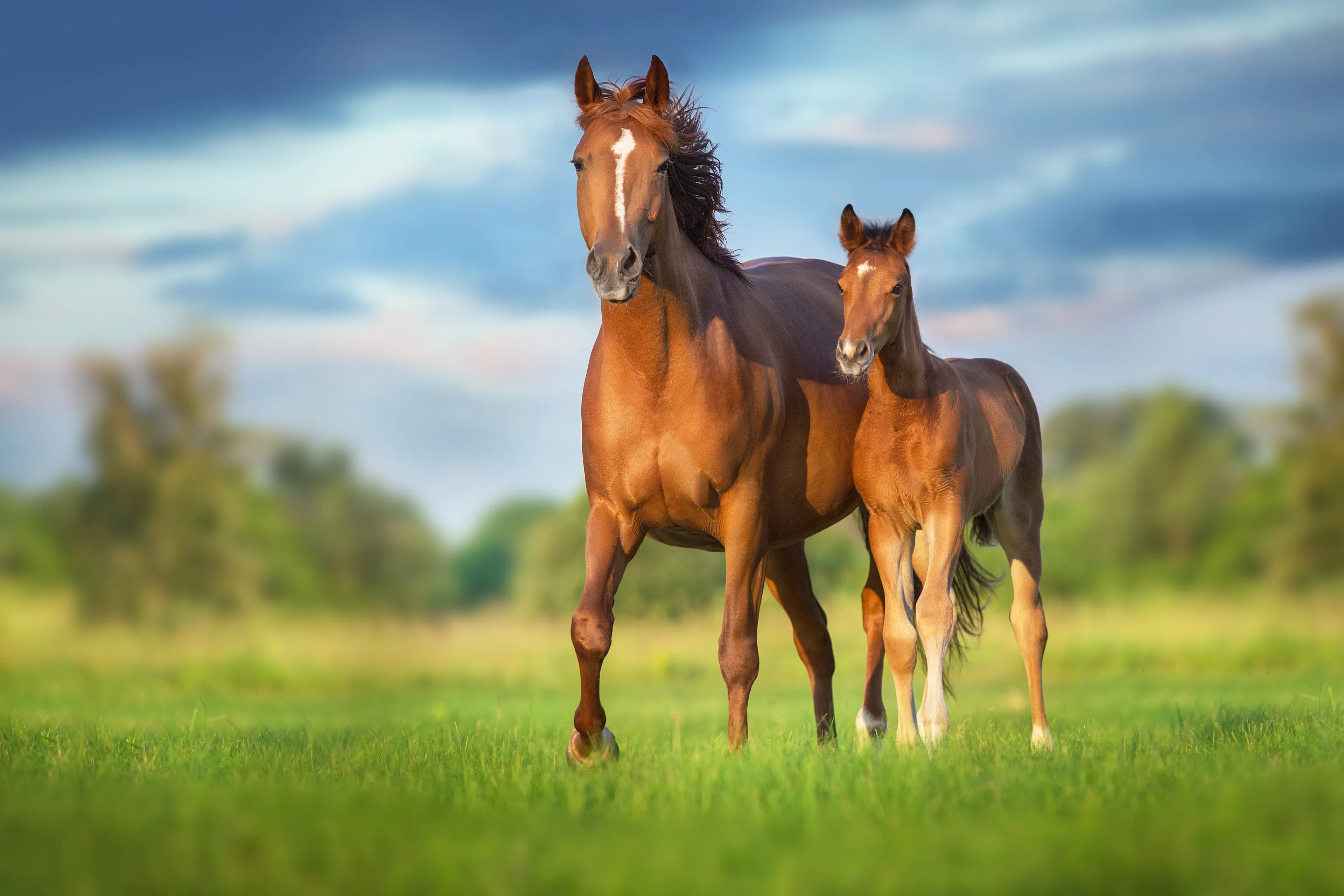
Listen closely in a pasture: snip, chew, swish. A horse may look like a magnificent running machine, but much of its day is a peaceful plant-powered picnic.
Snip, swish, thump! Who is making all that meadow music?
Imagine you are standing beside a grassy field on a breezy afternoon. First comes a soft tearing sound: snip, snip, snip. Then a tail swishes like a feathery fly-swatter. At last, a hoof lands with a firm thump that you can almost feel through your trainers. A horse has arrived.
A domestic horse is called Equus ferus caballus, and it is a mammal in the horse family, Equidae. Its long face, flowing mane and strong body can make it seem rather grand—like someone dressed for a parade even when they are simply eating lunch.
Yet lunch is a very big deal to a horse. Horses are herbivores, meaning they eat plants. Their favourite everyday foods include grass and hay, and people may also feed them grains such as oats. A horse’s soft, clever lips help it choose mouthfuls from the grass. Picture trying to pick up one crisp from a plate using only your lips. Tricky!
Horses have lived alongside people for thousands of years. They have carried riders, pulled carts and helped on farms in many parts of the world. But before we think of what a horse can do for people, it is worth pausing to notice the horse as a someone: an alert, social animal with places to go, friends to keep close and a whole field full of interesting smells to investigate.
Evidence: IUCN Red List of Threatened Species: Equus ferus caballus (domestic horse) — conservation status; Animal Diversity Web, University of Michigan Museum of Zoology: Equus caballus (horse); Wikipedia: Horse (Equus ferus caballus)
A horse-sized question: how big is big?
There is no single horse shape. Some breeds are small ponies; others are hefty draught horses. This is why meeting different horses can feel a bit like meeting dogs: a tiny terrier and a giant mastiff are both dogs, but they certainly do not fill a doorway in the same way.
People often measure a horse’s height in “hands.” One hand is exactly four inches—about the width of a grown-up’s hand. It is an old-fashioned measurement that has stayed useful, perhaps because it is easy to imagine someone standing beside a horse and counting hand-widths upward.
Many domestic horses live for around 25 to 30 years when cared for well. That is long enough for a horse and a person to share many seasons: crunchy autumn leaves, muddy spring fields, hot summer flies and frosty breaths in winter.
Horses are most at home in open, grassy places, including pastures, farmland, meadows and grasslands. Under human care they can live in a wide range of places around the world. Their ancestors lived on open landscapes in Eurasia, while domestic horses were later brought to the Americas. Wherever a horse lives, room to move and graze matters a great deal.
Evidence: Animal Diversity Web, University of Michigan Museum of Zoology: Equus caballus (horse); Wikipedia: Horse (Equus ferus caballus)
The foal who said, “Wobble first, race later!”
Here is one of the most surprising horse facts: a baby horse, called a foal, can stand within about an hour of being born. Its first attempt may look as if four very long springs have been attached in the wrong places. Wobble. Pause. Wobble again.
But those wobbly legs soon become useful. Within a few hours, a foal can walk to follow its mother, and it can run beside her very early in life. This speedy start is called being precocial: the youngster is born ready to get moving rather than staying helpless in a nest.
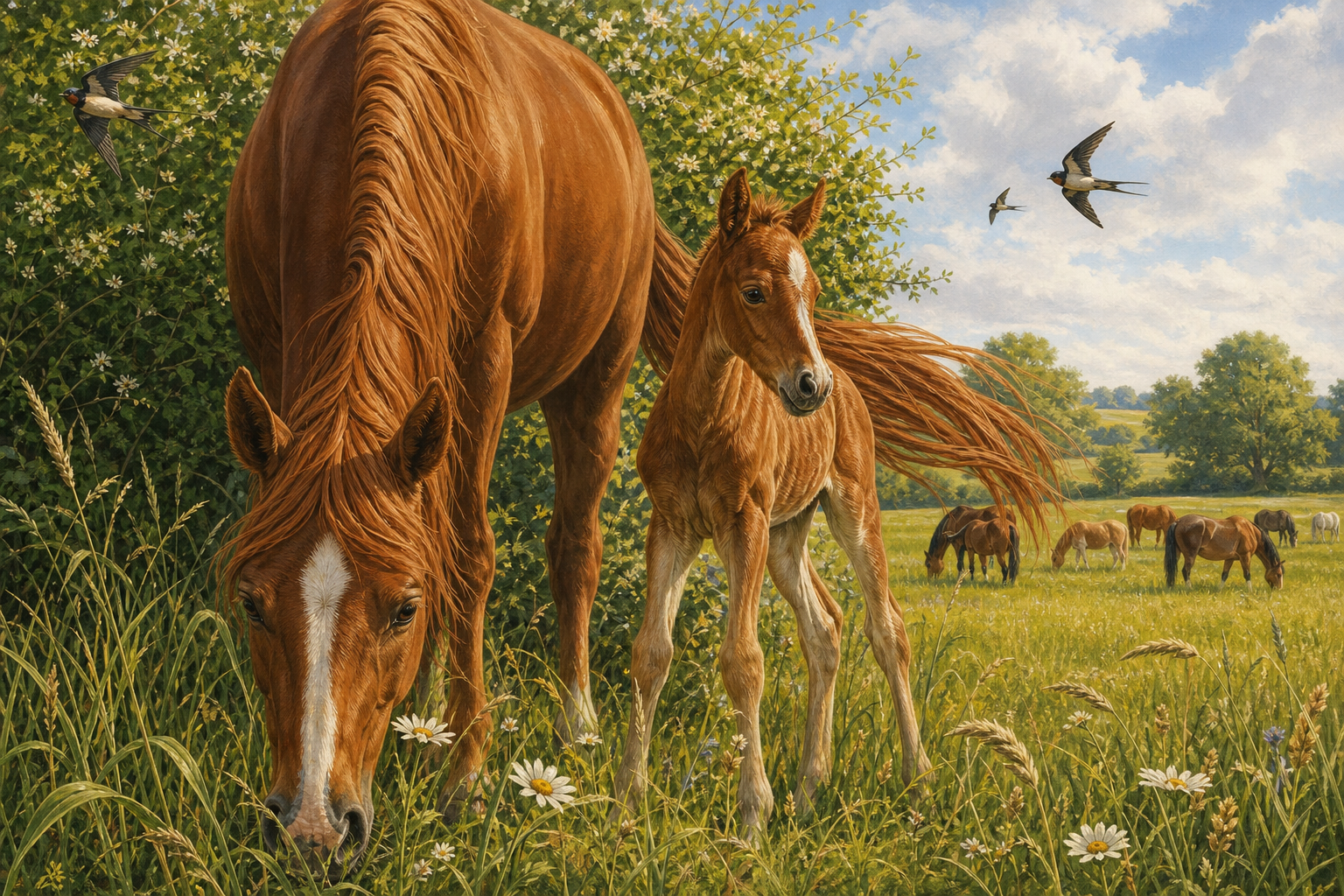
A foal stays close to its mother, drinking milk and learning what the world is like. Which patch of grass smells fresh? Where are the other horses? What made that bird suddenly flap from the hedge? Growing up is an outdoor lesson with hooves.
Horses tend to be active around the day and twilight. They also sleep in short stretches rather than having one long, tucked-in bedtime like many children do. Their days are made from little pieces: grazing, walking, watching, resting and checking in with the group.
Evidence: Animal Diversity Web, University of Michigan Museum of Zoology: Equus caballus (horse); Wikipedia: Horse (Equus ferus caballus)
Why does one horse keep looking over at another?
Because horses are social. They live in herds or bands, where individuals keep track of one another. A group can include mares, young horses and one or more stallions. In free-living domestic groups, stallions may defend and guide the band.
Horse conversation is not usually a big speech with a microphone. It can be a change in ear position, a tail swish, a nuzzle or a small sound. When you watch carefully, you may notice that a pasture is not silent at all. It is full of tiny messages.
This is one reason thoughtful care matters. A horse is not a lawn ornament with legs, nor a machine for rides. Horses need appropriate plant food, fresh water, veterinary and dental attention, humane training and companionship. They are powerful, yes—but power does not cancel feelings or needs.
Grazing horses can also affect the places where they live. By eating plants and moving through landscapes, they can influence plant communities and spread seeds. In places not suited to large grazing animals, however, free-living herds can put pressure on vegetation or compete with other grazers. Nature is a giant shared picnic blanket: who eats where can change what grows next.
Evidence: Animal Diversity Web, University of Michigan Museum of Zoology: Equus caballus (horse); Wikipedia: Horse (Equus ferus caballus)
Domestic, feral, or wild—are those the same thing?
Not quite. The horse in this story is the domestic horse: the form of horse people have kept for thousands of years. Domestic horses are abundant worldwide and are not evaluated as a separate domesticated form on the IUCN Red List.
Sometimes domestic horses live free without daily human care. These are often called feral horses. They are descendants of domestic horses, not the same as a truly never-domesticated wild population. Words can be slippery, like mud after rain, so it helps to slow down and ask what they mean.
Przewalski’s horse is a related wild horse taxon assessed separately by the IUCN and listed as Endangered. That does not mean that every horse in a local field is endangered. It does remind us that different kinds of horses can have very different stories and needs.
A caring horse-lover can hold both thoughts at once: celebrate the familiar horse in the meadow, and care about protecting wild relatives and the wild places they need. Rare horse breeds can matter too, because variety is valuable—just as a garden with many kinds of seeds can be more interesting and resilient than a garden with only one.
Evidence: IUCN Red List of Threatened Species: Equus ferus caballus (domestic horse) — conservation status; Animal Diversity Web, University of Michigan Museum of Zoology: Equus caballus (horse); Wikipedia: Horse (Equus ferus caballus)
A kind choice can start at your next snack
Horses show us how much life can happen around plants: grass under the muzzle, hay in the manger, a whole day shaped by grazing. We can let that spark a gentle question: how can our own choices make room for animals and healthy landscapes?
One cheerful answer is to explore more plant foods with your family—whole grains, vegetables, fruit, pulses, nuts and seeds are all part of healthy dietary patterns described by the World Health Organization. A colourful bean-and-vegetable wrap, oat porridge with fruit, or a lentil soup can be a small adventure on a plate. Food needs differ from person to person, so make changes with a trusted adult and, when needed, a qualified health professional.
The IPCC reports that shifts toward sustainable, healthy, more plant-based diets can lower food-system emissions and reduce pressure on land and biodiversity. Choosing a plant-forward or vegan meal is not about being perfect. It is a friendly way to say: “I notice animals. I notice the planet. I want to help.” That is a brave thought to carry, as steady as a hoofbeat across a field.
Evidence: World Health Organization: Healthy diet; Intergovernmental Panel on Climate Change: Climate Change 2022: Mitigation of Climate Change — Chapter 7
Questions people ask
What is a baby horse called?
A baby horse is called a foal. Foals are born ready to move: they can stand within about an hour and walk within a few hours so they can follow their mothers.
Evidence: Animal Diversity Web, University of Michigan Museum of Zoology: Equus caballus (horse); Wikipedia: Horse (Equus ferus caballus)
Do horses eat meat?
No. Horses are herbivores, or plant-eaters. They mainly graze on grasses and may be given hay and grains such as oats.
Evidence: Animal Diversity Web, University of Michigan Museum of Zoology: Equus caballus (horse); Wikipedia: Horse (Equus ferus caballus)
Why are horses measured in hands?
Horse height is often measured in hands. One hand equals exactly four inches, a traditional unit that is roughly the width of a grown-up hand.
Evidence: Wikipedia: Horse (Equus ferus caballus)
Is a free-living horse always a wild horse?
No. A feral horse is usually a free-living descendant of domestic horses. It is different from a truly wild horse population, such as the separately assessed Przewalski’s horse.
Evidence: IUCN Red List of Threatened Species: Equus ferus caballus (domestic horse) — conservation status; Animal Diversity Web, University of Michigan Museum of Zoology: Equus caballus (horse); Wikipedia: Horse (Equus ferus caballus)
Read the evidence
Sources behind this story
- Equus ferus caballus (domestic horse) — conservation status — IUCN Red List of Threatened Species
- Equus caballus (horse) — Animal Diversity Web, University of Michigan Museum of Zoology
- Horse (Equus ferus caballus) — Wikipedia
- Healthy diet — World Health Organization
- Climate Change 2022: Mitigation of Climate Change — Chapter 7 — Intergovernmental Panel on Climate Change
Health information is general education, not personal medical advice. Young readers should make food choices with a trusted adult and qualified health professional.