Today's animal friend · 24 October 2026
Dog: The Nose That Reads the World
Dogs are expert sniffers, lively communicators, and close companions to people around the world. Their story begins long before farms—and continues with every gentle walk, bowl, and play bow.
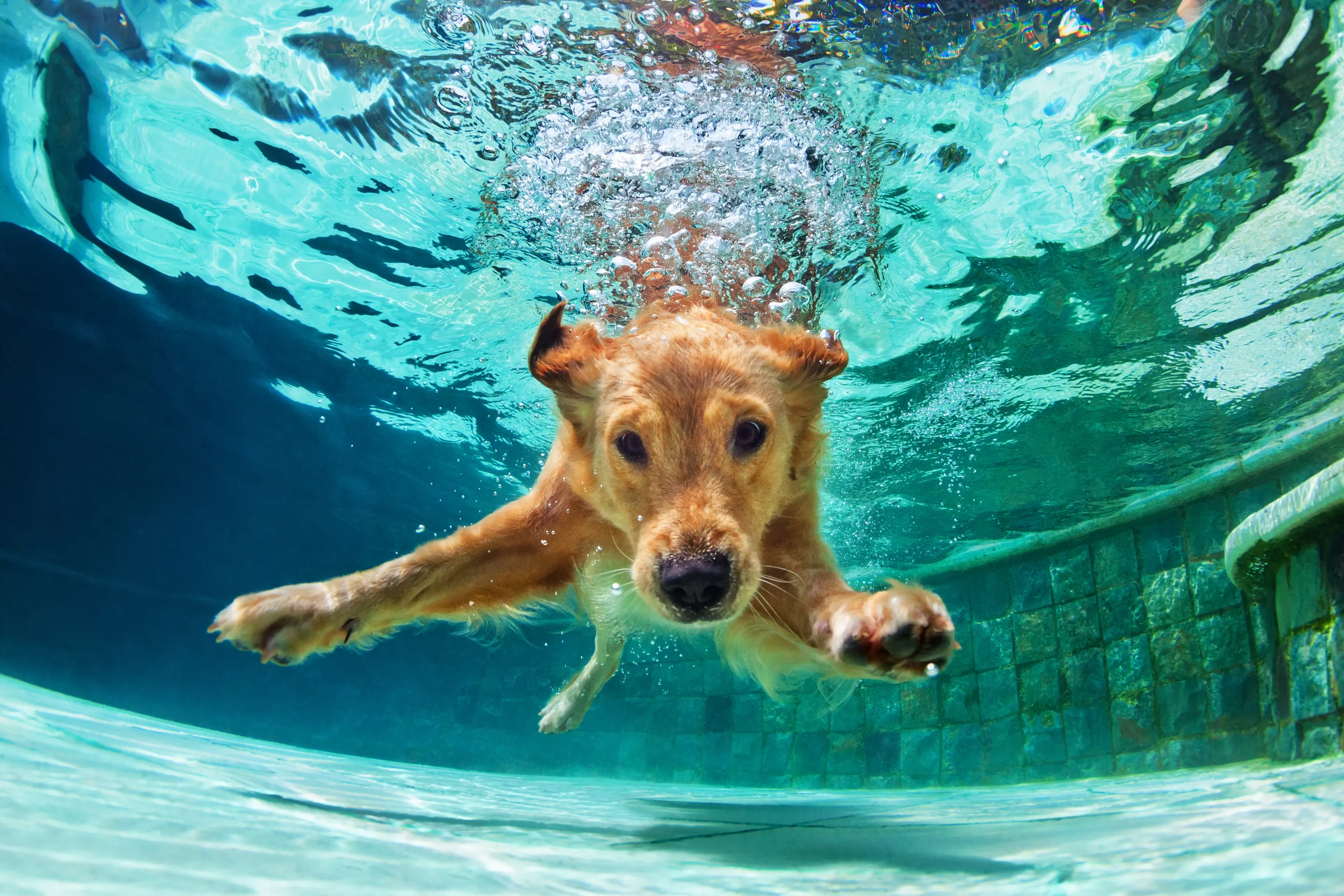
Dogs are expert sniffers, lively communicators, and close companions to people around the world. Their story begins long before farms—and continues with every gentle walk, bowl, and play bow.
Sniff, sniff… a whole newspaper on a lamppost!
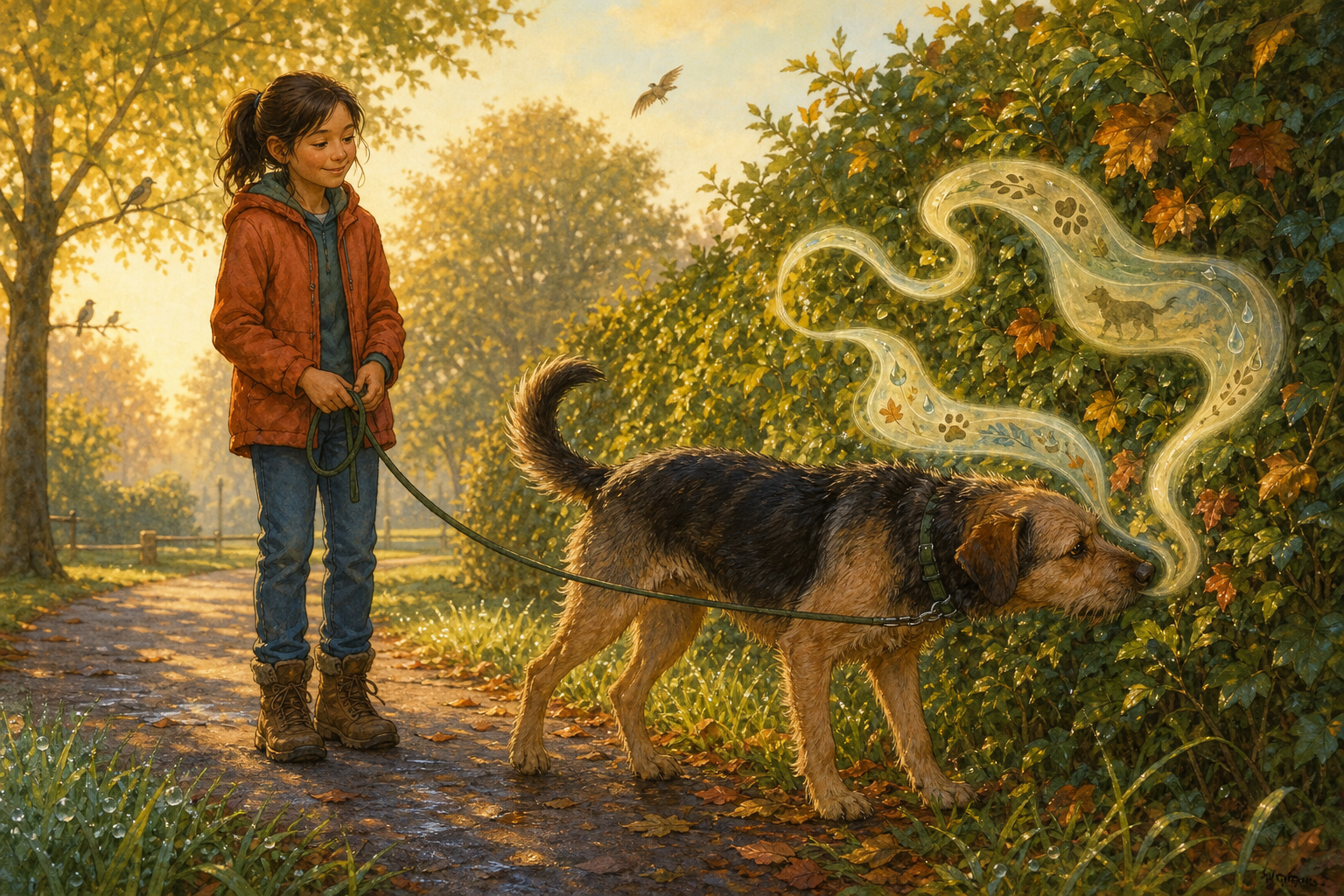
Imagine stepping outside on a cool morning. The pavement is damp, a leaf sticks to your shoe, and a dog pauses beside a hedge. Its nose wiggles. Sniff. Sniff-sniff. To us, the hedge may smell like… hedge. To a dog, smell is a giant information map, full of clues too faint for human noses to notice.
A dog’s powerful sense of smell is its superstar skill. Dogs use scent, along with sounds, body language, and chemical cues, to explore and communicate. That is why a walk is not only about getting from the front door to the park. It is more like a detective adventure, with the nose leading the way.
Dogs are active mainly in daytime and around twilight, so you may spot plenty of nose-to-ground investigating then. A patient person lets a dog have safe chances to sniff. It is not dawdling. Well, sometimes it may be dawdling. But it is also a dog learning about its neighbourhood in its very doggy way.
Evidence: Wikipedia: Dog (Canis lupus familiaris); Animal Diversity Web, University of Michigan Museum of Zoology: Canis lupus familiaris (dog)
Our very old friendship began before farms
Dogs are domestic dogs, or Canis lupus familiaris. They belong to the dog family, Canidae, and descend from wolves. Yet a dog curled beside a radiator or chasing a squeaky toy is not a wild wolf in a fluffy disguise. Thousands of years of living close to people have made dogs our familiar companions.
Here is the surprising bit: people and dogs became friends before agriculture began. Hunter-gatherers were keeping dogs at least about 14,000 years ago. That makes the dog the first animal people made friends with in this special way. Picture campfires, footsteps, watchful ears, and a long partnership beginning before fields of crops and farm fences.
Today, dogs live wherever people do: in towns, suburbs, farms, and countryside around the world. Their sizes and shapes can be wildly different—lap-sized little dogs and big dogs are all part of the same domestic-dog story. Adult size and lifespan vary greatly among breeds, so each dog needs care suited to its own body, energy, and life stage.
Evidence: Wikipedia: Dog (Canis lupus familiaris); Animal Diversity Web, University of Michigan Museum of Zoology: Canis lupus familiaris (dog)
What is that tail saying?
A dog cannot point to a speech bubble and say, “I am excited!” But it has many other ways to speak. Dogs use posture, sounds, scents, and faces. A play bow—front end low, rear end up—can be an invitation to romp. An alert stance can mean, “I noticed something!” A tense threat display means it is time to give the dog space.
Dogs are social animals and can form close bonds with people and other dogs. That does not mean every dog wants to greet every stranger, child, bicycle, or bouncy puppy. Being a good dog friend means noticing what the dog is telling you. A relaxed dog may enjoy gentle company; a worried-looking dog deserves room and a calm grown-up to help.
Puppies are baby dogs, and puppies born together are called a litter. Their mother feeds them milk and keeps them warm when they are very young. Later, puppies learn through play and exploring. Training with patience helps dogs understand our human world, where socks are not chew toys, roads are dangerous, and doorbells can be extremely suspicious.
Evidence: Wikipedia: Dog (Canis lupus familiaris); Animal Diversity Web, University of Michigan Museum of Zoology: Canis lupus familiaris (dog)
A dog bowl is not a one-size-fits-all buffet
Dogs are usually described as omnivores. Their food needs are more varied than the old cartoon idea of “meat, meat, and a giant bone.” Pet dogs need balanced food providing protein, carbohydrates, fats, and water. Dogs whose ancestors lived alongside farming communities also developed helpful adaptations for digesting starch-rich foods better than wolves do.
That is a job for caring adults, because the best food can differ from dog to dog. Some ordinary human foods are not safe for dogs, including chocolate and onions. Fresh water, suitable meals, exercise, training, and veterinary attention are all pieces of responsible care—not fancy extras.
The word “omnivore” is a clue to dogs’ flexible history, but it is not a reason to offer random snacks from the table. A dog’s hopeful face may look like a tiny furry lawyer making a very strong case for your sandwich. Still, keeping a dog well is about meeting its real needs, kindly and consistently.
Evidence: Wikipedia: Dog (Canis lupus familiaris); Animal Diversity Web, University of Michigan Museum of Zoology: Canis lupus familiaris (dog)
Loved dogs need safe neighbourhoods, too
Domestic dogs are abundant worldwide, and they are not evaluated by the IUCN Red List because they are a domesticated form. That is different from saying every dog is automatically safe and well. Individual dogs can face neglect, traffic, disease, and harm linked to poor breeding or lack of care.
There is another side to being a good neighbour. Free-ranging or feral dogs can sometimes hunt native wildlife and can carry parasites or diseases that affect other animals and people. This is not a reason to blame dogs. They did not invent roads, loose gates, or empty food bowls. It is a reason for people to make thoughtful choices.
A secure home, humane care, walks and play, training, and careful management of dogs that roam can help dogs and wildlife share places more safely. If you meet an unfamiliar dog, do not rush up for a cuddle. Ask the person with them first, move calmly, and let the dog decide whether it feels comfortable.
Evidence: IUCN Red List of Threatened Species: Canis lupus familiaris (domestic dog) — conservation status; Animal Diversity Web, University of Michigan Museum of Zoology: Canis lupus familiaris (dog); Wikipedia: Dog (Canis lupus familiaris)
A kind friendship can ripple outward
Dogs remind us that another creature’s day can be filled with things we barely notice: a warm patch of sun, the rustle of a treat bag, the scent of rain on grass, a familiar hand reaching for a lead. Caring for a dog means seeing the world from nearer the ground and remembering that a companion is a somebody, not an accessory.
Kind choices can reach beyond our own homes. For people, meals built around vegetables, fruit, whole grains, pulses, nuts, and seeds can be part of a healthy varied diet. Choosing more plant-based foods can also help reduce pressure from food systems on the climate, land, and biodiversity. A family does not need to be perfect to try a new bean chilli, lentil soup, or veggie-packed pasta night.
The important difference is this: people can explore thoughtful plant-forward meals with their families, while dogs need balanced food chosen for dogs with responsible adult guidance. In both cases, the best question is wonderfully simple: “What helps this living being thrive?” That question makes room for dogs, wildlife, and each other.
Evidence: World Health Organization: Healthy diet; Intergovernmental Panel on Climate Change: Climate Change 2022: Mitigation of Climate Change — Chapter 7; Animal Diversity Web, University of Michigan Museum of Zoology: Canis lupus familiaris (dog); Wikipedia: Dog (Canis lupus familiaris)
Small choices, wide kindness
A dog’s bright eyes and busy nose can remind us that animals have their own needs, feelings, and ways of experiencing a place. Offer dogs patient, responsible care, and make room for wildlife by keeping companion animals safely managed.
At the dinner table, families can also explore more plant-based meals—full of pulses, vegetables, fruit, whole grains, nuts, and seeds—as one positive choice for health and for a lighter footprint on land, biodiversity, and the climate. It is an invitation, not a contest: curiosity and kindness are excellent ingredients.
Evidence: World Health Organization: Healthy diet; Intergovernmental Panel on Climate Change: Climate Change 2022: Mitigation of Climate Change — Chapter 7; Animal Diversity Web, University of Michigan Museum of Zoology: Canis lupus familiaris (dog); Wikipedia: Dog (Canis lupus familiaris)
Questions people ask
Are dogs wolves?
Dogs descend from wolves and share a common ancestor with modern grey wolves, but domestic dogs have lived alongside people for thousands of years and are a distinct domesticated form.
Evidence: Wikipedia: Dog (Canis lupus familiaris); Animal Diversity Web, University of Michigan Museum of Zoology: Canis lupus familiaris (dog)
Why do dogs sniff so much?
Smell is a dog’s dominant sense. Sniffing helps a dog explore and pick up information from scents that may be much too faint for us to notice.
Evidence: Wikipedia: Dog (Canis lupus familiaris); Animal Diversity Web, University of Michigan Museum of Zoology: Canis lupus familiaris (dog)
Do all dogs like being petted?
No. Dogs are social, but each individual can feel differently in a moment. Watch for body language, ask the person caring for the dog, and give unfamiliar dogs space.
Evidence: Wikipedia: Dog (Canis lupus familiaris); Animal Diversity Web, University of Michigan Museum of Zoology: Canis lupus familiaris (dog)
Are domestic dogs endangered?
Domestic dogs are abundant around the world and are not evaluated by the IUCN Red List because they are domesticated. Individual dogs can still need protection from neglect, traffic, disease, and other welfare risks.
Evidence: IUCN Red List of Threatened Species: Canis lupus familiaris (domestic dog) — conservation status; Animal Diversity Web, University of Michigan Museum of Zoology: Canis lupus familiaris (dog); Wikipedia: Dog (Canis lupus familiaris)
Read the evidence
Sources behind this story
- Dog (Canis lupus familiaris) — Wikipedia
- Canis lupus familiaris (dog) — Animal Diversity Web, University of Michigan Museum of Zoology
- Canis lupus familiaris (domestic dog) — conservation status — IUCN Red List of Threatened Species
- Healthy diet — World Health Organization
- Climate Change 2022: Mitigation of Climate Change — Chapter 7 — Intergovernmental Panel on Climate Change
Health information is general education, not personal medical advice. Young readers should make food choices with a trusted adult and qualified health professional.