Today's animal friend · 14 July 2026
Chicken Conversations: Meet the Clever Friends in the Flock
From a hen’s quiet chat with her unhatched chicks to a flock’s busy chorus of calls, chickens offer a wonderful reminder that familiar animals can have rich social lives.
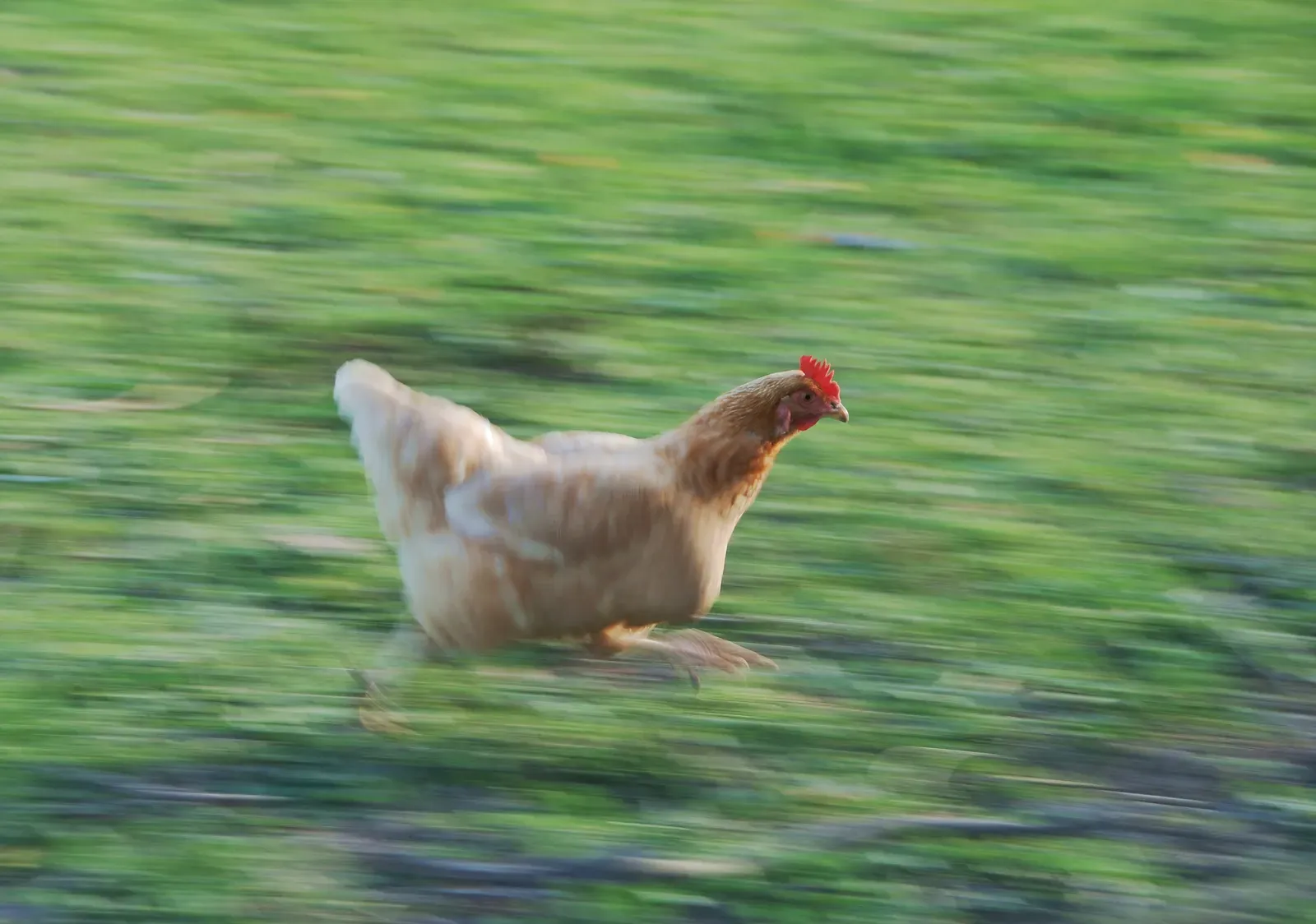
From a hen’s quiet chat with her unhatched chicks to a flock’s busy chorus of calls, chickens offer a wonderful reminder that familiar animals can have rich social lives.
A chicken is far more than a familiar bird
The domestic chicken, Gallus gallus domesticus, is one of the birds people are most likely to see nearby—on a farm, in a backyard, on grassland, or at the edge of woodland. Yet “familiar” should never mean “ordinary.” Each chicken is an alert, feathered individual, taking in the day with bright attention: the rustle of leaves, the movement of a friend, the possibility of a seed or insect in the soil.
Chickens are birds in the pheasant family, and their wild ancestor is the red junglefowl of Asia. That family connection can be a useful imagination-starter. Picture a woodland-edge bird, built for a busy life on the ground, then picture the many chickens who now live alongside people in places around the world. Domestic chickens come in many forms, but their shared history helps explain why scratching, searching, calling, and staying close to companions matter so much.
Most chickens are active in daylight. They use their feet to work through loose earth and their small, pointed beaks to investigate what they find. Their omnivorous menu can include seeds, grains, leaves, insects, and worms. A patch of ground is not just ground to a chicken: it is a changing puzzle, full of scents, textures, and tiny possibilities.
Evidence: Animal Cognition (Springer): Thinking chickens: a review of cognition, emotion, and behavior in the domestic chicken; IUCN Red List of Threatened Species: Gallus gallus (Red Junglefowl) — Red List Assessment; Encyclopaedia Britannica: Chicken (bird)
Flocks are communities, not crowds
A flock may look like a whirl of feathers at first, but chickens do not experience one another as interchangeable. Research reviewed on domestic chickens shows that they can recognise and remember individual flock members. In other words, a companion is not simply “another chicken”; she or he can be a familiar someone.
That matters because chickens are social birds. They spend time near one another, learn the rhythms of their group, and respond to what other birds are doing. Friendships and social knowledge are not always easy for humans to spot, especially when we rush past a coop or field. But a chicken’s social world is there in the small moments: who follows whom, who settles close by, and who reacts when a familiar bird gives a call.
This is a lovely reason to slow down when watching birds. Instead of seeing a flock as a single noisy shape, try noticing individuals. One may be determinedly scratching; another may pause to listen; another may hurry toward a companion. Paying attention is a form of respect—and it can turn an everyday sight into a window on animal lives.
Their calls carry news, warnings, and welcome
Chickens have plenty to say. They use a large repertoire of distinct calls, including alarm calls that can differ according to the kind of danger noticed. A sharp warning from one bird can change the behaviour of others nearby. That is communication with a purpose: sharing information in a social group.
Their voices also help keep a flock connected through the ordinary business of the day. Calls can gather companions, signal attention, or express what is happening around them. We do not need to translate every cluck into a human sentence to appreciate the important point: chickens are active communicators, listening as well as calling.
The next time you hear chickens, consider it a conversation rather than background noise. Sound is one of the ways a flock makes sense of its surroundings together. That busy chorus reflects vigilance, relationships, and the need to stay in touch—very familiar concerns in any community, feathered or otherwise.
A hen begins caring before her chicks hatch
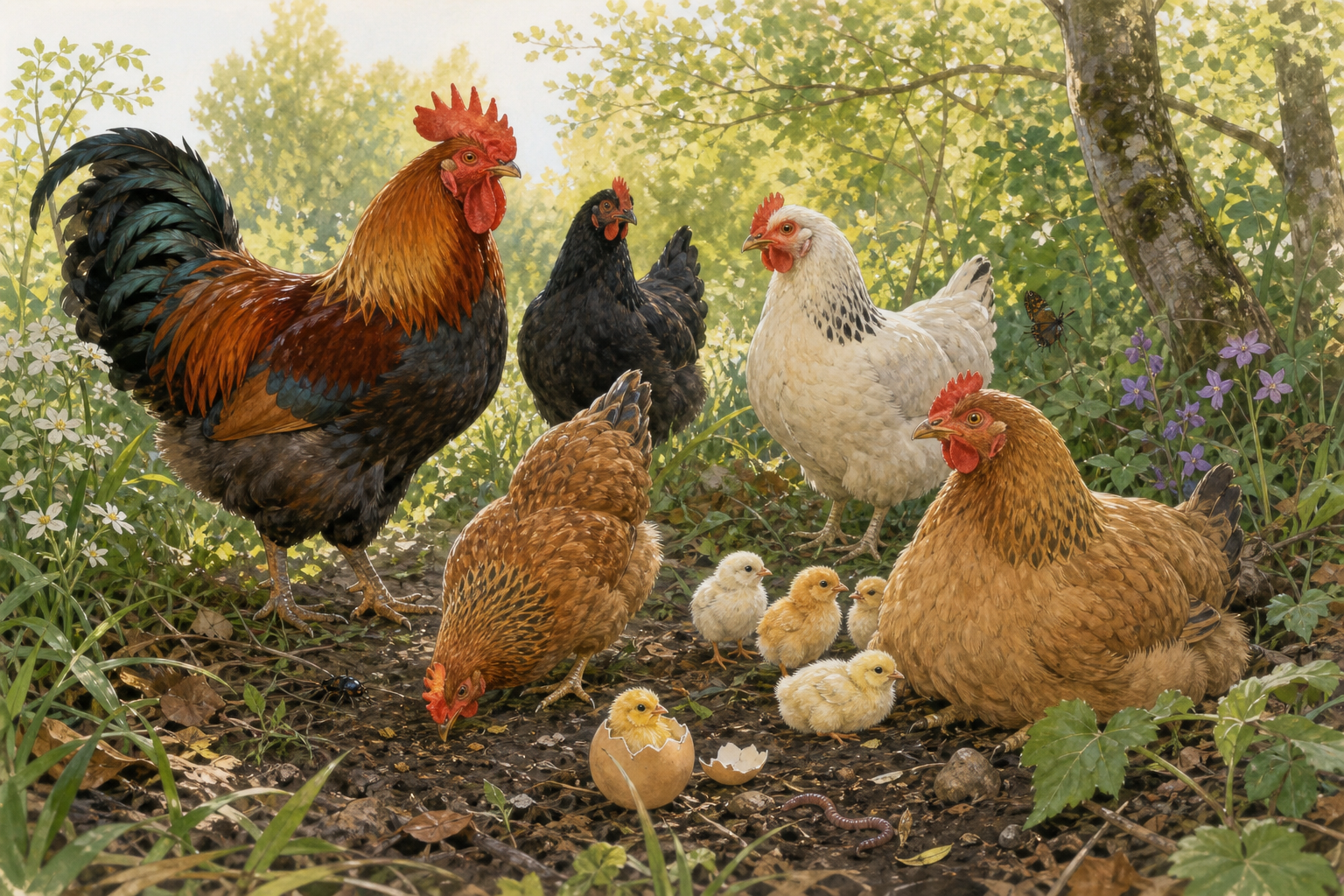
One of the most tender chicken stories begins while the chicks are still inside their eggs. Hens vocalise to their eggs, and chick embryos respond before hatching. Long before a chick steps into the outside world, there can already be sound travelling between parent and young.
After hatching, a mother hen’s presence remains important as chicks begin to explore. The image is gentle but powerful: a family connection does not suddenly appear at the moment a shell cracks. It is already under way, shaped by calls and responses.
This early communication is also a helpful reminder that birds are not little machines running on instinct alone. Chickens have behaviour, perception, learning, and social connections that deserve our curiosity. Their lives include the kinds of beginnings that many people recognise immediately: a parent calling, a young one answering, and a family finding its way together.
Curiosity is part of a chicken’s day
Chickens have been found to show abilities involving memory, self-control, basic numerical understanding, and object permanence—the understanding that something may still exist even when it is out of sight. Scientists continue to explore exactly how these abilities work in different situations, but the overall picture is clear: chickens are capable of more thought and learning than old stereotypes suggest.
Their everyday activities suit a mind that is ready to investigate. Searching for food means making choices: where to scratch, what to peck, whether to follow a companion’s interest, and when to pause. The world changes from minute to minute, especially outdoors, and a chicken meets it with movement and attention.
Chickens commonly live for about five to ten years, although lifespan varies with breed and living conditions. That is long enough for an individual to build familiar routines and relationships. If we meet a chicken, it is worth remembering that we are meeting someone with a past, preferences, and a day of her own—not a decoration in a landscape.
Evidence: Animal Cognition (Springer): Thinking chickens: a review of cognition, emotion, and behavior in the domestic chicken; Encyclopaedia Britannica: Chicken (bird)
The wild roots of a well-known bird
Domestic chickens are not evaluated on the IUCN Red List as a domestic form. Their wild ancestor, the red junglefowl, is assessed separately and is listed as Least Concern. Keeping those two facts distinct is important: a chicken in a backyard and a red junglefowl in Asia are connected, but they are not the same conservation entry.
The red junglefowl connection gives domestic chickens a deeper story. It links the bird at a neighbour’s gate or a sanctuary fence to forests in South and Southeast Asia and to a long relationship between people and birds. It also invites a useful question: what parts of a chicken’s life remain important no matter where she lives? Companionship, communication, opportunities to explore, and care for young are all part of the evidence-based picture.
Hopeful animal friendship starts with accurate attention. We can value wild animals in their homes, notice the needs of domesticated animals living near us, and resist treating either as an anonymous category. A flock is made of individuals, and each individual has a point of view.
Evidence: IUCN Red List of Threatened Species: Gallus gallus (Red Junglefowl) — Red List Assessment; Encyclopaedia Britannica: Chicken (bird); Animal Cognition (Springer): Thinking chickens: a review of cognition, emotion, and behavior in the domestic chicken
A kind choice can begin with noticing
When we understand that chickens recognise companions, communicate, learn, and form early family connections, kindness becomes more than a vague idea. It can mean letting that knowledge guide our everyday choices. Meals can be a place to practise care for animals without making anyone feel judged: try a colourful plant-based dish, share a bean-and-grain recipe, or ask a trusted adult about plant-forward foods your family might enjoy.
The World Health Organization describes healthy diets in broad terms that include whole grains, vegetables, fruit, pulses, nuts, and seeds. The IPCC also reports that shifts toward sustainable, healthy, more plant-based diets can help reduce food-system emissions and pressure on land and biodiversity. Food needs are personal, so children should make any dietary changes with a trusted adult and, when needed, a qualified health professional. The simple invitation is this: make room for plants, celebrate animals as fellow beings, and keep learning how compassion can reach from a flock in the sunshine to the choices on our tables.
Evidence: World Health Organization: Healthy diet; Intergovernmental Panel on Climate Change: Climate Change 2022: Mitigation of Climate Change — Chapter 7; Animal Cognition (Springer): Thinking chickens: a review of cognition, emotion, and behavior in the domestic chicken
Questions people ask
Are chickens and red junglefowl the same animal?
Domestic chickens descend from the red junglefowl of Asia, but the domestic chicken is a domesticated form and the red junglefowl is its wild ancestor.
Evidence: Encyclopaedia Britannica: Chicken (bird); IUCN Red List of Threatened Species: Gallus gallus (Red Junglefowl) — Red List Assessment
Do chickens recognise one another?
Yes. Evidence reviewed in animal-cognition research indicates that chickens recognise and remember individual flock members.
Why do chickens make so many sounds?
Their distinct calls help them communicate about what is happening around them, including warning one another about possible danger.
Can chicks communicate before hatching?
Yes. Hens vocalise to their eggs, and chick embryos can respond before hatching.
What do chickens like to eat?
Chickens are omnivores. Their food can include seeds, grains, leaves, insects, and worms.
Evidence: Encyclopaedia Britannica: Chicken (bird); Animal Cognition (Springer): Thinking chickens: a review of cognition, emotion, and behavior in the domestic chicken
Read the evidence
Sources behind this story
- Thinking chickens: a review of cognition, emotion, and behavior in the domestic chicken — Animal Cognition (Springer)
- Gallus gallus (Red Junglefowl) — Red List Assessment — IUCN Red List of Threatened Species
- Chicken (bird) — Encyclopaedia Britannica
- Healthy diet — World Health Organization
- Climate Change 2022: Mitigation of Climate Change — Chapter 7 — Intergovernmental Panel on Climate Change
Health information is general education, not personal medical advice. Young readers should make food choices with a trusted adult and qualified health professional.