Today's animal friend · 3 August 2026
The Twilight Whisker Explorer
When evening turns the garden blue-grey, a house cat can become a quiet, whiskery explorer. Let’s follow its soft-footed trail—and learn how caring choices can help cats and wildlife share a neighbourhood.
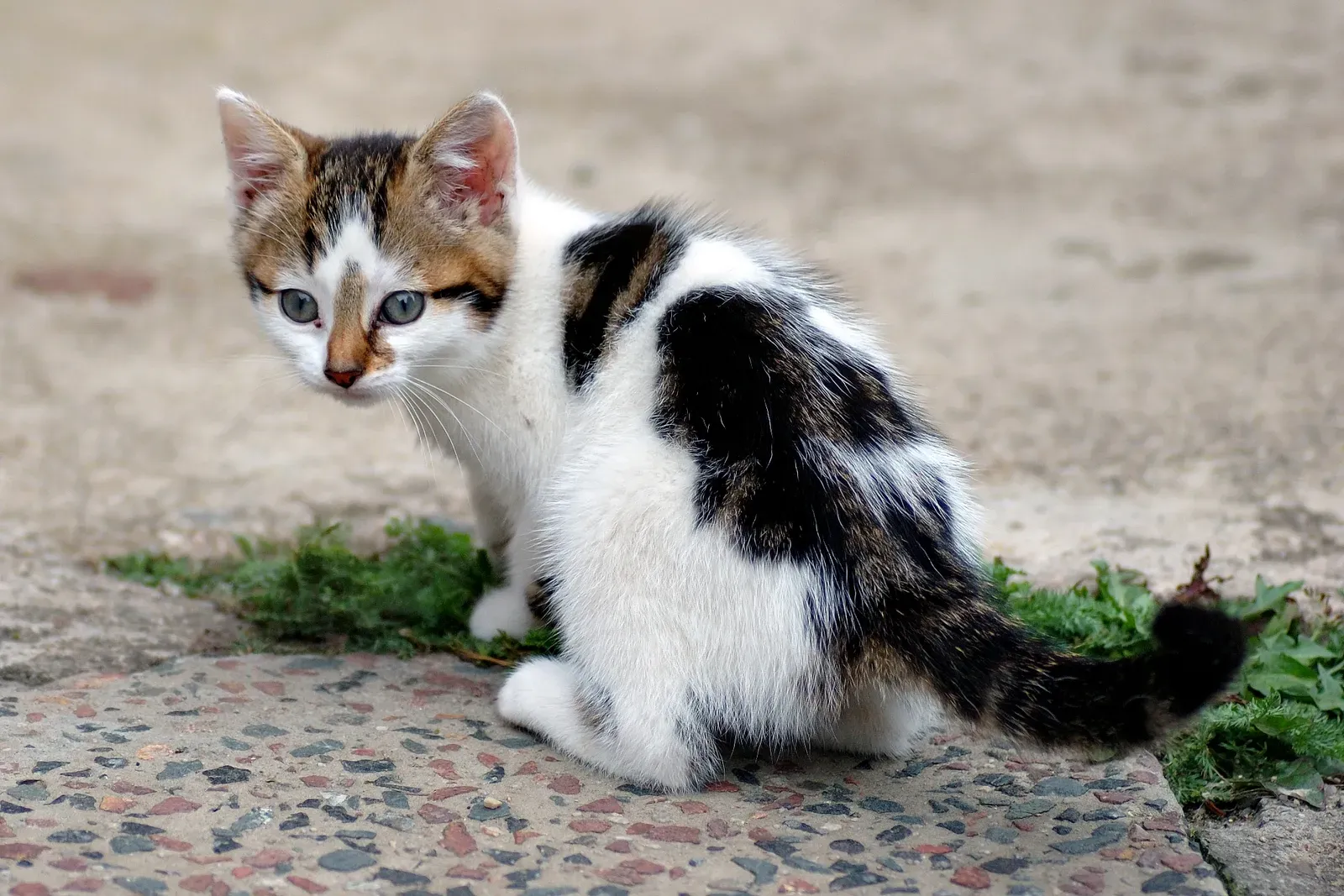
When evening turns the garden blue-grey, a house cat can become a quiet, whiskery explorer. Let’s follow its soft-footed trail—and learn how caring choices can help cats and wildlife share a neighbourhood.
A tail disappears beneath the hedge
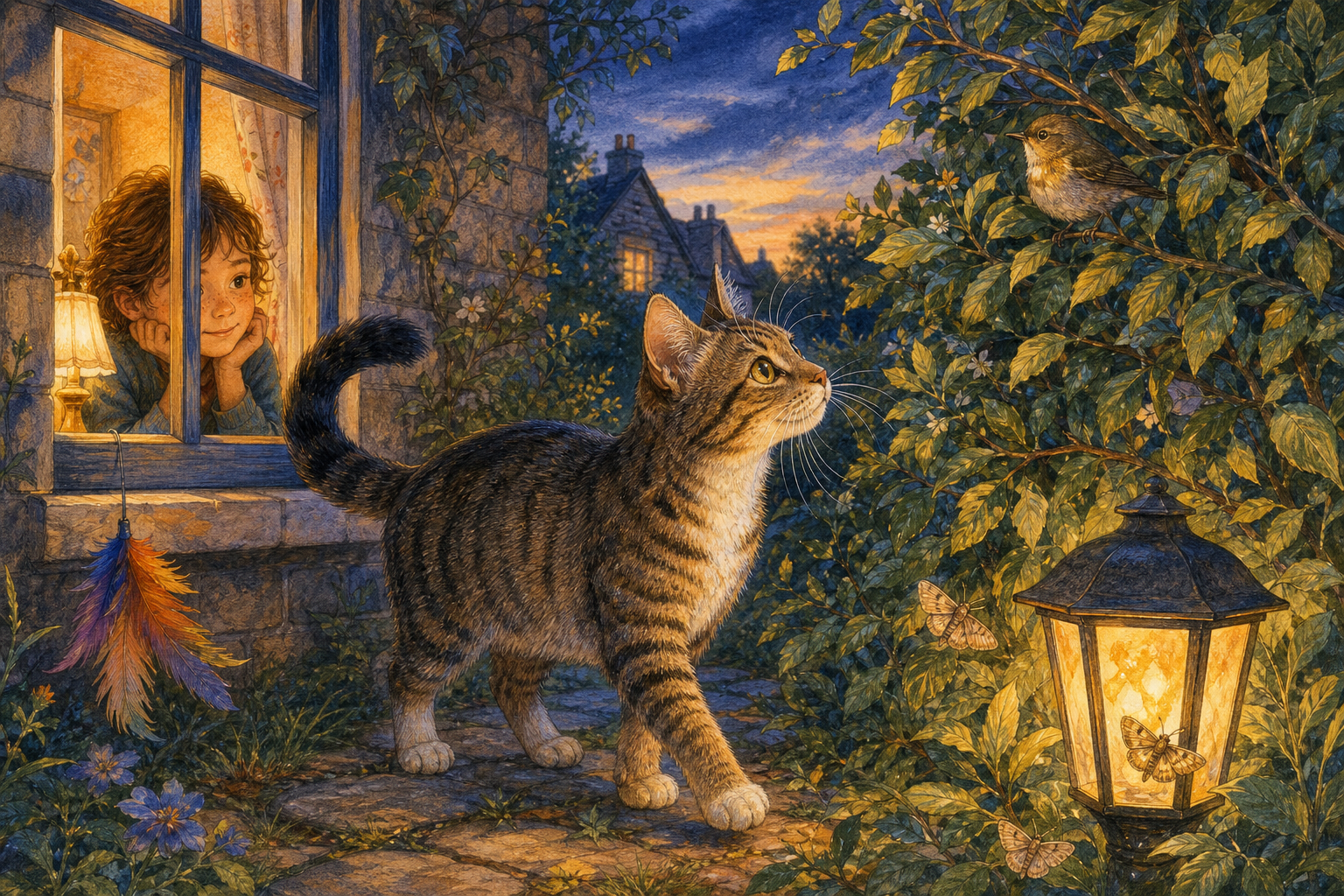
The garden is doing its evening stretch. Leaves flicker, a blackbird gives one last call, and—whoosh!—a striped tail slips under the hedge. There goes a domestic cat, or Felis catus, on the kind of quiet adventure that makes even a familiar garden feel mysterious.
Cats are often most lively around twilight and at night. That is when their dim-light skills are especially useful. A cat may pause so completely that it looks like a garden ornament with ears. Then its head tilts, its paws glide forward, and it is off again.
Domestic cats live alongside people across much of the world: in homes, on farms, in towns, and around gardens. Some curl up on sofas; some roam more freely. Wherever they live, they bring a little bit of wildcat-style watchfulness with them.
Evidence: IUCN Red List of Threatened Species: Felis catus (Domestic Cat) — conservation status note; Animal Diversity Web, University of Michigan Museum of Zoology: Felis catus (domestic cat); Wikipedia: Cat
Is a house cat really related to a lion? Yep.
A cat snoozing on a laundry basket may not look like a lion’s cousin—especially if it is snoring—but domestic cats belong to the cat family, Felidae. Lions, tigers, leopards, wildcats, and house cats are all members of this family.
Long ago, domestic cats descended mainly from African wildcats. Wildcats living near people had a useful reason to visit: human homes and stored grain could attract mice. Over many generations, cats and people became close neighbours, and then companions.
That shared history does not turn your cat into a mini lion with a secret jungle kingdom. But it does help explain the crouching, stalking, sudden pounces on a toy mouse, and serious face a cat wears while inspecting a paper bag. Important work, apparently.
Evidence: IUCN Red List of Threatened Species: Felis catus (Domestic Cat) — conservation status note; Animal Diversity Web, University of Michigan Museum of Zoology: Felis catus (domestic cat); Wikipedia: Cat
Whiskers: the cat’s built-in gap checker
Imagine trying to squeeze through a narrow doorway in the dark without using your hands. Tricky! A cat’s whiskers help with that sort of problem. They are touch sensors, or tiny feelers, that help a cat explore nearby objects and judge spaces, especially in low light.
Watch a cat near a fence, a chair leg, or the edge of a cardboard box. Its whiskers may brush ahead first, like a scout checking the path. Those whiskers are not just fancy face decorations, so they should never be trimmed for fun.
Cats also have ears that can rotate to catch sounds from different directions. Together with good low-light vision, this gives them a remarkable twilight toolkit. No cape is needed. The ears and whiskers have the hero job covered.
Evidence: Animal Diversity Web, University of Michigan Museum of Zoology: Felis catus (domestic cat); Wikipedia: Cat
What is that rumble saying?
A purr can sound like a tiny motor hidden inside a blanket. Cats often purr when they feel content and safe. Kittens may purr while they snuggle close to drink their mother’s milk, beginning this cosy sound very early in life.
But cats do not speak with purrs alone. They can meow, hiss, and use body language. A swishing tail, turned ears, or a relaxed stretch can all be clues about what a cat might be feeling. The best cat detectives look at the whole cat, not one signal.
Cats can live socially with people and with other cats, yet they often hunt alone. That mix makes sense for an animal that may enjoy a warm lap at breakfast and then set off to investigate a rustling shrub by itself.
Evidence: Animal Diversity Web, University of Michigan Museum of Zoology: Felis catus (domestic cat); Wikipedia: Cat
A careful neighbour is a brilliant neighbour
Cats are obligate carnivores, meaning they need a predominantly meat-based diet. Pet cats are usually fed cat food, while free-ranging cats may hunt small animals such as mice, rats, and birds. A cat is not being “bad” when its hunting instincts appear; it is doing something built into its animal history.
Still, wildlife needs thoughtful human neighbours too. Free-ranging cats can affect local populations of small wild animals. That is why cat care is also a teamwork project: grown-ups can help choose safe, thoughtful ways for cats to spend time outdoors, while giving them play, attention, and safe places to explore.
A feather wand, a puzzle feeder, or a lively game indoors can give a cat something wonderful to chase without turning the garden into its personal snack bar. Kindness can have more than one friend at a time: the cat on the windowsill and the bird in the hedge.
Evidence: Animal Diversity Web, University of Michigan Museum of Zoology: Felis catus (domestic cat); Wikipedia: Cat
Does the domestic cat need saving? It needs caring for.
The IUCN Red List does not give domestic cats a conservation category, because domesticated animals are not assessed in the same way as wild species. Their wildcat relatives are considered separately. So this is not a story about a wild species disappearing from the planet.
It is absolutely a story about care. Individual cats can face dangers such as traffic, neglect, and other outdoor hazards. Good food, veterinary attention, safe spaces, play, and thoughtful outdoor management help cats live well.
Caring for a cat also means noticing the small, ordinary things that matter: a water bowl that is fresh, a cosy place to rest, a toy that skitters across the floor, and a trusted person who pays attention. A cat may be a famous pet, but every single cat is still one particular whiskery somebody.
Evidence: IUCN Red List of Threatened Species: Felis catus (Domestic Cat) — conservation status note; Animal Diversity Web, University of Michigan Museum of Zoology: Felis catus (domestic cat); Wikipedia: Cat
Try a twilight detective walk
You do not need to follow a cat around or disturb one to become a twilight detective. With a grown-up, stand quietly near a window or in a safe garden spot as daylight fades. What sounds change first? Can you spot a bird choosing a roost, a moth wobbling past a lamp, or a neighbour’s cat listening with its ears turned like satellite dishes?
Keep a respectful distance and let animals choose whether to come close. If a cat is resting, that is its adventure for now. You can sketch its silhouette, write down the colours of the sky, or make up gentle names for the sounds you hear. “Crunchy leaf dragon” is scientifically optional.
The more closely we notice animals, the easier it becomes to make room for them. Cats remind us that a small creature can be both a familiar companion and a dazzling bundle of senses, patience, and purrs.
Evidence: Animal Diversity Web, University of Michigan Museum of Zoology: Felis catus (domestic cat); Wikipedia: Cat
Kind choices can include every creature at the table
Cats need food that meets their special carnivorous needs, so their care should be guided by a trusted adult and a qualified animal-care professional. Humans have a different menu of possibilities. For our own meals, the World Health Organization describes healthy diets as varied and rich in foods such as whole grains, vegetables, fruit, pulses, nuts, and seeds.
That gives families a cheerful chance to try plant-forward and vegan meals: perhaps bean tacos, lentil soup, vegetable noodles, or a seed-and-fruit snack. There is no need for a lecture at dinner. Curiosity is enough: “Which plant foods could we taste this week?”
Choices that shift toward sustainable, healthy, more plant-based diets can also reduce food-system emissions and pressure on land and biodiversity. So while we care gently for the cat who needs us, we can also choose meals that show gentleness to other animals and to the living world outside the window.
Evidence: World Health Organization: Healthy diet; Intergovernmental Panel on Climate Change: Climate Change 2022: Mitigation of Climate Change — Chapter 7; Animal Diversity Web, University of Michigan Museum of Zoology: Felis catus (domestic cat); Wikipedia: Cat
Questions people ask
Why does my cat seem busiest in the evening?
Cats are crepuscular, meaning they are often especially active around twilight. Their low-light vision, sensitive whiskers, and movable ears help them explore when the day is dimming.
Evidence: Animal Diversity Web, University of Michigan Museum of Zoology: Felis catus (domestic cat); Wikipedia: Cat
Do whiskers really help a cat find its way?
Yes. A cat’s whiskers are touch sensors. They help it notice nearby objects and judge narrow spaces, which is especially handy in low light.
Evidence: Animal Diversity Web, University of Michigan Museum of Zoology: Felis catus (domestic cat); Wikipedia: Cat
Is every purr a message that a cat is happy?
Cats often purr when they feel content and safe, and kittens can purr while suckling. To understand a cat, it is wise to notice its whole body language as well as its purr.
Evidence: Animal Diversity Web, University of Michigan Museum of Zoology: Felis catus (domestic cat); Wikipedia: Cat
Read the evidence
Sources behind this story
- Felis catus (Domestic Cat) — conservation status note — IUCN Red List of Threatened Species
- Felis catus (domestic cat) — Animal Diversity Web, University of Michigan Museum of Zoology
- Cat — Wikipedia
- Healthy diet — World Health Organization
- Climate Change 2022: Mitigation of Climate Change — Chapter 7 — Intergovernmental Panel on Climate Change
Health information is general education, not personal medical advice. Young readers should make food choices with a trusted adult and qualified health professional.