Today's animal friend · 20 October 2026
The Stripe in the Grass: Meeting a Common Garter Snake
Follow a flicker of stripes through the meadow and discover why this harmless snake is a brilliant part of the wild neighbourhood.
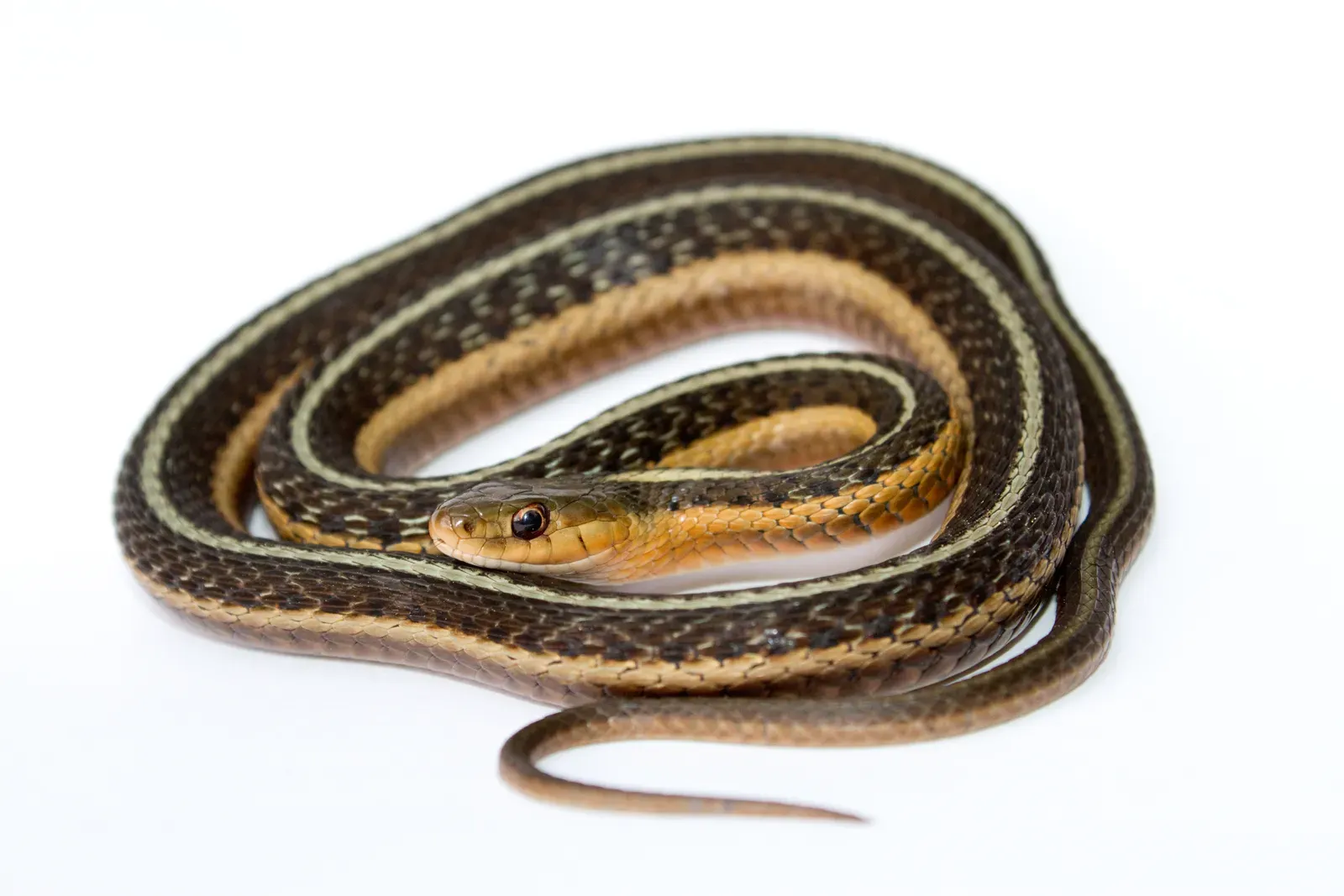
Follow a flicker of stripes through the meadow and discover why this harmless snake is a brilliant part of the wild neighbourhood.
A grass blade moves… then the grass blade has eyes
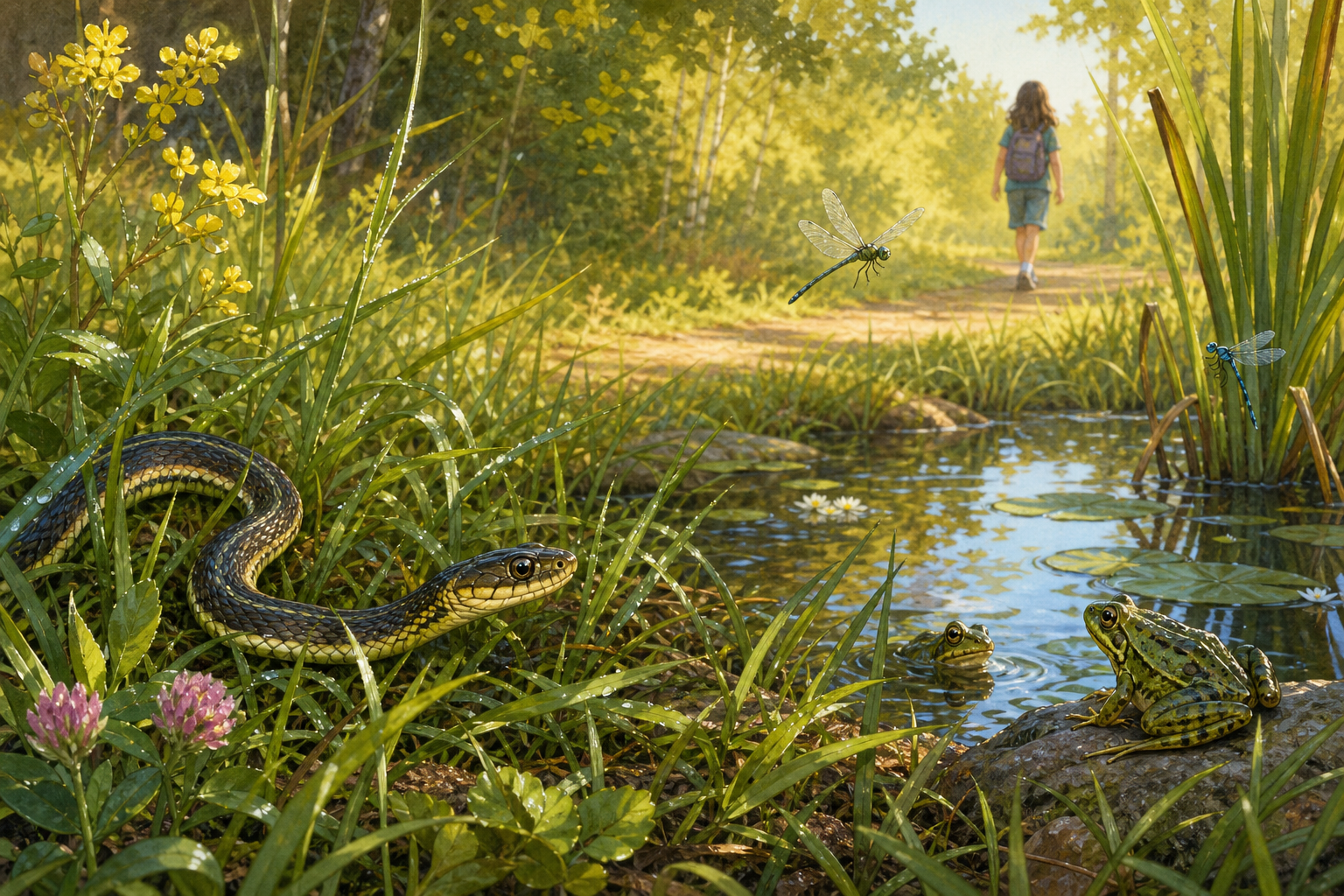
You are walking beside a pond when something makes the grass part in a tiny zigzag. Not a leaf. Not a shoelace. A common garter snake, Thamnophis sirtalis, is slipping through the green like a living ribbon. It may wear light stripes on a darker body, although its colours and patterns can vary. Blink, and it may vanish beneath a clump of plants before you can whisper, “Did you see that?”
Common garter snakes are active mainly in the daytime, when children, birds, beetles, and pond ripples are all busy too. They live across a huge stretch of North America, from Florida to Canada and west toward British Columbia and California. That is a lot of possible snake neighbourhoods: meadows, woodlands, wetlands, gardens, and damp places near ponds, ditches, lakes, or streams.
Despite the spooky stories snakes sometimes collect, this one is harmless to people and usually shy. A garter snake is not looking for an argument. It is looking for a quiet route through the grass, a warm place to bask, or perhaps a wriggly lunch.
Evidence: IUCN Red List of Threatened Species: Thamnophis sirtalis (Common Garter Snake) — Red List Assessment; Animal Diversity Web, University of Michigan Museum of Zoology: Thamnophis sirtalis (Common Garter Snake); Wikipedia: Common garter snake
Why “garter”? Think of a stripey sock helper
The word “garter” may sound old-fashioned. Long ago, a garter was a strap used to hold up a sock. The snake’s long stripes reminded people of those straps, and the name stuck. A common garter snake is often about as long as an arm—around 55 centimetres on average—though some grow much longer, up to about 137 centimetres. Its body is built for threading through narrow spaces, not for stomping around like a puppy in a puddle.
Its home can be surprisingly close to ours. Moist grass, leaf piles, shrubs, garden edges, and the banks of water can offer cover. “Cover” means places where a snake can tuck itself away from danger and weather. Imagine needing to cross a playground while everyone bigger than you is watching. You would probably appreciate a hedge or a tunnel. For a snake, a thick patch of plants can feel just as useful.
Being close to water is handy because many of the small animals it eats live there too. But a garter snake is not only a wetland animal. It is a flexible neighbour, using several kinds of habitats when they have the shelter and food it needs.
Evidence: Animal Diversity Web, University of Michigan Museum of Zoology: Thamnophis sirtalis (Common Garter Snake); Wikipedia: Common garter snake; IUCN Red List of Threatened Species: Thamnophis sirtalis (Common Garter Snake) — Red List Assessment
What is on the snake’s menu? Definitely not sandwiches
A common garter snake is a carnivore, meaning it eats other animals. Its menu can include earthworms, frogs, toads, fish, slugs, insects, leeches, snails, crayfish, and sometimes other small creatures. Near a pond, it might search for a little fish or an amphibian. In a damp garden, an earthworm or slug may be more likely. There is no need for a tiny chef hat, though; the snake finds its own food.
This makes the garter snake part of a busy food web. A food web is the crisscross of who eats whom in nature. Garter snakes are predators of small animals, but they can also be prey for fishes, birds, mammals, and other reptiles. In other words, this quiet stripe in the grass connects pond, soil, plants, and bigger animals in ways we may not notice at first.
That is one reason a snake deserves our respect even when we do not want one in our backpack. It has a job in its habitat simply by living its snake life: hunting, hiding, and becoming part of the meals and movements of the wider wild community.
Evidence: Animal Diversity Web, University of Michigan Museum of Zoology: Thamnophis sirtalis (Common Garter Snake); Wikipedia: Common garter snake; IUCN Red List of Threatened Species: Thamnophis sirtalis (Common Garter Snake) — Red List Assessment
The world’s least fancy alarm: stink!
Suppose a garter snake is surprised by a giant creature wearing trainers. From the snake’s point of view, that giant might be you. Usually, it tries to escape. If it feels threatened, it may release a foul-smelling musk. This is the snake’s very clear, if rather pongy, message: “Please give me some space!”
It is a clever defence because it can help the snake get away without a fight. The kindest response is wonderfully simple: freeze for a moment, admire from a distance, then let the snake choose its path. Do not pick it up, poke it, or try to take it home. Wild animals are safest when they can stay in the places and routines they know.
If you are lucky enough to spot one, tell a grown-up where it was and watch quietly from afar. You may see a quick flick of its tongue or a smooth wave of movement along its body. Then—zip—it may disappear into cover, leaving you with a good story and, hopefully, no musk on your hands.
Evidence: Animal Diversity Web, University of Michigan Museum of Zoology: Thamnophis sirtalis (Common Garter Snake); Wikipedia: Common garter snake; IUCN Red List of Threatened Species: Thamnophis sirtalis (Common Garter Snake) — Red List Assessment
A mother snake with a very wriggly surprise
Many people picture reptiles laying eggs. Common garter snake mothers do something different: they give birth to live young. A mother typically has about 10 to 40 baby snakes at once. Imagine opening a door and finding a whole class of miniature striped noodles ready to wriggle in different directions. That would be a busy day.
The young are independent from birth. They must begin finding food and cover on their own, which makes a safe, lively habitat especially important. Damp vegetation, garden cover, and healthy watersides are not just pretty scenery; they can be places where small animals find the space they need to live.
In colder parts of their range, garter snakes spend the late autumn through spring in shared underground or sheltered spaces. These winter hideaways are called dens. On mild winter days, they may even come out to bask. When spring arrives, snakes gather at dens to mate, and the meadow’s hidden story begins again.
Evidence: Animal Diversity Web, University of Michigan Museum of Zoology: Thamnophis sirtalis (Common Garter Snake); Wikipedia: Common garter snake; IUCN Red List of Threatened Species: Thamnophis sirtalis (Common Garter Snake) — Red List Assessment
A common snake still needs uncommon care
The common garter snake is listed by the IUCN as Least Concern overall. That is encouraging, and it is often common in parts of its range. But “common” does not mean “invincible.” In some places, garter snakes can be harmed by habitat destruction, pesticides, water pollution, persecution, and collection for the pet trade.
You can be a thoughtful neighbour without turning your garden into a snake hotel—unless the snakes apply for tiny keys, of course. Leave wild snakes wild. Help keep litter and pollution out of streams and ponds. If your family gardens, talk with an adult about gentle ways to care for plants and reduce pesticide use. Keeping moist cover near water and gardens can also help wildlife find shelter.
The best lesson from a garter snake may be this: something does not have to be loud, fluffy, or famous to matter. A shy striped animal in the grass belongs to the neighbourhood too. When we make room for healthy water, plants, and small creatures, we make room for wonderful surprises.
Evidence: IUCN Red List of Threatened Species: Thamnophis sirtalis (Common Garter Snake) — Red List Assessment; Animal Diversity Web, University of Michigan Museum of Zoology: Thamnophis sirtalis (Common Garter Snake); Wikipedia: Common garter snake
A kind choice can ripple outward
Caring about a garter snake can begin with noticing that its life matters to it: a warm basking spot, a clean pond edge, a safe route through grass. We can choose to leave wildlife free, protect the small places it depends on, and enjoy animals as neighbours rather than things to own.
Our food choices are another quiet way to practise kindness. The World Health Organization describes healthy diets as including foods such as vegetables, fruit, whole grains, pulses, nuts, and seeds. The IPCC reports that shifts toward sustainable, healthy, more plant-based diets can reduce pressure on land and biodiversity and lower food-system emissions. With a trusted adult, trying a plant-forward meal can be one cheerful way to care for animals and the living places they share.
Evidence: World Health Organization: Healthy diet; Intergovernmental Panel on Climate Change: Climate Change 2022: Mitigation of Climate Change — Chapter 7
Questions people ask
Is a common garter snake dangerous to people?
No. Common garter snakes are harmless to people. If startled, they usually try to escape and may release a smelly musk as a defence. Give them space and let them move away.
Evidence: Animal Diversity Web, University of Michigan Museum of Zoology: Thamnophis sirtalis (Common Garter Snake); Wikipedia: Common garter snake
Where might I see one?
Look carefully—without disturbing anything—around damp grassy places, pond edges, ditches, streams, meadows, woodlands, and gardens in much of North America.
Evidence: Animal Diversity Web, University of Michigan Museum of Zoology: Thamnophis sirtalis (Common Garter Snake); Wikipedia: Common garter snake; IUCN Red List of Threatened Species: Thamnophis sirtalis (Common Garter Snake) — Red List Assessment
Do common garter snakes lay eggs?
No. Mothers give birth to live young, typically around 10 to 40 babies, which are independent from birth.
Evidence: Animal Diversity Web, University of Michigan Museum of Zoology: Thamnophis sirtalis (Common Garter Snake); Wikipedia: Common garter snake
What should I do if I find one in the garden?
Watch from a respectful distance, keep pets and people from bothering it if you can, and let it find cover. Do not handle or collect it.
Evidence: Animal Diversity Web, University of Michigan Museum of Zoology: Thamnophis sirtalis (Common Garter Snake); IUCN Red List of Threatened Species: Thamnophis sirtalis (Common Garter Snake) — Red List Assessment
Read the evidence
Sources behind this story
- Thamnophis sirtalis (Common Garter Snake) — Red List Assessment — IUCN Red List of Threatened Species
- Thamnophis sirtalis (Common Garter Snake) — Animal Diversity Web, University of Michigan Museum of Zoology
- Common garter snake — Wikipedia
- Healthy diet — World Health Organization
- Climate Change 2022: Mitigation of Climate Change — Chapter 7 — Intergovernmental Panel on Climate Change
Health information is general education, not personal medical advice. Young readers should make food choices with a trusted adult and qualified health professional.