Today's animal friend · 13 November 2026
The Dolphin That Sees With Sound
A splashy ocean adventure with Tursiops truncatus—part whale, part neighbourly teammate, and definitely not a fish.
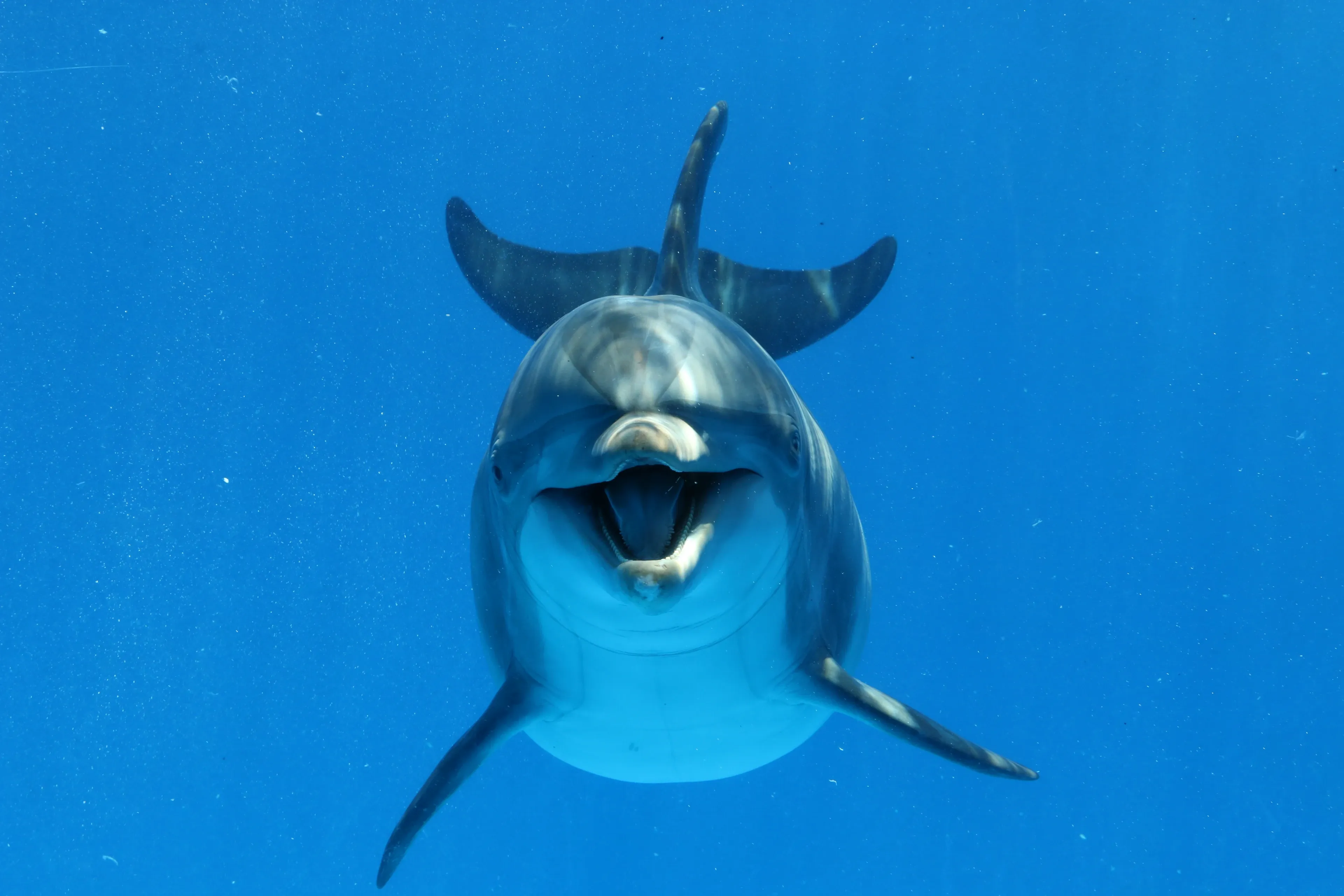
A splashy ocean adventure with Tursiops truncatus—part whale, part neighbourly teammate, and definitely not a fish.
Pffft! A breath breaks the blue
Imagine you are standing beside a quiet bay. The water has a crinkly, silver-paper shine. Then—pffft!—a common bottlenose dolphin pops to the surface, takes a breath through the blowhole on top of its head, and slips under again before you can say “Where did it go?”
That quick breath tells us something surprising: this dolphin is not a fish. It is a mammal, like you. It needs air, so it must return to the surface instead of breathing underwater. Its scientific name is Tursiops truncatus, but “common bottlenose dolphin” is quite a mouthful already, so let’s call it a bottlenose dolphin for this seaside visit.
The dolphin’s short, rounded snout gives it its bottle-like name. Adults can range widely in size, from about 1.8 to 4 metres long. That means some are around as long as a tall grown-up lying down, while others are longer than a small car. They are powerful swimmers, but their most important first move is wonderfully ordinary: breathe, then dive.
Evidence: IUCN Red List of Threatened Species: Tursiops truncatus (Common Bottlenose Dolphin) — Red List Assessment; Wikipedia: Common bottlenose dolphin; NOAA Fisheries (National Oceanic and Atmospheric Administration): Common Bottlenose Dolphin; NOAA Fisheries: Common Bottlenose Dolphin: Conservation Management
Click, click—who is hiding in the dark water?
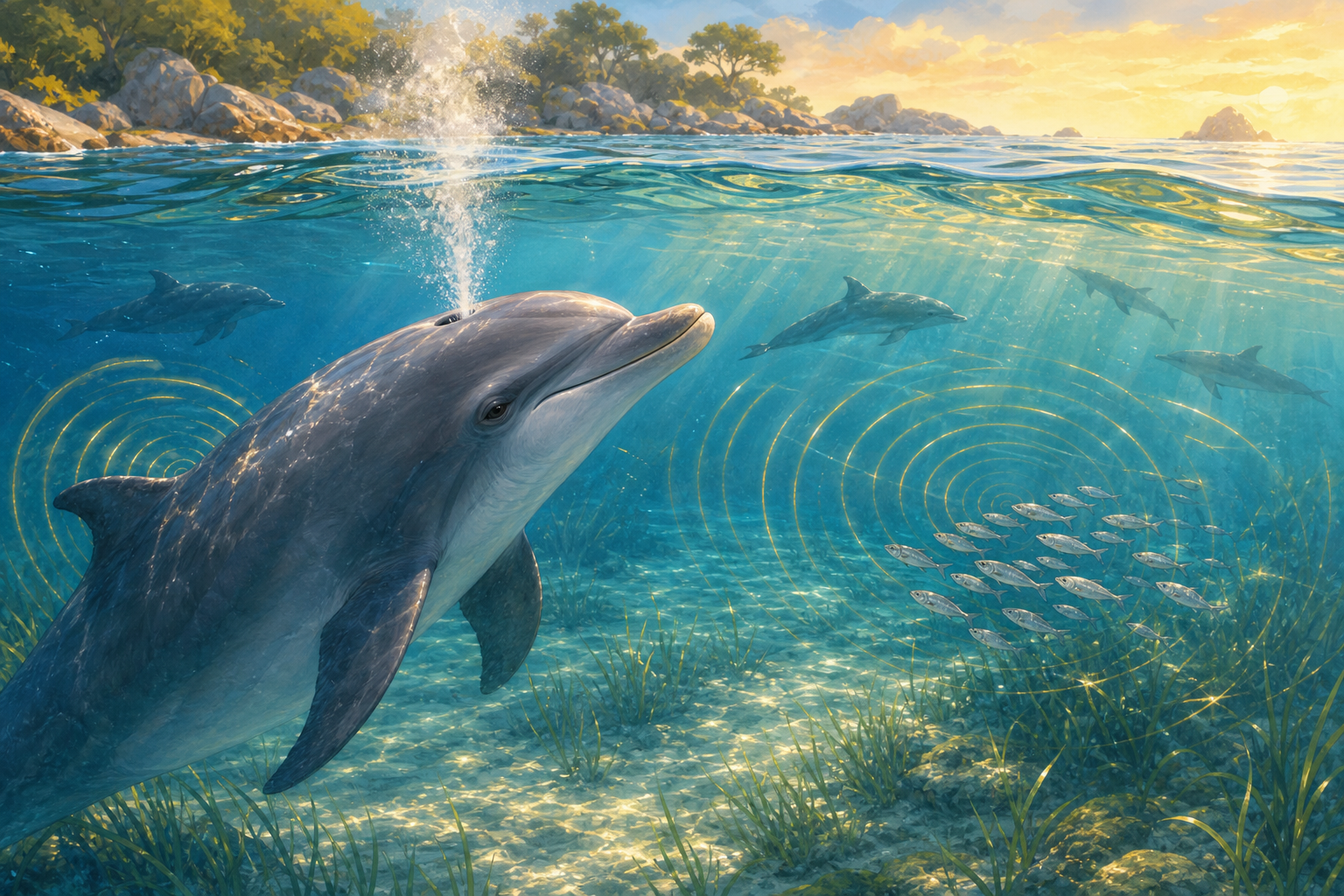
Below the surface, light can fade fast. A dolphin cannot simply switch on underwater headlights—rude of the ocean, really. Instead, bottlenose dolphins make clicking sounds and listen for echoes bouncing back from things around them. This skill is called echolocation.
Think of shouting in an empty hall and hearing your voice bounce back. A dolphin’s clicks can help it find its way and locate prey, even when the water is murky. The returning echoes are clues: something is ahead; something is moving; perhaps lunch is trying very hard not to be noticed.
Their menu includes fish, squid, eels, and crustaceans such as shrimp. Dolphins may hunt alone or together, and they usually swallow prey whole. A school of fish may look like one shimmering, wiggly cloud to us. To a hunting dolphin, it is a puzzle made of sounds, movement, and teamwork.
Evidence: NOAA Fisheries (National Oceanic and Atmospheric Administration): Common Bottlenose Dolphin; Wikipedia: Common bottlenose dolphin
No dolphin is an island
Bottlenose dolphins often travel in groups called pods. A pod commonly has about 15 dolphins, although groups can be much smaller or can gather into short-lived crowds of hundreds. So “a pod has 15 dolphins” is more like saying a class often has a certain number of children—not a rule carved into a seashell.
Why stick together? Dolphins can cooperate when hunting, including working as a team around a school of fish. Picture friends arranging themselves around a pile of runaway balloons so none floats away. The dolphins’ version is faster, wetter, and much more splashy.
These social swimmers live in coastal water and farther offshore. You might find them in bays and estuaries, where river water meets the sea, or out in the open ocean. They occur across tropical and temperate oceans worldwide, including the Atlantic, Pacific, and Indian oceans. Yet life can be different from place to place: dolphins near shore and dolphins offshore do not all face the same conditions.
Evidence: NOAA Fisheries (National Oceanic and Atmospheric Administration): Common Bottlenose Dolphin; Wikipedia: Common bottlenose dolphin
A sea neighbour with a big job
A bottlenose dolphin is a mid-sized marine predator. By eating fish, squid, and crustaceans, it is part of the busy food webs that connect nearshore waters and the open ocean. A food web is like an enormous sharing map of who eats what—except nobody gets to use a highlighter, because it would dissolve.
The species is widespread, and the IUCN lists it globally as Least Concern. That is encouraging news. But it does not mean every group of dolphins is safe or doing equally well. Scientists note that some local groups are depleted and that the trends for many groups are not known.
Dolphins can be harmed by getting tangled in fishing gear, being struck by vessels, pollution and biotoxins, habitat changes, oil spills, and loud ocean noise. Illegal feeding and harassment can cause trouble too. Wild dolphins have their own clever ways of finding food and moving through their homes; they deserve room to do that without people turning the sea into an obstacle course.
Evidence: IUCN Red List of Threatened Species: Tursiops truncatus (Common Bottlenose Dolphin) — Red List Assessment; NOAA Fisheries (National Oceanic and Atmospheric Administration): Common Bottlenose Dolphin; NOAA Fisheries: Common Bottlenose Dolphin: Conservation Management; Wikipedia: Common bottlenose dolphin
What protection can look like
Helping dolphins is not one single superhero job. It can mean scientists assessing local groups, fishers and managers working to reduce accidental capture, and trained responders helping with strandings or disentanglement. In United States waters, marine-mammal protection and conservation work are part of this effort. Other places use their own approaches.
There is also a role for everyday care. If you visit the coast, give wildlife space and follow local guidance. Never feed or chase dolphins. A calm, respectful view from a distance lets them choose where to swim, rest, and hunt. The best wildlife welcome mat is often: “You belong here; I won’t interrupt.”
Keeping litter and pollution out of waterways matters for the whole ocean neighbourhood. You do not need to solve every ocean problem before Tuesday. Learning, noticing, and caring are real beginnings. Every thoughtful choice is a tiny ripple, and ripples travel farther than they first appear.
Evidence: NOAA Fisheries: Common Bottlenose Dolphin: Conservation Management; NOAA Fisheries (National Oceanic and Atmospheric Administration): Common Bottlenose Dolphin; IUCN Red List of Threatened Species: Tursiops truncatus (Common Bottlenose Dolphin) — Red List Assessment
A kind choice can begin at the dinner table
Dolphins are not here for us to use; they are fellow animals with busy lives in a shared blue world. One gentle way to care about ocean neighbours is to be curious about meals that put more plants on the plate: beans, lentils, whole grains, vegetables, fruit, nuts, and seeds can all be part of a varied diet. If you want to try new foods, make it a family adventure with a trusted adult—perhaps a taco night where the beans get the starring role.
Choices that lean more plant-based can also help reduce pressure on land and biodiversity and can lower food-system emissions. Nobody needs to be perfect to be kind. A new plant-powered recipe, less wasted food, and a moment spent appreciating a wild dolphin’s freedom can all say the same quiet thing: this ocean friend matters.
Evidence: World Health Organization: Healthy diet; Intergovernmental Panel on Climate Change: Climate Change 2022: Mitigation of Climate Change — Chapter 7
Questions people ask
Are common bottlenose dolphins fish?
No. They are mammals and must come to the surface to breathe air through a blowhole. They may live in water and swim beautifully, but they are not fish.
Evidence: NOAA Fisheries (National Oceanic and Atmospheric Administration): Common Bottlenose Dolphin; Wikipedia: Common bottlenose dolphin
How do dolphins find food when the water is dark?
They make clicking sounds and listen to the echoes that return. This echolocation helps them navigate and locate prey such as fish and squid.
Evidence: NOAA Fisheries (National Oceanic and Atmospheric Administration): Common Bottlenose Dolphin; Wikipedia: Common bottlenose dolphin
Do all bottlenose dolphins live in the same kind of place?
No. The species lives both near coasts, including bays and estuaries, and in open ocean waters. Different local groups can have different conditions and conservation needs.
Evidence: NOAA Fisheries (National Oceanic and Atmospheric Administration): Common Bottlenose Dolphin; Wikipedia: Common bottlenose dolphin; NOAA Fisheries: Common Bottlenose Dolphin: Conservation Management
What should I do if I see dolphins?
Enjoy the moment from a respectful distance and follow local wildlife guidance. Do not feed, chase, or harass them. Dolphins need space to travel, rest, and hunt as wild animals.
Evidence: NOAA Fisheries: Common Bottlenose Dolphin: Conservation Management
Read the evidence
Sources behind this story
- Tursiops truncatus (Common Bottlenose Dolphin) — Red List Assessment — IUCN Red List of Threatened Species
- Common bottlenose dolphin — Wikipedia
- Common Bottlenose Dolphin — NOAA Fisheries (National Oceanic and Atmospheric Administration)
- Common Bottlenose Dolphin: Conservation Management — NOAA Fisheries
- Healthy diet — World Health Organization
- Climate Change 2022: Mitigation of Climate Change — Chapter 7 — Intergovernmental Panel on Climate Change
Health information is general education, not personal medical advice. Young readers should make food choices with a trusted adult and qualified health professional.