Today's animal friend · 16 August 2026
Brown Bear: The Berry Bush Visitor with a Winter Secret
A brown bear may look like it belongs in a superhero story, with a thick coat and strong shoulder hump. Yet much of its day is spent doing something wonderfully ordinary: searching for tasty plants.
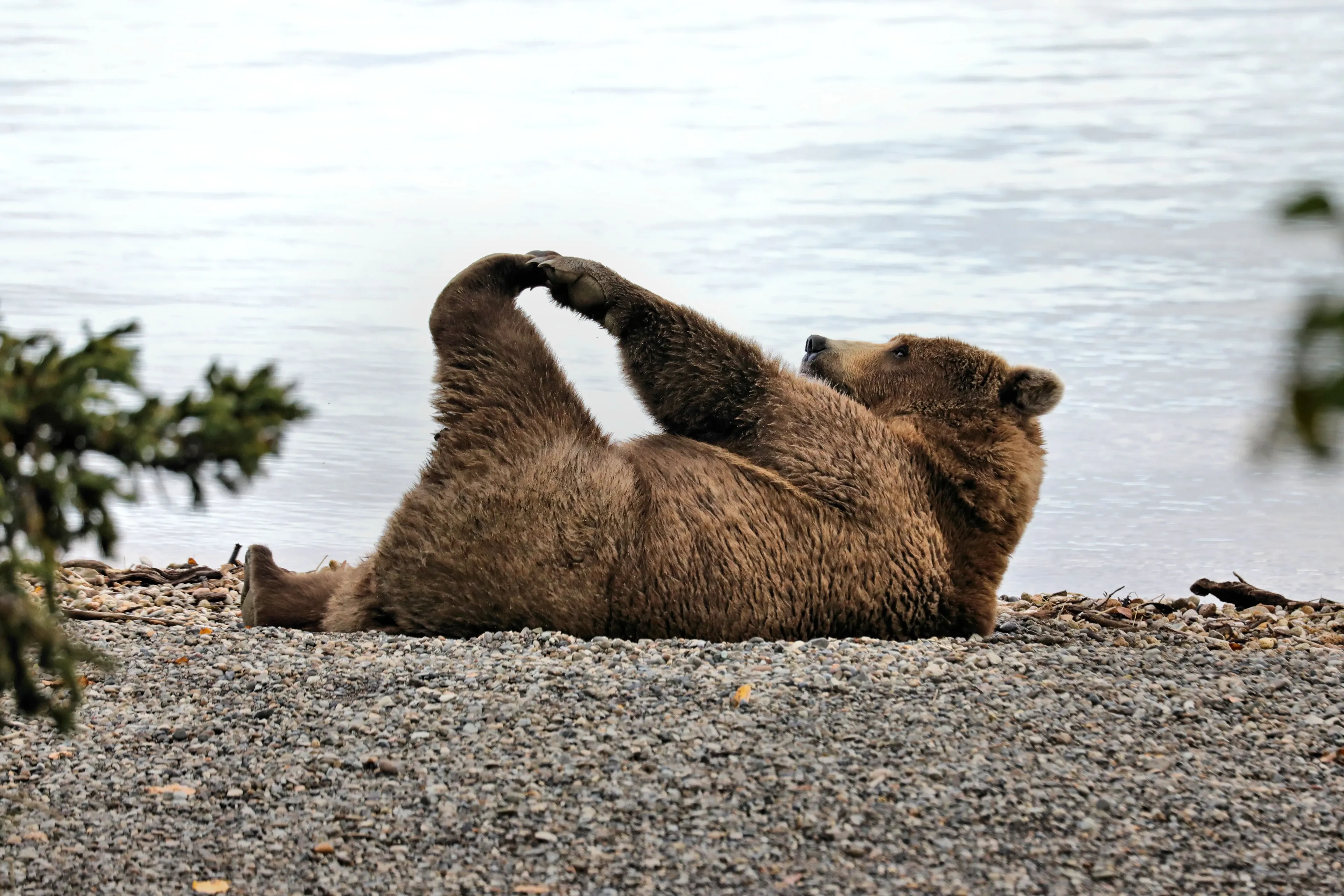
A brown bear may look like it belongs in a superhero story, with a thick coat and strong shoulder hump. Yet much of its day is spent doing something wonderfully ordinary: searching for tasty plants.
Listen—was that the berry bush?
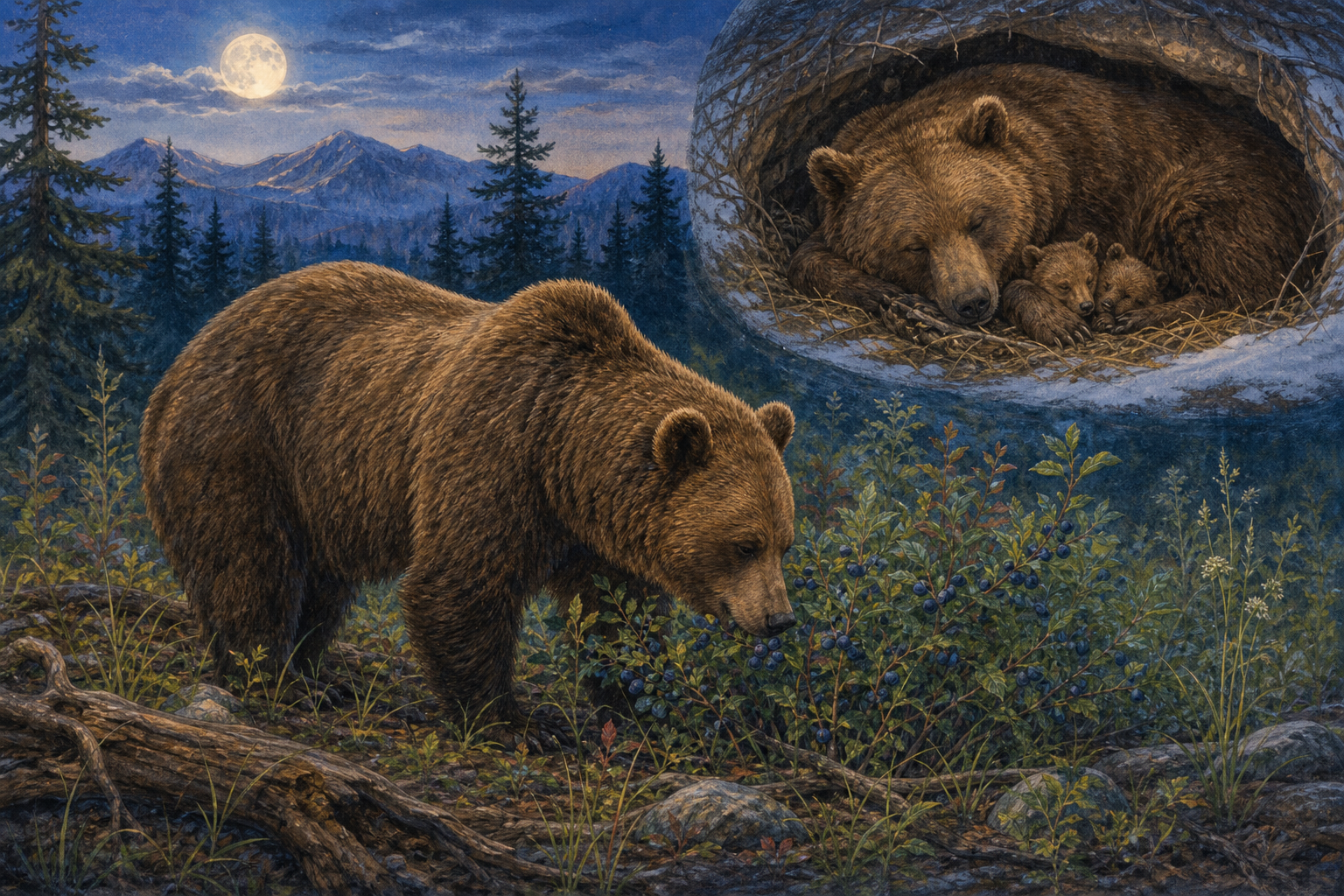
The evening forest is turning blue-grey. A branch gives a soft shiver. Leaves swish. Somewhere behind a berry bush, an enormous brown nose is busy sniffing for supper. Meet the brown bear, Ursus arctos: a furry wanderer so large that an adult can be longer than a small car is wide, yet so interested in food that a patch of berries can stop it in its tracks.
Brown bears live in parts of Europe, Asia, and North America. You may hear different names in different places: “grizzly bear” is used for some North American brown bears, while “Eurasian brown bear” points to bears in Europe and Asia. They are all part of the brown bear story, though bears in different regions can live rather differently.
Picture a bear in a forest, on a mountain slope, or out on tundra—open, chilly land where trees may be scarce. What does it need? Places with cover to rest in and places to find food. A brown bear’s world is not one giant bear bedroom. It is a huge outdoor pantry, changing with the seasons.
Evidence: IUCN Red List of Threatened Species: Ursus arctos (Brown Bear) — Red List Assessment; Animal Diversity Web, University of Michigan Museum of Zoology: Ursus arctos (brown bear); Wikipedia: Brown bear
Big paws, surprising menu
Brown bears are omnivores, which means they eat both plant foods and animal foods. But here is the surprising part: in many places, plants make up most of their meals. Berries, grasses, roots, and nuts are all on the menu. A bear may also eat insects or fish, depending on what is available. It is less like ordering one favourite meal forever and more like checking what the seasonal snack table has today.
That flexible appetite matters. Food changes from place to place and from season to season. A bear may travel a long way to find a rich food source. When food is plentiful, several bears can sometimes gather nearby, even though brown bears are generally solitary. Think of it as neighbours arriving at the same excellent fruit stall, not a team living together.
These bears are certainly powerful. Adults vary hugely in size, from about 80 to more than 600 kilograms. Their bodies can be about 1 to 2.8 metres long. But strength is not the whole story. By eating fruits and moving through the landscape, brown bears can help spread seeds. They are also predators in the ecosystems where they live. One animal, many important jobs.
Evidence: Animal Diversity Web, University of Michigan Museum of Zoology: Ursus arctos (brown bear); IUCN Red List of Threatened Species: Ursus arctos (Brown Bear) — Red List Assessment; Wikipedia: Brown bear
Why is the bear out when the day is dim?
Brown bears often forage in the morning and evening, and they can be active at night. That is why a person walking through a quiet woodland might never see one, even if a bear has been exploring the same wider area. Most bears would rather avoid people. Their lives are full of sniffing, listening, walking, digging, and choosing what to eat next—not posing dramatically on a rock, however excellent that would look in a storybook.
A brown bear usually lives alone, except for a mother and her cubs. Mother-cub time is serious learning time. Cubs follow their mother and learn where food can be found. They stay dependent on her for multiple years before setting out on their own. That is a long apprenticeship in the school of sniffing, climbing over rough ground, and remembering useful places.
Brown bears may have overlapping home ranges, so being solitary does not mean living on an empty planet. It means each bear needs room to move and make choices. Forests, mountains, tundra, and other wild spaces are not just scenery. They are routes between resting places and food.
Evidence: Animal Diversity Web, University of Michigan Museum of Zoology: Ursus arctos (brown bear); IUCN Red List of Threatened Species: Ursus arctos (Brown Bear) — Red List Assessment; Wikipedia: Brown bear
The cosiest winter room of all
When winter becomes harsh in places where brown bears live, a bear may settle into a den for a long period of winter inactivity, often called hibernation. Imagine curling up in the safest, snuggest room you can picture while snow gathers outside—except you are a bear, and your winter nap can last for months. Before cold weather arrives, bears eat heavily to prepare.
One of the most astonishing parts happens inside the den. Mother bears can give birth while resting there. Newborn cubs are tiny compared with their mother: about 340 to 680 grams. That is small enough to make the size difference seem almost silly. The cubs drink their mother’s milk, stay warm, and grow quickly.
Not every brown bear’s winter schedule is exactly the same. Denning depends on climate and conditions, and bears farther south may den for less time. Still, the idea is marvellous: a huge animal, quiet under winter weather, beginning the next chapter of its family story while the outside world waits for spring.
Evidence: Animal Diversity Web, University of Michigan Museum of Zoology: Ursus arctos (brown bear); IUCN Red List of Threatened Species: Ursus arctos (Brown Bear) — Red List Assessment; Wikipedia: Brown bear
“Least Concern” does not mean “no concern”
In the IUCN’s global 2017 assessment, brown bears were listed as Least Concern, with a stable global trend and a wild population summarised at about 110,000. That is encouraging news. But it is not a permission slip to stop caring. Some regional populations are rare or declining, and a global label cannot tell the full story of every mountain valley or forest.
Brown bears face trouble when habitat is lost or broken into smaller pieces by development. Conflict with people and illegal trade in bear parts are also documented pressures in some places. A bear searching for food may need to cross land shared with people, and that can be difficult for everyone involved.
Hope has practical shoes on. Protecting wild habitat, helping people and bears share landscapes more safely, and limiting illegal trade all match the challenges bears face. Caring can begin with curiosity: learning whose home a forest is, supporting efforts that keep habitats connected, and remembering that a wild animal needs space to be wonderfully, mysteriously wild.
Evidence: IUCN Red List of Threatened Species: Ursus arctos (Brown Bear) — Red List Assessment; Animal Diversity Web, University of Michigan Museum of Zoology: Ursus arctos (brown bear); Wikipedia: Brown bear
A bear-sized idea from a berry-sized meal
It is easy to look at a brown bear and notice its claws, muscle, and great shaggy coat. It is just as important to notice the berry bush. Plant foods are a major part of many brown bears’ diets. Their story is a reminder that strong, lively animals can be closely connected to fruits, roots, grasses, nuts, and the habitats that grow them.
People have different family meals and traditions, and nobody needs a lecture at the dinner table. Still, we can practise bear-style curiosity. Could a meal include beans, lentils, vegetables, fruit, whole grains, nuts, or seeds? The World Health Organization includes these foods in guidance about varied healthy diets. With a trusted adult, trying more plant-based meals can be a kind, tasty adventure.
Choosing more plant-based foods can also be a gentle way to care about wild places. The IPCC says shifts toward sustainable, healthy, more plant-based diets can reduce food-system emissions and pressure on land and biodiversity. A berry is not a magic wand, sadly. But thoughtful choices, added together, can leave more room for forests, mountains, and the animals who call them home.
Evidence: World Health Organization: Healthy diet; Intergovernmental Panel on Climate Change: Climate Change 2022: Mitigation of Climate Change — Chapter 7; Animal Diversity Web, University of Michigan Museum of Zoology: Ursus arctos (brown bear)
Choose kindness with room for everyone
A brown bear is not a mascot for being tough. It is a living neighbour of berry patches, rivers, forests, mountains, and tundra. Protecting those homes means making space for animals to find food, travel, rest, and raise cubs without needless conflict.
At home, a cheerful plant-forward plate can be one small caring choice. WHO guidance describes varied diets rich in foods such as vegetables, fruits, whole grains, pulses, nuts, and seeds. The IPCC reports that sustainable, healthy, more plant-based diets can ease pressure from food systems on climate, land, and biodiversity. Ask a trusted adult about trying a new bean stew, lentil taco, or berry-filled breakfast together.
Evidence: World Health Organization: Healthy diet; Intergovernmental Panel on Climate Change: Climate Change 2022: Mitigation of Climate Change — Chapter 7
Questions people ask
Are all brown bears called grizzlies?
No. Grizzly bear is a regional name used for some brown bears in North America. Brown bears also live across parts of Europe and Asia, where they may be called Eurasian brown bears.
Evidence: Animal Diversity Web, University of Michigan Museum of Zoology: Ursus arctos (brown bear); Wikipedia: Brown bear
Do brown bears only eat fish?
No. They can eat fish, insects, and other animal foods, but their diet also includes plenty of plant foods such as berries, grasses, roots, and nuts. What they eat changes by season and place.
Evidence: Animal Diversity Web, University of Michigan Museum of Zoology: Ursus arctos (brown bear); IUCN Red List of Threatened Species: Ursus arctos (Brown Bear) — Red List Assessment
How can a cub be born while its mother is in a den?
Mother brown bears can give birth during their winter denning period. The tiny cubs stay warm with their mother and drink her milk while they grow.
Evidence: Animal Diversity Web, University of Michigan Museum of Zoology: Ursus arctos (brown bear); Wikipedia: Brown bear
Are brown bears safe to approach?
No. Brown bears are wild, powerful animals and need plenty of space. The best way to appreciate one is from a safe distance and by following local wildlife guidance.
Evidence: Animal Diversity Web, University of Michigan Museum of Zoology: Ursus arctos (brown bear); IUCN Red List of Threatened Species: Ursus arctos (Brown Bear) — Red List Assessment
Read the evidence
Sources behind this story
- Ursus arctos (Brown Bear) — Red List Assessment — IUCN Red List of Threatened Species
- Ursus arctos (brown bear) — Animal Diversity Web, University of Michigan Museum of Zoology
- Brown bear — Wikipedia
- Healthy diet — World Health Organization
- Climate Change 2022: Mitigation of Climate Change — Chapter 7 — Intergovernmental Panel on Climate Change
Health information is general education, not personal medical advice. Young readers should make food choices with a trusted adult and qualified health professional.